
 100% FREE ACCESS
8th Standard CBSE Syllabus & Materials
8th Standard CBSE
CBSE 8th Social Science Theme D - Factors of Production - New Model Questions Papers Study Material - QB365 Set A
NEW8th Standard CBSE
CBSE 8th Social Science Theme C - Universal Franchise and India's Electoral System - New Model Questions Papers Study Material - QB365 Set A
NEW8th Standard CBSE
CBSE 8th Social Science Theme B - The Rise of the Marathas - New Model Questions Papers Study Material - QB365 Set A
NEW8th Standard CBSE
CBSE 8th Social Science Theme B - Reshaping India's Political Map - New Model Questions Papers Study Material - QB365 Set A
NEW8th Standard CBSE
CBSE 8th Social Science Theme A - Natural Resources and Their Use - New Model Questions Papers Study Material - QB365 Set A
NEW8th Standard CBSE
CBSE 8th Science Keeping Time with Skies - New Model Questions Papers Study Material - QB365 Set A

Published on: 18/09/2018
Model Question I
Download CBSE Class 8th Standard CBSE Social Science question papers, sample papers, important questions, and previous year solved papers in PDF format. Get free study materials, NCERT solutions, and exam preparation resources for Class 8th Standard CBSE Social Science
Questions + Answers key
Take MCQ Social Science Test
1.
What were the developments that led to the formation of Non-Alignment Movement?
2.
How did the development of cotton industries in Britain affect textile producers in India?
3.
The atrocities committed by both sides during the uprising were horrifying. Why do you think they happened?
4.
How was the Mahalwari system different from the Permanent Settlement?
5.
Can you think of examples of surveys in your world today? Think about how toy companies get information about what young people enjoy playing with or how the government finds out about the number of young people in school. What can a historian derive from such surveys?
6.
To protect people from exploitation-government makes certain_______
Laws
Police
Courts
Ministers
7.
In her book Stripurushtulna, she wrote "Isn't a woman's life as dear to her as yours is to you. Her face is not be seen, a widowed woman is a bad woman". Who wrote these words?
Pandita Ramabai
Tarabai Shinde
Begum Rokeya Shekhawat Hossain
Rashsundari Devi
8.
The first cotton mill in India was set up as a spinning mill in Bombay in :
1852 .
1854
1853
1855
9.
Union Carbide was a/an
American company
English company
Government-owned company
None of the above
10.
Who decides whether the accused person is guilty or not?
The police
The public
The judge
The defence lawyer
11.
Extraction of salt from sam bar lake in
Gujarat
Assam
Rajasthan
Bihar
12.
Which practice was described as a 'slur and a blot' on the 'fair name of India'?
Untouchability
Discrimination on the basis of religion
Racism
None of these
13.
What was the objective of the new law passed by the Company in 1850?
Converting all Muslims and Hindus to Christianity.
To divide the Indians on religious lines.
Making religious conversion to Christianity easier.
Not allowing Christians to inherit the land of their ancestors.
14.
What do you mean by Mahal in British revenue records?
Farmer and fields
A village or a group of villages
Seeds and crops
Local name of land revenue
15.
The British preserve official documents because
the preserved documents reveal the progress made by the country in the past.
one can study the notes and reports which were prepared in the past.
their copies may be made and used in modern times.
All of the above
16.
Describe the role of the police in investigating a Crime.
17.
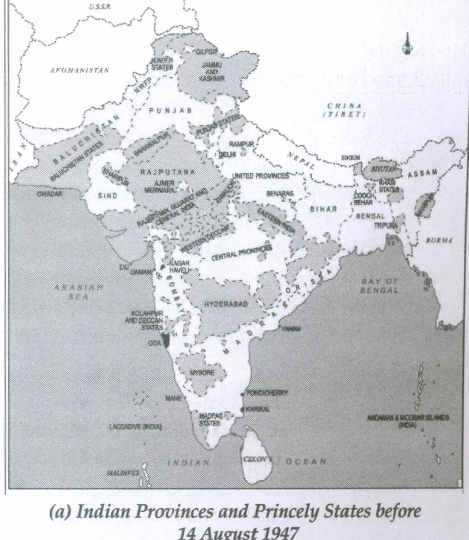
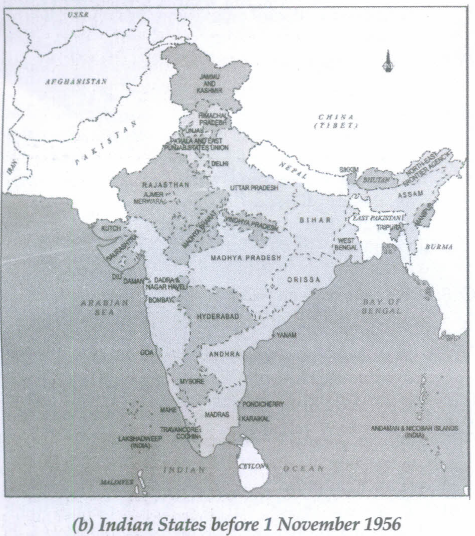
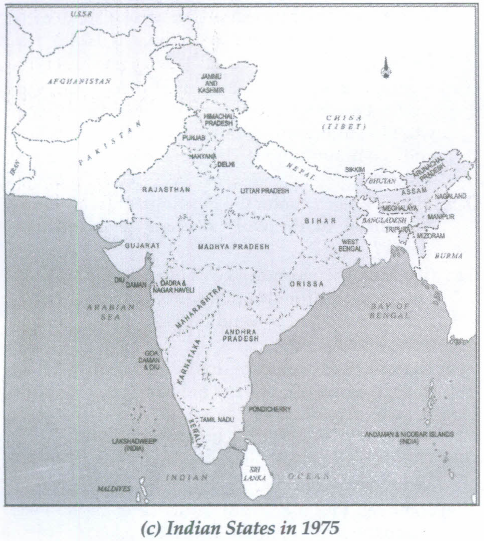
Look at the given figures 5(a), 5(b) and 5(c). Notice how the Princely States disappear in 5(b). Identify the new states that were formed in 1956 and later and the languages of these states
18.
Discuss few examples of educated women and the impact they had on society.
19.
Read the source given and answer the questions: Hadji Mulla, an indigo cultivator of Chandpore, Thana Hardi, was interviewed by the members of the Indigo Commission on Tuesday, 5 June 1860. This is what he said in answer to some of the questions:
W. S. Seton Karr, President of the Indigo Commission: Are you now willing to sow indigo; and if not, on what fresh terms would you be willing to do it?
Hadji Mulla: I am not willing to sow, and I don't know that any fresh terms would satisfy me.
Mr. Sale: Would you not be willing to sow at a rupee a bundle?
Hadji Mulla: No, I would not; rather than sowing indigo I will go to another country; I would rather beg than sow indigo.
(i) Why was Indigo commission set up?
(ii) Who was held responsible for the plight of the peasants by the Commission?
(iii) What were the revelations of the Indigo Commission?
20.
Why do foreign companies come to India?
21.
Describe the main types of formations in which the minerals occur.
22.
Look at the given picture and answer the following questions.
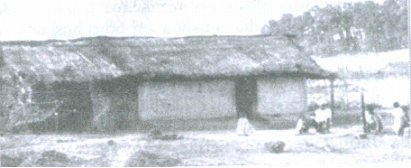
(i) Name the community, who was lived in this village?
(ii) In which century a series of famines devastated the dry tracts of India.
23.
How did the revolt spread from Meerut to other parts of the country?
24.
Historians divided Indian history into ancient, medieval and modern. But this division too has its problems. What are these problems?
25.
Why was Britain referred to as the workshop of the world?
26.
What made Britain the foremost industrial nation in the 19th century?
27.
Name some countries having Geothermal power plants.
28.
Write a short note on Nuclear Power.
29.
Which leaders led the Indian delegation to the U.N.? What was their argument?
30.
What was the aim of the second five-year plan? When was it formulated?
31.
What was the immediate cause of the Revolt?
32.
According to historians what is the meaning of the term 'Colonial'?
33.
What is the meaning of 'Colonization' in History?
34.
Why was the Calico Act enacted in England?
35.
Answer the following briefly:
(a) Two minerals which you use every day.
(b) Two regions rich in natural gas resources.
36.
This is a picture of Potti Sriramulu. Answer the following questions associated with him:
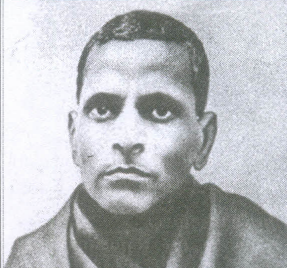
(i) Who was Potti Sriramulu? Why did he become famous?
(ii) What was his demand?
(iii) When was the Andhra State formed?
37.
Read the source and answer the questions given below:
Nehru wrote in a letter to the Chief Ministers of states: We have a Muslim minority who are so large in numbers that they cannot, even if they want, go anywhere else. That is a basic fact about which there can be no argument Whatever the provocation from Pakistan and whatever the indignities and horrors inflicted on non-Muslims there, we have got to deal with this minority in a civilized manner. We must give them security and the rights of citizens in a democratic State.
(i) In the above-mentioned source, Nehru is talking about which basic fact?
(ii) What did Nehru demand from the Chief Ministers of states?
38.
Read the following passage and answer the questions given below:
Here is an excerpt from the memoirs of Sitaram Pandey, "From Sepoy to Subedar" :
It is my humble opinion that this seizing of Oudh filled the minds of the sepoys with distrust and led them to plot against the Government. Agents of the Nawab of Oudh and also of the King of Delhi were sent all over India to discover the temper of the army. They worked upon the feelings of sepoys, telling them how treacherously the foreigners had behaved towards their king. They invented ten thousand lies and promises to persuade the soldiers to mutiny and turn against their masters, the English, with the object of restoring the Emperor of Delhi to the throne. They maintained that this was wholly within the army's powers if the soldiers would only act together and do as they were advised.
(i) Who was Sitaram Pandey?
(ii) Who persuaded him to write his memoirs?
(iii) How did the agents persuade the sepoys to rebel against the British?
39.
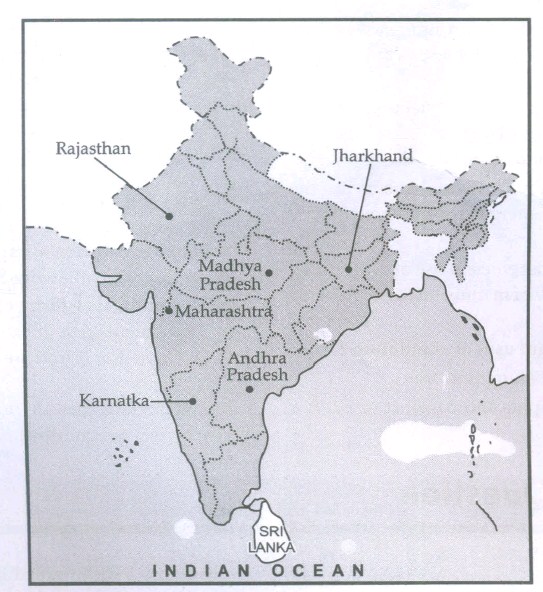
On the given political map of India, identify the five major copper producing states.
1.
(i) The Second World War ended in the year 1945. After the end of war, ideological differences emerged between the US and the USSR.
(ii) Both of them embarked upon increasing their influence on the newly independent countries. The entire world was divided into two armed camps.
(iii)It was the beginning of a cold war. Therefore, in the Bandung summit of the Afro-Asian countries, it was decided that they would not join any of the groups and would remain neutral and not align with any of the two powers. Thus, non-alignment movement, as named by Pt. Jawaharlal Nehru, came into being. The main contributors to the non-alignment movement were the representatives of India, Yugoslavia, Egypt, Ghana and Indonesia.
2.
The development of cotton industries in Britain affected textile producers in India due to the following factors:
(i) Competition in Foreign Markets By the beginning of the 19th century, English-made cotton textiles ousted Indian textiles from their traditional markets in Europe, Africa and America. This threw thousands of Indian weavers out of employment.
(ii) High Import Duties/Ban on Imports Exporting textiles to England became increasingly difficult due to the very high duties imposed on Indian textiles imported into Britain.
(iii) Capture of the Indian Market By the 1830s, British cotton cloth flooded Indian markets. By the 1880s, two-thirds of all cotton clothes worn by Indians were made of cloth produced in Britain.
3.
The atrocities like the unnecessary killing of innocent women and children, torture, mutilation etc took place because:
(i) The British wanted to teach a lesson to the rebels to never again rise against them. The way they found was to commit horrifying atrocities which would not be forgotten for ages.
(ii) The rebels released their pent up anger due to having been deprived of their traditional lives by the measures gradually introduced by the British over the last few years.
4.
| Mahalwari System | Permanent Settlement |
| Mahalwari system, it was decided that the rate of revenue was to be revised periodically, not permanently fixed | Under the PermanentSettlement, the rate of revenue was fixed permanently, i.e. it was not to be increased ever in the future. |
| In the Permanent Settlement, the zamindars were given the charge of collecting revenue from the peasants and paying it to the Company. | The Mahalwari system, the charge of collecting the revenue and paying it to the Company was given to the village headman. |
| The Mahalwari system came into effect in 1822. | The Permanent Settlement was introduced by the Company in 1793. |
5.
Today, different types of surveys are done by government and private companies. Surveys can be done on the basis of demographic changes, incomes, employment, and interests, etc. Surveys can be done by questionnaire method or interview method. Governments find out about the information of young people in the school by the records and the records of school authorities.
6.
(a)
Laws
7.
(b)
Tarabai Shinde
8.
(b)
1854
9.
(a)
American company
10.
(c)
The judge
11.
(c)
Rajasthan
12.
(a)
Untouchability
13.
(c)
Making religious conversion to Christianity easier.
14.
(b)
A village or a group of villages
15.
(d)
All of the above
16.
(i) One important function of the police is to investigate any complaint about the crime.
(ii) An investigation includes recording statements of witnesses and collecting different kinds of evidences.
(iii) On the basis of investigation, the police is required to form an opinion.
(iv) If the police thinks that the evidence points to the guilt of the accused person, then it can file a charge sheet in the court.
(v) Ultimately, the judge takes the decision whether a person is guilty or innocent.
17.
After the creation of Andhra Pradesh, A States Reorganisation commission was set up in 1956, recommending the redrawing of district and provincial boundaries to form compact provinces of Assamese, Bengal, Oriya, Tamil, Malayalam, Telugu and Kannada speakers respectively. North India was broken into several states. In 1960, the bilingual state of Bombay was divided into separate sates for Marathi and Gujarati speakers. In 1956, the state of Punjab was also divided into Punjab and Haryana, the former for the Punjabi speakers (who were mostly Sikhs), the latter for the rest (who did not speak Punjabi but versions of Haryanvi or Hindi).
18.
(i) Muslim women such as the Begums of Bhopal played a notable role in promoting education among women. They founded a primary school for girls at Aligarh.
(ii) Another remarkable woman, Begum Rokeya Sakhawat Hossain, started schools for Muslim girls in Patna and Calcutta. She was a fearless critic of conservative ideas, arguing that religious leaders of every faith accorded an inferior place to women.
(iii) By the 1880s, Indian women began to enter universities. Some of them trained to be doctors, while some became teachers. Many women began to write and publish their critical views on the condition of women in society.
(iv) Tarabia Shinde : She was the woman who was educated at home at Poona, and she published a book, Stripurushtulna, criticizing the social differences between men and women.
(v) Pandita Ramabai : She was a great scholar of Sanskrit. She felt that Hinduism was oppressive towards women, and wrote a book about the miserable life of upper-caste Hindu women. She founded a widows' home at Pune to provide shelter to widows who had been treated badly by their husband's relatives. Here, women were trained so that they could support themselves economically.
19.
(i) Indigo Commission was formed to enquire into the system of Indigo production following the movement of the ryots of Bengal against the British Indigo planters in the late 1850s.
(ii) The Commission held the planters guilty and criticised them for the coercive methods they used for indigo cultivators.
(iii) The Indigo Commission held the planters guilty and revealed how the planters forced the ryots to receive loan and sign contracts for the indigo cultivation. The indigo planters deprived the ryots of just prices for their crop. The commission also confirmed that the magistrates sided with the British planters in their torturous pursuits of indigo cultivation..
20.
Privately-owned companies are always aiming for profit maximization. Foreign companies also come to India with the same motive. Availability of cheap labour is the prime attraction. Wages that the companies have to pay to workers, say in the USA, are far higher than what they pay to workers in poorer countries like India. Companies can get longer hours of work for lower pay.
Additional expenses like housing for workers are also fewer. Cost cutting can also be done by other more dangerous means because of lax safety rules in India. Due to high population and rampant unemployment, employers exploit workers because of their vulnerable positions and there is always the option to replace one employee with another.
21.
Minerals generally occur in rocks of these forms:
1. In igneous and metamorphic rocks, minerals occur in the veins and the lodes. Major metallic minerals like tin, copper, zinc, lead etc are obtained from these veins and lodes.
2. In sedimentary rocks, minerals occur in layers. Coal and some forms of iron ore are found like this. Minerals such as gypsum, potash, salt and sodium salt are found as a result of evaporation especially in arid regions.
3. Inthe decomposed surface rocks (a residual mass of weathered material), bauxite is formed.
4. In alluvial deposits or placer deposits, minerals which are not corroded by water are found. Such as gold, silver, tin and platinum.
5. Inocean floor vast quantities of manganese nodules are found. Common salt, magnesium and bromine are largely derived from ocean waters.
22.
(i) Agarias - a community of iron smelters were lived in this village.
(ii) In the late 19th century a series of famines devastated the dry tracts of India.
23.
The soldiers who mutinied in Meerut rushed to Delhi and forced the Mughal king to give his backing to the revolt.
His writing a letter to all the chiefs to revolt was significant, as troops mutinied and joined other troops at nodal points like Delhi, Kanpur and" Lucknow.
Seeing this, the people of the towns and villages revolted and rallied around local leaders, zamindars and chiefs who were prepared to establish their authority and fight the British.
These leaders included Nana Saheb (Kanpur), Rani Lakshmibai (Jhansi), Begum Hazrat Mahal and Birjis Oadr (Lucknow), Maulvi Ahmadullah Shah (Faizabad), Bakht Khan (Bareilly) and Kunwar Singh (Bihar), among others. The British troops were outnumbered and were defeated in a number of battles.
24.
Many historians have divided Indian history into ancient, medieval and modern. This periodisation has been borrowed from the West.
According to them, a modern period was associated with the growth of science, reason, democracy, liberty, and equality. This view was accepted by the Western thinkers after the French Revolution.
Medieval period was a term used to describe a society where all these features of modern society did not exist.
If we accept this periodisation for our country, there must arise some problems. These are
We cannot justify the British Raj of India as the modern period.
At that time, people did not have equality, freedom or liberty. There was no economic growth and progress in the society.
25.
Britain was referred to as the workshop of the world as its iron and steel industries started growing from 1850s and later gained success. So many countries started buying and selling iron from Britain in greater quantities and thus it was given the title 'workshop of world'.
26.
Merchandised production of cotton textiles made Britain the foremost industrial nation in the 19th century.
27.
USA, New Zealand, Iceland, Phillipines, Central America. In India, Geothermal plants are located in Manikaran in Himachal Pradesh and Puga Valley in Laddakh.
28.
Nuclear power is obtained from energy stored in the nuclei of atoms of naturally occurring radio active elements like Uranium and Thorium. These fuels undergo nuclear fission in nuclear reactors and emit power.
29.
Jawaharlal Nehru and Krishna Menon led the Indian delegation to the U.N. between 1952 and 1962.
They argued for the policy of non-alignment.
30.
The second five year plan was formulated in 1956. Its main aim was development of heavy industries such as iron and steel and on the building of large dams. The effort was centralised at the state for regulating the economic policy for the next few decades.
31.
British introduced the enfield rifles in the army, whose cartridge had a greased paper cover and its end was to be bitten off before loading it in to the rifle. The cartridge was greased with the fat of pigs and cows. The news about greased cartridges spread like wild-fire and became the immediate cause of revolt.
32.
During the British rule in India, people never enjoyed equality, freedom or liberty. During this period, Indian economy was exploited and channelized for the development of British economy. In history, this period of British rule has been termed as 'Colonial' by many historians.
33.
(i) In history we can find that whenever one country invaded or conquered another, it brought about some changes in the society in terms of values, customs, and practices.
(ii) These kind of political, economic, social and cultural changes as a result of subjugation of one country by another are termed as 'Colonization' in history.
34.
(i) By the early 18th century, the wool and silk makers in England were worried by the popularity of Indian textiles in England markets. They began protesting the import of Indian cotton textiles.
(ii) During this period, the textiles industries in England had just begun to develop the Calico, which was an imitation of Indian style.
(iii) Now, cloth producers in England were in a situation to compete with Indian textiles and thus wanted to seize a secure market in England by preventing the entry of Indian textile. (iv) So in 1720, the British government enacted the Calico Act that banned the use of printed cotton textiles - chintz - in England
35.
(a) Copper and Iron are the minerals that are used by us every day.
(b) Two regions that are rich in natural gas resources are Jaisalmer and Krishna-Godavari delta.
36.
(i) Potti Sriramulu was a Gandhian leader in Andhra Pradesh. He became famous because of a hunger strike.
(ii) He demanded for an independent state for Telugu speaking people.
(iii) On October 1,1953the new state of Andhra Pradesh came in to being after the demise of Potti Sriramulu.
37.
(i) After partition, large number of Muslims decided to stay back in India rather than going to Pakistan. The number was so large that even if they wanted, it would have been difficult to shift them to somewhere else.
(ii) He demanded from the Ministers of States to deal with the minority group in a civilised manner. Secondly, providing them security and the rights of citizens in a democratic State was also his demand
38.
(i) Sitaram Pandey was a sepoy in the Bengal Native Army. He served the English for 48 years and retired in 1860.
(ii) He was persuaded by his Commanding Officer, Norgate, to write his memoirs.
(iii) The agents emphasised the treacherous behaviour of the foreigners against the Kings. Moreover, a number of lies and promises were invented to persuade the soldiers to rebel against the English in order to restore the Emperor of Delhi to the throne.
39.

8th Standard CBSE Syllabus & Materials
8th Standard CBSE
CBSE 8th Science Particulate Nature of Matter - New Model Questions Papers Study Material - QB365 Set A
NEW8th Standard CBSE
CBSE 8th Science Pressure, Winds, Stroms and Cyclones - New Model Questions Papers Study Material - QB365 Set A
NEW8th Standard CBSE
CBSE 8th Mathematics Quadrilaterals - New Model Questions Papers Study Material - QB365 Set A
NEW8th Standard CBSE
CBSE 8th Mathematics A story of Numbers - New Model Questions Papers Study Material - QB365 Set A



CBSE 8th Standard CBSE Subjects
CBSE Standards




