
 100% FREE ACCESS
6th Standard CBSE Syllabus & Materials
6th Standard CBSE
CBSE 6th Social Science The Value of Work - New Sample Question Papers Study Material - QB365 Set A
NEW6th Standard CBSE
CBSE 6th Social Science Family and Community - New Sample Question Papers Study Material - QB365 Set A
NEW6th Standard CBSE
CBSE 6th Social Science India's Cultural Roots - New Sample Question Papers Study Material - QB365 Set A
NEW6th Standard CBSE
CBSE 6th Social Science India,That is Bharat - New Sample Question Papers Study Material - QB365 Set A
NEW6th Standard CBSE
CBSE 6th Social Science Timeline and sources of history - New Sample Question Papers Study Material - QB365 Set A
NEW6th Standard CBSE
CBSE 6th Social Science Oceans and Continents - New Sample Question Papers Study Material - QB365 Set A

Published on: 05/03/2019
On the Trail of the Earliest People Important Questions
Download CBSE Class 6th Standard CBSE Social Science question papers, sample papers, important questions, and previous year solved papers in PDF format. Get free study materials, NCERT solutions, and exam preparation resources for Class 6th Standard CBSE Social Science
Questions + Answers key
Take MCQ Social Science Test
1.
This is a rock and cave shelter of Bhimbetka in the Deccan Plateau. Answer the following questions related to the cave shelter:
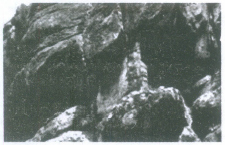
(i) What are habitation sites?
(ii) Why did people use these cave shelters as habitation sites?
(iii) In which mountain range are these rock and cave shelters found ?
(iv) Which valley is close to these rock shelters ?
2.
What were the uses of the stone tools invented by humans?
3.
Write about the inventions of the early man.
4.
Can you think of any other reason?
5.
What do you think the beads could have been used for?
6.
Grasslands led to an increase in :
Human population
Birds
Animals which feed on grass
Aquatic animals
7.
In which period, the major changes in the climate of the world had been noticed?
Palaeolithic
Neolithic
Mesolithic
Microlithic
8.
Edible plants are
poisonous
non-poisonous
tool making plants
used in making huts
9.
Tools made of wood have survived better than tools made of stone.
10.
Grains such as wheat and rice grew naturally.
11.
Which period witnessed environmental changes like the melting of glaciers and their replacement by thick forests ? What else do you know about this period ?
12.
What are the major developments of Neolithic age ?
13.
What are the important features of the paintings drawn on the rock shelters of Bhimbetka ?
14.
Why did hunter-gatherers move from place to place? Give at least four reasons.
15.
Answer the questions based on the picture given below:
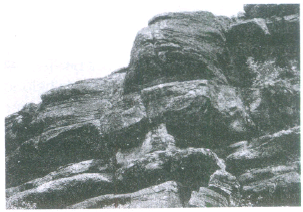
(i) Where are the above sites located?
(ii) Bhimbetka is located in which state?
(iii) Which valley is closer to these rock shelters?
16.
In Hunsgi, tools were made of ______________
17.
How did the early man learn herding and rearing animals?
18.
What is the Mesolithic period?
19.
How long would it take you to walk from your home to school?
20.
Ostriches were found in India during
1.
(i) Habitation sites were the places where people lived. For example, rock and cave shelters.
(ii) People choose these natural caves for habitation because they provided protection from rain, sun and wind.
(iii) These rock and cave shelters are found in the Vindhyas.
(iv) These rock shelters are close to the Narmada valley.
2.
Humans invented stone tools to assist them in their day to day activities.
(i) These tools were used to cut meat and bones from the dead body of an animal and also to scrape bark and animal skin.
(ii) They were also used as weapons (arrowheads and spears), made after sharpening stones into desired shapes.
(iii) Stone tools were handy in chopping wood which was used as firewood, and also to make huts.
3.
The greatest invention of the early man was perhaps the stone tools. They had sharp edges on one side and later, these tools had wooden handles.
4.
These paintings were done on ceremonial occasions. They were made of special rituals performed by hunters before they went in search of prey.
5.
The beads could have been used for making ornaments and jewelleries.
6.
(c)
Animals which feed on grass
7.
(a)
Palaeolithic
8.
(b)
non-poisonous
9.
(b)
10.
(a)
11.
(i) The Mesolithic period, also referred to as the Middle Stone Age, witnessed environmental changes like the melting of glaciers and their replacement by thick forests.
(ii) This period stretches from 12,000 years ago till about 10,000 years ago.
(iii) The people of this period used small tools called microliths, such as spearheads and arrow heads.
(iv) Probably, agriculture was also practiced to some extent.
(v) Domestication of animals, most importantly of dogs, started.
12.
The major developments of the Neolithic age are :
(i) Growing crops and domesticating animals.
(ii) Use of polished stone tools and weapons.
(iii) The art of making pottery and making painted potteries.
(iv) Practice of the burying the dead along with pottery, weapon, food and drink.
(v) Invention of the wheel.
13.
(i) The rock shelters of Bhimbetka are decorated with picture writings, depicting the life and times of pre-historic cave dwellers.
(ii) These paintings mirror the difficulties of the native man's struggle with life and also his accomplishments.
(iii)These paintings also show wild animals drawn with great accuracy.
(iv) Religious symbols those were popular with these pre-historic artists also adorn the walls of these shelters.
(v) The paintings are often superimposed, which reveal that the surfaces were used by different people at different times.
14.
The reasons behind the movement moving of hunters-gatherers are:
(i) If they stayed at one place for a long time, they would have eaten up all the available plant and animal resources. Therefore, they had to move elsewhere in search of food.
(ii) Animals move from place to place - either in search of smaller prey or in the case of deer and wild cattle, in search of grass and leaves. That is why, those who hunted them had to follow their movements.
(iii) Plants and trees bear fruit in different seasons. So, people may have moved from season to season in search of different kinds of plants.
(iv) People, plants and animals need water to survive. People living on river banks had to go in search of water during the dry seasons as some rivers are seasonal while others are perennial (with water throughout the year).
15.
(i) These sites are located in Bhimbetka.
(ii) Bhimbetka is located in Madhya Pradesh.
(iii) The Narmada Valley is close to these rock shelters.
16.
()
limestone
17.
()
When the hunters followed animals for hunting, they might have learnt about their food habits and their breeding seasons. It is likely that this helped people to start thinking about herding and rearing these animals themselves.
18.
()
It was period between 10,000 to 8,000 B.C.
19.
()
If I walked from my home to school, it would take me 2 hours.
20.
()
Palaeolithic Age

6th Standard CBSE Syllabus & Materials
6th Standard CBSE
CBSE 6th Social Science Locating Places on the Earth - New Sample Question Papers Study Material - QB365 Set A
NEW6th Standard CBSE
CBSE 6th Science A Journey Through States of Water - New Sample Question Papers Study Material - QB365 Set A
NEW6th Standard CBSE
CBSE 6th Science Temperature and its Measurement - New Sample Question Papers Study Material - QB365 Set A
NEW6th Standard CBSE
CBSE 6th Science Materials Around Us - New Sample Question Papers Study Material - QB365 Set A



CBSE 6th Standard CBSE Subjects
CBSE Standards




