
 100% FREE ACCESS
8th Standard Syllabus & Materials
8th Standard
TN 8th Tamil இயல் 3 - கல்வி கரையில - வினைமுற்று Important Questions And Answers Study Material - QB365 Set A
NEW8th Standard
TN 8th Tamil இயல் 2 - ஈடில்லா இயற்கை - மயங்கொலிகள் Important Questions And Answers Study Material - QB365 Set A
NEW8th Standard
TN 8th Tamil இயல் 2 - ஈடில்லா இயற்கை -பட்டமரம் Important Questions And Answers Study Material - QB365 Set A
NEW8th Standard
TN 8th Tamil இயல் 2 - ஈடில்லா இயற்கை - இயற்கையை போற்றுவோம் Important Questions And Answers Study Material - QB365 Set A
NEW8th Standard
TN 8th Tamil இயல் 1 - தமிழ் இன்பம் - ஆழிக்கு இணை Important Questions And Answers Study Material - QB365 Set A
NEW8th Standard
TN 8th Tamil இயல் 2-ஈடில்லா இயற்கை - திருக்குறள் Important Questions And Answers Study Material - QB365 Set A

Published on: 29/06/2019
Creative Questions For 8th standard Science For Second Chapter
Download Tamil Nadu 8th Standard Science question papers, model tests, one-mark questions, important questions, and public exam papers in PDF format. Free study materials and answer keys for TN State Board students.
Questions + Answers key
Take MCQ Science Test1.
Identify the state of matter based on the arrangement of the molecules.
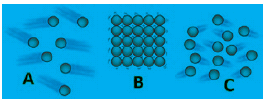
A - gas, B - solid, C – liquid
A - Liquid, B - solid, C – Gas
A - gas, B - solid, C - liquid
A - Liquid, B - Gas, C - Solid
2.
Molecule ______ D. smallest unit of a substance
1 - A, 2 - C, 3 - B, 4 - D
1 - C, 2 - A, 3 - B, 4 - D
1 - D, 2 - C, 3 - B, 4 - A
1 - B, 2 - C, 3 - A, 4 - D
3.
Pencil lead contains
graphite
diamond
aluminium
sulphur
4.
The property which allows metals to be hammered into their sheets is ___________
ductility
malleability
conductivity
tensile strength
5.
Which one of metal possess low tensile strength?
Silver
Copper
Zinc
Aluminium
6.
A form of non-metal which has high ductility is
nitrogen
oxygen
chlorine
carbon
7.
Symbol of Mercury is
Ag
Hg
Au
Pb
8.
Which one of the element name not derived from planet?
Plutonium
Neptunium
Uranium
Mercury
9.
The Pictorial symbol for water given by the alchemists was


10.
The spherical mirror used as a rear view mirror in the vehicle is
concave mirror
convex mirror
plane mirror
None of the above
11.
The centre of a sphere of which the reflecting surface of a spherical mirror is a part is called
pole
centre of curvature
cradius of curvature
aperture
12.
The spherical mirror with a reflecting surface curved inward is called
convex mirror
concave mirror
curved mirror
None of the above
13.
Which of the following has curved reflecting surface?
plane mirrors
spherical mirrors
simple mirrors
None of the above
14.
Which of the following statements is wrong?
Approximation gives accurate value
Approximation simplifies the calculation
Approximation is very useful when little information is available
Approximation gives the nearest value only
15.
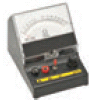
Which one of the following devices is used to measure electric current
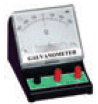
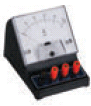
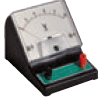
16.
Luminous intensity is the intensity of ________
Laser light
UV light
visible light
IR light
17.
Amount of substance is
directly proportional to the number of atoms
inversely proportional to the number of atoms
directly proportional to the square of number of atoms
inversely proportional to the square of number of atoms
18.
SI unit of temperature is __________
celsius
fahrenheit
kelvin
ampere
19.
Electric current is a ______quantity
base
supplementary
derived
professional
20.
Assertion: Avogadro’s number is the number of atoms in one mole of substance.
Reason: Avogadro’s number is a constant
a. If both assertion and reason are true and reason is the correct explanation of the assertion.
b. If both assertion and reason are true but reason is not the correct explanation of the assertion.
c. Assertion is true, but reason is false.
d. Assertion is false, but reason is true.
21.
Assertion: The SI system of units is the suitable system for measurements.
Reason: The SI unit of temperature is Kelvin.
a. Both assertion and reason are true and reason is the correct explanation of the assertion.
b. Both assertion and reason are true but reason is not the correct explanation of the assertion.
c. Assertion is true, but reason is false.
d. Both assertion and reason are false.
22.
Why are utensils made up of aluminium and brass?
23.
Define tensile strength.
24.
Tabulate four points of difference between metals and non-metals.
25.
Define focal length?
26.
What are errors?
27.
What are the differences between Plane angle and solid angle?
28.
How can we improve the beneficial bacterial count in human beings?
29.
Write a short note on common human diseases caused by micro organisms.
30.
What is dispersion? Explain in detail.
31.
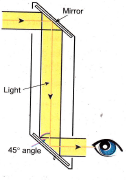
Explain the working of a periscope.
32.
What is reflection? Write short notes on regular and irregular reflection?
33.
Your friend was absent to school yesterday. You are enquiring about his absence. He told that he had fever and it was measured to be 100oC. Is it possible to have 100oC fever? If he is wrong, try to make him understand.
34.
Compounds can be made up of one atom.
35.
Gallium metal is in solid state at or just above room temperature.
36.
Metals are generally good conductors of electricity, but not good conductors of heat.
37.
Convert 300 K into celsius.
38.
Convert 80°C into kelvin
39.
Write the constituent elements and their symbols for the following compounds
a) Carbon monoxide
b) Washing soda
40.
What is ductility?
41.
Convert 60° into radian.
42.
If 2 coulomb of charge flows through a circuit for 10 seconds, calculate the current.
1.
(b)
A - Liquid, B - solid, C – Gas
2.
(a)
1 - A, 2 - C, 3 - B, 4 - D
3.
(a)
graphite
4.
(b)
malleability
5.
(c)
Zinc
6.
(d)
carbon
7.
(b)
Hg
8.
(d)
Mercury
9.
(c)
10.
(b)
convex mirror
11.
(c)
cradius of curvature
12.
(b)
concave mirror
13.
(b)
spherical mirrors
14.
(a)
Approximation gives accurate value
15.
(b)
16.
(c)
visible light
17.
(a)
directly proportional to the number of atoms
18.
(c)
kelvin
19.
(a)
base
20.
a. If both assertion and reason are true and reason is the correct explanation of the assertion.
21.
b. Both assertion and reason are true but reason is not the correct explanation of the assertion.
22.
The cooking utensils are made up of aluminium and brass because they are good conductors of heat and they possess high melting point.
23.
| S.No | Property | Metal | Non-metal |
| 1. | Malleability | Good | Poor-usually soft or brittle |
| 2. | Ductility | Good | Poor-Usually soft or brittle |
| 3. | Melting point | Usually high | Usually low |
| 4 | Boiling point | Usually high | Usually low |
24.
| S.No | Property | Metal | Non - metal |
| 1 | Malleability | Good | Poor - usually soft or brittle |
| 2 | Ductility | Good | Poor - usually soft or brittle |
| 3 | Melting point | usually high | usually low |
| 4 | Conductivity (Thermal and electrical) | Good | Very poor |
25.
The distance between the pole and the principle focus is called focal length (f) of a spherical mirror.
26.
The value of every measurement contains some uncertainty. These uncertainties are called as errors.
27.
| Plane angle | Solid angle |
| Angle between the intersection of two straight lines or two planes. | Angle formed by three or more planes intersecting at a common point. |
| S. I unit - radian(rad) | S. I unit - steradian (sr) |
| It is Two dimensional | It is Three dimensional |
28.
1. Eat a diverse range of foods.
2. Eat lots of vegetables, legumes, beans and fruit,
3. Eat fermented foods.
4. Don't eat too many artificial sweeteners.
5. Eat prebiotic foods.
6. Breast feed for atleast six months.
7. Eat whole grains.
8. Eat a plant-based diet.
9. Eat foods rich in polyphenols.
10. Take a probiotic supplement.
29.
| Human Diseases | Causative microorganisms | Mode of transmission | Symptoms | Preventive measures/ Treatment |
| Tuberculosis | Mycobacterium tuberculosis (Bacteria) | Through air and sputum of infected person | Persistent cough, blood mucus, loss of weight, breathlessness | BCG Vaccine |
| Cholera | Vibrio cholera (Bacteria) | By flies and by contaminated food and water | Watery diarrhea, vomiting, rapid dehydration. | Anticholera vaccine, maintaining personal hygiene. |
| Common cold | Influenza (virus) | Through air | Running nose, sneezing | Isolation of patient |
| Rabies | Rhabdo viridae (virus) | Animal Bite | Fever, hallucination, paralysis inability to swallow | Anti-rabies vaccine. |
| Amoebic dysentery | Entamoeba histolytica (Protozoa) | Food water and flies | Severe diarrhea and blood in stool | Proper sanitation to be followed and metronidazole antibiotic to be, administered |
| Malaria | Plasmodium (Protozoa) | Female Anopheles mosquito | Nausea, vomiting High fever | Antimalarial drugs like quinine, chloroquine, to be taken and also usage of mosquito repellents and nets. |
30.
i) Splitting of white light into its seven constituent colours on passing through a transparent medium is known as dispersion of light.
ii) Dispersion occurs because light of different colours present in white light have different wavelength and they travel at different speeds in a medium.
iii) The refraction of a light ray in a medium depends on its speed.
iv) As each coloured lights has a different speed, the constituent coloured lights are refracted at different extents inside the prism.
v) Refraction of a light ray is inversely proportional to its wavelength.
vi) Thus, the red coloured light which has a large wavelength is deviated less while the violet coloured light which has a short wavelength is deviated more.
vii) Formation of rainbow is an example of dispersion of white light.
31.
Periscope:-
(i) Periscope is an instrument used for viewing bodies or ships, which are over and around another body or a submarine.
Working:-
(i) It is based on the principle of the law of reflection of light
(ii) It consists of a long outer case and inside this case mirrors or prisms are kept at each end, inclined at an angle of 45o.
(iii) Light coming from the distant body falls on the mirror at the top end of the periscope and gets reflected vertically downward.
(iv) This light is reflected again by the second mirror kept at the bottom so as to travel horizontally and reach the eye of the observer.
(v) In some complex periscopes, optic fibre is used instead of mirrors for obtaining a higher resolution.
(vi) The distance between the mirrors also varies depending on the purpose of using the periscope.
32.
Reflection of light:
i) The bouncing back of the light rays as they fall on the smooth, shiny and polished surface is called reflection.
ii) Based on the nature of the surface, reflection can be classified into two types.
i) Regular reflection
ii) Irregular reflection
Regular Reflection :
1. When a beam of light falls on a smooth surface, it gets reflected. This reflection is called regular reflection.
2. After reflection, the reflected rays will be parallel to each other.
3. The angle of incidence and angle of reflection of each ray will be equal.
4. The law of reflection is obeyed in this reflection and thus a clear image is formed,
5. It is also known as specular reflection.
6. Example: Reflection of light by a plane mirror.
Irregular Reflection :
1. In a body having a rough or irregular surface each region of the surface is inclined at different angles.
2. When light falls on such a rough surface, the light rays are reflected at different angles. This reflection is called irregular reflection.
3. The angle of incidence and the angle of reflection each ray are not equal.
4. The law of reflection is not obeyed in this reflection and thus the image is not clear.
5. It is also known as diffused reflection.
6. Example: Reflection of light from a wall.
33.
It is impossible of 100°C fever. His statement is wrong. Clinical thermometers used by physicians are graduated in Fahrenheit scale. Hence, my friend might be affected by fever of 100°F. He wrongly understood it as fever of 100°C.
34.
False
correct answer: Gallium metal is in liquid state at or just above room temperature.
35.
False
Correct answer : Metals are generally good conductors of electricity, and heat.
36.
(a)
37.
C = K - 273
C = 300 - 273
C = 27 celsius
38.
K = C + 273
K = 80 + 273
K = 353 kelvin
39.
| Compound | Formula | Constituent elements | Symbols |
|---|---|---|---|
| 1. Carbon monoxide | CO | Carbon, Oxygen | C, O |
| 2. Washing Soda (Sodium Carbonate) |
Na2CO3 | Sodium, Carbon, Oxygen | Na, C, O |
40.
Metals can be drawn into thin wires. This property of metals is called ductility.
Example: Copper wires.
41.
We know that,
I0 =\(\frac { \pi }{ 180 } \)
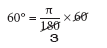
=\(\frac { \pi }{ 3 } \) radian
42.
Given: Charge Q = 2 C; time t = 10 s
I =\(\frac { Q }{ t } \) or I =\(\frac { 2 }{ 10 } \)
I = 0.2 A

8th Standard Syllabus & Materials
8th Standard
TN 8th Tamil இயல் 3 - கல்வி கரையில - பாடறிந்து ஒழுகுதல் Important Questions And Answers Study Material - QB365 Set A
NEW8th Standard
TN 8th Tamil இயல் 3-கல்வி கரையில - பல்துறைக் கல்வி Important Questions And Answers Study Material - QB365 Set A
NEW8th Standard
TN 8th Tamil இயல் 3-கல்வி கரையில - புத்தியைத் தீட்டு Important Questions And Answers Study Material - QB365 Set A
NEW8th Standard
TN 8th Tamil இயல் 2 - ஈடில்லா இயற்கை - தமிழர் மருத்துவம் ( நேர்காணல்) Important Questions And Answers Study Material - QB365 Set A



Tamilnadu Stateboard 8th Standard Subjects
Tamilnadu Stateboard Standards




