
 100% FREE ACCESS
11th Standard Syllabus & Materials
11th Standard
TN 11th Tamil இயற்கை வேளாண்மை,சுற்றுச்சூழல் -செய்யுள் - மனோன்மணீயம் Important Questions And Answers Study Material - QB365 Set A
NEW11th Standard
TN 11th Tamil என்னுயிர் என்பேன் -துணைப்பாடம் - இசைத்தமிழர் இருவர் Important Questions And Answers Study Material - QB365 Set A
NEW11th Standard
TN 11th Tamil மொழி கலை -செய்யுள் - ஒவ்வொரு புல்லையும் Important Questions And Answers Study Material - QB365 Set A
NEW11th Standard
TN 11th Tamil பீடு பெற நில் - இலக்கணம் - பகுபத உறுப்புகள் Important Questions And Answers Study Material - QB365 Set A
NEW11th Standard
TN 11th Tamil பீடு பெற நில் - துணைப்பாடம் - வாடிவாசல் Important Questions And Answers Study Material - QB365 Set A
NEW11th Standard
TN 11th Tamil பீடு பெற நில் - செய்யுள் - குறுந்தொகை Important Questions And Answers Study Material - QB365 Set A

Published on: 18/07/2019
Download Tamil Nadu 11th Standard Physics question papers, model tests, one-mark questions, important questions, and public exam papers in PDF format. Free study materials and answer keys for TN State Board students.
Questions + Answers key
Take MCQ Physics Test1.
The time of flight is __________ the time taken to attain the maximum height:
thrice
same
twice
four times
2.
s-t graph shown in figure is a parabola. From this graph we find that:
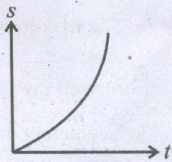
the body is moving with uniform velocity
the body is moving with uniform speed
the body is starting from rest and moving with uniform acceleration
the body is not moving at all
3.
The number of significant figures in 0.0006012 m is
3
4
7
5
4.
5.
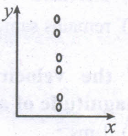
A ball is dropped from some height towards the ground. Which one of the following represents the correct motion of the ball?
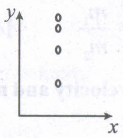
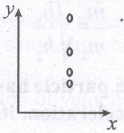
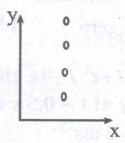
6.
If the velocity is \(\overrightarrow { v } =2\hat { i } +{ t }^{ 2 }\hat { j } -9\overrightarrow { k } \), then the magnitude of acceleration at t = 0.5s is
1 ms-2
2 ms-2
zero
-1 ms-2
7.
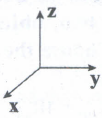
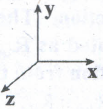
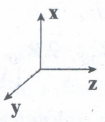
Which one of the following Cartesian coordinate systems is not followed in physics?
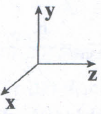
8.
The dimension of \({\left( {\mu}_{0}{\epsilon}_{0} \right)}^{{{1}\over{2}}}\) is
length
time
velocity
force
9.
The dimensional formula for gravitational constant G is
[ML3T-2]
[M-1L3T-2]
[M-1L-3T-2]
[ML-3T2]
10.
If \(\pi=3.14,\) then the value of \({\pi}^{2}\) is
9.8596
9.860
9.86
9.9
11.
Two vectors \(\vec A\) and \(\vec B\) are given in the component form as \(\overrightarrow { A } =5\hat { i } +7\hat { j } -4\hat { k } \) and \(\overrightarrow { B } =6\hat { i } +3\hat { j } +2\hat { k } \). Find \(\vec { A } +\vec { B } ,\vec { B } +\vec { A } ,\vec { A } -\vec { B } ,\vec { B } -\vec { A } \)
12.
A physical quantity x is given by x =\({a^2b^3\over c\sqrt{d}}\) . If the percentage errors of measurement in a,b, c and d are 4%, 2%, 3% and 1% respectively, then calculate the percentage error in the calculation of x.
13.
Define momentum.
14.
What is 1 light year?
15.
What are the resultants of the vector product of two given vectors given by \(\overrightarrow { A } =4\hat { i } -2\hat { j } +\hat { k } \ and \ \overrightarrow { B } =5\hat { i } +3\hat { j } -4\hat { k } \)
16.
The radius of the circle is 3.12 m. Calculate the area of the circle with regard to significant figures.
17.
Define a vector. Give examples.
18.
Write the rules for determining significant figures.
19.
The acceleration of a particle in ms-2 is given by a = 3t2 + 2t + 2, where time t is in second. If the particle starts with a velocity v = 2 ms-1 at t = 0, then find the velocity at the end of 2s.
20.
The initial and final temperatures of a liquid in a container are observed to be 75.4 ± 0.5°C and 56.8 ± 0.2°C. Find the fall in the temperature of the liquid.
21.
Two resistances R1 = (100 ± 3) \(\Omega\), R2 = (150 ± 2)\(\Omega\), are connected in series. What is their equivalent resistance?
22.
What are the advantages of S.I system?
23.
What do you mean by motion in one, two and three dimensions?
24.
25.
Write a short note on the scalar product between two vectors.
26.
Write to causes of errors in measurement.
27.
Derive the equation of motion, range and maximum height reached by the particle thrown at an oblique angle \(\theta\) with respect to the horizontal direction.
28.
Explain in detail the triangle law of addition.
29.
What do you mean by propagation of errors? Explain the propagation of errors in addition and multiplication.
30.
(i) Explain the use of screw gauge and vernier caliper in measuring smaller distances.
(ii) Write a note on triangulation method and radar method to measure larger distances
1.
(c)
twice
2.
(c)
the body is starting from rest and moving with uniform acceleration
3.
(b)
4
4.
(b)
5.
Distance travelled \(s=\frac{1}{2} g t^{2} ; s \alpha t^{2}\). The ratio of distances travelled by a freely falling body will be with ratio 1:4:9:...
6.
\(\vec{v}=2 \hat{l}+t^{2} \hat{j}-9 \vec{k}\)
\(\vec{a}=\frac{d \vec{v}}{d t}=2 t \hat{j}\)
\(\text { When } t=0.5 \mathrm{~s}\)
\(a=1 \mathrm{~ms}^{-2}\)
7.
Answers (a), (b) and (c) are all anticlockwiseand answer (d) alone is in the clockwise direction
8.
\(\text { Velocity of light } c=\frac{1}{\sqrt{\mu_{0} \varepsilon_{0}}}\)
\(c=\left(\mu_{0} \varepsilon_{0}\right)^{-\frac{1}{2}}\)
\(\text { Hence dimension }\left(\mu_{0} \varepsilon_{0}\right)^{-\frac{1}{2}} \text { is that of velocity. }\)
9.
\(\text { Gravitational constant } G=\frac{F r^{2}}{m_{l} m_{2}}\)
\(\text { Dimensional formula of } \mathrm{G}=\frac{\left[\mathrm{MLT}^{-2}\right]\left[\mathrm{L}^{2}\right]}{[\mathrm{M}][\mathrm{M}]}\)
\(=\frac{\mathrm{ML}^{3} \mathrm{~T}^{-2}}{\mathrm{M}^{2}}=\mathrm{M}^{-1} \mathrm{~L}^{3} \mathrm{~T}^{-2}\)
10.
\(\pi=3.14 \)
\(\pi^{2} =3.14 \times 3.14 \)
\(=9.8596=9.86 \)
11.
\(\vec { A } +\vec { B } =\left( 5\hat { i } +7\hat { j } -4\hat { k } \right) +\left( 6\hat { i } +3\hat { j } +2\hat { k } \right) =11\hat { i } +10\hat { j } -2\hat { k } \)
\(\vec { B } +\vec { A } =\left( 6\hat { i } +3\hat { j } +2\hat { k } \right) +\left( 5\hat { i } +7\hat { j } -4\hat { k } \right) =\left( 6+5 \right) \hat { i } +\left( 3+7 \right) \hat { j } +\left( 2-4 \right) \hat { k } =11\hat { i } +10\hat { j } -2\hat { k } \)
\(\vec { A } -\vec { B } =\left( 5\hat { i } +7\hat { j } -4\hat { k } \right) -\left( 6\hat { i } +3\hat { j } +2\hat { k } \right) =-\hat { i } +4\hat { j } -6\hat { k } \)
\(\vec { B } -\vec { A } =-\hat { i } +4\hat { j } -6\hat { k } \)
Note that the vector \(\vec A+\vec B\) and \(\vec B+\vec A \) are same and the vectors \(\vec A-\vec B\) and \(\vec B-\vec A \) are opposite to each other.
12.
Given \(x={a^2b^3\over c\sqrt{d}}\)
The percentage error in x is given by
\({\triangle x\over x} \times 100=2{\triangle a \over a}\times 100+3{\triangle b\over b}\times 100 +{\triangle c\over c}\times 100+{1\over 2}{\triangle d\over d}\times 100\)
= (2\(\times\)4%)+(3\(\times\)2%)+(1\(\times\)3%)+(1\2 \(\times\) 1%)
=8% + 6% + 3% + 0.5%
The percentage error is x = 17.5%
13.
(i) The linear momentum or simply momentum of a particle is defined as product of mass with velocity. It is denoted as '\(\overrightarrow { p } \)'. Momentum is also a vector quantity.
\(\overrightarrow { p } =m\overrightarrow { v } \)
(ii) The direction of momentum is also in the direction of velocity, and the magnitude of momentum is equal to product of mass and speed of the particle.
14.
1 light year is distance travelled by light in vacuum in one year. 1 Light Year = 9.467\(\times\)1015 m.
15.
\(\overrightarrow { A } =4\hat { i } -2\hat { j } +\hat { k } \)
\(\overrightarrow { B } =5\hat { i } +3\hat { j } -4\hat { k } \)
Resultant vector = \(\overrightarrow { A } +\overrightarrow { B } \)
\(=\left| \begin{matrix} \hat { i } & \hat { j } & \hat { k } \\ 4 & -2 & 1 \\ 5 & 3 & -4 \end{matrix} \right| \)
\(=\hat{i}(8-3)+\hat{j}[5-(-16)]+\hat{k}(12+10)\)
Resultant vector = 5\(\hat { i } \) +21\(\hat { j } \) + 22\(\hat { k } \)
16.
Radius of the circle r = 3.12 m
Area of the circle A = \(\pi\) r2
= 3.14\(\times\)3.12\(\times\)3.12
= 30.566016 m2
According to the rule of significant
A = 30.6 m2
17.
(i) A quantity which is described by both its magnitude and direction is called a vector quantity.
(ii) Geometrically, a vector is a directed line segment
Examples: Force, velocity displacement, acceleration, position vector, linear momentum and angular momentum.
18.
| Rule | Example |
| (i) All non-zero digits are significant | 1342 has four significant figures |
| (ii) All zeros between two non-zero digits are significant | 2008 has four significant figures |
| (iii) All zeros to the right of a non-zero digit but to the left of a decimal point are significant. | 30700 has five significant figures |
| (iv) a) The number without a decimal point, the terminal or trailing zero(s) are not significant. | 30700 has three significant figures |
| b) All zeros are significant if they come from a measurement | 30700 has three significant figures |
| (v) If the number is less than 1, the zero (s) on the right of the decimal point but to the left of the first non-zero digit are not significant. | 0.00345 has three significant figures |
| (vi) All zeros to the right of a decimal point and to the right of non-zero digit are significant. | 40.00 has four significant figures and 0.030400 has five significant figures |
| (vii) The number of significant figures does not depend on the system of units used | 1.53 cm, 0.0153 m, 0.0000153 km, all have three significant figures. |
19.
d =\(\frac { dv }{ dt } =\) (3t2+2t+2)dt
dv = (3t+2t+2)dt
\(\int { dv } =\int { ({ 3t }^{ 2 }+2t+2) } dt\)
v= t3+t2+2t+c
c = 2m/s, v = 18m/s at t =2s
20.
t1 = (75.4 ± 0.5)0C
t2 = (56.8 ± 0.2)0C
Fall in temperature = (75.4 ± 0.5°C) - (56.8 ± 0.2°C)
t = (18.6 ± 0.7)0C
21.
R1 = 100 ± = 3\(\Omega\); R2 = 150 ± 2\(\Omega\)
Equivalent resistance R =?
Equivalent resistance R = R1+ R2 = (100 ± 3) + (150 ± 2) = (100 + 150) ± (3 + 2)
R = (250 ± 5) \(\Omega\)
22.
(i) This system makes use of only one unit for one physical quantity, which means a rational system of units
(ii) In this system, all the derived units can be easily obtained from basic and supplementary units, which means it is a coherent system of units.
(iii) It is a metric system which means that multiples and submultiples can be expressed as powers of 10.
23.
Motion in one dimension
(i) One dimensional motion is the motion of a particle moving along a straight line.
(ii) In this motion, only one of the three rectangular coordinates specifying the position of the object changes with time.
Motion in two dimensions
(i) If a particle is moving along a curved path in a plane, then it is said to be in two dimensional motion.
(ii) In this motion, two of the three rectangular coordinates specifying the position of object change with time.
(iii) Motion of a coin on a carrom board.
Motion in three dimensions
(i) A particle moving in usual three dimensional space has three dimensional motion.
(ii) In this motion, all the three coordinates specifying the position of an object change with respect to time. When a particle moves in three dimensions all the three coordinates x, y and z..will vary.
24.
25.
It is defined as the product of the magnitudes of both the vectors and the cosine of the angle between them.
If there are two vectors \(\overrightarrow { A } \) and \(\overrightarrow { B } \) having an angle θ between then, \(\overrightarrow { A } \).\(\overrightarrow { B } \)= ABCDθ.
Here, A and B are magnitude of \(\overrightarrow { A } \) and \(\overrightarrow { B } \).
1. It is commutative, i.e., \(\vec{A} \cdot \vec{B}=\vec{B} \cdot \vec{A}\).
2. It obeys distributive law, i.e, \(\vec{A} \cdot(\vec{B}+\vec{C})=\vec{A} \cdot \vec{B}+\vec{A} \cdot \vec{C}\).
3. \((\vec{A} \cdot \vec{B})_{\max }=\mathrm{AB}\), when \(\theta=0^{\circ}\), i.e., when the vectors are parallel.
4. \((\vec{A} \cdot \vec{B})_{\min }=-A B\), when \(\theta=180^{\circ}\), i.e., when the vectors are antiparallel.
5. \(\vec{A} \cdot \vec{B}=0\) when \(\theta=90^{\circ}\), i.e., when the vectors are mutually orthogonal.
6. The self dot product of unit vectors \(\vec{i}, \vec{j} \ and \ \hat{k}, \hat{i} . \hat{i}=\hat{j} \cdot \hat{j}=\hat{k} \cdot \hat{k}=1\)
7. In the case of orthogonal unit vectors, \(\hat{i}, \hat{j} \ and \ \hat{k}, \hat{i}, \hat{j}=\hat{j}, \hat{k}=\hat{k} \cdot \hat{k}=0\)
8. Work is the example for dot product.
26.
| (i) | Least count error | Associated with the poor resolution of the instrument |
| (ii) | Instrumental errors | Associated with the faulty calibration or change in conditions |
| (iii) | Random errors | Getting difficult results for the same measurement done repeatedly |
| (iv) | Personal errors | Associated with the individual performing the experiments ie. Improper precautions, incorrect initial set up of experiment |
| (v) | Systematic errors | Which tends to be in the same direction |
27.
Consider an object thrown with initial velocity \(\overrightarrow{u}\) at an angle \(\theta\) with the horizontal.
Then,
\(\overrightarrow{u}=u,\overrightarrow{i}+u,\overrightarrow{j}\)
where ux =u cos \(\theta\) is the horizontal component and uy = u sin \(\theta\) the vertical component of velocity.
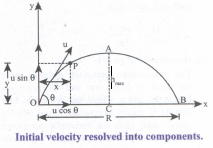
Since the acceleration due to gravity acts in the direction opposite to the direction of vertical component uy, this component will gradually reduce to zero at the maximum height of the projectile. At this maximum height, the same gravitational force will push the projectile to move downward and fall to the ground.
But, there is no acceleration along the x direction throughout the motion. So, the horizontal component of velocity (ux = u cos \(\theta\)) remains the same till the object reaches the ground.
After anytime t, the velocity along horizontal motion
vx = ux + axt = ux = u cos\(\theta\) [∴ ax = 0]
The horizontal distance travelled by projectile in time t is
sx = \({u}_{x}t+{{1}\over{2}}a_n{t}^{2}\)
[∴ sx = x and an = 0]
∴ t = \(\frac{x}{u \cos \theta} \) ......(1)
For the vertical motion the velocity after time t is vy = uy + ayt
vy = u sin \(\theta\) - gt........(2)
(∴ ug = u sin \(\theta\) and ay = - g)
The vertical distance travelled by the projectile in the same time r is
sy = \({u}_{y}t{{1}\over{2}}{a}_{y}{t}^{2}\)
y = sin \(\theta\ t-{{1}\over{2}}{gt}^{2}\)
(Here, (Here, sy = y, uy = u sin \(\theta\) and ay = - g)
Substitute the value of t from equation (1) in equation (3), we have
\(y=u\ \sin\theta{{x}\over{u\ \cos\ \theta}}-{{1}\over{2}}g{{x^2}\over{u^2{cos}^{2}\theta}}\)
\(y=x\ \tan\theta-{{1}\over{2}}g{{x^2}\over{u^2{cos}^{1}\theta}}\)
Thus the path followed by the projectile is an inverted parabola.
2. Maximum height: The maximum vertical distance travelled by the projectile during its journey is called maximum height.
For the vertical part of the motion. \({v}_{y}^{2}={u}_{y}^{2}+2{a}_{y}s\)
Here, uy = u sin \(\theta\), ay = -g, S = hmax and at the maximum height vy = 0.
Hence,
∴ 0 = u2 sin2 = 2ghmax
\({h}_{max}={{{u}^{2}{sin}^{2}\theta}\over{2g}}\)
3. Horizontal Range (R): The maximum horizontal distance between the point of projection and the point on the horizontal plane where the projectile hits the ground is called horizontal range (R).
Range R = Horizontal component of velocity x time of flight
= u cos \(\theta\times{T}_{f}\)
\(R=u\ \cos\theta\times{{2u\ \sin\theta}\over{g}}={{2{u}^{2}\sin\theta\cos\theta}\over{}g}\) \([\therefore T_f=\frac {2u\ sin \theta}{g}]\)
\(\therefore\ R={{u^2\sin 2\theta}\over{g}}\)
28.
If two vectors which are inclined to each other are represented in magnitude and direction by the two adjacent sides of a triangle taken in order, then their resultant is the closing side of the triangle taken in the reverse order.
Let us consider two vectors, \(\overrightarrow { A } \) and \(\overrightarrow { B } \) inclined an angle \(\theta\) with each other as shown in figure
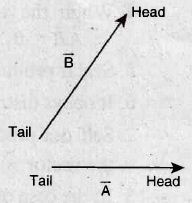
To find the resultant, the head of the first vector \(\overrightarrow { A } \) is connected to the tail of the second vector \(\overrightarrow { B } \). Let \(\theta\) be the angle between them. The resultant vector \(\overrightarrow { R } \) is the line drawn connecting the tail of the first vector, \(\overrightarrow { A } \) to the head of the second vector \(\overrightarrow { B } \). Thus \(\overrightarrow { R } \) = \(\overrightarrow { A } \)+ \(\overrightarrow { B } \). The magnitude is \(\overrightarrow { R } \) (resultant) is given geometrically by the length of \(\overrightarrow { R } \)(\(\theta\)). The direction of the resultant is the angle between \(\overrightarrow { R } \) and \(\overrightarrow { A } \).
To find the magnitude of the resultant, the triangle ABN is obtained by extending OA to ON and drawing the perpendicular drop from B.
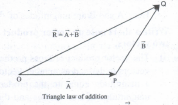
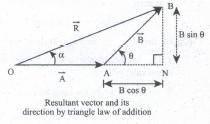
ABN is a right angled triangle. From the figure, \(\cos\ \theta={{AN}\over{B}}\ \therefore AN=B\ \cos\ \theta\)
\(\sin\ \theta={{BN}\over{B}}\ \therefore BN=B\ \sin\theta\)
For \(\triangle OBN,\) we have OB2 + ON2 + BN2
\(R^2=(A+B\ \cos\theta)^2+(B\sin\theta)^2\)
\(=A^2+B^2cos^2\theta+2AB\ \cos\theta+B^2\sin^2\theta\)
\(=A^2+B^2(\cos^2\theta+\sin^2\theta)+2AB\ \cos\theta\)
\( R\ =\sqrt{A^2+B^2+2AB \cos\theta}\)
Let \(\overrightarrow { R } \) makes an angle \(\alpha\) with \(\overrightarrow{A},\) then in \(\triangle OBN,\)
\(\tan\ \alpha={{BN}\over{ON}}+{{BN}\over{OA+AN}}=\frac{B \ sin \theta}{A +B\ cos \theta}\)
\(\therefore \alpha={\tan}^{-1}\left[ {{B\sin\theta}\over{A+B\cos\theta}} \right]\)
29.
Propagation of errors
A number of measured quantities may be involved in the final calculation of an experiment. Different types of instruments might have been used for taking readings. Then we may have to look at the errors in measuring various quantities, collectively.
The error in the final result depends on
(i) The errors in the individual measurements
(ii) On the nature of mathematical operations performed to get the final result. So we should know the rules to combine the errors.
The various possibilities of the propagation or combination of errors in different mathematical operations are discussed below:
(i) Error in the sum of two quantities:
Let A\(\triangle\) and \(\triangle\)B be the absolute errors in the two quantities A and B respectively. Then,
Measured value of A = A \(\pm\triangle\) A
Measured value of B = B \(\pm\triangle\) B
Consider the sum, Z = A + B
The error \(\triangle\) Z in Z is the given by
Z \(\pm\triangle\) Z = (A \(\pm\triangle\)A) + ( B \(\pm\triangle\) B)
= ( A + B ) \(\pm\) (\(\triangle\)A+ \(\triangle\) B)
= Z \(\pm\) ( \(\triangle\) A + \(\triangle\) B )
(or) \(\triangle\)Z = \(\triangle\) A+ \(\triangle\) B
The maximum possible error in the sum of two quantities is equal to the sum of the absolute errors in the individual quantities.
(ii) Error in the difference of two quantities:
Let \(\triangle\)A and \(\triangle\)B be the absolute errors in the two quantities, A and B, respectively. Consider the product Z = AB
Let \(\triangle\)A and \(\triangle\)B be the absolute errors in the two quantities, A and B, respectively. Consider the product Z = AB
The error \(\triangle\)Z in Z is given by \(Z \pm \Delta Z=(A \pm \Delta A)(B \pm \Delta B)\)
\(=(A B) \pm(A \Delta) \pm(B \Delta A) \pm(\Delta A . \Delta B)\)
Dividing L.H.S by Z and R.H.S by AB, we get,
\(1 \pm \frac{\Delta Z}{Z} \cdot 1 \pm \frac{\Delta B}{B} \pm \frac{\Delta A}{A} \pm \frac{\Delta A}{A} \cdot \frac{\Delta B}{B}\)
As \(\triangle\)A/A, \(\triangle\)B/B are both small quantities, their product term \(\frac{\Delta A}{A} \cdot \frac{\Delta B}{B}\) can be neglected. The maximum fractional error in Z is
\(\frac{\Delta Z}{Z}=\pm\left(\frac{\Delta A}{A}+\frac{\Delta B}{B}\right)\)
The maximum error in difference of two quantities is equal to the sum of the absolute errors in the individual quantities.
(iii) Error in the division or quotient of two quantities
Let \(\triangle\)A and \(\triangle\)B be the absolute errors in the two quantities A and B respectively.
Consider the quotient, \(\mathrm{Z}=\frac{A}{B}\)
The error \(\triangle\)Z in Z is given by
\(Z \pm \Delta Z =\frac{A \pm \Delta A}{B \pm \Delta B}=\frac{A\left(1 \pm \frac{\Delta A}{A}\right)}{B\left(1 \pm \frac{\Delta B}{B}\right)} \)
\(=\frac{A}{B}\left(1 \pm \frac{\Delta A}{A}\right)\left(1 \pm \frac{\Delta B}{B}\right)^{-1}\)
or \(Z \pm \Delta Z=Z\left(1 \pm \frac{\Delta A}{A}\right)\left(1 \pm \frac{\Delta B}{B}\right)\)
[using (1+x) n \(\approx\) 1+n x, when x<1]
Dividing both sides by Z, we get,
\(1 \pm \frac{\Delta Z}{Z} =\left(1 \pm \frac{\Delta A}{A}\right)\left(1 \pm \frac{\Delta B}{B}\right)
\)
\(=1 \pm \frac{\Delta Z}{Z} \pm \frac{\Delta B}{B} \pm \frac{\Delta A}{A} \cdot \frac{\Delta B}{B}\)
As the terms \(\triangle\)A /A and \(\triangle\)B/ B are small, their product term can be neglected. The maximum fractional error in Z is given by
\(\frac{\Delta Z}{Z}=\left(\frac{\Delta A}{A}+\frac{\Delta B}{B}\right)\)
The maximum fractional error in the quotient of two quantities is equal to the sum of their individual fractional errors.
30.
Use of screw gauge in measuring radius of a thin wire in the range of 10-5 m
The wire whose diameter is to be determined should be clamped between the jaws of the screw gauge. The reading on pitch scale (P.S.R) is noted. Then the reading of the reading of the head scale coinciding with the pitch scale is noted (A.S.C.) The zero correction is applied to head scale incidence. (C.H.S.S.).
The total reading is given by
T.R = P.S.R + (C.H.S.C. X L.C)
The procedure is repeated for at least six different positions of the wire. The mean of the reading taken gives the diameter of the wire. Half of this gives radius of the wire 'r' in the range of 10-5 m.
Use of vernier caliper in measuring smaller distances in the range of 10-4 m
The sphere is kept between the two jaws. The main scale reading (MSR) is noted (i.e), the main scale division immediately before the zero of the vernier scale. Then the vernier scale division which coincides with some main scale division (VSD) is noted. Zero correction made with this VSD gives VSR. Multiply this VSR by least count and add with MSR. This will give the diameter of the sphere. Observations for different positions of the sphere is hence forth recorded. The mean of the readings taken gives the diameter of the sphere. Half of this gives the diameter of the sphere. Half of this gives radius in the range of 10-4 am
(ii) Write a note on triangulation method and radar method to measure larger distances.
Triangulation method for the height of an accessible object
Let AB = h be the height of the tree or tower to be measured. Let C be the point of observation at distance x from B. Place a range finder at C and measure the angle of elevation, ∠ACB = θ as shown in Figure
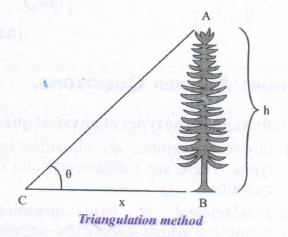
From right angled triangle ABC,
\(\tan \theta=\frac{A B}{B C}=\frac{h}{x}\)
(or) height h = x tan θ
Knowing the distance x, the height h can be determined.
Radar Method: In Radar method radio waves are sent from transmitters which, after reflection from the planet, are detected by the receiver. By measuring, the time interval (r) between the instants the radio waves are sent and received, the distance of the planet can be determined as to get the actual distance of the object. This method can also be used to determine the height, at which an aeroplane flies from the ground.
\(Speed =\frac{\text { Distance travelled }}{\text { Time taken }} \) (Speed is explained in unit 2 )
Distance (d)= Speed of radio waves x Time taken
\(d=\frac{v \times t}{2}\)
where v is the speed of the radio wave. As the time taken (r) is for the distance covered during the forward and backward path of the radio waves, it is divided by 2 to get the actual distance of the object. This method can also be used to determine the height, at which an aeroplane flies from the ground.

11th Standard Syllabus & Materials
11th Standard
TN 11th Tamil பீடு பெற நில் - செய்யுள் - காவடிச்சிந்து Important Questions And Answers Study Material - QB365 Set A
NEW11th Standard
TN 11th Tamil பீடு பெற நில் - உரைநடை - மலை இடப்பெயர்கள் : ஓர் ஆய்வு Important Questions And Answers Study Material - QB365 Set A
NEW11th Standard
TN 11th Tamil மாமழை போற்றுதும் - துணைப்பாடம் - யானை டாக்டர் Important Questions And Answers Study Material - QB365 Set A
NEW11th Standard
TN 11th Tamil மாமழை போற்றுதும் - செய்யுள் - ஐங்குறுநூறு Important Questions And Answers Study Material - QB365 Set A



Tamilnadu Stateboard 11th Standard Subjects

Maths

Commerce

Economics

Biology

Business Maths and Statistics

Accountancy

Computer Science
Physics

Chemistry
Maths
Biology
Economics
Physics
Chemistry

History
Business Maths and Statistics

Computer Science
Accountancy

Computer Applications
History
Computer Technology
Commerce
Computer Applications
Computer Technology

Tamil

English

French
Tamilnadu Stateboard Standards

