
 100% FREE ACCESS
6th Standard CBSE Syllabus & Materials
6th Standard CBSE
CBSE 6th Social Science The Value of Work - New Sample Question Papers Study Material - QB365 Set A
NEW6th Standard CBSE
CBSE 6th Social Science Family and Community - New Sample Question Papers Study Material - QB365 Set A
NEW6th Standard CBSE
CBSE 6th Social Science India's Cultural Roots - New Sample Question Papers Study Material - QB365 Set A
NEW6th Standard CBSE
CBSE 6th Social Science India,That is Bharat - New Sample Question Papers Study Material - QB365 Set A
NEW6th Standard CBSE
CBSE 6th Social Science Timeline and sources of history - New Sample Question Papers Study Material - QB365 Set A
NEW6th Standard CBSE
CBSE 6th Social Science Oceans and Continents - New Sample Question Papers Study Material - QB365 Set A

Published on: 31/07/2018
Some of the important questions are prepared from this chapter Getting to Know Plants. The important questions are covers from the Higher Order Thinking Questions and Value Based Questions
Download CBSE Class 6th Standard CBSE Science question papers, sample papers, important questions, and previous year solved papers in PDF format. Get free study materials, NCERT solutions, and exam preparation resources for Class 6th Standard CBSE Science
Questions + Answers key
Take MCQ Science Test
1.
The type of leaf venation and root in plants are related in an interesting way. Explain the statement.
2.
Can the stem of a plant be compared with a street with two ways traffic? Give reason.
3.
Will a leaf taken from a potted plant kept in a dark room for a few days turn blue black when tested for starch? Give reason for your answer.
4.
Write the names of the parts of a flower.
5.
Draw (a) a leaf, (b) a tap root and (c) a flower
6.
Money plant is an example of creeper. Do you agree? Explain.
7.
It is given that a plant is very tall and have hard, thick stem with branching on the upper part of the plants. On the basis of the given characteristics, categorise the plant.
8.
Some plants have underground as well as aerial roots. Name one of such plants.
9.
Name two herbaceous plants.
10.
State the function of a leaf.
11.
Observe the figure of an activity given as figure, carried out with leaves of plants and polythene bag. Now answer the following.
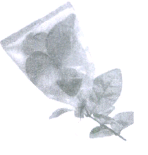
(a) Which process is demonstrated in the activity?
(b) When will this activity show better results on a bright sunny day or a cloudy day?
(c) What will you observe in the polythene bag after a few hours of setting up the activity?
(d) Mention anyone precaution you must take, while performing this activity.
12.
Sarita was interested in knowing more about plants and its parts. She started exploring and collecting plants. She wanted to preserve them, so that she can have a good collection of plants.
(a) Suggest the steps to help her in identifying plants.
(b) Is there any other method to identify plants Explain.
(c) What are the values shown by Sarita?
13.
Which of the following is not the primary function of stem?
Conduction of water
Photosynthesis
Formation of branches
Bears flowers and fruits
14.
Which of the following is not a correct match?
Petiole: attaches leaf to stem
Lamina: green flat part of leaf
Margin: gives shape to the leaf
Veins: transpiration
15.
The swollen part at the base of a flower from which the whorls of the flower radiate is called the
thalamus
pedicel
pistil
carpel
16.
The points on the stem from where leaves grow are called
nodes
internodes
axils
buds
17.
The buds at the tip of the stem or its branches are called
axillary buds
nodal buds
apical buds
growing buds
18.
Rose plant is a _________whereas tomato plant is a__________
19.
The fine hair-like structures on roots are called
20.
Water comes out of the leaf by a process called__________
21.
The flower is that part of the plant which bears __________ organs.
22.
The plants are green due to the presence of ________
23.
Lateral roots are present in a tap root.
24.
Ovary always produces seeds.
25.
Stem beans branches, flowers and fruits.
26.
Anther is a part of the pistil.
27.
Arrangement of leaf on plant is called venation.
1.
The relation between type of leaf venation and type of roots is
(i) The plant having leaves with reticulate venation has tap roots, e.g. sunflower plant.
(ii) The plant having leaves with parallel venation has fibrous roots, e.g. wheat.
2.
Yes, the stem of a plant can be compared with a street with two ways traffic because
(i) It carries water and minerals from the roots to the leaves and other parts of plant in upward direction.
(ii) It takes the prepared food by the leaves to other parts of the plant.
3.
No, a leaf from a potted plant kept in dark will not turn blue-black when tested for the presence of starch. This is because all the stored starch would have been used up by the plant. No fresh starch would be synthesised due to non availability of sunlight.
4.
The parts of a flower are as follows:
(i) Petals
(ii) Sepals
(iii) Stamens
(iv) Pistil
5.
a)
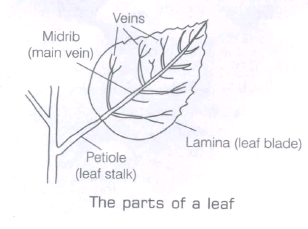
b)
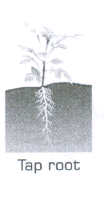
c)
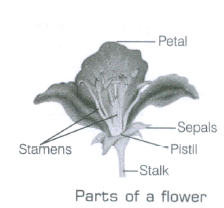
6.
Yes, money plant is an example of a creeper. It is because money plants have thin, long and weak stem which cannot stand upright and spreads on the ground.
7.
From the given characteristics, it can be concluded that the given plant is a tree.
8.
Banyan tree has well developed root system inside the soil. It also develops roots from its branches which grow downwards and reach the ground and grow in soil as well.
9.
Tomato and potato are herbs.
10.
The leaf generally performs the function of photosynthesis.
11.
(a) The process demonstrated in the activity is transpiration.
(b) The activity will show best results on a bright sunny day because transpiration is maximum in sunlight.
(c) After a few hours of setting up the activity, one can observe small droplets of water inside the polythene bag.
(d) A major precaution one must take while performing the activity is that the polythene bag should be cleaned and its mouth should be sealed properly. Also, the twig should be fresh with 10-12 leaves.
12.
(a) Sarita can follow the following steps:
(i) Collect plant twig with flowers.
(ii) Press the8m in papers/magazines.
(iii) Change the paper/magazine every day for 5-6 days.
(iv) When plants are well pressed and dried place them on white plane paper sheet.
(v) Stick the plants to sheet with cello tape.
(vi) Try to identify the plant.
(vii) Take help of teachers/seniors for plant identification.
(b) Yes, plants can also be identified on the basis of the nature of their stem and size.
(c) Inquisitive, scientific attitude and love for nature.
13.
(b)
Photosynthesis
14.
(d)
Veins: transpiration
15.
(a)
thalamus
16.
(a)
nodes
17.
(c)
apical buds
18.
()
shrub, herb
19.
()
root hairs
20.
()
transpiration
21.
()
reproductive
22.
()
chlorophyll
23.
(a)
24.
(a)
25.
(a)
26.
(b)
27.
(a)

6th Standard CBSE Syllabus & Materials
6th Standard CBSE
CBSE 6th Social Science Locating Places on the Earth - New Sample Question Papers Study Material - QB365 Set A
NEW6th Standard CBSE
CBSE 6th Science A Journey Through States of Water - New Sample Question Papers Study Material - QB365 Set A
NEW6th Standard CBSE
CBSE 6th Science Temperature and its Measurement - New Sample Question Papers Study Material - QB365 Set A
NEW6th Standard CBSE
CBSE 6th Science Materials Around Us - New Sample Question Papers Study Material - QB365 Set A



CBSE 6th Standard CBSE Subjects
CBSE Standards




