
 100% FREE ACCESS
6th Standard CBSE Syllabus & Materials
6th Standard CBSE
CBSE 6th Social Science The Value of Work - New Sample Question Papers Study Material - QB365 Set A
NEW6th Standard CBSE
CBSE 6th Social Science Family and Community - New Sample Question Papers Study Material - QB365 Set A
NEW6th Standard CBSE
CBSE 6th Social Science India's Cultural Roots - New Sample Question Papers Study Material - QB365 Set A
NEW6th Standard CBSE
CBSE 6th Social Science India,That is Bharat - New Sample Question Papers Study Material - QB365 Set A
NEW6th Standard CBSE
CBSE 6th Social Science Timeline and sources of history - New Sample Question Papers Study Material - QB365 Set A
NEW6th Standard CBSE
CBSE 6th Social Science Oceans and Continents - New Sample Question Papers Study Material - QB365 Set A

Published on: 05/03/2019
New Questions and Ideas Important Model Questions
Download CBSE Class 6th Standard CBSE Social Science question papers, sample papers, important questions, and previous year solved papers in PDF format. Get free study materials, NCERT solutions, and exam preparation resources for Class 6th Standard CBSE Social Science
Questions + Answers key
Take MCQ Social Science Test
1.
Who was Mahavira?
2.
What is a Sangha?
3.
What was considered permanent in the universe by the thinkers?
4.
Explain the terms atman and brahman.
5.
How did the beggar convince the sages to share their food with him?
6.
The universal soul has been referred to as
Tanha
Karma
Atman
All of these
7.
What did the term bhikkhus mean?
Gainer
Achiever
Beggar
Loser
8.
Who prepared a grammar for Sanskrit?
Buddha
Mahavira
Kisagotami
Panini
9.
Where did Buddha attain his enlightenment?
Gaya
Rajgir
Banaras
Ayodhya
10.
The earliest____________were made of wood, and then of brick.
11.
Who supported Jainism?
12.
This is a cave in Karle. Answer the following questions related to the picture:
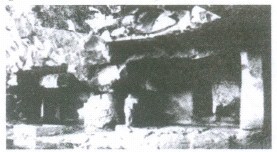
(i) Who lived in these shelters?
(ii) In which season were these caves used the most and why?
(iii)Where is this cave situated in the present day?
13.
Read the following passage and answer the questions given below:
"Around the time when Jainism and Buddhism were becoming popular, the brahmins developed the system of Ashramas. Here, the word' ashrama'
does not mean a place where people live and meditate. It is used instead to refer to a stage of life. Four Ashramas were recognised-brahmacharya,
grihastha, vanaprastha, and sanyasa."
(i) When did the system of Ashramas develop?
(ii) What does the word' Ashrama' mean?
(iii) How many Ashramas were there? Name them.
14.
Who are Jains? State some features of their lives.
15.
Answer the questions based on the picture given below:
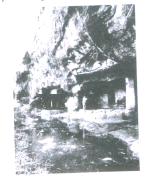

(i) The cave above in the picture are located in which state?
(ii) What was the purpose of these caves?
16.
Discuss the story of the wise beggar in your own words.
17.
Bhikkhus
18.
Name the places to which Jainism spread.
19.
Who was Panini?
20.
What was the original name of Lord Buddha?
1.
Vardhamana Mahavira was the most famous thinker of the Jains, who spread his message around 2500 years ago. He was a Kshatriya prince of the Lichchhavis, a group that was a part of the Vajji Sangha.
At the age of thirty, he left home and went to live in a forest. For twelve years, he led a hard and lonely life, at the end of which he attained enlightenment.
2.
Sangha was an association of those who left their homes. As both Mahavira and Buddha felt that only those who left their homes could gain true knowledge, they arranged for them to stay together in the Sangha.
3.
Many of the thinkers felt that there was something permanent in the universe that would last even after death. They described this as the atman or the individual soul and the brahmin or the universal soul. They believed that ultimately, both the atman and the brahmin were one
4.
Many of the thinkers felt that there was something permanent in the universe that would last even after death. They described this as the atman or the individual soul and the brahman or the universal soul. They believed that ultimately, both the atman and the brahman were one
5.
The beggar convinced the sages that all people are part of the universal world i.e., God, and he is also a part of the universal soul. If the sages refused food to the beggar, they are refusing it to God. So, the sages shared their food with him.
6.
(c)
Atman
7.
(c)
Beggar
8.
(d)
Panini
9.
(a)
Gaya
10.
()
Viharas
11.
()
Jainism was supported mainly by traders.
12.
(i) Buddhist monks and nuns lived and meditated in these shelters.
(ii) These raves were used by the monks and nuns in tile rainy season because during this season it was very difficult to travel.
(iii) This cave is in Karle, which is in present day Maharashtra.
13.
(i) The system of Ashramas developed around the 6th century B.C.This was the time when Jainism and Buddhism became popular.
(ii) The word' Ashrama' means' a stage of life'.
(iii) There were four Ashramas. They were brahmacharya, grihastha, vanaprastha and sanyasa.
14.
The followers of Mahavira are known as Jains.
Some of the features of the Jains are :
(i) They had to lead very simple lives, begging for food.
(ii) They have to be absolutely honest and are especially asked not to steal.
(iii) They have to observe celibacy.
(iv) Men had to give up everything, including their clothes.
15.
(i)Karle, present-day Maharashtra
(ii)Monks and nuns lived and meditated in these caves or shelters.
16.
The story of the wise beggar is taken from the Chhandogya Upanishad. There were two sages named Shaunaka and Abhipratarin, who worshipped the universal soul.
One day when they started to eat, a beggar came and asked for some foods But they refused him to give Then the beggar told them that the universal soul fills the whole world, everybody is a part of it. God is also a universal soul. Thus, by denying food to the beggar, actually they are denying food to the universal so Hearing the beggar's view, the sages realised the truth and shared their food with him.
17.
()
The Prakrit word for beggar
18.
()
Over hundreds of years, Jainism spread to different parts of north India and to Gujarat, Tamil Nadu, and Karnataka.
19.
()
Panini was a great grammarian. He prepared the grammar for Sanskrit. He arranged the vowels and consonants in a special order and then used these to create formulae like those found in algebra.
20.
()
Siddhartha was the original name of Lord Buddha.

6th Standard CBSE Syllabus & Materials
6th Standard CBSE
CBSE 6th Social Science Locating Places on the Earth - New Sample Question Papers Study Material - QB365 Set A
NEW6th Standard CBSE
CBSE 6th Science A Journey Through States of Water - New Sample Question Papers Study Material - QB365 Set A
NEW6th Standard CBSE
CBSE 6th Science Temperature and its Measurement - New Sample Question Papers Study Material - QB365 Set A
NEW6th Standard CBSE
CBSE 6th Science Materials Around Us - New Sample Question Papers Study Material - QB365 Set A



CBSE 6th Standard CBSE Subjects
CBSE Standards




