
 100% FREE ACCESS
6th Standard CBSE Syllabus & Materials
6th Standard CBSE
CBSE 6th Social Science The Value of Work - New Sample Question Papers Study Material - QB365 Set A
NEW6th Standard CBSE
CBSE 6th Social Science Family and Community - New Sample Question Papers Study Material - QB365 Set A
NEW6th Standard CBSE
CBSE 6th Social Science India's Cultural Roots - New Sample Question Papers Study Material - QB365 Set A
NEW6th Standard CBSE
CBSE 6th Social Science India,That is Bharat - New Sample Question Papers Study Material - QB365 Set A
NEW6th Standard CBSE
CBSE 6th Social Science Timeline and sources of history - New Sample Question Papers Study Material - QB365 Set A
NEW6th Standard CBSE
CBSE 6th Social Science Oceans and Continents - New Sample Question Papers Study Material - QB365 Set A

Published on: 31/07/2018
From the chapter Motion and Measurement, some of the important questions are covered in this question paper.
Students, subscribe and get plenty of question paper with answer key. For subscription please click here.
Download CBSE Class 6th Standard CBSE Science question papers, sample papers, important questions, and previous year solved papers in PDF format. Get free study materials, NCERT solutions, and exam preparation resources for Class 6th Standard CBSE Science
Questions + Answers key
Take MCQ Science Test
1.
Explain how will you decide whether an object is in motion or at rest.
2.
Describe in detail that how do the thickness of a thin wire can be determined.
3.
We need standard unit of measurements for a quantity. Explain why.
4.
Can an object be in motion and rest simultaneously for different observers? Give an example and consequence.
5.
The distance between Radha's home and her school is 3250 m. Express this distance into km.
6.
To measure chest, what type of measuring device would you use?
7.
Mention some modes of transportation of ancient times.
8.
State how many kilometres are there in 1 metre.
9.
Mention the two contributions in 20th century towards transportation.
10.
Give the name of the motion possessed by the vehicles on a straight road.
11.
Different modes of___________________ are used to go from one place to another.
12.
The metric system for measurement was created by the_________________
13.
The SI unit of length is ______________________
14.
Motion of a wheel of a bicycle is ________________
15.
One metre is _________cm.
16.
The object which does not change its position time is said to be at rest.
17.
A cloth merchant uses a meter rod to measure the length of the cloth.
18.
A flying bird in the sky is at rest.
19.
An elastic tape cannot give a true measurement.
20.
Motion of earth about its own axis is rotatory.
21.
A ball rolling on the ground represents
rectilinear motion
rotational motion
Both (a) and (b)
None of the above
22.
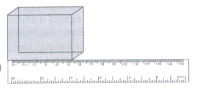
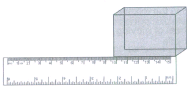
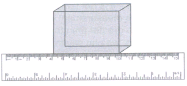
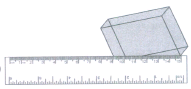
Which of the following figure shows the correct placement of a block along a scale for measuring its length?
23.
Paheli moves on a straight road from point A to point G. She takes 20 min to cover a certain distance AB and 30 min to cover the rest of distance BG. She then turns back and takes 30 min to cover the distance GB and 20 min to cover the rest of the distance to her starting point. She makes 5 rounds on the road of the same way. Paheli concludes that her motion is
only rectilinear motion
only periodic motion
rectilinear and periodic motion
neither rectilinear nor periodic
24.
Which of the following does not express a time interval?
A day
A second
A school period
Time of the first bell in the school
25.
The distance between Delhi and Mumbai is usually expressed in the unit of
decametre
metre
centimetre
kilometre
26.
It is not accurate to measure a length with elastic tapes. Explain why.
27.
While travelling in a train, it appears that the trees near the track are moving whereas co-passengers appear to be stationary. Explain the reason.
1.
An object is said to be at rest when it does not change its position with time.
If an object changes its position with respect to time, it is said to be in motion.
2.
First of all, take a round pencil and try to wrap the given wire round the pencil making.
25 turns forming a coil. Now, measure the length of the wire that turns formed coil. Divide the total length of the coil by number of turns. This is the thickness of the Wire.
3.
We need standard unit of measurements because the unit like handspan, foot, cubit differ from person to person or even indifferent countries. So, for a uniform measurement, standard unit of measurement is really required.
4.
Yes, a person driving a car is in rest with respect to other person in car but in motion with respect to a person standing roadside. State of motion and rest depends upon observer or reference point.
5.
Given, distance between Radha's home
and her school = 3250 m
We know that
1 km = 1000m
\(\therefore 1m ={1\over 1000}km\)
Now, the distance between Radha's home and her school in km
\( = 3250 \times {1\over 1000}={3250\over 1000}\)
= 3.25 km
6.
We will use the measuring tape to measure chest.
7.
In ancient times, there were some modes of transportation like bullock cart, horse cart, camel cart, etc.
8.
There are\(1\over 1000\) kilometre in 1 metre
9.
The two contributions in 20th century towards transportation is electric trains and supersonic aeroplanes.
10.
Rectilinear motion is the motion possessed by the vehicles on a straight road.
11.
()
transport
12.
()
French
13.
()
metre
14.
()
circular motion
15.
()
100
16.
(a)
17.
(a)
18.
(b)
19.
(a)
20.
(a)
21.
(c)
Both (a) and (b)
22.
(c)
23.
(c)
rectilinear and periodic motion
24.
(d)
Time of the first bell in the school
25.
(d)
kilometre
26.
Elastic tapes are stretchable due to which their length can be increased during the measurement if it is not handle with care. Therefore, the measurement done by elastic tapes may be greater than the actual length of the object. So, we can say that elastic tapes are not accurate to measure a length.
27.
While travelling, trees near the track same to be moving back (i.e. opposite to the direction of motion of a train) because there is a relative motion between outside trees and moving train. While in case of co-passengers, the relative motion between we and co-passengers, is zero, so it appears to be stationary.

6th Standard CBSE Syllabus & Materials
6th Standard CBSE
CBSE 6th Social Science Locating Places on the Earth - New Sample Question Papers Study Material - QB365 Set A
NEW6th Standard CBSE
CBSE 6th Science A Journey Through States of Water - New Sample Question Papers Study Material - QB365 Set A
NEW6th Standard CBSE
CBSE 6th Science Temperature and its Measurement - New Sample Question Papers Study Material - QB365 Set A
NEW6th Standard CBSE
CBSE 6th Science Materials Around Us - New Sample Question Papers Study Material - QB365 Set A



CBSE 6th Standard CBSE Subjects
CBSE Standards




