
 100% FREE ACCESS
6th Standard CBSE Syllabus & Materials
6th Standard CBSE
CBSE 6th Social Science The Value of Work - New Sample Question Papers Study Material - QB365 Set A
NEW6th Standard CBSE
CBSE 6th Social Science Family and Community - New Sample Question Papers Study Material - QB365 Set A
NEW6th Standard CBSE
CBSE 6th Social Science India's Cultural Roots - New Sample Question Papers Study Material - QB365 Set A
NEW6th Standard CBSE
CBSE 6th Social Science India,That is Bharat - New Sample Question Papers Study Material - QB365 Set A
NEW6th Standard CBSE
CBSE 6th Social Science Timeline and sources of history - New Sample Question Papers Study Material - QB365 Set A
NEW6th Standard CBSE
CBSE 6th Social Science Oceans and Continents - New Sample Question Papers Study Material - QB365 Set A

Published on: 02/03/2019
Revision Test On Geography
Download CBSE Class 6th Standard CBSE Social Science question papers, sample papers, important questions, and previous year solved papers in PDF format. Get free study materials, NCERT solutions, and exam preparation resources for Class 6th Standard CBSE Social Science
Questions + Answers key
Take MCQ Social Science Test
1.
What are the drawbacks of cutting trees?
2.
What type of vegetation are found in the Himalayas?
3.
Why do climbers experience problems in breathing at height?
4.
Why is Venus called the Morning and the Evening Star?
5.
Many girls are named after rivers e.g. Yamuna, Mandakini and Kaveri
(i) Do you know anyone in your locality who is named after a river? Ask your parents and others and make a list of such names,
(ii) Could you also find other names related to water e.g. Shabnam ?
6.
Name some of the depositional features
7.
Mention some of the disadvantages of magnetic compass.
8.
Why is the earth called the 'blue planet'?
9.
What is an equinox?
10.
During a vacation, visit a planetarium and describe your experience in the class.
11.
Latitudes are measured in:
Centimetres
Inches
Degrees
Grams
12.
Westerly Loo is hot and dry wind that blows in
West Bengal
Punjab
Rajasthan
TamilNadu
13.
Canberra is the capital of :
Canada
Australia
U.S.A.
Russia
14.
The mountains differ from plateaus in
Base
Texture
Extension
Elevation
15.
Which gas is responsible for global warming?
CO2
O2
N2
H2
16.
A plan is a drawing with detailed information of
geographical features
a small area
geographical location
a large area
17.
Wildlife week is observed every year in the first week of _____________
November
August
September
October
18.
On 22nd December, which of the following receives direct rays of the sun?
Tropic of Cancer
Tropic of Capricorn
North Pole
South Pole
19.
Which of the following are shown on the globe in their correct size?
Continents
Oceans
Countries
All of these
20.
How much time does moon take to complete a round of the earth?
27 days
35 days
30 days
45 days
21.
Which is the nearest star of the Earth?
22.
Why do all planets have different time periods to complete a revolution?
23.
Answer the following question based on given picture?
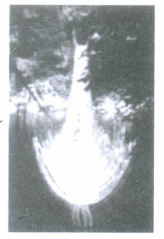
Above picture is located in which state of India and what does it depict?
24.
In the following diagram, which arrow indicates the East North direction.
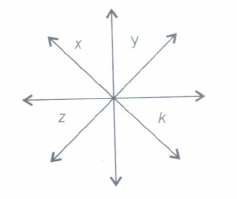
25.
Draw a diagram of the globe showing the earth's axis, the equator, tropics of Cancer and Capricorn,
Arctic circle and Antarctic circle and answer the question that follow.
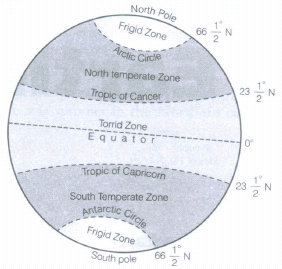
(i) What is value of the Tropic of Cancer?
(ii) Which of the following zones is situated between 66o30 's and poles?
26.
Write a note on galaxy and universe?
27.
Mangrove forests
28.
Mars
29.
Tropical Rain Forests occur in the areas which receive_______rainfall
30.
When do we observe a leap year?
31.
The world's largest hot desert ____________ lies in the _____________ content.
32.
Siberian Cranes arrive in ______________ and stay till early ________________
33.
We consider a year consisting of __________ days.
34.
A map is a representation of any of the Earth on flat surface.
35.
The smaller part of the landmass lies in the Northern hemisphere.
1.
The drawbacks of cutting trees are as follows:
(i) Due to cutting of trees, several species of wildlife are declining rapidly.
(ii) It is also leading to increasing natural disasters such as floods.
(iii) It will lead to increase in global warming.
2.
A wide range of species is found in the mountains according to the variation in height. With the increase in height, temperature falls. At a height between 1500 meters and 2500 meters, most of the trees are conical in shape. These trees are called coniferous trees. Chir, pine and deodar are important trees of these forests. At the higher altitudes, temperate grasslands give way to Alpine vegetation.
3.
The density of atmosphere varies with height. It is maximum at the sea level and decreases rapidly as we go up. Climbers experience problems in breathing at height due to decrease in the density of air.
4.
Venus is the first celestial body to become visible in the sky at evening and is the last one to disappear from the sky at sunrise. That is why, it is called the Morning and the Evening star.
5.
(i) Yes, two girls, Krishna and Ganga live in my locality who are named after a river.
(ii) The list of such names related to water are Ravi, Jhelum and Godavari.
6.
Some of the depositional features are: moraines, levees, flood-plains and sand dunes.
7.
The compass is very stable in areas close to the Equator, which is far from "Magnetic North". At some point close to the Magnetic Pole, the compass will not indicate any particular direction, but will begin to drift in a non-direction indicating manner. Also, the needle starts to point up or down when getting closer to the poles, due to the so called magnetic inclination. Cheap compass with bad bearings may get stuck due to this, thereby indicating a wrong direction.
8.
The earth is called 'blue planet' because of excess of watery surface on it which is around 71 per cent of earth's surface.
9.
On 21st March and 23rd September, the whole Earth experiences equal days and equal nights because neither of the poles is tilted towards the sun and the equator receives direct sun rays, this is called an equinox.
10.
I visited Nehru planetarium at Delhi during vacation. I went there with my parents and elder brother. My experience of planetarium was fantastic and enjoying. I have learnt a lot after visiting there. I got to know about the movement of planet and satellites. I also came to know about the stars and constellations. I learnt about thefonctioning offollowing things by visiting the planetarium:
(i) Solar system: The live show about the structure and functioning of solar system revealed the arrangement of planets, satellites, asteroids and meteoroids. I also came to know about how the entire solar system is moving because of gravitation. It showed 'how sun emits light and heat'.
(ii) Structure of planets: The programme showed structure of each planet's surrounding and surface with 'how was it made'.
(iii) Structure of satellites: The show also revealed the structure and movement of satellites like moon and artificial satellites ete. The functioning of artificial satellites was shown.
(iv) Eclipse: Half an hour programme explained the cause that creates the condition of both solar and lunar eclipse.
(v) Stars: The short film
11.
(c)
Degrees
12.
(c)
Rajasthan
13.
(b)
Australia
14.
(d)
Elevation
15.
(a)
CO2
16.
17.
(d)
October
18.
(b)
Tropic of Capricorn
19.
(d)
All of these
20.
(a)
27 days
21.
()
The sun is the nearest star of the Earth.
22.
(i) In our Solar System, the time taken by each planet to complete a revolution around the Sun varies greatly.
(ii) Inner planets have much shorter orbits in distance and take lesser time than outer planets.
(iii) For example, Mercury, the closest planet to the Sun completes its orbital revolution around the Sun in 88 days, while the Earth takes 1 year to complete its revolution.
(iv) In addition, outer planets have slower average orbital speeds than inner planets.
23.
Above picture depicts Rope Bridge and it is located in Arunachal Pradesh.
24.
x
25.
(i) 23°30' N is value of the Tropic of Cancer.
(ii) Frigid zone is situated between 66030' and poles.
26.
Galaxy A galaxy is a huge system of billions of stars and clouds of dust and gases. There are millions of galaxies in the universe. These galaxies altogether make the universe.
Akash Ganga or Milky Way is the example of galaxy. It appears as a river of light flowing in the sky, .
Universe Universe is the combination of millions of galaxies. The size of universe is very difficult to imagine and scientists still are working on it to know more about the universe.
27.
()
Sundari
28.
()
Inner planet
29.
()
heavy
30.
()
We observe a leap year after every four years.
31.
()
Sahara, African
32.
()
December, March
33.
()
365
34.
(a)
35.
(b)

6th Standard CBSE Syllabus & Materials
6th Standard CBSE
CBSE 6th Social Science Locating Places on the Earth - New Sample Question Papers Study Material - QB365 Set A
NEW6th Standard CBSE
CBSE 6th Science A Journey Through States of Water - New Sample Question Papers Study Material - QB365 Set A
NEW6th Standard CBSE
CBSE 6th Science Temperature and its Measurement - New Sample Question Papers Study Material - QB365 Set A
NEW6th Standard CBSE
CBSE 6th Science Materials Around Us - New Sample Question Papers Study Material - QB365 Set A



CBSE 6th Standard CBSE Subjects
CBSE Standards




