
6th Standard Syllabus & Materials
6th Standard
TN 6th Tamil பருவம் 1 - இயல் 1 - மொழி -தமிழ்த்தேன் - இன்பத்தமிழ் Sample Question Papers Study Material - QB365 Set A
NEW6th Standard
TN 6th English T1 - Supplementary - The Apple Tree and The Farmer Sample Question Papers Study Material - QB365 Set A
NEW6th Standard
TN 6th English T1 - Prose - When The Trees Walked Sample Question Papers Study Material - QB365 Set A
NEW6th Standard
TN 6th Social Science T3 - CIV - Road Safety Sample Question Papers Study Material - QB365 Set A
NEW6th Standard
TN 6th Social Science T3 - CIV - Local Bodies - Rural and Urban Sample Question Papers Study Material - QB365 Set A
NEW6th Standard
TN 6th Social Science T3 - CIV - Democracy Sample Question Papers Study Material - QB365 Set A

Published on: 05/09/2026
Download Tamil Nadu 6th Standard Science question papers, model tests, one-mark questions, important questions, and public exam papers in PDF format. Free study materials and answer keys for TN State Board students.
Questions + Answers key
Take MCQ Science Test
1.
Calcium is an example for
carbohydrate
fat
Protein
minerals
2.
Lizards breathe through their
Skin
Gills
Lungs
Trachea
3.
Organs of absorption is__________
Root
Stem
Leaf
Flower
4.
Lighter impurities like dust when mixed with rice or pulses can be removed by __________
filtration
sedimentation
decantation
winnowing
5.
The correct relation among the following is
Speed = distance × time
Speed = distance / time
Speed = time / distance
Speed = 1 / (distance × time)
6.
The height of a tree can be measured by
Metre scale
plastic ruler
Metre rod
measuring tape
7.
Vitamin D deficiency causes ___________.
8.
Some living things are made of a single cell, called_______ organism.
9.
Primary organs of photosynthesis are _____________.
10.
The method employed to separate clay particles from water is______
11.
Motion of a potter’s wheel is an example for__________ motion.
12.
500 gm = ________ kilogram.
13.
What are the body parts of a snake?
14.
Give the main difference between a pure substance and an impure substance.
15.
Define - Sedimentation
16.
Relate the terms leaves and photosynthesis.
17.
Define balanced diet.
18.
Define force.
19.
What is the SI Unit of mass?
20.
Name any one instrument used for measuring mass.
21.
Mention the features that help a bird to fly is the air?
22.
Differentiate between Unicellular and Multicellular organisms.
23.
24.
A rubber ball changes its shape on pressing. Can it be called a solid?
25.
Compare the taproot and fibrous root systems.
26.
The distance between two places is 43.65 km. Convert it into metre and cm.
27.
Define measurement.
28.
Tabulate the vitamins and their corresponding deficiency diseases.
29.
Describe the various features which help Camel dwell well in the desert.
30.
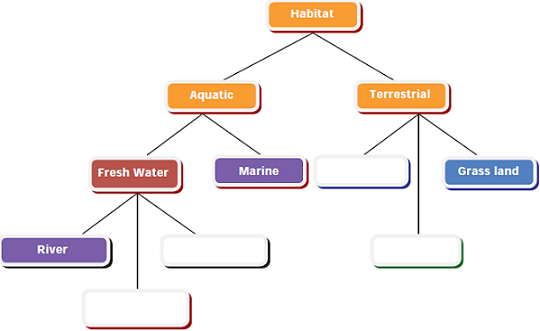
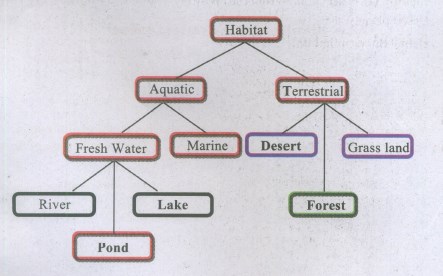
Complete the map by filling the blanks
31.
Make a list of the functions of root and stem.
32.
Explain two methods that you can use to measure the length of a curved line.
33.
Fibrous Root
34.
Photosynthesis
35.
Stem
36.
Desert
37.
Mountain
38.
The force which acts on an object without physical contact._______
1.
(d)
minerals
2.
(c)
Lungs
3.
(a)
Root
4.
(d)
winnowing
5.
(b)
Speed = distance / time
6.
(d)
measuring tape
7.
()
Rickets
8.
()
unicellular
9.
()
leaves
10.
()
fittratien
11.
()
Rotatory
12.
()
0.500
13.
(i) A snakes head contains the eyes, nostrils, mouth brain and a special sensory structure.
(ii) Snakes are entirely covered with scales.
14.
| PURE SUBSTANCE | IMPURE SUBSTANCE |
| A pure substance is made up of only one kind of particulars. | An impure substance contains more than one kind of particulars. |
| The components are mixed chemically in a fixed ratio. | The components are mixed physically in any ratio. |
15.
The settling down of heavier component of a mixture when allowed to remain undisturbed for some time is called sedimentation.
16.
The green leaves prepare food by the.process of photosynthesis.
17.
A balanced diet is one which contains adequate amount of al the necessary nutrienrs required for healthy growth and activity.
18.
Force is push or pull by an animate or inanimate agency.
19.
Kilogram.
20.
Beam balance (or) Electronic balance
21.
i) Birds have streamlined body covered with feathers. This body shape provides minimum resistance to air.
ii) They have a pair of wings to fly in the air.
iii) They have hollow and light bones.
22.
| S.No. | Unicellular Organisms | Multicellular Organisms |
| 1 | They are made up of single cell. | They are organisms are made up of many cells. |
| 2 | The single cell of the organism can perform all the functions of life. |
Division of labour exists among cells. Different cells are specialized to peform different functions. |
| 3 | These organisms are generally very small (microscopic) in size. |
They are mostly large in size |
| 4 | They lack tissues, organs and organ systems. |
They are composed of tissues, organs and organ system |
| 5. | Growth occurs by an increase in the size of the cell. eg. Amoeba, Paramecium and Euglena. |
Growth occurs by an increase in the number of cells by cell division. eg. Earthworms, Fish, Frogs, Lizard and human beings. |
23.
24.
(i) Yes, a rubber ball can be called a solid because it doesn't flow away like liquids or gases.
(ii) But the rigidity of the rubber ball is less than the external force. So it changes its shape.
25.
| TAP ROOT SYSTEM | FIBROUS ROOT SYSTEM |
|---|---|
| (i) It consists of a single root called tap root and some smaller lateral roots arise from the tap root. | (i) It consists of a cluster of roots arising from the base of the stem. |
| (ii) They are seen in dicotyledonous plants. | (ii) It is generally seen in monocotyledonous plants. |
| (iii) Ex: Bean, Mango | (iii) Ex: Grass, paddy, maize |
26.
We know, 1km = 1000 m.
\(\therefore\) 43.65 km = 43.65 x 1000 m = 43650 m
1m = 100cm
43650m = 100 x 43650
= 43,65,000 cm
43.65 km = 43,650 m
= 43,65,000 cm.
27.
The comparison of an unknown quantity with some known quantity is known as measurement.
28.
| S.no | Property | deficiency disease |
| 1 | vitamin A | Night blindness |
| 2 | vitamin B | Beri beri |
| 3 | vitamin C | Scurvy |
| 4 | vitamin D | Rickets |
| 5 | vitamin E | Nervous weakness, dimming of eyesight |
| 6 | vitamin K | Weakness of the bones, teeth etc. |
29.
(1) The camel has long legs which help it to keep its body away from the hot sand in the desert.
(2) It can store large amount of water in its body.
(3) it loses very little water from its body through excretion.
(4) A camel's hump has fat stored in it. It ups the stored fat when required.
(5) It has large and flat padded feet to walk easily on soft sand.
(6) It has long eye lashes and hairs to protect its eyes and ears from the blowing dust.
(7) It can keep its nostrils closed to avoid dust.
30.
31.
FUNCTIONS OF THE ROOT:
i) The root fixes the plant to the soil.
ii) Absorbs water and minerals from the soil.
iii) Stores food in some plants like Carrot and beetroot
FUNCTIONS OF THE STEM:
i) The stem supports the branches, leaves, flowers and fruits.
ii) Transports Water and minerals from roots to upper aerial plant parts.
iii) Transports the prepared food from leaves to other parts through stem.
iv) Stores food as in the case of sugarcane
32.
Method 1:
(i) Place a string along the curved line, Make sure that the stringcovers every bit of the curved line.
(ii) Mark the points where the curved line begins and ends on the string.
(iii) Now, stretch the string along the length of a meter scale and measure the distance between the two markings of the string.
(iv) This will give us the length of a curved line.
Method 2:
(i) Draw a curved line AB on a piece of paper.
(ii) Separate the legs of the divider by 0.5 cm or 1 cm using a ruler.
(iii) Place it on the curved line starting from one end. Mark the position of the other end. Move it along the line again and again cutting the line into number of segments of equal lengths. The remaining parts of the line can be measured using a scale.
(iv) Count the number of segments.
(v) Therefore, the length of the line = (number of segments x length of each segment) + length of the left over part.
33.
Monocot
34.
Leaves
35.
Branches
36.
Dry place
37.
Himalayas
38.
Non contact force

6th Standard Syllabus & Materials
6th Standard
TN 6th Social Science T3 - GEO - Understanding Disaster Sample Question Papers Study Material - QB365 Set A
NEW6th Standard
TN 6th Social Science T3 - GEO - Globe Sample Question Papers Study Material - QB365 Set A
NEW6th Standard
TN 6th Social Science T3 - GEO - Asia and Europe Sample Question Papers Study Material - QB365 Set A
NEW6th Standard
TN 6th Social Science T3 - HIS - South Indian Kingdoms Sample Question Papers Study Material - QB365 Set A



Tamilnadu Stateboard 6th Standard Subjects
Tamilnadu Stateboard Standards



