
 100% FREE ACCESS
6th Standard CBSE Syllabus & Materials
6th Standard CBSE
CBSE 6th Social Science The Value of Work - New Sample Question Papers Study Material - QB365 Set A
NEW6th Standard CBSE
CBSE 6th Social Science Family and Community - New Sample Question Papers Study Material - QB365 Set A
NEW6th Standard CBSE
CBSE 6th Social Science India's Cultural Roots - New Sample Question Papers Study Material - QB365 Set A
NEW6th Standard CBSE
CBSE 6th Social Science India,That is Bharat - New Sample Question Papers Study Material - QB365 Set A
NEW6th Standard CBSE
CBSE 6th Social Science Timeline and sources of history - New Sample Question Papers Study Material - QB365 Set A
NEW6th Standard CBSE
CBSE 6th Social Science Oceans and Continents - New Sample Question Papers Study Material - QB365 Set A

Published on: 30/07/2018
From the chapter Understanding Elementary Shapes, some of the important questions are covered in this question paper.
Students, subscribe and get plenty of question paper with answer key. For subscription please click here.
Download CBSE Class 6th Standard CBSE Mathematics question papers, sample papers, important questions, and previous year solved papers in PDF format. Get free study materials, NCERT solutions, and exam preparation resources for Class 6th Standard CBSE Mathematics
Questions + Answers key
Take MCQ Mathematics Test
1.
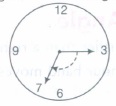
Write name of angle in the following figure.
2.
Which direction will you face if you start facing, South and makes \(\frac { 1 }{ 2 } \) revolution anti-clockwise?
3.
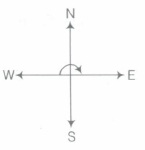
What part of a revolution have you turned through if you stand facing.
West and turn clockwise to face East?
4.
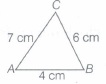
Draw a ΔABC, where AB = 4 cm, BC = 6 cm, CA = 7 cm.
5.
Compare the given line segments

6.
A regular polygon has all its sides and angles equal.
7.
The number of sides of a polygon is always five.
8.
Cone is also a polygon.
9.
Sum of interior angles of scalene triangle and equilateral triangle are different.
10.
Comparisian of line segment by observation is not better than the comparision of line segment by ruler and divider.
11.
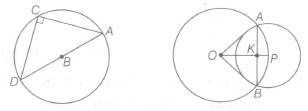
Using the information given, name the right angles in each part of figure.
(a) AC 丄 BD
(b) AE 丄 CE
(c) AC 丄 CD
(d) OP 丄 AB
12.
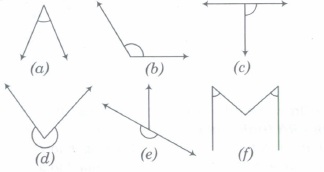
Classify each one of the following angles as right, straight, acute, obtuse or refles.
13.
Reflex angle is always _______ 180° and ______ 360°.
14.
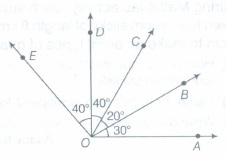
\(\angle AOE\) is a/an _____ angle.
15.
When the sum of the measures of two angles is that of a right angle, then each one of them is ______.
16.
Sum of two acute angles never be ______ angle.
17.
An angle larger than a right angle but less than a straight angle is an ______ angle.
18.
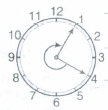
Write the revolution for each figure.
19.
State the type of angle formed between the following direction clockwise.
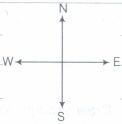
North and South.
20.
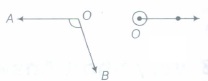
State the type of angle given below.
21.
Using the information given, name the right angles in each part of figure.
AC 丄 BD 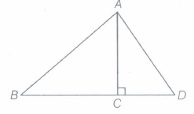
22.
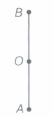
Which points in figure, appear to be mid-point of the line segments? When you locate a mid-point, name the two equal line segments formed by it.
23.
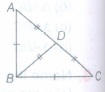
In figure, AB = BC and AD = BD = DC. Then, the number of isosceles triangles in the figure is
1
2
3
4
24.
If the sum of two angles is greater than 180°, then which of the following is not possible for the two angles?
One obtuse angle and one acute angle
One reflex angle and one acute angle
Two obtuse angles
Two right angles
25.
Where will the hour hand of a clock stop, if it starts at 7 and makes \(\frac { 3 }{ 4 } \) revolution clockwise?
2
3
4
5
26.
Where will the hand of a clock stop, if it start at 5 and makes \(\frac { 1 }{ 4 } \) of a revolution clockwise?
7
8
9
10
27.
If a bicycle wheel has 48 spokes, then the angle between a pair of two consecutive spokes is
\(\left( 5\frac { 1 }{ 2 } \right) ^{ 0 }\).
\(\left( 7\frac { 1 }{ 2 } \right) ^{ 0 }\).
\(\left( \frac { 2 }{ 11 } \right) ^{ 0 }\).
\(\left( \frac { 2 }{ 15 } \right) ^{ 0 }\).
1.
Obtuse angle
2.
North
3.
Here, the turn from West to North is one right angle, from North to East is one right angle. So, the turn from West to East is two right angles.
Hence, \(\frac { 1 }{ 2 } \) of a revolution is required to turn from West to East.
4.
5.
\(\overline{ AB } <\overline { PQ } \).
6.
(a)
7.
(b)
8.
(b)
9.
(b)
10.
(a)
11.
(a) Since, AC 丄 BD, it means \(\angle E = 90°\)
∴ \(\angle AEB, \angle BEC, \angle CED\) and \(\angle AED\) are right angles.
(b) Since, AE 丄 CE, it means \(\angle E = 90°\)
∴ \(\angle AEC\) is a right angle.
(c) Since, AC 丄 CD, it means \(\angle C= 90°\)
∴ \(\angle ACD\) is a right angle.
(d) Since, OP 丄 AB, it means \(\angle K = 90°\)
\(\therefore\ \ \ \ \ \angle AKO, \angle OKB, \angle BKP\) and \(\angle AKP\) are right angles.
12.
We know that,
An angle which is smaller than a right angle is called an acute angle.
An angle with measure 90° is called a right angle.
An angle which is greater than a right angle but smaller than a straight angle is called an obtuse angle.
An angle with measure 180° is called a straight angle.
An angle which is greater than a straight angle but smaller than a complete angle is called a reflex angle.
Now, from these results
(a) Given angle is smaller than a right angle, so it is an acute angle.
(b) Given angle is more than a right angle, so it is an obtuse angle.
(c) Given angle is a right angle.
(d) Given angle is more than a straight angle, so it is a reflex angle.
(e) Given angle is a straight angle.
(f) Both angles are smaller than a right angle, so both these are acute angles.
13.
()
greater than, less than
14.
()
obtuse
15.
()
acute angle
16.
()
Reflex or straight angle
17.
()
Obtuse
18.
\(\frac { 3 }{ 4 } \) revolution
19.
180°(straight angle)
20.
In the given figures, we have,
\(\angle AOB\) is an obtuse angle.
21.
\(\angle ACD = \angle ACB = 90°\)
22.
In the figure, O is the mid-point of \(\overline { AB } \) and \(\overline { OA } \)=\(\overline { OB } .\)
23.
(c)
3
24.
(d)
Two right angles
25.
(c)
4
26.
(b)
8
27.
(b)
\(\left( 7\frac { 1 }{ 2 } \right) ^{ 0 }\).

6th Standard CBSE Syllabus & Materials
6th Standard CBSE
CBSE 6th Social Science Locating Places on the Earth - New Sample Question Papers Study Material - QB365 Set A
NEW6th Standard CBSE
CBSE 6th Science A Journey Through States of Water - New Sample Question Papers Study Material - QB365 Set A
NEW6th Standard CBSE
CBSE 6th Science Temperature and its Measurement - New Sample Question Papers Study Material - QB365 Set A
NEW6th Standard CBSE
CBSE 6th Science Materials Around Us - New Sample Question Papers Study Material - QB365 Set A



CBSE 6th Standard CBSE Subjects
CBSE Standards




