
 100% FREE ACCESS
10th Standard CBSE Syllabus & Materials
10th Standard CBSE
CBSE 10th Social Science ECO - Globalisation and the Indian Economy - New Model Questions Papers Study Material - QB365 Set A
NEW10th Standard CBSE
CBSE 10th Social Science ECO - Money and Credit - New Model Questions Papers Study Material - QB365 Set A
NEW10th Standard CBSE
CBSE 10th Social Science ECO - Sectors of the Indian Economy - New Model Questions Papers Study Material - QB365 Set A
NEW10th Standard CBSE
CBSE 10th Social Science ECO - Development - New Model Questions Papers Study Material - QB365 Set A
NEW10th Standard CBSE
CBSE 10th Social Science PS - Outcomes of Democracy - New Model Questions Papers Study Material - QB365 Set A
NEW10th Standard CBSE
CBSE 10th Social Science PS - Gender, Religion and Caste - New Model Questions Papers Study Material - QB365 Set A

Published on: 11/10/2019
Polynomials
Download CBSE Class 10th Standard CBSE Maths question papers, sample papers, important questions, and previous year solved papers in PDF format. Get free study materials, NCERT solutions, and exam preparation resources for Class 10th Standard CBSE Maths
Questions + Answers key
Take MCQ Maths Test
1.
If \(\alpha\) and \(\beta\) are zeroes of the polynomial p(x) = 6x2 - 5x + k such that \(\alpha-\beta=\frac{1}{6}\), find the value of k.
2.
If \(\alpha\) and \(\beta\) are the zeroes of polynomial p(x) = 3x2 + 2x + 1, find the polynomial whose zeroes are \(\frac { 1-\alpha }{ 1+\alpha } \) and \(\frac { 1-\beta}{ 1+\beta} \)
3.
Polynomial x4 + 7x3 + 7x2 + px + q is exactly divisible by x2 + 7x + 12, then find the value of p and q.
4.
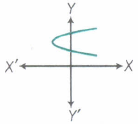
The graph of y=p(x) is given, where p(x) is a polynomial. Find the number of zeros of p(x).
5.
If polynomial 6x4+8x3+17x2+21x+7 is divided by another polynomial 3x2+4x+1, then what will be the quotient and remainder?
6.
Find other zeroes of the polynomial 2x4-3x3-5x2+9x-3, if it is given that two of its zeroes are \(-\sqrt { 3 } \) and \(\sqrt { 3 } \) , respectively
7.
A polynomial g(x) of degree zero is added to the polynomial 2x3+5x2-14x+10, so that it becomes exactly divisible by 2x-3. Find g(x).
8.
Obtain all other zeroes of the polynomial x4+7x3+7x2-35x-60, if two of its zeroes are -3 and -4.
9.
If α and β are zeroes of the quadratic polynomial p(x)=6x2+x-1, then find the value of \(\frac { \alpha }{ \beta } +\frac { \alpha }{ \alpha } +2\left( \frac { 1 }{ \alpha } +\frac { 1 }{ \beta } \right) +3\alpha \beta \)
10.
If 1 and -1 are zeroes of polynomial Lx4+Mx3+Nx2+Rx+P, then show that L+N+P=M+R.
11.
Find the quadratic polynomial, whose sum of zeroes is 8 and their products is 12. Then, find the zeroes of the polynomial.
12.
Find the zeroes of quadratic polynomial y2+92y+1920.
13.
Find the degree of the following polynomial
(i) \(7y^{ 5 }+6y^{ 2 }-1\)
(ii) \(\frac { y^{ 4 }+3y^{ 2 }+y }{ y } \)
14.
If α and β are the zeroes of the polynomial 2y2+7y+5, then find the value of α+β+αβ.
15.
If 2 is a zero of polynomial f(x)=ax2-3(a-1)x-1, then find the value of a.
1.
According to the question, \(\alpha\) and \(\beta\) are zeroes of the polynomial p(x) = 6x2 - 5x + k
So, Sum of zeroes = \(\alpha +\beta =-\left( \frac { -5 }{ 6 } \right) =\frac { 5 }{ 6 } \) ... (i)
Product of zeroes = \(\alpha \beta =\frac { k }{ 6 } \)
\(\alpha-\beta=\frac{1}{6}\) (Given) ...... (ii)
Adding equations (i) and (ii), we get
\(2\alpha=2\)
\(\Rightarrow \quad \alpha=\frac{1}{2}\)
Putting the value of \(\alpha\) in equation (ii), we get
\(\frac{1}{2}-\beta=\frac{1}{6}\)
\(\Rightarrow \quad \frac{1}{2}-\frac{1}{6}=\beta\)
\(\Rightarrow \quad \frac{2}{6}=\frac{1}{3}=\beta\)
\(\therefore \quad \alpha\beta=\frac{k}{6}=\frac{1}{2}\times\frac{1}{3}\)
\(\therefore \quad k=1\)
2.
Since \(\alpha\) and \(\beta\) are the zeroes of polynomial p(x) = 3x2 + 2x + 1
Hence, \(\alpha+\beta=-\frac{2}{3}\)
and \(\alpha\beta=\frac{1}{3}\)
Now for the new polynomial,
Sum of the zeroes = \(\frac { 1-\alpha }{ 1+\alpha } +\frac { 1-\beta}{ 1+\beta} \)
\(=\frac { \left( 1-\alpha +\beta -\alpha \beta \right) +\left( 1+\alpha -\beta -\alpha \beta \right) }{ \left( 1+\alpha \right) \left( 1+\beta \right) } \)
\(=\frac { 2-2\alpha \beta }{ \left( 1+\alpha +\beta +\alpha \beta \right) } =\frac { 2-\frac { 2 }{ 3 } }{ 1-\frac { 2 }{ 3 } +\frac { 1 }{ 3 } } \)
\(\therefore\) Sum of zeroes \(=\frac { { 4 }/{ 3 } }{ { 2 }/{ 3 } } =2\)
Product of zeroes \(=\left[ \frac { 1-\alpha }{ 1+\alpha } \right] \left[ \frac { 1-\beta }{ 1+\beta } \right] \)
\(=\frac { \left( 1-\alpha \right) \left( 1-\beta \right) }{ \left( 1+\alpha \right) \left( 1+\beta \right) } \)
\(=\frac { 1-\alpha -\beta +\alpha \beta }{ 1+\alpha +\beta +\alpha \beta } =\frac { 1-\left( \alpha +\beta \right) +\alpha \beta }{ 1+\left( \alpha +\beta \right) +\alpha \beta } \)
\(\therefore\) Product of zeroes \(=\frac { 1+\frac { 2 }{ 3 } +\frac { 1 }{ 3 } }{ 1-\frac { 2 }{ 3 } +\frac { 1 }{ 3 } } =\frac { \frac { 6 }{ 3 } }{ \frac { 2 }{ 3 } } =3\)
Hence, Required polynomial = x2 - (Sum of zeroes)x + Product of zeroes
= x2 - 2x + 3
3.
Factors of x2 + 7x + 12 :
x2 + 7x + 12 = 0
\(\Rightarrow\) x2 + 4x + 3x + 12 = 0
\(\Rightarrow\) x(x + 4) + 3 (x + 4) = 0
\(\Rightarrow\) (x + 4) (x + 3) = 0
\(\Rightarrow\) x = - 4, - 3 .... (i)
Let p'(x) = x4 + 7x3 + 7x2 + px + q
If p(x) is exactly divisible by x2 + 7x + 12, then x = - 4 and x = - 3 are zeroes of p(x) [from eq (i)]
p(x) = x4 + 7x3 + 7x2 + px + q
p(- 4) = (-4)4 + 7(-4)3 + 7(-4)2 + p(-4) + q
but p(-4) = 0
\(\therefore\) 0 = 256 - 448 + 112 - 4p + q
\(\Rightarrow\) 0 = - 4p + q - 80
\(\Rightarrow\) 4p - q = 80 ... (ii)
and p(-3) = (-3)4 + 7 (-3)3 + 7(-3)2 + p(-3) + q
but p(-3) = 0
\(\therefore\) 0 = 81 - 189 + 63 - 3p + q
\(\Rightarrow\) 0 = -3 p+ q - 45
\(\Rightarrow\) 3p - q = - 45
On solving eq.(ii) and eq. (iii) by elimination method, we get
4p - q = - 80
3p - q = - 45
p = - 35
On putting the value of p in eq. (i),
4(- 35) - q = - 80
\(\Rightarrow\) - 140 - q = - 80
\(\Rightarrow\) - q = 140 - 80
\(\Rightarrow\) - q = 60
\(\Rightarrow\) q = - 60
Hence, p = - 35, q = - 60
4.
The graph of y = p(x) does not intersect the X-axis at any point. So, it has no zero.
5.
Quotient=2x2+5, remainder=x+2
6.
\(1,\frac { 1 }{ 2 } \)
7.
Let g(x)=k, then 2x 3 +5x 2 -14x+10+k will be exactly by 2x-3.
On dividing 2x 3 +5x 2 -14x+10+k by 2x-3, we get Quotient x2+4x-1 and remainder 7+k.
Since, 2x 3 +5x 2 -14x+10+k is exactly divisible by 2x-3, so remainder=0
⇒ 7+k=0⇒k=-7
8.
\(\sqrt { 5 } ,-\sqrt { 5 } \)
9.
\(\frac { \alpha }{ \beta } +\frac { \alpha }{ \alpha } +2\left( \frac { 1 }{ \alpha } +\frac { 1 }{ \beta } \right) +3\alpha \beta \)
\(=\frac { \alpha ^{ 2 }+\beta ^{ 2 } }{ \alpha \beta } +2\left( \frac { \alpha +\beta }{ \alpha \beta } \right) +3\alpha \beta =-\frac { 2 }{ 3 } \)
10.
Let f(x)=Lx4+Mx3+Nx2+Rx+P.
Then, we have f(1)=0
and f(-1)=0
⇒ L+M+N+R+P=0 ..(i)
and L-M+N-R+P=0 ...(ii)
From Eq. (ii), we have L+N+P=M+R
11.
Now, for finding zeroes, put x2-8x+12=0
⇒ (x-6)(x-2)=0⇒ x=2, 6
Hence, the required quadratic polynomial is x2-8x+12 and their zeroes are 2 and 6.
12.
Let p(y)=y2+92y+1920=(y+32)(y+60)
Now, for zeroes of p(y), put p(y)=0
Zeroes y=-32, -60
13.
(i) 5
(ii) 3
14.
α+β+αβ=\(-\frac { 7 }{ 2 } +\frac { 5 }{ 2 } =-1\)
15.
\(f(2)=0\Rightarrow \alpha =\frac { 5 }{ 2 } \)

10th Standard CBSE Syllabus & Materials
10th Standard CBSE
CBSE 10th Social Science PS - Federalism - New Model Questions Papers Study Material - QB365 Set A
NEW10th Standard CBSE
CBSE 10th Social Science PS - Power Sharing - New Model Questions Papers Study Material - QB365 Set A
NEW10th Standard CBSE
CBSE 10th Social Science GEO - Manufacturing Industries - New Model Questions Papers Study Material - QB365 Set A
NEW10th Standard CBSE
CBSE 10th Social Science GEO - Minerals and Energy Resources - New Model Questions Papers Study Material - QB365 Set A



CBSE 10th Standard CBSE Subjects
CBSE Standards





