
 100% FREE ACCESS
10th Standard CBSE Syllabus & Materials
10th Standard CBSE
CBSE 10th Social Science ECO - Globalisation and the Indian Economy - New Model Questions Papers Study Material - QB365 Set A
NEW10th Standard CBSE
CBSE 10th Social Science ECO - Money and Credit - New Model Questions Papers Study Material - QB365 Set A
NEW10th Standard CBSE
CBSE 10th Social Science ECO - Sectors of the Indian Economy - New Model Questions Papers Study Material - QB365 Set A
NEW10th Standard CBSE
CBSE 10th Social Science ECO - Development - New Model Questions Papers Study Material - QB365 Set A
NEW10th Standard CBSE
CBSE 10th Social Science PS - Outcomes of Democracy - New Model Questions Papers Study Material - QB365 Set A
NEW10th Standard CBSE
CBSE 10th Social Science PS - Gender, Religion and Caste - New Model Questions Papers Study Material - QB365 Set A

Published on: 31/07/2019
Manufacturing Industries
Download CBSE Class 10th Standard CBSE Social Science question papers, sample papers, important questions, and previous year solved papers in PDF format. Get free study materials, NCERT solutions, and exam preparation resources for Class 10th Standard CBSE Social Science
Questions + Answers key
Take MCQ Social Science Test
1.
Manufacturing industries includes
Crop Production
Fish Production
Plantation
Sugar Production
2.
Atomic Power Plant causes
Water Pollution
Noise Pollution
Air Pollution
Heat Pollution
3.
Durgapur is situated in
Jharkhand
Orissa
Chhattisgarh
West Bengal
4.
Largest producer of Jute and Jute made goods
Bangladesh
India
Sri Lanka
Brazil
5.
Which one of the following industries uses limestone as a raw material?
Aluminium
Cement
Sugar
Jute
6.
Why did the traditional cotton textile industry of India receive a setback during the colonial period?
7.
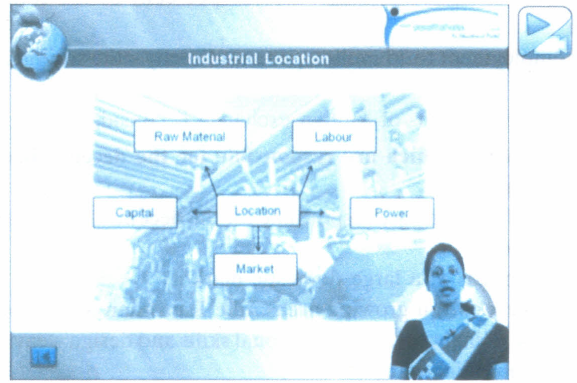
Explain any three factors that influence the location of an industry.
8.
What is the meaning of a manufacturing industry? Why is it considered the backbone of economic development? Give two reasons.
9.
What are the steps taken by the Government to protect jute industry in India?
10.
State any two reasons for the rapid growth of cement industries in India.
11.
How did the partition of the country in 1947 affect the jute industry?
12.
What are the mismatches of textile industry in India?
13.
Where was the first successful textile mill established in India?
14.
To which sector does the textile industry belong to.
15.
Give an example of a small scale industry.
16.
Which factors influence the location of an industry?
17.
When will India be in a position to complete in the International market?
18.
Name any two manufacturing goods in which India ranks first.
19.
Where were the manufacturing units located in the pre-independence period in India?
20.
Why are jute products still in demand in spite of stiff competition from synthetic products?
21.
What is the key to decision of the factory location?
22.
To which all categories do iron and steel industries fall?
23.
Explain any three problems faced by Iron and Steel Industry in India.
24.
"The economic strength of a country is measured by the development of manufacturing industries". Support the statement with arguments.
1.
(d)
Sugar Production
2.
(d)
Heat Pollution
3.
(d)
West Bengal
4.
(b)
India
5.
(b)
Cement
6.
The traditional cotton textile industry of India suffered a setback during the colonial period because of competition from mill-made cloth from England. In England cotton textiles were produced in large quantities with the help of the powerloom. The surplus was sold in India for profit as India was then a colony of England. Mill-made cloth was cheaper on account of large scale production. On the other hand, our traditional textiles used ancient techniques like handspinning and handloom weaving. Hence, its production could not compete with mill-made cloth of England.
7.
Following are the three factors that influence the location of an industry.
(a) Nearness to raw materials, i.e. coal, iron etc, is an important factor of industrial location.
(b) Market offers an important locational factor.
(c) Besides, plenty of capital can attract an industry to any location
8.
Production of good in the factories in large quantities after processing from raw materials to more valuable products, is called manufacturing industry. Manufacturing industry is considered as the backbone of economic development because of the following reasons.
(a) It helps in modernizing agriculture which is the backbone of our economy.
(b) Export of manufactured goods expands trade and commerce and brings the much needed foreign exchange.
9.
(i) The National Jute Policy was formulated with the objective of increasing productivity, improving quality, ensuring good prices to jute farmers, and enhancing the yield per hectare.
(ii) The internal market has been increasing due to the Government policy of compulsory use of jute packaging and to prevent the use of polymers or polythene bags.
(iii) The growing global concern for environment friendly, biodegradable materials has once again opened the opportunity for jute products.
10.
(i) Decontrol of price and distribution since 1989 and other policy reforms by the government helped its growth in India.
(ii) Large demand of good quality cement produced in India by the countries of East Asia, Middle East, Africa and South Asia apart from the domestic demand boosted this industry.
11.
(i) Bengal was famous for jute production. It was partitioned into East and West Bengal in 1947 along with the partition of India. East Bengal became part of Pakistan and later an independent country called Bangladesh. Accordingly, we lost some of the major jute industries like the one in Agartala.
(ii) Now one of the problems faced by jute industry in India is international competition especially from Bangladesh.
12.
(i) We have a large share in the world trade of cotton yarn, accounting for 1/4 of the total trade. However, our trade in garments is only 4 % of the world total.
(ii) Our spinning mills are competitive at the global level and capable of using all the fabrics we produce. However, the weaving, knitting and processing units cannot use much of the high quality yarn that is produced in the country.
(iii) There are some large and modern factories but most of the production is in fragmented small units, which cater to the local needs.
13.
The first successful textile mill was established in Mumbai in India.
14.
The textile industry is an example of the agro-based industry.
15.
Soap making or manufacturing sewing machines are examples of small scale industries.
16.
Cost, government policies and specialized labour influence the location of industry.
17.
India will be in a position to complete in the international market with more efficiency, improvement in the quality of goods and with more competitiveness.
18.
Gur and khandsari, sponge iron.
19.
These were located in places from the point of view of overseas trade such as Mumbai, Kolkata and Chennai.
20.
Because it is biodegradable and eco-friendly.
21.
Least cost.
22.
Mineral based, Basic, Heavy, large scale industries.
23.
(i) Integrated steel plants are different from mini steel plants in many aspects.
(a) An integrated steel plant is large and handles everything in one complex from integrating raw materials to steel making, rolling and shaping.
(b) On the other hand, a mini steel plant is smaller, has electric furnaces, uses steel scrap and sponge iron, and has re-rollers that use steel ingots as well. It produces mild and alloy steel of given specifications.
The problems faced by this industry are:
(a) high production costs and limited availability of coking coal
(b) lower productivity of labour
(c) irregular supply of energy
(d) poor infrastructure. Recent developments that have led to a rise in the production capacity of this industry are liberalisation and Foreign Direct Investment, with help from private entrepreneurs.
(ii) Industrial pollution of the environment is of four types: air, water, land and noise. Air pollution is caused by smoke released by chemical and paper factories, brick kilns, refineries and smelting plants, and burning of fossil fuels in factories ignoring pollution norms. Water pollution is caused by the discharging of organic and inorganic industrial wastes and effluents into rivers. This form of pollution is caused by paper, pulp, chemical, textile, dyeing, petroleum refineries, tanneries and electroplating industries. The major solid wastes released into rivers in India are fly ash, phospo - gypsum, and iron and steel slags. Thermal pollution of water is another form of water pollution, caused by the emission of hot water from factories and thermal plants into rivers and ponds. Dumping of solid wastes renders the soil infertile and useless too. Lastly, noise pollution results from industrial and construction activities, machinery, generators, and saws, pneumatic and electric drills.
(iii) The steps to be taken to minimise environmental degradation by industry are as follows:
(a) To control water pollution, industrial effluents need to be treated on all three levels (primary, secondary and tertiary); the use of water for processing should be minimised via reuse and recycling; rainwater can be harvested to meet water requirements, and ground water usage should be regulated by law.
(b) For the minimisation of air pollution, smoke stacks should be fitted to factories with electrostatic precipitators, fabric filters, scrubbers and inertial separators. Also, smoke can be reduced by using oil or gas instead of coal.
(c) Noise pollution can be controlled by fitting generators with silencers, redesigning machinery to reduce noise, and using earplugs and earphones besides other noise absorbing material.
24.
(i) Manufacturing industries help in modernizing agriculture.
(ii) They also reduce the heavy dependence of people on agricultural income by providing them jobs.
(iii) Industrial development reduces unemployment and poverty.
(iv) It also brings down regional disparities. v.Export of manufactured goods expands trade and commerce, and brings foreign exchange.
(v) Prosperity of our country depends on transforming raw materials into furnished goods of higher value and diversifying our industries.
(vi) Industrial sector contributes 27% of GDP and manufacturing contributes 17% of GDP.

10th Standard CBSE Syllabus & Materials
10th Standard CBSE
CBSE 10th Social Science PS - Federalism - New Model Questions Papers Study Material - QB365 Set A
NEW10th Standard CBSE
CBSE 10th Social Science PS - Power Sharing - New Model Questions Papers Study Material - QB365 Set A
NEW10th Standard CBSE
CBSE 10th Social Science GEO - Manufacturing Industries - New Model Questions Papers Study Material - QB365 Set A
NEW10th Standard CBSE
CBSE 10th Social Science GEO - Minerals and Energy Resources - New Model Questions Papers Study Material - QB365 Set A



CBSE 10th Standard CBSE Subjects
CBSE Standards





