
 100% FREE ACCESS
10th Standard CBSE Syllabus & Materials
10th Standard CBSE
CBSE 10th Social Science ECO - Globalisation and the Indian Economy - New Model Questions Papers Study Material - QB365 Set A
NEW10th Standard CBSE
CBSE 10th Social Science ECO - Money and Credit - New Model Questions Papers Study Material - QB365 Set A
NEW10th Standard CBSE
CBSE 10th Social Science ECO - Sectors of the Indian Economy - New Model Questions Papers Study Material - QB365 Set A
NEW10th Standard CBSE
CBSE 10th Social Science ECO - Development - New Model Questions Papers Study Material - QB365 Set A
NEW10th Standard CBSE
CBSE 10th Social Science PS - Outcomes of Democracy - New Model Questions Papers Study Material - QB365 Set A
NEW10th Standard CBSE
CBSE 10th Social Science PS - Gender, Religion and Caste - New Model Questions Papers Study Material - QB365 Set A

Published on: 07/12/2018
When preparing for your exams or even when you are working towards mastering the board examination, most experts recommend that you dedicate time and effort into solving question papers from the previous year or CBSE sample papers for class 10. This practice not only will familiarize you with the format of the question paper, but it will also teach you the discipline of answering the entire question paper within the time allotted to you at the examination. Learning how much time to allot for different questions of different weightage will give you an advantage in the exam. The time that you allot to answer a five-mark question will be different from the time you take to answer a one mark answer. Be sure to answer the last year sample paper CBSE class 10 as this will have the format according to the latest syllabus.
Get 100 percent accurate NCERT Solutions for Class 10 Maths Chapter (Polynomials Important Questions) solved by expert Maths teachers. We provide step by step solutions for questions given in class 10 maths text-book as per CBSE Board guidelines from the latest NCERT book for class 10 maths.
This chapter is in continuation with what the students have learned in lower grades related to the area of the triangle. Students are advised to go through the solutions given for the questions in this chapter to score well in the exams.
Grade 10 CBSE has questions for a total of 13 marks in the final examination paper as per the latest pattern.
Download CBSE Class 10th Standard CBSE Maths question papers, sample papers, important questions, and previous year solved papers in PDF format. Get free study materials, NCERT solutions, and exam preparation resources for Class 10th Standard CBSE Maths
Questions + Answers key
Take MCQ Maths Test
1.
When p(x) = x2 + 7x + 9 is divided by g(x), we get (x + 2) and - 1 as the quotient and remainder respectively, find g(x).
2.
If \(\alpha\) and \(\beta\) are the zeroes of the polynomial 6y2 - 7y + 2, find a quadratic polynomial whose zeroes are \(\frac{1}{\alpha}\) and \(\frac{1}{\beta}\)
3.
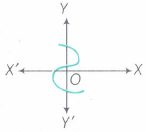
In the given figure, the graph of a polynomial p(x) is shown. Find the number of zeros of P(x).
4.
Find the quadratic polynomial, whose zeroes are in the ratio 2:3 and their sum is 15.
5.
Find the value of 'a' if X+a is a factor (zero) of the polynomial 2x2+2ax+5x+10.
6.
If \(\alpha\) and \(\beta\) are zeroes of the polynomial p(x) = 6x2 - 5x + k such that \(\alpha-\beta=\frac{1}{6}\), find the value of k.
7.
Draw the graph of the polynomial -x2+4x-4 and find the zeroes of the polynomial.
8.
Find the degree of the following polynomial
(i) \(7y^{ 5 }+6y^{ 2 }-1\)
(ii) \(\frac { y^{ 4 }+3y^{ 2 }+y }{ y } \)
9.
If the squared difference of the zeroes of the quadratic polynomial f(x) = x2 + px + 45 is equal to 144, find the value of p.
10.
If the zeroes of the polynomial x2 + px + q are double in value to the zeroes of 2x2 - 5x - 3, find the value of p and q.
11.
If p,q are zeroes of polynomial f(x) = 2x2 - 7x + 3, find the value of p2 + q2.
12.
If zeroes of the polynomial x2 + 4x + 2a are \(\alpha\) and \(\frac{2}{\alpha}\), then find the value of a.
13.
If - 1 is a zero of the polynomial f(x) = x2 - 7x - 8, then calculate the other zero.
14.
If sum of the zeroes of the quadatic polynomial 3x2 - kx + 6 is 3, then find the value of k.
15.
If \(\alpha\) and \(\beta\) are the roots of ax2 - bx + c = 0 \(\left( a\neq 0 \right) \), then calculate \(\alpha+\beta\).
16.
If one zero of the polynomial (a2+9)x2+13x+6a is a reciprocal of the other, then find the value of a.
17.
If the product of the zeroes of the polynomial (ax2-6x-6) is 4, then find the value of a.
18.
Divide the polynomial p(x) by the polynomial g(x) and verify the division algorithm in following.
p(x)=2x4-2x3-5x2-x+8, g(x)=2x2+4x+3
19.
Represent the following quadratic polynomial on the graph and also find the zeroes of the polynomial
-x2+x+6
1.
p(x) = x2 + 7x + 9
q(x) = x + 2
r(x) = - 1
g(x) = ?
p(x) = g(x) q(x) + r(x)
\(\Rightarrow\) x2 + 7x + 9 = g(x)(x + 2) - 1
\(\Rightarrow \quad g\left( x \right) =\frac { { x }^{ 2 }+7x+10 }{ x+2 } \)
\(\frac { \left( x+2 \right) \left( x+5 \right) }{ x+2 } \)
\(\therefore \quad g(x) =x+5\)
2.
p(y) = 6y2 - 7y + 2
\(\alpha +\beta =-\left( -\frac { 7 }{ 6 } \right) =\frac { 7 }{ 6 } \)
and \(\alpha\beta=\frac{2}{6}=\frac{1}{3}\)
Now \(\frac { 1 }{ \alpha } +\frac { 1 }{ \beta } =\frac { \alpha +\beta }{ \alpha \beta } =\frac { { 7 }/{ 6 } }{ { 2 }/{ 6 } } =\frac { 7 }{ 2 } \)
and \(\frac { 1 }{ \alpha } \times \frac { 1 }{ \beta } =\frac { 1 }{ \alpha \beta } =3\)
The required polynomial is \({ y }^{ 2 }-\frac { 7 }{ 2 } y+3=\frac { 1 }{ 2 } \left[ 2{ y }^{ 2 }-7y+6 \right] \)
3.
Here, the graph of p(x) intersects X-axis at one point only
\(\therefore\) Number of zeroes of p(x) = 1
4.
x2-15x+54
5.
Let p(x)=2x2+2ax+5x+10
Since, x+a is a factor of p(x).
Therefore, p(-a)=0
⇒ 2(-a)2+2a(-a)+5(-a)+10=0
⇒ 2a2-2a2-5a+10=0⇒5a=10a=2
6.
According to the question, \(\alpha\) and \(\beta\) are zeroes of the polynomial p(x) = 6x2 - 5x + k
So, Sum of zeroes = \(\alpha +\beta =-\left( \frac { -5 }{ 6 } \right) =\frac { 5 }{ 6 } \) ... (i)
Product of zeroes = \(\alpha \beta =\frac { k }{ 6 } \)
\(\alpha-\beta=\frac{1}{6}\) (Given) ...... (ii)
Adding equations (i) and (ii), we get
\(2\alpha=2\)
\(\Rightarrow \quad \alpha=\frac{1}{2}\)
Putting the value of \(\alpha\) in equation (ii), we get
\(\frac{1}{2}-\beta=\frac{1}{6}\)
\(\Rightarrow \quad \frac{1}{2}-\frac{1}{6}=\beta\)
\(\Rightarrow \quad \frac{2}{6}=\frac{1}{3}=\beta\)
\(\therefore \quad \alpha\beta=\frac{k}{6}=\frac{1}{2}\times\frac{1}{3}\)
\(\therefore \quad k=1\)
7.
2, 2
8.
(i) 5
(ii) 3
9.
The given quadratic polynomial is f(x) = x2 + px + 45. Let \(\alpha\) and \(\beta\) be the zeroes of the given quadratic polynomial.
\(\therefore \quad \alpha +\beta =-p\) and \(\alpha\beta=45\) ....(i)
Given, \(\left( \alpha -\beta \right) ^{ 2 }=144\)
\(\Rightarrow \quad \left( \alpha +\beta \right) ^{ 2 }-4\alpha \beta =144\)
\(\Rightarrow \quad \left( -p \right) ^{ 2 }-4\times 45=144\)
\(\Rightarrow \quad p^{ 2 }-180=144\)
\(\Rightarrow \quad p^{ 2 }=144+180=324\)
\(\therefore \quad p=\pm \sqrt { 324 } =\pm 18\)
Thus, the value of p is \(\pm 18\)
10.
Let f(x) = 2x2 - 5x - 3
Let the zeroes of polynomial be \(\alpha\) and \(\beta\), then
Sum of zeroes = \(\alpha+\beta = \frac{5}{2}\)
Product of zeroes = \(\alpha\beta=-\frac{3}{2}\)
According to the question, zeroes of x2 + px + q are \(2\alpha\) and \(2\beta\)
Sum of zeroes \(-\frac { Coeff.of \ x }{ Coeff.of \ { x }^{ 2 } } =\frac { -p }{ 1 } \)
\(\Rightarrow \quad -p= 2\alpha+2\beta=2(\alpha+\beta)\)
\(\Rightarrow \quad -p=2\times\frac{5}{2}=5\Rightarrow p=-5\)
Product of zeroes \(=\frac { Constant \ term }{ Coeff \ of \ { x }^{ 2 } } =\frac { q }{ 1 } \)
\(\Rightarrow \quad q = 2\alpha\times2\beta=4\alpha\beta\)
\(\Rightarrow \quad q=4(-\frac{3}{2})=-6\)
\(\therefore \quad p=-5\) and \(q=-6\)
11.
f(x) = 2x2 - 7x + 3
Sum of roots = p + q \(=-\frac { Coefficient\quad of\quad x }{ Coefficient\quad of\quad { x }^{ 2 } } \)
\(=-\left( \frac { -7 }{ 2 } \right) =\frac { 7 }{ 2 } \)
Product of roots = pq \(=-\frac { Constant\quad term }{ Coefficient\quad of\quad { x }^{ 2 } } =\frac{3}{2}\)
We know that
(p + q)2 = p2 + q2 + 2pq
\(\Rightarrow\) p2 + q2 = (p + q)2 - 2pq
\(=\left( \frac { 7 }{ 2 } \right) ^{ 2 }-3=\frac { 49 }{ 4 } -\frac { 3 }{ 1 } =\frac { 37 }{ 4 } \)
12.
Comparing x2+4x+2a with ax2+bx+c,
a=1,b=4,c=2a
According to the question,
\(\alpha, \frac{\alpha}{2}\) are the zeroes of the polynomial,
sum of the zeroes \(\frac{\mathrm{b}}{\mathrm{a}}\)
\(\alpha+\frac{\alpha}{2}=\frac{-4}{1}\)
\(\alpha=\frac{-8}{3}\)
\(\alpha^{2}=\frac{64}{9}\) [squaring both sides]
product of all zeroes,
\(\alpha \times \frac{\alpha}{2}=\frac{2 a}{1}\)
α2=4a
\(\therefore 4 \mathrm{a}=\frac{64}{9}\left[\because \alpha^{2}=\frac{64}{9}\right]\)
\(a=\frac{16}{9}\)
13.
f(x) = x2 - 7x - 8
Let other zero be k, then
Sum of zeroes \(-1+k=-\left( \frac { -7 }{ 1 } \right) =7\)
\(\Rightarrow k = 8\)
14.
p(x) = 3x2 - kx + 6
Sum of the zeroes = 3 \(=-\frac { Coefficient\quad of\quad x }{ Coefficient\quad of\quad { x }^{ 2 } } \)
\(\Rightarrow \quad 3=-\frac { \left( -k \right) }{ 3 } \)
k = 9
15.
Sum of the roots \(=-\frac { Coefficient\quad of\quad x }{ Coefficient\quad of\quad { x }^{ 2 } } \)
\(\Rightarrow \quad \alpha +\beta =-\left( \frac { b }{ a } \right) \)
\(=\frac{b}{a}\)
16.
Let α and \(\frac { 1 }{ \alpha } \) be two zeroes of the given polynomial, which are reciprocal of each other.
On comparing the given polynomial with Ax2+Bx+C, we get
A=a2+9, B=13 and C=6a
Now, product of zeroes,
\(\alpha \times \frac { 1 }{ \alpha } =\frac { Constant \ term }{ Coefficient \ of \ x^{ 2 } } \)
\(\\ \Rightarrow \ 1=\frac { 6\alpha }{ a^{ 2 }+9 }\)
\( \\ \Rightarrow \ a^{ 2 }+9=6a\)
\(\\ \Rightarrow \ a^{ 2 }-6a+9=0\)
\(\\ \Rightarrow \ (a-3)^{ 2 }=0\ \ \left[ \because \quad (x-y)^{ 2 }=x^{ 2 }+y^{ 2 }-2xy \right] \)
\(\\ \therefore \ a=3\)
17.
\(a=-\frac { 3 }{ 2 } \)
18.
Quotient, q(x) = x2 - 3x + 2 and remainder, r(x) = 2.
19.
-2,3

10th Standard CBSE Syllabus & Materials
10th Standard CBSE
CBSE 10th Social Science PS - Federalism - New Model Questions Papers Study Material - QB365 Set A
NEW10th Standard CBSE
CBSE 10th Social Science PS - Power Sharing - New Model Questions Papers Study Material - QB365 Set A
NEW10th Standard CBSE
CBSE 10th Social Science GEO - Manufacturing Industries - New Model Questions Papers Study Material - QB365 Set A
NEW10th Standard CBSE
CBSE 10th Social Science GEO - Minerals and Energy Resources - New Model Questions Papers Study Material - QB365 Set A



CBSE 10th Standard CBSE Subjects
CBSE Standards





