
 100% FREE ACCESS
10th Standard CBSE Syllabus & Materials
10th Standard CBSE
CBSE 10th Social Science ECO - Globalisation and the Indian Economy - New Model Questions Papers Study Material - QB365 Set A
NEW10th Standard CBSE
CBSE 10th Social Science ECO - Money and Credit - New Model Questions Papers Study Material - QB365 Set A
NEW10th Standard CBSE
CBSE 10th Social Science ECO - Sectors of the Indian Economy - New Model Questions Papers Study Material - QB365 Set A
NEW10th Standard CBSE
CBSE 10th Social Science ECO - Development - New Model Questions Papers Study Material - QB365 Set A
NEW10th Standard CBSE
CBSE 10th Social Science PS - Outcomes of Democracy - New Model Questions Papers Study Material - QB365 Set A
NEW10th Standard CBSE
CBSE 10th Social Science PS - Gender, Religion and Caste - New Model Questions Papers Study Material - QB365 Set A

Published on: 26/10/2025
Download CBSE Class 10th Standard CBSE Maths question papers, sample papers, important questions, and previous year solved papers in PDF format. Get free study materials, NCERT solutions, and exam preparation resources for Class 10th Standard CBSE Maths
Questions + Answers key
Take MCQ Maths Test
1.
Find a quadratic polynomial, the sum and product of whose zeroes are, respectively
\(\frac{3}{2} \text { and }-\frac{1}{2}\)
2.
Find a quadratic polynomial, the sum and product of whose zeroes are, respectively
\(2+\sqrt{3} \text { and } 2-\sqrt{3}\)
3.
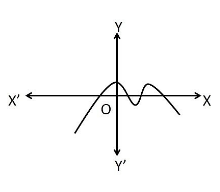
Look at the graphs in figure given below graph of y=p(x) is a polynomial. The graphs, find the number of zeroes of p(x)
4.
Find a quadratic polynomial each with the given numbers as the sum and product of its zeroes respectively.
4, 1
5.
Find a quadratic polynomial each with the given numbers as the sum and product of its zeroes respectively.
\(-\frac{1}{4}, \frac{1}{4}\)
6.
Find a quadratic polynomial each with the given numbers as the sum and product of its zeroes respectively.
1, 1
7.
Find a quadratic polynomial each with the given numbers as the sum and product of its zeroes respectively.
\(0, \sqrt{5}\)
8.
If α, β are zeroes of the x2 +7x + 7, find the value of \({1\over \alpha}+{1\over \beta}-2\alpha\beta\)
9.
If α, β are zeroes of x2 + 5x + 5, find the value of α-1+ β-1.
10.
If the squared difference of the zeroes of the quadratic polynomial f(x) = x2 + px + 45 is equal to 144, find the value of p.
11.
If \(\alpha\) and \(\beta\) are zeroes of the polynomial f(x) = x2 - x - k, such that \(\alpha-\beta=9\), find k.
12.
If \(\alpha\) and \(\beta\) are the zeroes of the polynomial f(x) = x2 - 6x + k, find the value of k, such that \({ \alpha }^{ 2 }+{ \beta }^{ 2 }=40\)
13.
If \(\alpha\) and \(\beta\) are the zeroes of a polynomial \({ x }^{ 2 }-4\sqrt { 3 } x+3\), then find the value of \(\alpha+\beta-\alpha\beta\)
14.
If p,q are zeroes of polynomial f(x) = 2x2 - 7x + 3, find the value of p2 + q2.
15.
Form a quadratic polynomial p(x) with 3 and \(-\frac{2}{5}\) as sum and product of its zeroes, respectively.
16.
Find a quadratic polynomial, the sum and product of whose zeroes are 6 and 6 respexctively. Hence find the zeroes.
17.
Find the zeroes of the quadratic polynomial \(\sqrt { 3 } { x }^{ 2 }-8x+4\sqrt { 3 } \)
18.
Find all the zeroes of f(x) = x2 - 2x
19.
Find the sum of the zeroes of quadratic polynomial x2+7x+10.
20.
If α and β are zeroes of the quadratic polynomial f(x)=x2-5x+k, such that α-β=1, then find the value of k.
21.
For a quadratic polynomial, whose one zero is 8 and the product of zeroes is -56.
22.
Find a quadratic polynomial with zeroes \(3+\sqrt { 2 } \) and \(3-\sqrt { 2 } \) .
23.
Find the zeroes of the quadratic polynomial (x2+5x+6) and verify the relation between the zeroes and the coefficients.
24.
If zeroes α and β of a polynomial x2-7x+k are such that α-β=1, then find the value of k.
25.
Identify the type of the polynomials given below:
\(f(p)=3-p^{ 2 }+\sqrt { 7 } p\)
1.
\(2 x^{2}-3 x-1 \text { (v) } 4 x^{2}-x+1\)
2.
\(x^{2}-(2+\sqrt{3}) x+(2-\sqrt{3})\)
3.
The number of zeroes of p(x) are 4. (∵ the graph intersects the x-axis at four points)
4.
Let the quadratic polynomial be ax2 + bx + c, and its zeroes be α and ß
Given \(\alpha+B=4=-\frac{b}{a}\)
\(\alpha \beta=1=\frac{c}{a}\)
If a = 1, then b = -4, c = 1
Therefore, the quadratic polynomial is x2 – 4x +1.
5.
\(-\frac{1}{4}, \frac{1}{4}\)
Let the quadratic polynomial be ax2 + bx + c, and its zeroes be α + ß
Given \(\alpha+\beta=-\frac{1}{4}=-\frac{b}{a}\)
\(\alpha \beta=\frac{1}{4}=\frac{c}{a}\)
If a = 4, b = 1, c = 1
Therefore, the quadratic polynomial is 4x2 + x +1.
6.
Let the quadratic polynomial be ax2 + bx + c, and its zeroes be α and ß
Given \(\alpha+\beta=-\frac{b}{a}=1\)
\(\alpha \beta=\frac{c}{a}=1\)
If a = 1, b = -1, and c = 1
Therefore, the quadratic polynomial is x2 – x +1.
7.
\(0, \sqrt{5}\)
Let the polynomial be ax2 + bx + c, and its zeroes be α and ß
Given \(\alpha+B=0=-\frac{b}{a}\)
\(\alpha \beta=\sqrt{5}=\frac{c}{a}\)
If \(a=1, b=0, c=\sqrt{5}\)
Therefore, the quadratic polynomial is \(x^{2}+\sqrt{5}\)
8.
P(x)=x2+ 7x+ 7
Here, a =1, b =7, c=7
∴ α, β are both zeroes of p(x)
\(∴\ \alpha+\beta={-b\over a}=-7\)
\(\alpha\beta={c\over a}=7\)
Now \({1\over \alpha}+{1\over \beta}-2\alpha\beta={\beta+\alpha\over \alpha\beta}-2\alpha\beta\)
\(={-7\over 7}-2\times7=-1-14=-15\)
9.
\(α+β=-{b\over a}\)
⇒ α + β = -5 and αβ=\(c\over a\)⇒α, β=5
Now \(α^{-1}+ β^{-1}={1\over \alpha}+{1\over \beta}={-5\over 5}=-1\)
10.
The given quadratic polynomial is f(x) = x2 + px + 45. Let \(\alpha\) and \(\beta\) be the zeroes of the given quadratic polynomial.
\(\therefore \quad \alpha +\beta =-p\) and \(\alpha\beta=45\) ....(i)
Given, \(\left( \alpha -\beta \right) ^{ 2 }=144\)
\(\Rightarrow \quad \left( \alpha +\beta \right) ^{ 2 }-4\alpha \beta =144\)
\(\Rightarrow \quad \left( -p \right) ^{ 2 }-4\times 45=144\)
\(\Rightarrow \quad p^{ 2 }-180=144\)
\(\Rightarrow \quad p^{ 2 }=144+180=324\)
\(\therefore \quad p=\pm \sqrt { 324 } =\pm 18\)
Thus, the value of p is \(\pm 18\)
11.
Since \(\alpha\) and \(\beta\) are the zeroes of the polynomial, then
\(\alpha +\beta =-\frac { Coefficient \ of\ x }{ Coefficient \ of \ { x }^{ 2 } } \)
\(\Rightarrow \quad \quad \alpha +\beta =-\left( \frac { -1 }{ 1 } \right) =1\) .... (i)
Given \(\alpha-\beta=9\) ... (ii)
From (i) and (ii), \(\alpha=5,\beta=-4\)
\(\alpha \beta =\frac { Constant \ term }{ Coefficient \ of \ { x }^{ 2 } } \)
\(\alpha \beta =-k\)
\(\Rightarrow \quad (5)(-4) = -k\)
\(\Rightarrow \quad k = 20\)
12.
\(\alpha+\beta=-\frac{b}{a}\)
\(=\frac { -\left( -6 \right) }{ 1 } =6\)
and \(\alpha\beta=\frac{c}{a}=\frac{k}{1}=k\)
\(\therefore \quad { \alpha }^{ 2 }+{ \beta }^{ 2 }=\left( \alpha +\beta \right) ^{ 2 }-2\alpha \beta =40\)
\(\Rightarrow \quad \left( 6 \right) ^{ 2 }-2k=40\)
\(\Rightarrow \quad 36-2k=40\)
\(\Rightarrow \quad 2k = - 4\)
\(\therefore \quad k = - 2\)
13.
\({ x }^{ 2 }-4\sqrt { 3 } x+3=0\)
If \(\alpha\) and \(\beta\) are the zeroes of \({ x }^{ 2 }-4\sqrt { 3 } x+3\)
then \(\alpha+\beta=-\frac{b}{a}\)
\(\Rightarrow \quad \alpha +\beta =-\frac { \left( -4\sqrt { 3 } \right) }{ 1 } \)
\(\Rightarrow \quad \alpha +\beta=4\sqrt { 3 }\)
and \(\alpha\beta=\frac{c}{a}\)
\(\Rightarrow \quad \alpha\beta=\frac{3}{1}\)
\(\Rightarrow \quad \alpha\beta=3\)
\(\therefore \quad \alpha +\beta -\alpha \beta =4\sqrt { 3 } -3\)
14.
f(x) = 2x2 - 7x + 3
Sum of roots = p + q \(=-\frac { Coefficient\quad of\quad x }{ Coefficient\quad of\quad { x }^{ 2 } } \)
\(=-\left( \frac { -7 }{ 2 } \right) =\frac { 7 }{ 2 } \)
Product of roots = pq \(=-\frac { Constant\quad term }{ Coefficient\quad of\quad { x }^{ 2 } } =\frac{3}{2}\)
We know that
(p + q)2 = p2 + q2 + 2pq
\(\Rightarrow\) p2 + q2 = (p + q)2 - 2pq
\(=\left( \frac { 7 }{ 2 } \right) ^{ 2 }-3=\frac { 49 }{ 4 } -\frac { 3 }{ 1 } =\frac { 37 }{ 4 } \)
15.
According to the question, sum of zeroes = 3
Product of zeroes = \(-\frac{2}{5}\)
The required quadratic polynomial
= x2 - x (Sum of zeroes) + Product of zeroes
= x2 - x(3) - \(\frac{2}{5}\)
= x2 - 3x - \(\frac{2}{5}\)
= \(\frac{1}{5}\left( 5{ x }^{ 2 }-15x-2 \right) \)
\(\therefore\) The quadratic polynomial is \(\left( 5{ x }^{ 2 }-15x-2 \right) \frac{1}{5}\)
16.
Sum of zeroes = 6, Product of zeroes = 9
\(\therefore\) Quadratic polynomial is x2 - 6x + 9
Also x2 - 6x + 9 = 0
\(\Rightarrow\) (x - 3)(x - 3) = 0
\(\Rightarrow\) x = 3, 3
Hence zeroes are 3, 3
17.
\(p(x) = \sqrt { 3 } { x }^{ 2 }-8x+4\sqrt { 3 } \)
\(=\sqrt { 3 } { x }^{ 2 }-6x -2x+4\sqrt { 3 } \)
\(=\sqrt { 3 } x\left( x-2\sqrt { 3 } \right) -2\left( x-2\sqrt { 3 } \right) \)
\(=\left( \sqrt { 3 } x-2 \right) \left( x-2\sqrt { 3 } \right) \)
\(\therefore\) Zeroes are, \(x=\frac { 2 }{ \sqrt { 3 } } ,2\sqrt { 3 } \)
18.
f(x) = x2 - 2x
= x(x - 2)
i.e. f(x) = 0 \(\Rightarrow \) x = 0 or x = 2
Hence zeroes are 0 & 2.
19.
-7
20.
k=6
21.
x2-x-56
22.
x2-6x+7
23.
-2 and -3
24.
α+β=7 ...(i)
α-β=1 ....(ii)
On solving Eqs. (i) and (ii), we get α=4 and β=3
Now, k=αβ=12
25.
Quadratic

10th Standard CBSE Syllabus & Materials
10th Standard CBSE
CBSE 10th Social Science PS - Federalism - New Model Questions Papers Study Material - QB365 Set A
NEW10th Standard CBSE
CBSE 10th Social Science PS - Power Sharing - New Model Questions Papers Study Material - QB365 Set A
NEW10th Standard CBSE
CBSE 10th Social Science GEO - Manufacturing Industries - New Model Questions Papers Study Material - QB365 Set A
NEW10th Standard CBSE
CBSE 10th Social Science GEO - Minerals and Energy Resources - New Model Questions Papers Study Material - QB365 Set A



NCERT Books

Syllabus

Exam Pattern

Sample Question Papers

Previous year Question Papers

Important Notes

MCQ Practice test

NCERT Exemplers

Case study Questions

Image Based Questions

Passage based Questions

HOT Questions

Value Based Questions

Model Questions Papers
NCERT ( Book Back ) Questions

Assertion and Reason
Important Questions And Answers

CBSE 10th Standard CBSE Subjects
CBSE Standards



