
 100% FREE ACCESS
10th Standard CBSE Syllabus & Materials
10th Standard CBSE
CBSE 10th Social Science ECO - Globalisation and the Indian Economy - New Model Questions Papers Study Material - QB365 Set A
NEW10th Standard CBSE
CBSE 10th Social Science ECO - Money and Credit - New Model Questions Papers Study Material - QB365 Set A
NEW10th Standard CBSE
CBSE 10th Social Science ECO - Sectors of the Indian Economy - New Model Questions Papers Study Material - QB365 Set A
NEW10th Standard CBSE
CBSE 10th Social Science ECO - Development - New Model Questions Papers Study Material - QB365 Set A
NEW10th Standard CBSE
CBSE 10th Social Science PS - Outcomes of Democracy - New Model Questions Papers Study Material - QB365 Set A
NEW10th Standard CBSE
CBSE 10th Social Science PS - Gender, Religion and Caste - New Model Questions Papers Study Material - QB365 Set A

Published on: 22/10/2025
Download CBSE Class 10th Standard CBSE Maths question papers, sample papers, important questions, and previous year solved papers in PDF format. Get free study materials, NCERT solutions, and exam preparation resources for Class 10th Standard CBSE Maths
Questions + Answers key
Take MCQ Maths Test
1.
Find the roots of the quadratic equation 6x2 – x – 2 = 0
2.
Find the values of k for which the following equation has equal roots.
\((k-12)x^{ 2 }+2(k-12)x+2=0\)
3.
The product of two successive integral multiples of 5 is 300. Determine the multiples.
4.
A two digit number is such that the product of its digits is 15. If 18 is added to the number, the digits interchange their places. Find the number.
5.
Find two consecutive positive integers, sum of whose squares in 365.
6.
Represent the following situations mathematically:
A cottage industry produces a certain number of toys in a day. The cost of production of each toy (in rupees) was found to be 55 minus the number of toys produced in a day. On a particular day, the total cost of production was Rs. 750. We would like to find out the number of toys produced on that day.
7.
Find the discriminant of the equation \(3 x^{2}-2 x+\frac{1}{3}=0\) and hence find the nature of its roots. Find them, if they are real.
8.
Find the value of k, for which the quadratic equation \(4x^{2}+4\sqrt{3x} \ + \ k = 0\) has equal roots.
9.
For what values of p the equation \((1+p)x^2+2(1+2p)x+(1+p)=0\) has coincident roots?
10.
Is it possible to design a rectangular mango grove whose length is twice its breadth, and the area is 800m2? If, so, find its length and breadth
11.
Find the nature of the roots of the following quadratic equation. If the real roots exist, find them: \(3x^2-4\sqrt3 x+4=0\)
12.
Find the roots of the equation 2x2 - 5x + 3 = 0, by factorisation.
13.
Find the roots of the following quadratic equations by the factorisation.
\(x^{ 2 }-3x-10=0\)
14.
Check whether the following quadratic equations.
\((x+2)^{ 3 }=2x(x^{ 2 }-1)\)
15.
The sum of two numbers is 17 and the sum of their squares is 157. Find the numbers,
16.
The two roots of the equation \(3 x^2-2 \sqrt{6} x+2=0\) are
real and distinct
not real
real and equal
rational
17.
Out of a certain number of saras birds, one-fourth the number are moving about lotus plants, \(\frac{1}{9} t h\) are coupled with \(\frac{1}{4} \text { th }\) as well as 7 times the square root of the number move on a hill, 56 birds remain in vakula tree. What is the total number of birds?
576
567
556
557
18.
If the coefficient of x in the quadratic equation x2 + px + q = owas taken as 17 in the place of 13 and its roots were found to be -2 and -15 then the roots of the original equation.
3,10
-3, -10
-3, 10
3, -10
19.
The linear factors of the quadratic equation x2 + kx + 1 = 0 are
k > 2
k < 2
k > -2
2 < k < -2
20.
The quadratic equation \(2 x^{2}-\sqrt{5} x+1=0\) has
two distinct real roots
two equal real roots
no real roots
more than 2 real roots
21.
If the value of the Discriminant function of a quadratic equation is D = 27, then its roots are
Distinct, Irrational
Same, Rational
Distinct, Rational
Same Irrational
22.
If x = 1 is a common root of the equation x2 + ax – 3 = 0 and bx2 – 7x + 2 = 0 then ab =
-3
7
10
6
23.
Which of the following is a solution of the quadratic equation x2 – b2 = a(2x-a)
x= ab
x = a/b
x = b/a
x = a+b
24.
The discriminant of the quadratic equation 2x2 – 6x + 3 = 0, is
12
-12
-10
10
25.
If one root of a Quadratic equation is m + √n , then the other root is
√m + n
Can not be determined
m + √n
m – √n
26.
The positive value of k, for which both equations: x2 + kx + 64 = 0 and x2 – 8x + k = 0 have real roots is______
k = -16
k = 16
k ≤ 16
k ≥ 16
27.
If ax² + bx + c = 0 is a quadratic polynomial then p(x) = 0 i.e. ax² + bx + c = 0, a≠0 is called___
Quadratic equation or Linear equation
Differential equation
Linear Equation
Quadratic Equation
28.
The solution of (x +2)2 = 25 is
-3, 7
-3,-7
3,-7
3,7
29.
The same value of x satisfies the equations 4x + 5 = 0 and 4x2 + (5 + 3p)x + 3p2=0, then p is
0 or 5/4
¼ or ½
0 or ¼
0 or ½
30.
If x = 1 is a root of equation x2 – Kx + 5 = 0 then value of K is
5
6
4
-6
31.
If ax2 + bx + c , a≠0 is factorizable into product of two linear factors, then roots of ax2 + bx + c = 0 can be found by equating each factor to
1
-1
2
0
32.
Write the condition, when given quadratic equation has no real roots
b2 – 4ac = 0
b2 – 4ac > 0
Either A or C
b2 – 4ac < 0
33.
If the length of the rectangle is one more than the twice its width, and the area of the rectangle is 300 square meter. What is the measure of the width of the rectangle?
-25
12
24
25
34.
The length of the plot in meters is 1 more than twice its breadth and the area of a rectangle plot is 528m2. Which of the following quadratic equations represents the given situation:
x2+2x- 528=0
x2+x- 528=0
2x2+x- 528=0
2x2+x+ 528=0
35.
The nature of the roots of following quadratic equation 3x2-4√3x+4=0 is
Unequal
Equal
No real roots
None of above
36.
Raj and Ajay are very close friends. Both the families decide to go to Ranikhet by their own cars. Raj's car travels at a speed of x km/h while Ajay's car travels 5 km/h faster than Raj's car. Raj took 4 h more than Ajay to complete the journey of 400 km.
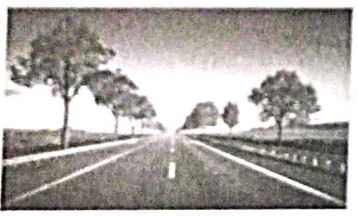
(i) What will be the distance covered by Ajay's car in 2 h?
(a) 2(x + 5) km (b) (x - 5) km
(c) 2(x + 10)km (d) (2x + 5) km
(ii) Which of the following quadratic equation describe the speed of Raj's car?
(a) x2 - 5x - 500 = 0 (b) x2 + 4x - 400 = 0
(c) x2 + 5x - 500 = 0 (d) x2 - 4x + 400 = 0
(iii) What is the speed of Raj's car?
(a) 20 km/h (b) 15 km/h
(c) 25 km/h (d) 10 km/h
(iv) How much time took Ajay to travel 400 km?
(a) 20 h (b) 40 h
(c) 25 h (d) 16 h
37.
Amit is preparing for his upcoming semester exam. For this, he has to practice the chapter of Quadratic Equations. So he started with factorization method. Let two linear factors of \(a x^{2}+b x+c \text { be }(p x+q) \text { and }(r x+s)\)
\(\therefore a x^{2}+b x+c=(p x+q)(r x+s)=p r x^{2}+(p s+q r) x+q s .\)
Now, factorize each of the following quadratic equations and find the roots.
(i) 6x2 + x - 2 = 0
| \((a) 1,6\) | \((b) \frac{1}{2}, \frac{-2}{3}\) | \((c) \frac{1}{3}, \frac{-1}{2}\) | \((d) \frac{3}{2},-2\) |
(ii) 2x2-+ x - 300 = 0
| \((a) 30, \frac{2}{15}\) | \((b) 60, \frac{-2}{5}\) | \((c) 12, \frac{-25}{2}\) | (d) None of these |
(iii) x2- 8x + 16 = 0
| (a) 3,3 | (b) 3,-3 | (c) 4,-4 | (d) 4,4 |
(iv) 6x2- 13x + 5 = 0
| \((a) 2, \frac{3}{5}\) | \((b) -2, \frac{-5}{3}\) | \((c) \frac{1}{2}, \frac{-3}{5}\) | \((d) \frac{1}{2}, \frac{5}{3}\) |
(v) 100x2- 20x + 1 = 0
| \((a) \frac{1}{10}, \frac{1}{10}\) | \((b) -10,-10\) | \((c) -10, \frac{1}{10}\) | \((d) \frac{-1}{10}, \frac{-1}{10}\) |
38.
Quadratic equations started around 3000 B.C. with the Babylonians. They were one of the world's first civilisation, and came up with some great ideas like agriculture, irrigation and writing. There were many reasons why Babylonians needed to solve quadratic equations. For example to know what amount of crop you can grow on the square field;
Based on the above information, represent the following questions in the form of quadratic equation.
(i) The sum of squares of two consecutive integers is 650.
| (a) x2 + 2x - 650=0 | (b) 2x2 + 2x - 649=0 | (c) x2 - 2x - 650=0 | (d) 2x2 + 6x - 550=0 |
(ii) The sum of two numbers is 15 and the sum of their reciprocals is 3/10.
| (a) x2+ 10x-150=0 | (b) 15x2-x + 150=0 | (c) x2-15x + 50=0 | (d) 3x2 - 10x + 15 = 0 |
(iii) Two numbers differ by 3 and their product is 504.
| (a) 3x2- 504=0 | (b) x2- 504x+3=0 | (c) 504x2+3=x | (d) x2 + 3x - 504 = 0 |
(iv) A natural number whose square diminished by 84 is thrice of 8 more of given number.
| (a) x2 + 8x-84=0 | (b) 3x2 - 84x+3=0 | (c) x2 -3x-108=0 | (d) x2 -11x+60=0 |
(v) A natural number when increased by 12, equals 160 times its reciprocal.
| (a) x2 - 12x + 160 = 0 | (b) x2 - 160x + 12 = 0 | (c) 12x2 - x - 160 = 0 | (d) x2 + 12x - 160 = 0 |
1.
We have
6x2 – x – 2 = 6x2 + 3x – 4x – 2
= 3x (2x + 1) – 2 (2x + 1)
= (3x – 2)(2x + 1)
The roots of 6x2 - x - 2 = 0 are the values of x for which (3x - 2)(2x + 1) = 0
Therefore, 3x - 2 = 0 or 2x + 1 = 0,
ie., x = \(\frac{2}{3}\) or x = \(-\frac{1}{2}\)
Therefore, the roots of 6x2 - x - 2 = 0 are \(\frac{2}{3}\) and \(-\frac{1}{2}\)
We verify the roots, by checking that \(\frac{2}{3}\) and \(-\frac{1}{2}\) satisfy 6x2 - x - 2 = 0.
2.
Given quadratic equation is
\((k-12)x^{ 2 }+2(k-12)x+2=0\)
On comparing with \(ax^{ 2 }+bx+x=0,\) we get
a=k-12,b=2(k-12) and c=2
Now, \(D=b^{ 2 }-4ac\)
=\([2(k-12)]^{ 2 }-4(k-12)(2)\)
\(=4(k-12)^{ 2 }-8(k-12)\)
=\((k-12)[4(k-12)-8]\)
= \((k-12)(4k-48-8)\)
=(k-12)(4k-56)
3.
Let two successive integral multiples of 5
be x and x + 5.
ATQ x (x + 5) = 300
\(\Rightarrow x^{ 2 }+5x-300=0\)
\(\Rightarrow (x+20)(x-15)=0\)
\(\Rightarrow \) x=-20 or x=15
When x=-20, multiples are -20 and -20+5= -15
When x=15 , multiples are 15 and 15+5 =20
4.
Let digit at ten's place be x
and digit at unit's place be y
Also xy=15 \(\Rightarrow x=\frac { 15 }{ y } \) ....(i)
ATQ
10x+y+18=10y+x
\(\Rightarrow \) 9x-9y+18=0
\(\Rightarrow \) x-y+2=0
\(\Rightarrow \frac { 15 }{ y } -y+2=0\) [From (i)]
\(\Rightarrow \) 15-y2+2y=0
\(\Rightarrow \) y2-2y-15=0
\(\Rightarrow \) (y-5) (y+3) =0
\(\Rightarrow \) y=5, y=3 [y=-3 rejected]
On putting the value of y= 5 in equation
(i). we get
\(x=\frac { 15 }{ 5 } =3\)
\(\therefore \) Number = 3X10+5 = 35
5.
Let the two consecutive integers be x and x+1
ATQ x2+(x+1)2=365
\(\Rightarrow\) x2+x2+2x+1=365 \(\Rightarrow\) 2x2+2x-364=0
\(\Rightarrow\) x2+x-182=0 \(\Rightarrow\) x2+14x-13x-182=0
\(\Rightarrow\) x(x+14)-13(x+14)=0 \(\Rightarrow\) (x-13)(x+14)=0
\(\Rightarrow\) x=13, -14 (-14 is rejected because it is a negative integer)
Hence, the two consecutive positive integers are 13 and 13+1=14
6.
Let the number of toys produced on that day be x.
Therefore, the cost of production (in rupees) of each toy that day = 55 – x
So, the total cost of production (in rupees) that day = x (55 – x)
Therefore, x (55 – x) = 750
i.e., 55x – x2 = 750
i.e., – x2 + 55x – 750 = 0
i.e., x2 – 55x + 750 = 0
Therefore, the number of toys produced that day satisfies the quadratic equation
x2 – 55x + 750 = 0
which is the required representation of the problem mathematically.
7.
Here a = 3, b = - 2 and \(c=\frac{1}{3} \text { . }\)
Therefore, discriminant b2 - 4ac = (-2)2 - 4 x 3 x \(\frac{1}{3}\) = 4 - 4 = 0.
Hence, the given quadratic equation has two equal real roots.
The roots are \(\frac{-b}{2 a}, \frac{-b}{2 a}, \text { i.e., } \frac{2}{6}, \frac{2}{6}, \text { i.e., } \frac{1}{3}, \frac{1}{3} .\)
8.
k = 3
9.
(1+p)x2+2(1+2p)x+(1+p)=0
Here a=1+p,b=2(1+2p),c=(1+p)
D=b2-4ac=[2(1+2p)2-4(1+p)(1+p)
=4(1+4p2+4p)-4(1+p2+2p)
=4+16p2+16p-4-4p2-8p
=12p2+8p
For coincident roots i.e. equal roots
D=0
\(\Rightarrow \) 12p2+8p=0 \(\Rightarrow \) 4p(3p+2)=0
\(\Rightarrow \) p=0 or p=\(\frac { -2 }{ 3 } \)
10.
Let breadth of a rectangular mango grove be x m
Then, length of a rectangular mango grove = 2x m
According to the question,
Area of rectangular mango grove = 800 m2
\(\Rightarrow\) 2x(x) = 800 [\(\because\) Area = length \(\times\) breadth]
\(\Rightarrow\) 2x2 = 800 \(\Rightarrow\) x2 = 400
\(\Rightarrow\) x = \(\pm\)20
But, x = -20 is not possible because breadth can never be negative. so, x = 20.
Thus, length = 2x = 40 m and breadth = 20 m.
11.
\(3 x^{2}-4 \sqrt{3} x+4=0\)
Comparing it with ax2 + bx + c = 0, we get
a = 3, b = \(-4 \sqrt{3}\) and c = 4
Discriminant = b2 - 4ac
\(=(-4 \sqrt{3})^{2}-4(3)(4)\)
= 48 - 48 = 0
As b2 - 4ac = 0,
Therefore, real roots exist for the given equation and they are equal to each other.
And the roots will be \(\frac{-b}{2 a}\)
Therefore, the roots are \(\frac{2}{\sqrt{3}} \text { and } \frac{2}{\sqrt{3}}\)
12.
Let us first split the middle term - 5x as -2x -3x [because (-2x) x (-3x) = 6x2 = (2x2 ) x 3].
So, 2x2 - 5x + 3 = 2x2 - 2x - 3x + 3 = 2x (x - 1) -3(x - 1) = (2x - 3)(x - 1)
Now, 2x2 - 5x + 3 = 0 can be rewritten as (2x - 3)(x - 1) = 0.
So, the values of x for which 2x2 - 5x + 3 = 0 are the same for which (2x - 3)(x - 1) = 0,
i.e., either 2x - 3 = 0 or x - 1 = 0.
Now, 2x - 3 = 0 gives x = \(\frac{3}{2}\) and x - 1 = 0 gives x = 1.
So, x = \(\frac{3}{2}\) and x = 1 are the solutions of the equation.
In other words, 1 and \(\frac{3}{2}\) are the roots of the equation 2x2 - 5x + 3 = 0.
Verify that these are the roots of the given equation.
Note that we have found the roots of 2x2 - 5x + 3 = 0 by factorising 2x2 - 5x + 3 into two linear factors and equating each factor to zero.
13.
Given equations is \(x^{ 2 }-3x-10=0\)
\(\Rightarrow x^{ 2 }-5x+2x-10=0\)
\(\left[ \because -5x(2)=-10\\ and-5+2=-3 \right] \)
\(\Rightarrow x(x-5)+2(x-5)=0\)
\(\Rightarrow x-5=0\quad \Rightarrow x=5\)
\(\Rightarrow x+2=0\Rightarrow x=-2\)
Hence, the roots of the equation
\(x^{ 2 }-3x-10=0\quad are-2\quad and\quad 5\)
14.
Given equation is
\((x+2)^{ 2 }=2x(x^{ 2 }-1)\)
\(\Rightarrow x^{ 3 }+8+3x^{ 2 }(2)+3x(2)^{ 2 }=2x^{ 3 }-2x\)
\(\left[ \because (a+b)^{ 3 }=a^{ 3 }+b^{ 3 }+3a^{ 2 }b+3ab^{ 2 } \right] \)
\(\Rightarrow x^{ 2 }+8+6x^{ 2 }+12x-2x^{ 2 }-2x\)
\(\Rightarrow -x^{ 2 }+8+6x^{ 2 }+12x-2x^{ 3 }+2x=0\)
Which is not of the form \(ax^{ 2 }+bx+c=0\)
because it has cubic term i.e.\(x^{ 3 }\)
Hence it is not a quadratic equation.
15.
6, 11
16.
(c)
real and equal
17.
(a)
576
18.
(b)
-3, -10
19.
(d)
2 < k < -2
20.
(c)
no real roots
21.
(a)
Distinct, Irrational
22.
(c)
10
23.
(d)
x = a+b
24.
(a)
12
25.
(d)
m – √n
26.
(b)
k = 16
27.
(d)
Quadratic Equation
28.
(c)
3,-7
29.
(a)
0 or 5/4
30.
(b)
6
31.
(d)
0
32.
(d)
b2 – 4ac < 0
33.
(b)
12
34.
(c)
2x2+x- 528=0
35.
(b)
Equal
36.
(i) (a) Since, Ajay's car travels a distance in one hour is (x + 5) km. Therefore, Ajay's car travels a distance two hours is 2(x + 5) km.
(ii) (c) \(\because \text { Time }=\frac{\text { Distance }}{\text { Speed }}\)
Time taken by Ajay and Raj to complete the 400 km journey,
\(t_1=\frac{400}{x+5} \mathrm{~h} \)
and \(t_2=\frac{400}{x} \mathrm{~h}\)
According to the question,
t2 = t1 + 4
\( \therefore \frac{400}{x}=\frac{400}{x+5}+4\)
\(\Rightarrow \frac{100}{x}=\frac{100}{x+5}+1\) [dividing by 4]
\(\Rightarrow\) 100(x + 5) = 100x + x(x + 5)
\(\Rightarrow\) 100x + 500 = 100x + x2 + 5x
\(\Rightarrow\) x2 +5x - 500 = 0
(iii) (a) Consider the quadratic equation x2 + 5x - 500 = 0
On comparing with ax2 + bx + c =0, we get
a = 1, b = 5 and c = -500
\(\begin{aligned} \because \quad x & =\frac{-b \pm \sqrt{b^2-4 a c}}{2 a} \\ \end{aligned}\)
\(\begin{aligned} & =\frac{-5 \pm \sqrt{(5)^2-4 \times(1)(-500)}}{2 \times 1} \\ \end{aligned}\)
\(\begin{aligned} & =\frac{-5 \pm \sqrt{25+2000}}{2}=\frac{-5 \pm \sqrt{2025}}{2} \\ \end{aligned}\)
\(\begin{aligned} & =\frac{-5 \pm 45}{2}=\frac{-50}{2}, \frac{40}{2}=-25,20 \end{aligned}\)
Since, speed cannot be negative, so we consider only x = 20.
Hence, the speed of Raj's car is 20 km/h.
(iv) (d) To travel 400 km, time taken by Ajay
\(\begin{aligned} t_1 & =\frac{400}{(x+5)} \\ \end{aligned}\)
\(\begin{aligned} & =\frac{400}{20+5}=\frac{400}{25}=16 \mathrm{~h} \end{aligned}\)
37.
(i) (b):We have \(6 x^{2}+x-2=0\)
\(\Rightarrow \quad 6 x^{2}-3 x+4 x-2=0 \)
\(\Rightarrow \quad(3 x+2)(2 x-1)=0 \)
\(\Rightarrow \quad x=\frac{1}{2}, \frac{-2}{3}\)
(ii) (c): \(2 x^{2}+x-300=0\)
\(\Rightarrow \quad 2 x^{2}-24 x+25 x-300=0 \)
\(\Rightarrow \quad(x-12)(2 x+25)=0 \)
\(\Rightarrow \quad x=12, \frac{-25}{2}\)
(iii) (d): \(x^{2}-8 x+16=0\)
\(\Rightarrow(x-4)^{2}=0 \Rightarrow(x-4)(x-4)=0 \Rightarrow x=4,4\)
(iv) (d): \(6 x^{2}-13 x+5=0\)
\(\Rightarrow \quad 6 x^{2}-3 x-10 x+5=0 \)
\(\Rightarrow \quad(2 x-1)(3 x-5)=0 \)
\(\Rightarrow \quad x=\frac{1}{2}, \frac{5}{3}\)
(v) (a): \(100 x^{2}-20 x+1=0\)
\(\Rightarrow(10 x-1)^{2}=0 \Rightarrow x=\frac{1}{10}, \frac{1}{10}\)
38.
(i) (b): Let two consecutive integers be x, x + 1.
Given, x2 + (x + 1)2 = 650
\(\begin{array}{l}
\Rightarrow 2 x^{2}+2 x+1-650=0 \\
\Rightarrow 2 x^{2}+2 x-649=0
\end{array}\)
(ii) (c): Let the two numbers be x and 15 - x.
Given, \(\frac{1}{x}+\frac{1}{15-x}=\frac{3}{10}\)
\(\begin{array}{l}
\Rightarrow 10(15-x+x)=3 x(15-x) \\
\Rightarrow 50=15 x-x^{2} \Rightarrow x^{2}-15 x+50=0
\end{array}\)
(iii) (d): Let the numbers be x and x + 3.
Given, x(x + 3) = 504
\(\Rightarrow\) x2 + 3x - 504 = 0
(iv) (c): Let the number be x.
According to question, x2 - 84 = 3(x + 8)
\(\Rightarrow x^{2}-84=3 x+24 \Rightarrow x^{2}-3 x-108=0\)
(v) (d): Let the number be x.
According to question, x + 12 = \(\frac {160}{x}\)
\(\Rightarrow x^{2}+12 x-160=0\)

10th Standard CBSE Syllabus & Materials
10th Standard CBSE
CBSE 10th Social Science PS - Federalism - New Model Questions Papers Study Material - QB365 Set A
NEW10th Standard CBSE
CBSE 10th Social Science PS - Power Sharing - New Model Questions Papers Study Material - QB365 Set A
NEW10th Standard CBSE
CBSE 10th Social Science GEO - Manufacturing Industries - New Model Questions Papers Study Material - QB365 Set A
NEW10th Standard CBSE
CBSE 10th Social Science GEO - Minerals and Energy Resources - New Model Questions Papers Study Material - QB365 Set A



NCERT Books

Syllabus

Exam Pattern

Sample Question Papers

Previous year Question Papers

Important Notes

MCQ Practice test

NCERT Exemplers

Case study Questions

Image Based Questions

Passage based Questions

HOT Questions

Value Based Questions

Model Questions Papers
NCERT ( Book Back ) Questions

Assertion and Reason
Important Questions And Answers

CBSE 10th Standard CBSE Subjects
CBSE Standards



