
 100% FREE ACCESS
10th Standard CBSE Syllabus & Materials
10th Standard CBSE
CBSE 10th Social Science ECO - Globalisation and the Indian Economy - New Model Questions Papers Study Material - QB365 Set A
NEW10th Standard CBSE
CBSE 10th Social Science ECO - Money and Credit - New Model Questions Papers Study Material - QB365 Set A
NEW10th Standard CBSE
CBSE 10th Social Science ECO - Sectors of the Indian Economy - New Model Questions Papers Study Material - QB365 Set A
NEW10th Standard CBSE
CBSE 10th Social Science ECO - Development - New Model Questions Papers Study Material - QB365 Set A
NEW10th Standard CBSE
CBSE 10th Social Science PS - Outcomes of Democracy - New Model Questions Papers Study Material - QB365 Set A
NEW10th Standard CBSE
CBSE 10th Social Science PS - Gender, Religion and Caste - New Model Questions Papers Study Material - QB365 Set A

Published on: 26/10/2025
Download CBSE Class 10th Standard CBSE Maths question papers, sample papers, important questions, and previous year solved papers in PDF format. Get free study materials, NCERT solutions, and exam preparation resources for Class 10th Standard CBSE Maths
Questions + Answers key
Take MCQ Maths Test
1.
Solve 2x+3y=11 and 2x-4y=-24 and then find the value of m for which y=mx+3.
2.
An aeroplane when 4500m high passes vertically above of elevation at the same observation point are 60o and 45o respectively. How many metres higher is the one than the other?
3.
The perimeter of a right-angled triangle is 70 units and its hypotenuse is 29 units. Find the lengths of the other sides.
4.
An express train takes 1 hour less than a passenger train to travel 132 km between Mysore and Bengaluru (without taking into consideration the time they stop at intermediate stations). If the average speed of the express train is 11 km/h more than that of the passenger train, find the average speed of the two trains.
5.
Form a quadratic polynomial p(x) with 3 and \(-\frac{2}{5}\) as sum and product of its zeroes, respectively.
6.
Check whether 15n can end with digit zero for any natural number n.
7.
The point R divides the line segment AB where A(-4,0), B(0,6) are such that AR=\(3\over6\)AB. Find the coordinates of R.
8.
Find the area of a quadrant of a circle whose circumference is 22cm.
9.
Find the 20th term from the last term of the AP: 3, 8, 13, ......, 253
10.
A car has two wipers which do not overlap. Each wipes has a blade of length 30 cm sweeping through an angle of 105°. Find the total area cleaned at each Sweep of the blades.
11.
A box contains 100 cards marked from 1 to 100. If one card is drawn at random from the box, find the probability that it bears:
(i) a single digit number
(ii) a number which is a perfect square
(iii) a number which is divisible by 7
12.
Find the value of \(\frac { \cos { { 60 }^{ 0 } } +\sin { { 45 }^{ 0 } } -\cot { { 30 }^{ 0 } } }{ \tan { { 60 }^{ 0 } } +\sec { { 45 }^{ 0 } } -cosec{ 30 }^{ 0 } } .\)
13.
If a and β are the zeroes of the quadratic polynomial p(x)=ax2+bx+c, then evaluate a2β+aβ2 .
14.
Prove that \(3+2\sqrt { 5 } \) is irrational.
15.
Show that the points (7,10), (-2,5) and (3,-4) are the vertices of an isosceles right triangle.
16.
If \(\sin \theta-\cos \theta=0\), then the value of θ is
30°
45°
90°
0°
17.
Three vertices of a parallelogram ABCD are A(1, 4) B(- 2, 3) and C (5, 8). The ordinate of the fourth vertex D is
8
9
7
6
18.
Point P divides the line segment joining R(-1,3) and S(9,8) in ratio k : 1. If P lles on the line x-y+2=0, then value of k is
2/3
1/2
1/3
1/4
19.
The zeroes of the quadratic polynomial16x2 - 9 are
\(\frac{3}{4}, \frac{3}{4}\)
\(-\frac{3}{4}, \frac{3}{4}\)
\(\frac{9}{16}, \frac{9}{16}\)
\(-\frac{9}{16}, \frac{9}{16}\)
20.
What is the common difference of the A.P. in which a18 – a14 = 32?
4
3
5
2
21.
The sum of a number and it’s reciprocal is 5,2. The numbers is / are
-1/5,1
-5,-/5
-5
5,1/5
22.
The roots of quadratic equation ax² + bx + c = 0 is given by
\(\frac { b\pm \sqrt { { b }^{ 2 }-4ac } }{ 2c } \)
\(\frac { -b\pm \sqrt { { b }^{ 2 }-4ac } }{ 2c } \)
\(\frac { b\pm \sqrt { { b }^{ 2 }-4ac } }{ 2c } \)
\(\frac { -b\pm \sqrt { { b }^{ 2 }-4ac } }{ 2c } \)
23.
The value of cosec2 30° sin2 45° – sec2 60° is
2
1
-2
0
24.
In the adjoining figure, PQ || BC, then what could be the values of AP & PB respectively
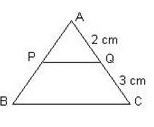
1 cm and 3 cm
3 cm and 6 cm
2 cm and 4 cm
4 cm and 6 cm
25.
Adding 1 to the numerator and subtracting 1 from the denominator of a fraction makes it 1. However, if 1 is added only to the denominator of the fraction it becomes ½ . The fraction is______
2/3
3/5
5/3
3/2
26.
The graph of y = p(x) is given below. The number of zeroes of p(x) are
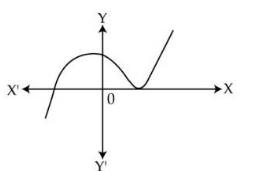
3
0
4
2
27.
If a prime number p divides a2 , then which one of the following is true?
p divides a
p = a
p > a
a divides p
28.
H. C. F. of 96 and 404 is
4696
4
96
8
29.
The outer and inner diameters of a circular ring are 34 cm and 32 cm respectively. The area of the ring is:
33π cm2
60π cm2
66π cm2
29π cm2
30.
The area swept by the minute hand of a circular clock in 5 minutes forms a
Circle
Segment
Cone
Sector
31.
If three coins are tossed simultaneously, than the probability of getting at least two heads, is
1/4
3/8
1/2
1/8
32.
What is the probability that a number selected from the numbers (1, 2, 3,..........,15) is a multiple of 4?
1/5
4/5
2/15
1/3
33.
A tree casts a shadow 4 m long on the ground, when the angle of elevation of the sun is 450. The height of the tree is:
4.5 m
3 m
5.2 m
4 m
34.
Assertion cos2 A - sin 2 A = 1 is a trigonometric identity.
Reason An equation involving trigonometric ratios of an angle is called trigonometric identity, if it is true for all values of the angles involved.
Codes:
(a) If both Assertion and Reason are correct and Reason is the correct explanation of Assertion.
(b) If both Assertion and Reason are correct, but Reason is not the correct explanation of Assertion.
(c) If Assertion is correct but Reason is Incorrect.
(d) If Assertion is incorrect but Reason is correct
35.
Assertion The first term of an AP is m and its common difference is p, then the 13th term is a + 10p.
Reason In an AP Sn - Sn-1 = an.
Codes:
(a) If both Assertion and Reason are correct and Reason is the correct explanation of Assertion.
(b) If both Assertion and Reason are correct, but Reason is not the correct explanation of Assertion.
(c) If Assertion is correct but Reason is incorrect.
(d) If Assertion is incorrect but Reason is correct.
36.
Rahul goes to a fete in Mussoorie. There he saw a game having prizes - wall clocks, power banks, puppets and water bottles. The game consists of a box having cards inside it, bearing the numbers 1 to 200, one on each card.
A person has to select a card at random. Now, the winning of prizes has the following conditions:
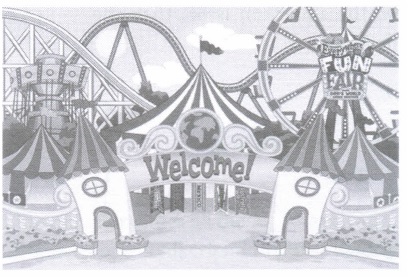
On the basis of above information, answer the following questions.
(i) Find the probability of winning a puppet.
| (a) \(\begin{equation} \frac{1}{5} \end{equation}\) | (b) \(\begin{equation} \frac{1}{8} \end{equation}\) |
| (c) \(\begin{equation} \frac{1}{10} \end{equation}\) | (d) \(\begin{equation} \frac{2}{15} \end{equation}\) |
(ii) The probability of winning a water bottle is
| (a) \(\begin{equation} \frac{1}{18} \end{equation}\) | (b) \(\begin{equation} \frac{1}{19} \end{equation}\) |
| (c) \(\begin{equation} \frac{1}{20} \end{equation}\) | (d) \(\begin{equation} \frac{1}{16} \end{equation}\) |
(iii) The probability of winning a power bank is
| (a) \(\begin{equation} \frac{3}{10} \end{equation}\) | (b) \(\begin{equation} \frac{11}{50} \end{equation}\) |
| (c) \(\begin{equation} \frac{33}{100} \end{equation}\) | (d) \(\begin{equation} \frac{1}{8} \end{equation}\) |
(iv) The probability of winning a wall clock is
| (a) \(\begin{equation} \frac{7}{100} \end{equation}\) | (b) \(\begin{equation} \frac{51}{100} \end{equation}\) |
| (c) \(\begin{equation} \frac{19}{100} \end{equation}\) | (d) \(\begin{equation} \frac{27}{100} \end{equation}\) |
(v) The probability of getting 'Better Luck next time' is
| (a) \(\begin{equation} \frac{1}{40} \end{equation}\) | (b) \(\begin{equation} \frac{1}{80} \end{equation}\) |
| (c) \(\begin{equation} \frac{1}{20} \end{equation}\) | (d) \(\begin{equation} \frac{1}{60} \end{equation}\) |
37.
Two hoardings are put on two poles of equal heights standing on either side of the road. From a point between them on the road the angle of elevation of the top of poles are 60° and 30° respectively. Height of the each pole is 20 m.
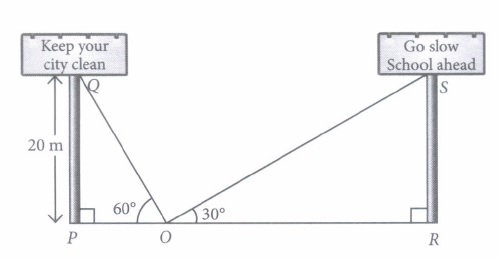
Based on the above information, answer the following questions. (Take \(\sqrt{3}\) = 1.73).
(i) Find the length of PO.
| (a) 20 m | \((b) 20 \sqrt{3} \mathrm{~m}\) | \((c) \frac{20}{\sqrt{3}} \mathrm{~m}\) | (d) None of these |
(ii) Find the length of RO.
| (a) 20 m | \((b) 20 \sqrt{3} \mathrm{~m}\) | \((c) \frac{20}{\sqrt{3}} \mathrm{~m}\) | (d) None of these |
(iii) The width of the road is
| (a) 31.23m | (b) 35.68 m | (c) 39.73 m | (d) 46.24 m |
(iv) If the angle of elevation made by pole PQ is 45°, then the length of PO =
| (a) 20 m | \((b) 20 \sqrt{3} \mathrm{~m}\) | \((c) \frac{20}{\sqrt{3}} \mathrm{~m}\) | (d) None of these |
(v) Angle formed by the line of sight with the horizontal when the point being viewed is above the horizontal level is known as
| (a) angle of depression | (b) angle of elevation | (c) right Angle | (d) reflex angle |
38.
In a pathology lab, a culture test has been conducted. In the test, the number of bacteria taken into consideration in various samples is all3-digit numbers that are divisible by 7, taken in order.
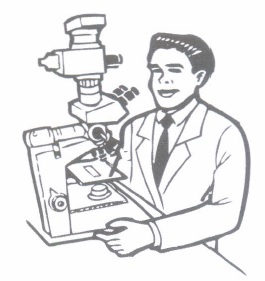
On the basis of above information, answer the following questions.
(i) How many bacteria are considered in the fifth sample?
| (a) 126 | (b) 140 | (c) 133 | (d) 149 |
(ii) How many samples should be taken into consideration?
| (a) 129 | (b) 128 | (c) 130 | (d) 127 |
(iii) Find the total number of bacteria in the first 10 samples.
| (a) 1365 | (b) 1335 | (c) 1302 | (d) 1540 |
(iv) How many bacteria are there in the 7th sample from the last?
| (a) 952 | (b) 945 | (c) 959 | (d) 966 |
(v) The number of bacteria in 50th sample is
| (a) 546 | (b) 553 | (c) 448 | (d) 496 |
1.
Given pair of linear equations is
2x+3y=11 ..(i)
and 2x-4y=-24 ...(ii)
From Eq. (i) we have
4y=2x+24
\(\Rightarrow \quad y=\frac { 2x+24 }{ 4 } \)
\(\Rightarrow \quad y=\frac { x+12 }{ 2 } \quad \quad \quad ..(iii)\)
On substituting the value of y from Eq. (ii) in Eq. (i), we get
\(2x+3\left( \frac { x+12 }{ 2 } \right) =11\)
\(\Rightarrow\) 4x+3(x+12)=11 x 2
\(\Rightarrow\) 4x+3x+36=22 \(\Rightarrow\) 7x=22-36
\(\Rightarrow\) 7x=-14 \(\Rightarrow\) x=-2
On substituting x=-2 in Eq. (iii), we get
\(\Rightarrow \quad y=\frac { -2+12 }{ 2 } \Rightarrow \frac { 10 }{ 2 } \Rightarrow y=5\)
On substituting x=-2 and y=5 in the equation y=mx+3, we get
5=m x (-2)+3
\(\Rightarrow\)5=-2m+3
\(\Rightarrow\) 2m=3-5=-2
\(\Rightarrow\) m=-1
2.
1902m
3.
Let ABC is the right-angled triangle.
Let BC=x units and AB=y units.
Also AC Hypotenuse=29 units
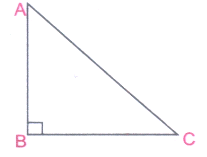
Now Perimeter=70 units
\(\Rightarrow\) x+y+29=70
\(\Rightarrow\) x+y=41
\(\Rightarrow\) y=41-x ....(i)
Also, AC2=AB2+BC2
\(\Rightarrow\) (29)2=(y)2+x2
\(\Rightarrow\) 841=(41-x)2+x2 [Using (i)]
\(\Rightarrow\) 841=1681+x2-82x+x2
\(\Rightarrow\) 2x2-82x+840=0
\(\Rightarrow\) x2-41x+420=0
\(\Rightarrow\) (x-20)(x-21)=0
\(\Rightarrow\) x=20 or x=21
Wnen x=20, y=41-x=21 and when x=21, y=41-21=20
\(\therefore\) Length of other sides are 20 units and 21 units.
4.
Let the speed of the passenger train be x km/hr. Then,
Speed of the express train = (x + 11)km/hr
Time taken by the passenger train to cover 132 km between Mysore to Bangalore \(\frac{132}{x} \mathrm{hr}\)
Time taken by the express train to cover 132 km between Mysore to Bangalore = \(=\frac{132}{x+11} \mathrm{hr}\)
Therefore,
\( \frac{132}{x}-\frac{132}{x+11}=1 \)
\( \frac{132(x+11)-132 x}{x(x+11)}=1 \)
\(\frac{132 x+1452-132 x}{x^{2}+11}=1 \)
\(\frac{1452}{x^{2}+11}=1 \)
1452 = x2 + 11
x2 + 11 - 1452 = 0
x2 - 33x + 44x - 1452 = 0
x(x - 33) + 44(x - 33) = 0
(x - 33)(x + 44) = 0
So, either
x - 33 = 0
x = 33
Or
x + 44 = 0
x = -44
But, the speed of the train can never be negative.
Thus, when x = 33 then speed of express train
= x + 11
= 33 + 11
= 44
e speed of the passenger train is x = 33 km/hr
and the speed of the express train is x = 44 km/hr respectively.
5.
According to the question, sum of zeroes = 3
Product of zeroes = \(-\frac{2}{5}\)
The required quadratic polynomial
= x2 - x (Sum of zeroes) + Product of zeroes
= x2 - x(3) - \(\frac{2}{5}\)
= x2 - 3x - \(\frac{2}{5}\)
= \(\frac{1}{5}\left( 5{ x }^{ 2 }-15x-2 \right) \)
\(\therefore\) The quadratic polynomial is \(\left( 5{ x }^{ 2 }-15x-2 \right) \frac{1}{5}\)
6.
No
7.
Let coordinates of R be (x,y)

\(AR=\frac { 3 }{ 4 } AB\)
But \(AR+RB=AB\quad \Rightarrow \quad \frac { 3 }{ 4 } AB+RB=AB\)
\(\Rightarrow \ RB=AB-\frac { 3 }{ 4 } AB=\frac { 4AB-3AB }{ 4 } =\frac { AB }{ 4 } \)
\(\frac { AR }{ RB } =\frac { \frac { 3 }{ 4 } AB }{ \frac { 1 }{ 4 } AB } =\frac { 3 }{ 4 } :\frac { 1 }{ 4 } =\frac { 3 }{ 4 } \times \frac { 4 }{ 1 } =3:1\)
Thus, R divides AB in the ratio 3:1.
\(x=\frac { 3\times 0+1\times (-4) }{ 3+1 } =\frac { 0-4 }{ 4 } =\frac { -4 }{ 4 } =-1\) and \( y=\frac { 3\times 6+1\times 0 }{ 3+1 } =\frac { 18+0 }{ 4 } =\frac { 18 }{ 4 } =\frac { 9 }{ 2 } \)
Thus , coordinates of R are \(\left( -1,\frac { 9 }{ 2 } \right) \).
8.
Let, Radius of the circle = r
\(\therefore\) Circumference of the circle = \(2\pi r\)
A.T.Q \(2\pi r\) = 22 cm
\(\Rightarrow\) \(2\times {22\over 7}\times r=22\ \ \ \Rightarrow\ \ \ \ r={{22\times 7\over 2\times 22}}={7\over 2}cm\)
Area of quadrant of the circle \(={\pi r^2\theta\over 360^o}={22\over 7}\times {7\times 7\over 2\times 2}\times {90^o\over 360^o}={22\times 7\over 2\times 2\times 4}={77\over 8}cm^2\)
9.
Given, AP is 3, 8, 13,........., 253
Here, a = 3, d = 8 - 3 = 5
First term from the last = 253 then d = -5
a20 = a + 19d = 253 + 19 (-5) = 253 - 95 = 158
10.
Length of wiper blade = 30 cm = r
\(\theta\) = 105°
\(\therefore\) Area of cleaned by two blade
= 2 \(\times\) Area of sector formed by blade
\(\begin{aligned}
& =2 \times \frac{\theta}{360^{\circ}} \times \pi r^2 \\
\end{aligned}\)
\(\begin{aligned}
=\frac{2 \times 105^{\circ}}{360^{\circ}} \times \frac{22}{7} \times(30)^2
\end{aligned}\)
= 825 \(\times\) 2 cm2
= 1650 cm2
11.
(i) P (single digit number) = \(\frac{9}{100}\)
(ii) P (perfect square) = \(\frac{1}{10}\)
(iii) P (a number which is divisible by 7) = \(\frac{7}{50}\)
12.
We have, \(\frac { \cos { { 60 }^{ 0 } } +\sin { { 45 }^{ 0 } } -\cot { { 30 }^{ 0 } } }{ \tan { { 60 }^{ 0 } } +\sec { { 45 }^{ 0 } } -cosec{ 30 }^{ 0 } } \)
\(=\frac { \frac { 1 }{ 2 } +\frac { 1 }{ \sqrt { 2 } } -\sqrt { 3 } }{ \sqrt { 3 } +\sqrt { 2 } -2 } =\frac { \frac { \sqrt { 2 } +2-2\sqrt { 2 } \times \sqrt { 3 } }{ 2\sqrt { 2 } } }{ \sqrt { 3 } +\sqrt { 2 } -2 } \)
\([ \because \cos { { 60 }^{ 0 } } =1/2,\sin { { 45 }^{ 0 } } =1/\sqrt { 2 } ,\cot { { 30 }^{ 0 } } =\sqrt { 3 }\)
\( \tan { { 60 }^{ 0 } } =\sqrt { 3 } ,\sec { { 45 }^{ 0 } } =\sqrt { 2 } \quad and\quad cosec{ 30 }^{ 0 }=2 ] \)
\(=\frac { \sqrt { 2 } +2-2\sqrt { 6 } }{ 2\sqrt { 2 } (\sqrt { 3 } +\sqrt { 2 } -2) } \)
\(=\frac { \sqrt { 2 } +2-2\sqrt { 6 } }{ 2\sqrt { 6 } +2\sqrt { 2 } \times \sqrt { 2 } -2\sqrt { 2 } \times 2 } =\frac { \sqrt { 2 } +2-2\sqrt { 6 } }{ 2\sqrt { 6 } +4-4\sqrt { 2 } } \)
13.
Given, a and β are the zeroes of the polynomial
p(x)=ax2+bx+c.
Sum of zeroes, a+β=\(-b\over a\) and product of zeroes, aβ=\(c\over a\)
Now, a2β+aβ2=aβ(a+β)
\(=\frac { c }{ a } \times \frac { (b) }{ a } =\frac { -bc }{ a^{ 2 } } \)
14.
Let us assume to the contrary that \(3+2\sqrt { 5 } \) is a rational number. Then, it can be expressed in the form \(\frac{a}{b}\), where a, b are coprime integers and \(b\neq 0\)
Now, \(3+2\sqrt { 5 } \) = a/b, where a,b are integers and \(b\neq 0\)
On rearranging, we get
\(2\sqrt { 5 } =\frac { a }{ b } -3\quad or\quad \sqrt { 5 } =\frac { a }{ 2b } -\frac { 3 }{ 2 } \)
Since, a, b are integers and \(b\neq 0\) , therefore \(\frac{a}{2b}\) is rational number and so \(\frac{a}{2b}\) - \(\frac{3}{2}\) is a rational number.
[since, difference of two rational numbers is also a rational number]
\(\Rightarrow \sqrt { 5 } \) is a rational number. But \(\sqrt { 5 } \) is an irrational number.
This shows that our assumption is incorrect.
So, \(3+2\sqrt { 5 } \) is irrational.
15.
AB2=(-2-7)2+(5-10)2 = (-9)2+(-5)2 =81+25 =106
BC2=(3-(-2))2+(-4-5)2=(5)2+(-9)2=25+81=106
AC2=(3-7)2+(-4-10)2=(4)2+(14)2=16+196=212
Since AB2+BC2=AC2
∴ ABC is a right triangle.
AB = \(\sqrt { 106 } \) and BC = \(\sqrt { 106 } \)
∵ AB = BC
∴ ABC is an isosceles right triangle.
16.
(b)
45°
17.
(b)
9
18.
(a)
2/3
19.
(b)
\(-\frac{3}{4}, \frac{3}{4}\)
20.
(b)
3
21.
(d)
5,1/5
22.
(d)
\(\frac { -b\pm \sqrt { { b }^{ 2 }-4ac } }{ 2c } \)
23.
(c)
-2
24.
(d)
4 cm and 6 cm
25.
(b)
3/5
26.
(c)
4
27.
(a)
p divides a
28.
(b)
4
29.
(a)
33π cm2
30.
(d)
Sector
31.
(c)
1/2
32.
(a)
1/5
33.
(d)
4 m
34.
(d) If Assertion is incorrect but Reason is correct.
35.
(d) If Assertion is incorrect but Reasonis correct.
36.
Total number of possible outcome, n(S) = 200
(i) (c): Let A be the event that number on selected card is divisible by 10.
A = {10, 20, 30, 40, 50, 60, 70, 80, 90, 100, 110, 120,130, 140, 150,160, 170, 180, 190,200}
\(\Rightarrow\) n(A) = 20
\(\begin{equation} P(A)=\frac{n(A)}{n(S)}=\frac{20}{200}=\frac{1}{10} \end{equation}\)
(ii) (c) : Let B be the event that the number on the selected card is a prime number more than 100 but less than 150.
B = {101, 103, 107, 109, 113, 127, 131, 137, 139, 149}
\(\Rightarrow\)n(B) = 10
\(\begin{equation} P(B)=\frac{n(B)}{n(S)}=\frac{10}{200}=\frac{1}{20} \end{equation}\)
(iii) (c) : Let C be the event that the number on the selected card is a multiple number of 3.
C = {3, 6, 9,12, ..... ,192,195, 198}
\(\Rightarrow\) n(C) = 66
\(\begin{equation} P(C)=\frac{n(C)}{n(S)}=\frac{66}{200}=\frac{33}{100} \end{equation}\)
(iv) (a) : Let D be the event that the number on the selected card is a perfect square.
D = {I, 4, 9, 16,25,36,49,64,81, 100, 121, 144, 169, 196}
\(\Rightarrow\)n(D) = 14
\(\begin{equation} P(D)=\frac{n(D)}{n(S)}=\frac{14}{200}=\frac{7}{100} \end{equation}\)
(v) (a): Let E be the event that the number on the selected card is a perfect cube.
E = {I, 8, 27, 64, 125}
\(\Rightarrow\)n(E) = 5
\(\begin{equation} P(E)=\frac{5}{200}=\frac{1}{40} \end{equation}\)
37.
(i) (c): \(\text { In } \Delta O P Q\), we have
\(\tan 60^{\circ}=\frac{P Q}{P O} \)
\(\Rightarrow \sqrt{3}=\frac{20}{P O} \)
\(\Rightarrow P O=\frac{20}{\sqrt{3}} \mathrm{~m}\)
(ii) (b): In \(\Delta\)ORS, we have
\(\tan 30^{\circ}=\frac{R S}{O R} \Rightarrow \frac{1}{\sqrt{3}}=\frac{20}{O R} \Rightarrow O R=20 \sqrt{3} \mathrm{~m}\)
(iii) (d): Clearly, width of the road = PR
\(\begin{array}{l}
=P O+O R=\left(\frac{20}{\sqrt{3}}+20 \sqrt{3}\right) \mathrm{m} \\
=20\left(\frac{4}{\sqrt{3}}\right) \mathrm{m}=\frac{80}{\sqrt{3}} \mathrm{~m}=46.24 \mathrm{~m}
\end{array}\)
(iv) (a): \(\text { In } \Delta O P Q \text { , if } \angle P O Q=45^{\circ} \text { , then }\)
\(\tan 45^{\circ}=\frac{P Q}{P O} \Rightarrow 1=\frac{20}{P O} \Rightarrow P O=20 \mathrm{~m}\)
(v) (b)
38.
Here the smallest 3-digit number divisible by 7 is 105. So, the number of bacteria taken into consideration is 105, 112, 119, .... ,994 So, first term (a) = 105, d = 7 and last term = 994
(i) (c): t5 = a + 4d = 105 + 28 = 133
(ii) (b): Let n samples be taken under consideration.
\(\because\) Last term = 994
\(\Rightarrow\) a + (n - 1)d = 994 \(\Rightarrow\) 105 + (n - 1)7 = 994 \(\Rightarrow\) n = 128
(iii) (a): Total number of bacteria in first 10 samples
\(=S_{10}=\frac{10}{2}[2(105)+9(7)]=1365\)
(iv) (a): t7 from end = (128 - 7 + 1)th term from beginning = 122th term = 105 + 121(7) = 952
(v) (c): t50 = 105 + 49 x 7 = 448

10th Standard CBSE Syllabus & Materials
10th Standard CBSE
CBSE 10th Social Science PS - Federalism - New Model Questions Papers Study Material - QB365 Set A
NEW10th Standard CBSE
CBSE 10th Social Science PS - Power Sharing - New Model Questions Papers Study Material - QB365 Set A
NEW10th Standard CBSE
CBSE 10th Social Science GEO - Manufacturing Industries - New Model Questions Papers Study Material - QB365 Set A
NEW10th Standard CBSE
CBSE 10th Social Science GEO - Minerals and Energy Resources - New Model Questions Papers Study Material - QB365 Set A



NCERT Books

Syllabus

Exam Pattern

Sample Question Papers

Previous year Question Papers

Important Notes

MCQ Practice test

NCERT Exemplers

Case study Questions

Image Based Questions

Passage based Questions

HOT Questions

Value Based Questions

Model Questions Papers
NCERT ( Book Back ) Questions

Assertion and Reason
Important Questions And Answers

CBSE 10th Standard CBSE Subjects
CBSE Standards



