
 100% FREE ACCESS
10th Standard CBSE Syllabus & Materials
10th Standard CBSE
CBSE 10th Social Science ECO - Globalisation and the Indian Economy - New Model Questions Papers Study Material - QB365 Set A
NEW10th Standard CBSE
CBSE 10th Social Science ECO - Money and Credit - New Model Questions Papers Study Material - QB365 Set A
NEW10th Standard CBSE
CBSE 10th Social Science ECO - Sectors of the Indian Economy - New Model Questions Papers Study Material - QB365 Set A
NEW10th Standard CBSE
CBSE 10th Social Science ECO - Development - New Model Questions Papers Study Material - QB365 Set A
NEW10th Standard CBSE
CBSE 10th Social Science PS - Outcomes of Democracy - New Model Questions Papers Study Material - QB365 Set A
NEW10th Standard CBSE
CBSE 10th Social Science PS - Gender, Religion and Caste - New Model Questions Papers Study Material - QB365 Set A

Published on: 21/10/2025
Download CBSE Class 10th Standard CBSE Maths question papers, sample papers, important questions, and previous year solved papers in PDF format. Get free study materials, NCERT solutions, and exam preparation resources for Class 10th Standard CBSE Maths
Questions + Answers key
Take MCQ Maths Test
1.
Assertion : For 0o < θ ≤ 90o, cosec θ - cot θ and cosec θ + cot θ are reciprocal of each other
Reason : cosec θ - cot2 θ =1
(a) Both Assertion and Reason are correct and Reason is the correct explanation of Assertion.
(b) Both Assertion and Reason are correct but Reason is not the correct explanation of Assertion.
(c) Assertion is correct but Reason is incorrect.
(d) Assertion is incorrect but Reason is correct.
2.
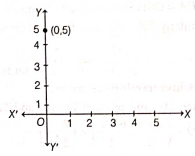
Assertion : The point (0, 5) lies on Y-axis.
Reason : The x-coordinate of the point on Y-axis is zero
(a) Both Assertion and Reason are correct and Reason is the correct explanation of Assertion.
(b) Both Assertion and Reason are correct but Reason is not the correct explanation of Assertion.
(c) Assertion is correct but Reason is incorrect.
(d) Assertion is incorrect but Reason is correct.
3.
Assertion : If the points A(4, 3) and B (x, 5) lie on a circle with centre 0(2, 3), then the value of x is 2.
Reason : Centre of a circle is the mid-point of each chord of the circle.
(a) Both Assertion and Reason are correct and Reason is the correct explanation of Assertion.
(b) Both Assertion and Reason are correct but Reason is not the correct explanation of Assertion.
(c) Assertion is correct but Reason is incorrect.
(d) Assertion is incorrect but Reason is correct.
4.
Assertion (A) Total surface area of the toy is the sum of the curved surface area of the hemisphere and the curved surface area of the cone.
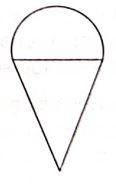
Reason (R) Toy is obtained by fixing the plane surfaces of the hemisphere and cone together.
(a) Both Assertion and Reason are correct and Reason is the correct explanation of Assertion.
(b) Both Assertion and Reason are correct but Reason is not the correct explanation of Assertion.
(c) Assertion is correct but Reason is incorrect.
(d) Assertion is incorrect but Reason is correct.
5.
Assertion (A) The surface areaof largest sphere that can be inscribed in a hollow cube of side a cm is \(\pi\) a2 cm2.
Reason (R) The surface area of a sphere of radius r is \(\frac{4}{3} \pi r^3\)
(a) Both Assertion and Reason are correct and Reason is the correct explanation of Assertion.
(b) Both Assertion and Reason are correct but Reason is not the correct explanation of Assertion.
(c) Assertion is correct but Reason is incorrect.
(d) Assertion is incorrect but Reason is correct.
6.
Assertion When two coins are tossed together, the probability of getting no tail is \(\frac{1}{4}\).
Reason The probability P(E) of an event Esatisfies \(0 \leq P(E) \leq 1\).
(a) Both Assertion and Reason are correct and Reason is the correct explanation of Assertion.
(b) Both Assertion and Reason are correct but Reason is not the correct explanation of Assertion.
(c) Assertion is correct but Reason is incorrect.
(d) Assertion is incorrect but Reason is correct.
7.
Assertion (A) : \(-5, \frac{-5}{2}, 0, \frac{5}{2}, \ldots\) is an arithmetic progression.
Reason (R) : The terms of an arithmetic progression cannot have both positive and negative rational numbers.(a) Both Assertion and Reason are correct and Reason is the correct explanation of Assettion.
(b) Both Assertion and Reason are correct but Reason is not the correct explanation of Assertion.
(c) Assertion is correct but Reason is incorrect.
(d) Assertion is incorrect but Reason is correct.
8.
Assertion : If \(5+\sqrt{7}\) is a root of a quadratic equation with rational coefficients, then its other root is \(5-\sqrt{7}\).
Reason : Surd roots of a quadratic equation with rational coefficients occur in conjugate pairs.
(a) Both Assertion and Reason are correct and Reason is the correct explanation of Assertion.
(b) Both Assertion and Reason are correct but Reason is not the correct explanation of Assertion.
(c) Assertion is correct but Reason is incorrect.
(d) Assertion is incorrect but Reason is correct.
9.
Assertion (A) In a cricket match, a batsman hits a boundary 9 times out of 45 balls he plays. The probability that in a given ball, he does not hit the boundary is \(\frac{4}{5}\).
Reason (R) P(E) + P(not E) = 1
(a) Both Assertion (A) and Reason (R) are true and Reason (R) is the correct explanation of the Assertion (A).
(b) Both Assertion (A) and Reason (R) are true but Reason (R) is not correct explanation ot the Assertion (A).
(c) Assertion (A) is true but Reason (R) is false.
(d) Assertion (A) is false but Reason (R) is true.
10.
Assertion (A) The point which divides the line segment joining the points A (1, 2) and B(-1, 1) internally in the ratio 1 : 2 is \(\left(\frac{-1}{3}, \frac{5}{3}\right)\)
Reason (R) The coordinates of the point which divides the line segment joining the points A (x1, y1 )and B (x2, y2 ) in the ratio m1 : m2 are \(\left(\frac{m_1 x_2+m_2 x_1}{m_1+m_2}, \frac{m_1 y_2+m_2 y_1}{m_1+m_2}\right)\)
(a) Both Assertion (A) and Reason (R) are true and Reason (R) is the correct explanation of the Assertion (A).
(b) Both Assertion (A) and Reason (R) are true but Reason (R) is not correct explanation ot the Assertion (A).
(c) Assertion (A) is true but Reason (R) is false.
(d) Assertion (A) is false but Reason (R) is true.
11.
Assertion : The HCF of two numbers is 5 and their product is 150. Then, their LCM is 40.
Reason : For any two positive integers a and b. HCF (a, b) x LCM (a, b) = a x b
(a) Both Assertion and Reason are correct and Reason is the correct explanation of Assertion.
(b) Both Assertion and Reason are correct but Reason is not the correct explanation of Assertion.
(c) Assertion is correct but Reason is incorrect.
(d) Assertion is incorrect but Reason is correct.
12.
Assertion : The number 5n cannot end with the digit 0. where n is a natural number.
Reason : Prime factorisation of 5 has only two factors 1 and 5.
(a) Both Assertion and Reason are correct and Reason is the correct explanation of Assertion.
(b) Both Assertion and Reason are correct but Reason is not the correct explanation of Assertion.
(c) Assertion is correct but Reason is incorrect.
(d) Assertion is incorrect but Reason is correct.
13.
Assertion (A) \(\sqrt{2}(5-\sqrt{2})\) is an irrational number.
Reason (R) Product of two irrational number is always irrational.
(a) Both Assertion (A) and Reason (R) are true and Reason (R) is the correct explanation of Assertion (A).
(b) Both Assertion (A) and Reason (R) are true but Reason (R) is not the correct explanation of Assertion (A).
(c) Assertion (A)is true but Reason (R) is false.
(d) Assertion (A) is false but Reason (R) is true.
14.
Assertion (A) The distance of P (a, b) from origin is a2 + b2.
Reason (R) The distance between two points A(x1, y1) and B(x2, y2) is \(\sqrt{\left(x_2-x_1\right)^2+\left(y_2-y_1\right)^2}\)
(a) Both Assertion (A) and Reason (R) are true and Reason (R) is the correct explanation of Assertion (A).
(b) Both Assertion (A) and Reason (R) are true but Reason (R) is not the correct explanation of Assertion (A).
(c) Assertion (A)is true but Reason (R) is false.
(d) Assertion (A) is false but Reason (R) is true.
15.
Assertion: Three points A, B and C are such that AB + BC > AC, then they are collinear.
Reason: Three points are collinear if they lie on a straight line.
Codes :
(a) If both Assertion and Reason are correct and Reason is the correct explanation of Assertion.
(b) If both Assertion and Reason are correct, but Reason is not the correct explanation of Assertion.
(c) If Assertion is correct but Reason is incorrect.
(d) If Assertion is incorrect but Reason is correct.
16.
Assertion : The coordinates of the points which divide the line segmen joining A (4, - 1) and B(-2, - 3) into three equal parts are \(\left(2, \frac{-5}{3}\right)\) and \(\left(0, \frac{-7}{3}\right)\) .
Reason : The points which divide AB in the ratio 1 : 3 and 3 : 1 are called points of trisection of AB.
Codes :
(a) If both Assertion and Reason are correct and Reason is the correct explanation of Assertion. -
(b) If both Assertion and Reason are correct, but Reason is not the correct explanation of Assertion.
(c) If A~sertion is correct but Reason is incorrect.
(d) If Assertion is incorrect but Reason is correct.
17.
Assertion : PArea of the triangle whose vertices are \(A\left(\frac{-3}{2}, 3\right), B(6,-2) \text { and } C(-3,4)\) ) is 0.
Reason: The points A, Band Care collinear.
Codes :
(a) If both Assertion and Reason are correct and Reason is the correct explanation of Assertion. -
(b) If both Assertion and Reason are correct, but Reason is not the correct explanation of Assertion.
(c) If A~sertion is correct but Reason is incorrect.
(d) If Assertion is incorrect but Reason is correct.
18.
Assertion: A number x is chosen at random from the numbers -3,-2,-1. 0, 1.2, 3, then the probability that Ixl < 2 is \(\frac{4}{7}\)
Reason: The probability that a number selected from the numbers 1, 2, 3, 20 is a multiple of 3 is \(\frac{3}{10}\).
Codes
(a) If both Assertion and Reason are correct and Reason is the correct explanation of Assertion.
(b) If both Assertion and Reason are correct, but Reason is not the correct explanation of Assertion.
(c) If Assertion is correct but Reason is incorrect.
(d) If Assertion is incorrect but Reason is correct.
19.
Assertion: The probability of selecting a number from the numbers 1 to 20 is \(\frac{1}{20}\).
Reason: For any event E, if P(E) = 1, then E is called an impossible event.
Codes
(a) Both Assertion and Reason are correct and Reason is the correct explanation of Assertion.
(b) Both Assertion and Reason are correct but Reason is not the correct explanation of Assertion.
(c) Assertion is correct but Reason is incorrect.
(d) Assertion is incorrect but Reason is correct.
20.
Assertion: In a lottery, there are 5 prizes and 20 blanks, the probability of not getting a prize 4 is \(\frac{4}{5}\)
Reason: A die is tossed once, then the probability of getting a number less than 5 is \(\frac{2}{3}\)
Codes
(a) If both Assertion and Reason are correct and Reason is the correct explanation of Assertion.
(b) If both Assertion and Reason are correct, but Reason is not the correct explanation of Assertion.
(c) If Assertion is correct but Reason is incorrect.
(d) If Assertion is incorrect but Reason is correct.
21.
Assertion: In a quadrilateral ABCD, ∠B = 90°. If AD2 = AB2 + BC2 + CD2, then ∠ACD = 90°.
Reason: In a triangle, if the square of one side is equal to the sum of the squares of the other two sides, then the angle opposite to the first side is a right angle.
Codes:
(a) If both Assertion and Reason are correct and Reason is the correct explanation of Assertion.
(b) If both Assertion and Reason are correct, but Reason is not the correct explanation of Assertion.
(c) If Assertion is correct but Reason is incorrect.
(d) If Assertion is incorrect but Reason is correct.
22.
Assertion: In ΔABC, ∠B = 90° and BD ⊥ AC. If AD = 4 cm and CD = 5 cm then BD is 2\(\sqrt5\) cm.
Reason: The ratio of the areas of two similar triangles are equal to the ratio of squares of any two corresponding sides.
Codes:
(a) If both Assertion and Reason are correct and Reason is the correct explanation of Assertion.
(b) If both Assertion and Reason are correct, but Reason is not the correct explanation of Assertion.
(c) If Assertion is correct but Reason is incorrect.
(d) If Assertion is incorrect but Reason is correct.
23.
Assertion: In a rhombus of side 15 cm, one of the diagonals is 20 cm long. The length of the second diagonal is 10\(\sqrt6\) cm.
Reason: The sum of the squares of the sides of a rhombus is equal to the sum of the squares of its diagonals.
Codes:
(a) If both Assertion and Reason are correct and Reason is the correct explanation of Assertion.
(b) If both Assertion and Reason are correct, but Reason is not the correct explanation of Assertion.
(c) If Assertion is correct but Reason is incorrect.
(d) If Assertion is incorrect but Reason is correct.
24.
Assertion: Δ ABC ∼ Δ POR such that ar(ΔABC) = 36 cm2 and ar(ΔPOR) = 49 cm2. If AB = 6 cm, then PQ = 10 cm.
Reason: If Δ ABC - Δ DEP, then \(\frac{\operatorname{ar}(\Delta A B C)}{\operatorname{ar}(\Delta D E F)}=\frac{A B^{2}}{D E^{2}}=\frac{B C^{2}}{E F^{2}}=\frac{A C^{2}}{D F^{2}}\)
Codes:
(a) If both Assertion and Reason are correct and Reason is the correct explanation of Assertion.
(b) If both Assertion and Reason are correct, but Reason is not the correct explanation of Assertion.
(c) If Assertion is correct but Reason is incorrect.
(d) If Assertion is incorrect but Reason is correct.
25.
Assertion : In the given figure, AP and AO are tangents to a circle such that AP = 11cm and \(\angle P A Q=60^{\circ}\), then length of PQ is 8 cm.
Reason : The centre of the circle lies on the bisector of the angle between the two tangents.
Codes :
(a) If both Assertion and Reason are correct and Reason is the correct explanation of Assertion.
(b) If both Assertion and Reason are correct, but Reason is not the correct explanation of Assertion.
(c) If Assertion is correct but Reason is incorrect.
(d) If Assertion is incorrect but Reason is correct.
26.
Assertion : If TA and TB are tangents to the circle with centre O such that \(\angle \mathrm{OAB}=35^{\circ}\),then \(\angle O A B=35^{\circ}\)
Reason : Two tangents TP and TO are drawn to a circle with centre O from an external point T, then \(\angle P T Q=2 \angle O P Q\), \(\angle O A B=35^{\circ}\).
Codes :
(a) If both Assertion and Reason are correct and Reason is the correct explanation of Assertion.
(b) If both Assertion and Reason are correct, but Reason is not the correct explanation of Assertion.
(c) If Assertion is correct but Reason is incorrect.
(d) If Assertion is incorrect but Reason is correct.
27.
Assertion : If tangents PA and PB from a point P to a circle with centre O are inclined to each other at angle of 76°, then L.POA is 52°.
Reason :Two tangents AP and AQ are drawn to a circle with centre O from a point A. Then,\(\angle A P O=\angle A Q O\)
Codes :
(a) If both Assertion and Reason are correct and Reason is the correct explanation of Assertion.
(b) If both Assertion and Reason are correct, but Reason is not the correct explanation of Assertion.
(c) If Assertion is correct but Reason is incorrect
(d) If Assertion is incorrect but Reason is correct
28.
Assertion : A tangent PA at point A of a circle of radius 6 cm meets a line through the centre O at a point P so that OP = 10 cm, then PA = 9 cm.
Reason : The tangents drawn at the ends of a diameter of a circle are parallel.
Codes :
(a) If both Assertion and Reason are correct and Reason is the correct explanation of Assertion.
(b) If both Assertion and Reason are correct, but Reason is not the correct explanation of Assertion.
(c) If Assertion is correct but Reason is incorrect
(d) If Assertion is incorrect but Reason is correct.
29.
Assertion cos2 A - sin 2 A = 1 is a trigonometric identity.
Reason An equation involving trigonometric ratios of an angle is called trigonometric identity, if it is true for all values of the angles involved.
Codes:
(a) If both Assertion and Reason are correct and Reason is the correct explanation of Assertion.
(b) If both Assertion and Reason are correct, but Reason is not the correct explanation of Assertion.
(c) If Assertion is correct but Reason is Incorrect.
(d) If Assertion is incorrect but Reason is correct
30.
Assertion In right triangle ABC and DEF\(\left(\angle C=\angle F=90^{\circ}\right), \angle B \text { and } \angle E\) are acute angles, such that sin B = sin E, then \(\angle B=\angle E\)
Reason \(\Delta A B C \sim \Delta D E F\)
Codes:
(a) If both Assertion and Reason are correct and Reason is the correct explanation of Assertion.
(b) If both Assertion and Reason are correct, but Reason is not the correct explanation of Assertion.
(c) If Assertion is correct but Reason is Incorrect.
(d) If Assertion is incorrect but Reason is correct
31.
Assertion The equation \(\sec ^{2} \theta=\frac{4 x y}{(x+y)^{2}} \text { is }\) only possible, when x = y.
Reason \(\sec ^{2} \theta \geq 1\) and therefore \((x-y)^{2} \leq 0\)
Codes:
(a) If both Assertion and Reason are correct and Reason is the correct explanation of Assertion.
(b) If both Assertion and Reason are correct, but Reason is not the correct explanation of Assertion.
(c) If Assertion is correct but Reason is Incorrect.
(d) If Assertion is incorrect but Reason is correct.
32.
Assertion The rational number \(\frac{129}{2^{2} \times 5^{7} \times 7^{2}}\) is non-terminating repeating decimals.
Reason Let x be a rational number whose decimal expansion terminates. Then, x can expressed in the form of \(\frac{p}{q}\) where p and q are coprime and the prime factorisation of q is of the form 2m x 5 n, where m and n are non-negative integers.
codes:
(a) If both Assertion and Reason are correct and Reason is the correct explanation of Assertion.
(b) If both Assertion and Reason are correct, but Reason is not the correct explanation of Assertion.
(c) If Assertion is correct but Reason is incorrect.
(d) If Assertion is incorrect but reason is correct.
33.
Assertion The product of \((3+\sqrt{5})\) and (3 - \(\sqrt{5}\)) is a rational number.
Reason The product of two irrational number is always rational number.
codes:
(a) If both Assertion and Reason are correct and Reason is the correct explanation of Assertion.
(b) If both Assertion and Reason are correct, but Reason is not the correct explanation of Assertion.
(c) If Assertion is correct but Reason is incorrect.
(d) If Assertion is incorrect but Reason is correct.
34.
Assertion Sum of first 10 even natural number is 120.
Reason If a is the first term, l is the last term and d is the common difference of an Ap, then nth term from the end is given by 1- (n -1) d.
Codes:
(a) If both Assertion and Reason are correct and Reason is the correct explanation of Assertion.
(b) If both Assertion and Reason are correct, but Reason is not the correct explanation of Assertion.
(c) If Assertion is correct but Reason is incorrect.
(d) If Assertion is incorrect but Reason is correct.
35.
Assertion If the nth term of an AP be (2n2 - 1),then the sum of its first n terms is n3.
Reason If a,l and n are first term, last term and number of terms of an Ap, respectively then \(S_{n}=\frac{n}{2}(a+l)\)
Codes:
(a) If both Assertion and Reason are correct and Reason is the correct explanation of Assertion.
(b) If both Assertion and Reason are correct, but Reason is not the correct explanation of Assertion.
(c) If Assertion is correct but Reason is incorrect.
(d) If Assertion is incorrect but Reason is correct.
36.
Assertion In an Ap,Sn = n2 + n, then T20 = 40.
Reason In an Ap, an - an-1 = d.
Codes:
(a) If both Assertion and Reason are correct and Reason is the correct explanation of Assertion.
(b) If both Assertion and Reason are correct, but Reason is not the correct explanation of Assertion.
(c) If Assertion is correct but Reason is incorrect.
(d) If Assertion is incorrect but Reason is correct.
37.
Assertion The first term of an AP is m and its common difference is p, then the 13th term is a + 10p.
Reason In an AP Sn - Sn-1 = an.
Codes:
(a) If both Assertion and Reason are correct and Reason is the correct explanation of Assertion.
(b) If both Assertion and Reason are correct, but Reason is not the correct explanation of Assertion.
(c) If Assertion is correct but Reason is incorrect.
(d) If Assertion is incorrect but Reason is correct.
38.
Assertion: If the equation
y2 + 4my + n = 0 has real roots, then \(m^{2}=\frac{n}{4}\)
Reason: If the quadratic equation
ax2 + bx + c = 0, a ≠ 0 has b2 - 4ac = 0, then x = \(\frac{-b}{2 a}, \frac{-b}{2 a}\)
Codes:
(a) If both Assertion and Reason are correct and Reason is the correct explanation of Assertion.
(b) If both Assertion and Reason are correct, but Reason is not the correct explanation of Assertion.
(c) If Assertion is correct but Reason is incorrect.
(d) If Assertion is incorrect but Reason is correct.
39.
Assertion x2 + 4kx + 25 = 0 has no real roots if \(\frac{-5}{2}<\ k\ \frac{5}{2}\)
Reason Quadratic equation
Codes:
ax2 + bx + c = 0, a \(\neq \) 0 has real roots if b2- 4ac \(\geq\)0.
(a) If both Assertion and Reason are correct and Reason is the correct explanation of Assertion.
(b) If both Assertion and Reason are correct, but Reason is not the correct explanation of Assertion.
(c) If Assertion is correct but Reason is incorrect.
(d) If Assertion is incorrect but Reason is correct.
40.
Assertion:The roots of 2x2 + 7x - 15 is - 5 and \(\frac{3}{2}\)
Reason: Roots of the quadratic equation ax2 + bx + c = 0, a \(\neq \) 0 are given by \(x = {-b \pm \sqrt{b^2-4ac} \over 2a}\)
Codes:
(a) If both Assertion and Reason are correct and Reason is the correct explanation of Assertion.
(b) If both Assertion and Reason are correct, but Reason is not the correct explanation of Assertion.
(c) If Assertion is correct but Reason is incorrect.
(d) If Assertion is incorrect but Reason is correct.
41.
Assertion: The equation x2 + x + 4 = 0 has equal roots.
Reason: Quadratic equation
Codes:
ax2 + bx + c = 0, a \(\neq \) 0 has equal roots if b2 -4ac = 0.
(a) If both Assertion and Reason are correct and Reason is the correct explanation of Assertion.
(b) If both Assertion and Reason are correct, but Reason is not the correct explanation of Assertion.
(c) If Assertion is correct but Reason is incorrect.
(d) If Assertion is incorrect but Reason is correct.
1.
(a) Both Assertion and Reason are correct and Reason is the correct explanation of Assertion.
Given, \(\operatorname{cosec} \theta-\cot \theta\)
Reciprocal of this expression \(=\frac{1}{\operatorname{cosec} \theta-\cot \theta}\)
On multiplying and dividing by \(\operatorname{cosec} \theta+\cot \theta\),
\(\frac{1}{\operatorname{cosec} \theta-\cot \theta} \times \frac{\operatorname{cosec} \theta+\cot \theta}{\operatorname{cosec} \theta+\cot \theta}= \frac{\operatorname{cosec} \theta+\cot \theta}{\operatorname{cosec}^2 \theta-\cot ^2 \theta}\)
\(=\operatorname{cosec} \theta+\cot \theta \quad\left[\because \operatorname{cosec}^2 \theta-\cot ^2 \theta=1\right]\)
2.
(a) Both Assertion and Reason are correct and Reason is the correct explanation of Assertion.
3.
(c) Assertion is correct but Reason is incorrect.
(c) Given, A(4,3) and B(x, 5) are two points on the circle with centre of circle O(2,3).
\(\therefore O A =O B \) [radius of circle]
\(\Rightarrow O A^2=O B^2\)
\(\Rightarrow (4-2)^2+(3-3)^2 =(x-2)^2+(5-3)^2\)
[by distance formula]
\(\Rightarrow \quad(x-2)^2+4=4 \Rightarrow(x-2)^2=0\)
\( \Rightarrow \quad x-2=0 \Rightarrow x=2\)
4.
Total surface area (TSA) of toy = CSA of hemisphere + CSA of cone
This is because the toy is obtained by joining the plane surfaces of hemisphere and cone.
5.
(c) Given, side of cube = a cm
\(\Rightarrow\) Diameter of sphere = a cm
\(\Rightarrow\) Radius of sphere = \(\frac{a}{2}\)cm
We know that surface area of sphere = 4\(\pi\)r2
\(=4 \pi \times \frac{a}{2} \times \frac{a}{2}\)
= a2\(\pi\)cm2
6.
(b) S = {HH, HT, TH, TT}
Favourable outcomes = {HH}
Total number of outcomes = 4
\(\therefore \text { Probability }=\frac{\text { Number of favourable outcomes }}{\text { Total number of outcomes }}=\frac{1}{4}\)
Reason is true but not correct explanation of Assertion.
7.
(c) Assertion is correct but Reason is incorrect.
8.
(a) Both Assertion and Reason are correct and Reason is the correct explanation of Assertion.
Let \(a x^2+b x+c=0\) be the quadratic equation. Then, roots of this equation are given by
\(x=\frac{-b \pm \sqrt{b^2-4 a c}}{2 a}\)
\(x=-\frac{b}{2 a} \pm \frac{\sqrt{b^2-4 a c}}{2 a}\)
This shows that irrational roots can exist only as conjugate pairs.
9.
(a) A bastman hits a boundary 9 times out of 45 balls he plays.
P(A) = P (hits a target) = \(\frac{9}{45}=\frac{1}{5}\)
Since, \(P(A)+P(\bar{A})=1\)
\(\begin{aligned}
\Rightarrow \quad P(\bar{A}) & =1-P(A)
\end{aligned}\)
\(\begin{aligned}
=1-\frac{1}{5}=\frac{4}{5}
\end{aligned}\)
\(\therefore\) Probability of not hitting the boundary is \(\frac{4}{5}\)
\(\therefore\) Both Assertion (A) and reason (R) are correct.
10.
(d) Let the point C divides A (1, 2) and B(-1, 1) internally in the ratio 1 : 2.
Then, by section formula, we have
\(x=\frac{m_1 x_2+m_2 x_1}{m_1+m_2} \text { and } y=\frac{m_1 y_2+m_2 y_1}{m_1+m_2}\)
So, \(x=\frac{2 \times 1+1 \times(-1)}{2+1} \text { and } y=\frac{2 \times 2+1 \times 1}{2+1}\)
\(\Rightarrow x=\frac{2-1}{3} \text { and } y=\frac{4+1}{3} \Rightarrow x=\frac{1}{3} \text { and } y=\frac{5}{3}\)
\(\therefore \quad x=\frac{1}{3} \text { and } y=\frac{5}{3}\)
\(\therefore\) Assertion (A) is false but Reason (R) is true.
11.
(d) We know that HCF and LCM of two numbers (a, b) is given by
\( \operatorname{HCF}(a, b) \times \operatorname{LCM}(a, b)=a \times b\)
\(\Rightarrow 5 \times \operatorname{LCM}(a, b)=150\)
\( \Rightarrow \operatorname{LCM}(a, b)=\frac{150}{5}=30\)
\(\therefore\) Assertion is incorrect but Reason is correct.
12.
(a) Both Assertion and Reason are correct and Reason is the correct explanation of Assertion.
13.
(c) Assertion (A) Simplitying the expression \(\sqrt{2}(5-\sqrt{2})=5 \sqrt{2}-(\sqrt{2})^2=5 \sqrt{2}-2\) It is known that \(\sqrt{2}\) is an irrational number and multiplying an irrational number by a rational number (here, 5) results in an irrational number. Subtracting a rational number (2) from an irrational number still gives us an irrational number.
Thus, \(\sqrt{2}(5-\sqrt{2})\) is an irrational number.
Hence, Assertion (A) is true.
Reason (R) It is known that \(\sqrt{2}\) is an irrational number. Product of \(\sqrt{2}\) and \(\sqrt{2}\) is equal to 2, which is a rational number.
Therefore, product of two irrational numbers is always an irrational number is false.
Hence, Reason (R) is false.
14.
(a) Assertion (A) The distance of P(a, b) from origin i.e. (0, 0) is given by the distance formula,
\(\sqrt{\left(x_2-x_1\right)^2+\left(y_2-y_1\right)^2}\) , where (x1, y1) and (x2, y2) are two points on a plane.
Here, (x1, y1) = (a, b) and (x2 - y2) = (0, 0)
On substituting the values in the formula, we get
\(\sqrt{(0-a)^2+(0-b)^2}=\sqrt{a^2+b^2}\)
Therefore, Assertion (A) is true.
Reason (R) The distance between the points A(x1, y1) and B(x2, y2) is given by the distance formula
\(\sqrt{\left(x_2-x_1\right)^2+\left(y_2-y_1\right)^2}\)
Therefore, Reason (R) is true.
Hence, both Assertion (A) and Reason (R) are true. Also, Reason (R) is the correct explanation of Assertion (A).
15.
(d) Assertion Three points A, B, C are collinear if and only if AB + BC = AC, but AB + BC > AC.
. Ii A, B, C att: not collinear.
16.
(c) Assertion

\(\therefore\) Coordinates of \(P=\left(\frac{-2+8}{1+2}, \frac{-3-2}{1+2}\right)\)
= \(\left(2, \frac{-5}{3}\right)\)
Coordinates of \(Q=\left(\frac{-4+4}{1+2}, \frac{-6-1}{1+2}\right)=\left(0, \frac{-7}{3}\right)\)
which is correct.
Reason The point which divide AB in the ratio 1 : 2 and 2 : 1 are called point of trisection.
17.
(a) Assertion Area of \(\triangle A B C\)
\(=\frac{1}{2}\left|\frac{-3}{2}(-2-4)+6(4-3)+(-3)(3+2)\right|\)
\(=\frac{1}{2}|9+6-15|=0\)
18.
(d) Assertion Given numbers -3,-2,-1, 0, 1, 2, 3.
\(\because\) Ixl < 2 = -1. 0, 1
\(\therefore\) Required probability=\(\frac{3}{7}\), which is incorrect. 7
Reason From the numbers 1,2,3, .... , 20
Multiple of 3 are 3,6,9,12,15,18
\(\therefore\) Probability \(=\frac{6}{20}=\frac{3}{10}\), Which is correct.
19.
(c) Total possible outcomes are 20 as there as 20 numbers from the numbers 1 to 20 and favourable outcome is 1.
\(\therefore\) Required probability = \(\frac{1}{20}\)
20.
(b) If both Assertion and Reason are correct, but Reason is not the correct explanation of Assertion.
21.
(a) If both Assertion and Reason are correct and Reason is the correct explanation of Assertion.
22.
(c) If Assertion is correct but Reason is incorrect.
23.
(a) If both Assertion and Reason are correct and Reason is the correct explanation of Assertion.
24.
(d) If Assertion is incorrect but Reason is correct.
25.
If Assertion is incorrect but Reason is correct.
26.
If both Assertion and Reason are correct and Reason is the correct explanation of Assertion.
27.
If both Assertion and Reason are correct, but Reason is not the correct explanation of Assertion.
28.
If Assertion is incorrect but Reason is correct.
29.
(d) If Assertion is incorrect but Reason is correct.
30.
(a) If both Assertion and Reason are correct and Reason is the correct explanation of Assertion.
31.
(a) If both Assertion and Reason are correct and Reason is the correct explanation of Assertion.
32.
(a) If both Assertion and Reason are correct and Reason is the correct explanation of Assertion
33.
(c) If Assertion is correct but Reason is incorrect.
34.
(d) If Assertion is incorrect but Reason is correct.
35.
(a) If both Assertion and Reason are correct and Reason is the correct explanation of Assertion.
36.
(b) If both Assertion and Reason are correct, but Reason is not the correct explanation of Assertion.
37.
(d) If Assertion is incorrect but Reasonis correct.
38.
(a) If both Assertion and Reason are correct and Reason is the correct explanation of Assertion.
39.
(b) If both Assertion and Reason are correct, but Reason is not the correct explanation of Assertion.
40.
(a) If both Assertion and Reason are correct and Reason is the correct explanation of Assertion.
41.
(d) If Assertion is incorrect but Reason is correct.

10th Standard CBSE Syllabus & Materials
10th Standard CBSE
CBSE 10th Social Science PS - Federalism - New Model Questions Papers Study Material - QB365 Set A
NEW10th Standard CBSE
CBSE 10th Social Science PS - Power Sharing - New Model Questions Papers Study Material - QB365 Set A
NEW10th Standard CBSE
CBSE 10th Social Science GEO - Manufacturing Industries - New Model Questions Papers Study Material - QB365 Set A
NEW10th Standard CBSE
CBSE 10th Social Science GEO - Minerals and Energy Resources - New Model Questions Papers Study Material - QB365 Set A



NCERT Books

Syllabus

Exam Pattern

Sample Question Papers

Previous year Question Papers

Important Notes

MCQ Practice test

NCERT Exemplers

Case study Questions

Image Based Questions

Passage based Questions

HOT Questions

Value Based Questions

Model Questions Papers
NCERT ( Book Back ) Questions

Assertion and Reason
Important Questions And Answers

CBSE 10th Standard CBSE Subjects
CBSE Standards



