
 100% FREE ACCESS
10th Standard CBSE Syllabus & Materials
10th Standard CBSE
CBSE 10th Social Science ECO - Globalisation and the Indian Economy - New Model Questions Papers Study Material - QB365 Set A
NEW10th Standard CBSE
CBSE 10th Social Science ECO - Money and Credit - New Model Questions Papers Study Material - QB365 Set A
NEW10th Standard CBSE
CBSE 10th Social Science ECO - Sectors of the Indian Economy - New Model Questions Papers Study Material - QB365 Set A
NEW10th Standard CBSE
CBSE 10th Social Science ECO - Development - New Model Questions Papers Study Material - QB365 Set A
NEW10th Standard CBSE
CBSE 10th Social Science PS - Outcomes of Democracy - New Model Questions Papers Study Material - QB365 Set A
NEW10th Standard CBSE
CBSE 10th Social Science PS - Gender, Religion and Caste - New Model Questions Papers Study Material - QB365 Set A

Published on: 20/10/2025
Download CBSE Class 10th Standard CBSE Maths question papers, sample papers, important questions, and previous year solved papers in PDF format. Get free study materials, NCERT solutions, and exam preparation resources for Class 10th Standard CBSE Maths
Questions + Answers key
Take MCQ Maths Test
1.
The following real numbers have decimal expansions as given below. In each case, decide whether they are rational or not. If they are rational, and of the form, \(\frac{p}{q}\) what can you say about the prime factors of q?
43.123456789
2.
Find the values of a and b, if they are the zeroes of polynomial x2 + ax + b.
3.
Find the sum of first 25 terms of an AP whose nth term is 1 - 4n.
4.
Find the zeroes of the following polynomial by factorisation method and verify the relations between the zeroes and their coefficients \(-\sqrt{3},-7 / \sqrt{3}\)
5.
Show that one and only one out of n, n + 2 or n + 4 is divisible by 3, where n is any positive integer
6.
How many multiples of 9 lie between 10 and 300?
7.
Two arithmetic progressions have the same first term. The common difference of one progression is 4 more than the other progression, 124th term of the first arithmetic progression is the same as 42nd term of the second. Find one set of possible values of the common differences, Show your work,
8.
If the zeroes of the polynomial x3-3x2+x+1 are a-b and a+b, then find a and b.
9.
Show that any positive integer is of the form 3q or 3q + 1 or 3q + 2 for some integer q.
10.
Examine that the sequence 7,13,19,25,... is an AP. Also, find the common difference.
11.
n is a natural number such that n > 1 Which of these can definitely be expressed as a product of primes?
(i) √n (ii) n (iii) √n/2
only (ii)
only (i) and (ii)
all (i), (ii) and (iii)
cannot be determined without knowing n
12.
Find the fifth term of an A.P whose first term is -1 and common difference is -3
-13
10
-16
4
13.
The first and last terms of an AP are 1 and 11. If the sum of all its terms is 36, then the number of terms will be
8
5
6
7
14.
The number of zeroes for the polynomial y = p (x) from the given graph is :
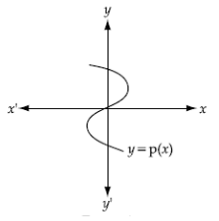
2
3
0
1
15.
The following graph corresponds to a
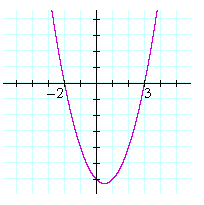
Linear polynomial
Bi- quadratic polynomial
Quadratic polynomial
Cubic polynomial
16.
6n is divisible by
2
3
5
2 and 3 both
17.
In a pool at an aquarium, a dolphin jumps out of the water travelling at 20 cm/s. Its height above water level after t s is given by h = 20t - 16t2.
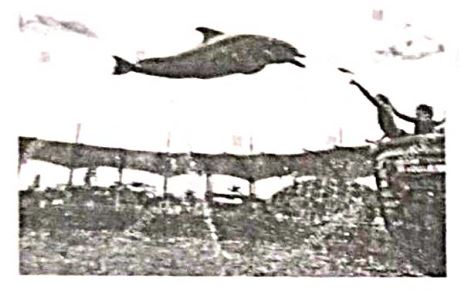
On the basis of above information, answer the following questions.
(i) Find zeroes of polynomial p(t) = 20t - 16t2.
(ii) Which of the following types of graph represents p(t)?
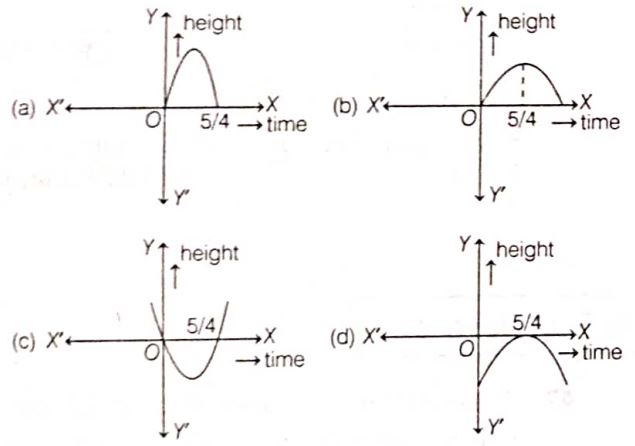
(iii) (a) What would be the value of h at t = \(\frac{3}{2}\)?
Interpret the result.
Or
(b) How much distance has the dolphin covered before hitting the water level again?
18.
Aditya works as a librarian in Bright Children International School in Indore. He ordered for books on English, Hindi and Mathematics. He received 96 English books, 240 Hindi Books and 336 Maths books. He wishes to arrange these books in stacks such that each stack consists of the books on only one subject and the number of books in each stack is the same. He also wishes to keep the number of stacks minimum.

(a) Find the number of books in each stack.
| (i) 24 | (ii) 48 | (iii) 54 | (iv)72 |
(b) Find the total number of stacks formed.
| (i) 7 | (ii) 10 | (iii) 14 | (iv) 16 |
(c) How many stacks of Mathematics books will be formed?
| (i) 7 | (ii) 8 | (iii) 9 | (v) 10 |
(d) If the thickness of each English book is 3 cm, then the height of each stack of English books is
| (i) 120 cm | (ii) 124 cm | (iii) 136 cm | (iv) 144 cm |
(e) If each Hindi book weighs 1.5 kg, then find the weight of books in a stack of Hindi books.
| (i) 24 kg | (ii) 48 kg | (iii) 72 kg | (iv) 96 kg |
19.
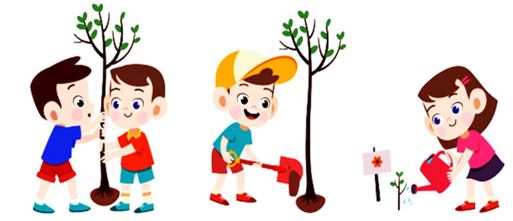
In a school, students thought of planting trees in and around the school to reduce air pollution. It was decided that each section of each class would plant twice as many plants as the class standard. There were 3 sections of each standard from 1 to 12. So, if there are three sections in class 1 say 1A, 1B and 1C, then each section would plant 2 trees. Similarly, each section of class 2 would plant 4 trees and so on. Thus, the number of trees planted by classes 1 to 12 formed an AP given by 6, 12, 18,...
(a) What is the common difference of the AP formed
| (i) 6 | (ii) 5 | (iii) 3 | (iv) 2 |
(b) What will be the nth term of the AP formed?
| (i) 5n | (ii) 6n | (iii) 5n+6 | (iv) 6n+6 |
(c) How many trees will be planted by the students of all the sections of class 8?
| (i) 42 | (ii) 48 | (iii) 54 | (iv) 60 |
(d) Find the total number of trees planted by class 12 students.
| (i) 54 | (ii) 72 | (iii) 66 | (iv) None of these |
(e) What will be the third term from the end of the AP formed?
| (i) 72 | (ii) 66 | (iii) 60 | (iv) 54 |
1.
We know that, a rational number has either terminating or non-terminating repeating decimal expansion.
Here, 43.123456789 has terminating decimal expansion. So, it represents a rational number.
i.e. 43123456789 =\(\frac{43123456789}{1000000000}\)= \(\frac{p }{q}\)
Thus, q = 109, whose factors are 29 x 59.
2.
Sum of zeroes \(=-\frac { Coefficient\ of \ x }{ Coefficient \ of \ { x }^{ 2 } } \)
\(\therefore \quad a + b = - a\)
\(\Rightarrow \quad 2a + b = 0\)
Product of zeroes = \(=-\frac { Constant \ term }{ Coefficient \ of \ { x }^{ 2 } } \)
\(\therefore \quad ab = b\)
\(\Rightarrow \quad a=1\)
then b = - 2
3.
an = 1 - 4n
\(\Rightarrow\) a1 = 1 - 4 x 1 = -3
a2 = 1 - 4 x 2 = -7
d = a2 - a1
= - 7 - ( - 3 ) = - 4
a25 = a + 24d
- 3 = 24 x ( - 4 ) = - 99
Now, S25 = \(\frac{25}{2}({a}_{1}+{a}_{25})\)
\(=\frac{25}{2}(-3-99)\)
= 25 x ( - 51 ) = - 1275
4.
= \(-\sqrt{3},-7 / \sqrt{3}\)
5.
Let n be any +ve integer, then
n = 3q + r, r = 0, 1, 2
n = 3q or 3q + 1 or 3q + 2
Case I:
When, n = 3q,which is divisibleby 3
n + 2 = 3q + 2, which is not divisible by 3
n + 4 = 3q + 4, which is not divisible by 3
Case II:
When, n = 3q + 1, which is not divisible by 3 'h
n + 2 = 3q + 1 + 2 = 3q + 3, which is divisible by 3
n + 4 = 3q + 1 + 4 = 3q + 5, which is not divisible by 3
Case III:
When, n = 3q + 2, which is not divisible by 3
n + 2 = 3q + 2 + 2 = 3q + 4, which is not divisible by 3
n + 4 = 3q + 2 + 4 = 3q + 6, which is divisible 3
Case I, II and III \(\Rightarrow\) One and only one out of n, n + 2 or n + 4 is divisible by 3.
6.
32
7.
Considers \(d_1=d_2+4\) or \(d_2=d_1+4\), where \(d_1\) and \(d_2\) are the common differences of the two arithmetic progressions.
Also, \(a_{124}=b_{42} \Rightarrow a_1+123 d_1=b_1+41 d_2\) where \(a_1, a_{124}, b_1\) and \(b_{42}\) are the \(1 \mathrm{st}, 124 \mathrm{th}, 1\) st and 42 nd terms of the two arithmetic progressions, respectively.
\(\Rightarrow \quad a_1+123 d_1=a_1+41 d_2 \quad\left[\because a_1=b_1\right]\)
Solve the above two equations and the value of \(d_1=-2\) and \(d_2=-6\) or \(d_1=2\) and \(d_2=6\).
One set of possible value of common difference is as follows
\(a_{124} =b_{42} \)
\(\Rightarrow a_1+123\left(4+d_2\right) =b_1+41 d_2\)
\(\Rightarrow \quad 492+123 d_2 =41 d_2 \Rightarrow d_2=-6\)
8.
Given, (a-b),a and (a+b) are the zeroes of the polynomial x3-3x2+x+1.
On comparing given polynomial with
Ax3+Bx2+cx2+D, we get
A=1, B=-3, C=1 and D=1
Now, sum of zeroes=(a-b)+a+(a+b)=-B/A
⇒ \(3a=\frac { -(-3) }{ 1 } =3\) [∵ B=-3, A=1]
⇒ 3A=3⇒A=1
Sum of product of zeroes taken two at a time
=a(a-b)+a(a+b)+(a+b)(a-b)=\(\frac { C }{ A } \)
⇒ a2-ab+a2+ab+a2-b2=1/1 [∵ C=1, A=1]
⇒ 3a2-b2=1⇒3(1)2-b2=1 [from Eq.(i)]
⇒ 3-b2=1⇒b2=2⇒b=\( \pm \sqrt { 2 } \)
Hence, a=1 and b=\( \pm \sqrt { 2 } \)
9.
Let a be any positive integer, then apply Euclid's division lemma for a and b = 3
10.
Yes, 6
11.
(a)
only (ii)
12.
(a)
-13
13.
(c)
6
14.
(d)
1
15.
(c)
Quadratic polynomial
16.
(d)
2 and 3 both
17.
(i) Given, p(t) = 20t - 6t2
For zeroes.
p(t) = 0
\(\Rightarrow\) 20t - 16t2 = 0
\(\Rightarrow\)4t(5 - 4t) = 0
\(\Rightarrow\) 4t = 0 or 5 - 4t = 0
\(\Rightarrow\) t = 0, t = \(\frac{5}{4}\)
\(\therefore\) Zeros of p(t) are 0 and \(\frac{5}{4}\).
(ii) (a) Because 0 and \(\frac{5}{4}\) are zeroes of polynomial and p(t) should increase when height and time are increasing.
(iii) (a) At t = \(\frac{3}{2}\)
\(p\left(\frac{3}{2}\right)=20 \times \frac{3}{2}-16 \times\left(\frac{3}{2}\right)^2=30-36=-6\)
\(\Rightarrow\) Height = 6 cm
'-ve' denote graph is below the X-axis.
(b) \(\therefore\) Distance = Speed \(\times\)Time
\(=20\times \frac{5}{4}\)
= 25 cm
18.
(a) (ii)
96 = 25 x 3
240 = 24 x3 x5
(b) (iii)
Total number of books = 96 +240+336=672
Number of books in each stack = 48
\(\therefore\) Number of stacks formed -= \(\frac{672}{48}=14\)
(c) (i)
Number of mathmatics books = 336
Number of stacks of mathematics books formed = \(\frac{336}{48}\)
= 7
(d) (iv)
Number of books in each stack of english books = 48
Thickness of each english book = 3 cm
\(\therefore\) Height of each stack of english books = (48X3) cm
= 144cm
(e) (iii)
Number of books in a stack of hindi books = 48
Weight of each hindi book = 1.5kg
\(\therefore\) The weight of books in a stack of hindi books
= (48X1.5)kg = 72kg
19.
(a) (i)
The given AP is 6,12,18...,
The common difference = 12-6 =6.
(b) (ii)
In the given AP, we have:a=d=6
\(\therefore a_{n}=a+(n-1) d=6+(n-1) 6=6+6 n-6=6 n\)
(c) (ii)
The number of trees planted by the students of all the sections of class
= 8th term of the given AP
= 6n = 6X8=48
(d) (ii) T
otal number of trees planted by class 12 students
= 6 X 12 = 72
(e) (iii)
3rd term from the end = \((n-3+1) \text { th term }\)
= (12-3+1) th term = 10th term
= 6X10=60

10th Standard CBSE Syllabus & Materials
10th Standard CBSE
CBSE 10th Social Science PS - Federalism - New Model Questions Papers Study Material - QB365 Set A
NEW10th Standard CBSE
CBSE 10th Social Science PS - Power Sharing - New Model Questions Papers Study Material - QB365 Set A
NEW10th Standard CBSE
CBSE 10th Social Science GEO - Manufacturing Industries - New Model Questions Papers Study Material - QB365 Set A
NEW10th Standard CBSE
CBSE 10th Social Science GEO - Minerals and Energy Resources - New Model Questions Papers Study Material - QB365 Set A



NCERT Books

Syllabus

Exam Pattern

Sample Question Papers

Previous year Question Papers

Important Notes

MCQ Practice test

NCERT Exemplers

Case study Questions

Image Based Questions

Passage based Questions

HOT Questions

Value Based Questions

Model Questions Papers
NCERT ( Book Back ) Questions

Assertion and Reason
Important Questions And Answers

CBSE 10th Standard CBSE Subjects
CBSE Standards



