
 100% FREE ACCESS
10th Standard CBSE Syllabus & Materials
10th Standard CBSE
CBSE 10th Social Science ECO - Globalisation and the Indian Economy - New Model Questions Papers Study Material - QB365 Set A
NEW10th Standard CBSE
CBSE 10th Social Science ECO - Money and Credit - New Model Questions Papers Study Material - QB365 Set A
NEW10th Standard CBSE
CBSE 10th Social Science ECO - Sectors of the Indian Economy - New Model Questions Papers Study Material - QB365 Set A
NEW10th Standard CBSE
CBSE 10th Social Science ECO - Development - New Model Questions Papers Study Material - QB365 Set A
NEW10th Standard CBSE
CBSE 10th Social Science PS - Outcomes of Democracy - New Model Questions Papers Study Material - QB365 Set A
NEW10th Standard CBSE
CBSE 10th Social Science PS - Gender, Religion and Caste - New Model Questions Papers Study Material - QB365 Set A

Published on: 21/10/2025
Download CBSE Class 10th Standard CBSE Maths question papers, sample papers, important questions, and previous year solved papers in PDF format. Get free study materials, NCERT solutions, and exam preparation resources for Class 10th Standard CBSE Maths
Questions + Answers key
Take MCQ Maths Test
1.
Prove that \(\frac{\cot A-\cos A}{\cot A+\cos A}=\frac{\operatorname{cosec} A-1}{\operatorname{cosec} A+1}\)
2.
Write the degree of the following polynomials.
x3-3
3.
Graphically, find whether the following pair of equations has no solution, unique solution or infinitely many solutions:
5x - 8y + 1 = 0; (1)
3x - \(24\over5\)y+\(3\over5\)=0 (2)
4.
E and F are points on the sides PQ and PR respectively of a ΔPQR. For the following case, state whether EF || QR. PE = 3.9 cm, EQ = 3 cm, PF = 3.6 cm and FR = 2.4 cm
5.
Find the sum of all multiples of 7 lying between 500 and 900.
6.
The angle of elevation of a cloud from a point 60m above a lake is 300 and the angle of depression of the reflection of the cloud in the lake is 600.Find the height of the cloud.
7.
A card is drawn from a well-shuffled deck of playing cards. Find the probability of drawing
(i) a face card
(ii) a red face card.
8.
Find the value of p for which the point (-1,3), (2,p) and (5,-1) are collinear.
9.
State whether the following quadratic equations have two different real roots. Justify your answer. (x-1)(x+2)+2=0
10.
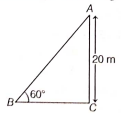
Sachin is a fireman worker. When he throws water on the fire of burning house, he notice that one child is crying for getting help. At once Sachin tied a rope at the top of a pole near the burning house and its other end tied at the ground. He climbed the rope and from the top of the pole picked the child and save their life. Suppose the height of the pole is 20 m and the angle made by the rope with ground is 60°.
(i) Calculate the distance covered by the fireman to reach the top of the pole.
(ii) Find the distance between the foot of the pole and where he tied the rope at the ground.
11.
Prove that sec A (1 – sin A) (sec A + tan A) = 1.
12.
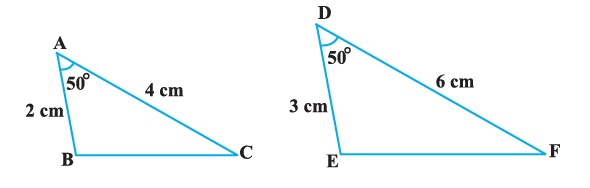
Draw two triangles ABC and DEF such that AB = 2 cm, \(\angle\) A = 50°, AC = 4 cm, DE = 3 cm, \(\angle\) D = 50° and DF = 6 cm
13.
Form the pair of linear equations for the following problems and find their solution by substitution method:
The larger of two supplementary angles exceeds the smaller by 18 degree. Find the angles.
14.
If \(\alpha\) and \(\beta\) are the zeroes of the polynomial x2 + 8x + 6 from a quadratic polynomial whose zeroes are \(\frac{1}{\alpha}\) and \(\frac{1}{\beta}\)
15.
For going to city B from city A, there is a route via city C such that \(AC\bot CB\) , AC = 2x km and CB = 2 (x + 7) km. It is proposed to construct a 26 km highway, which directly connects the two cities A and B. Find how much distance will be saved in reaching city B from city A after the construction on the highway?
16.
Give two examples of pair of similar and non-similar figures.
17.
Find the values of k for which the equations \(9x^{ 2 }+3kx+4=0\) has real roots
18.
The sum of first n terms of three arithmetic progressions are S1, S 2 and S 3 respectively. The first term of each A.P. is 1 and their common differences are 1, 2 and 3 respectively. Prove that S1+ S3 = 2S2.
19.
Form the pair of linear equation in the following problems and find their solutions graphically.
Two years ago, Salim was thrice as old as his daughter and six years later, he will be four years older than twice her age. Howald are they now
20.
Champa went to a 'Sale' to purchase some pants and skirts. When her friends asked her, how many of each she had bought, she answered, ''The number of skirts is two less than twice the number of pants purchased. Also, the number of skirts is four less than four times the number of pants purchased'. Help her friends to find out how many pants and skirts Champa bought.
21.
Sides AB and AC and median AD of △ABC are respectively proportional to sides PQ and PR and median PM of another △PQR. Show that \(\triangle\)ABC ~ \(\triangle\)PQR.
22.
If \(\angle A\) and \(\angle B\) are acute angles such that cos A = cos B, show that \(\angle A\) and \(\angle B\)
23.
Examine that the sequence 7,13,19,25,... is an AP. Also, find the common difference.
24.
Find whether the following equations have real roots .If real roots exist, then find them
(i) \(8x^{ 2 }+2x-3=0\)
(ii) \(-2x^{ 2 }+3x+2=0\)
25.
From top of a 7m high building, the angle of elevation of the top of a cable tower is 600 and the angle of depression of its foot is 45o. Determine the height of the tower.
26.
The distance between the points \(P\left(-\frac{11}{3}, 5\right)\) and \(Q\left(-\frac{2}{3}, 5\right)\) is
6 units
2 units
4 units
3 units
27.
Sides of two similar triangles are in the ratio 4 : 9. Areas of these triangles are in the ratio
2 : 3
4 : 9
81 : 16
16 : 81
28.
(sec A + tan A) (1 – sin A) =
sec A
sin A
cosec A
cos A
29.
\(\frac{1-\tan ^{2} 45^{\circ}}{1+\tan ^{2} 45^{\circ}}\) =
tan 90°
1
sin 45°
0
30.
Take a point A(3, 4) on the graph and draw two lines from it, one is parallel to X-axis and another parallel to Y-axis. Again, take four points on both line on both sides of A, such that their x-coordinates and y-coordinates form an AP with common difference 2. Then, the area of circle, passing through these four points is
12 sq units
13 sq units
12.56 sq units
13.56 sq units
31.
After covering a distance of 30 km with a uniform speed, there is some defect in a train engine and therefore, its speed is reduced to 4/5 of its original speed. Consequently, the train reaches its destination late by 45 min. Had it happened after covering 18 km more, the trains would have seached 9 min earlier. The speed of train and the distance of journey is
20 km/h and 100 km
18 km/h and 120 km
30 km/h and 120 km
None of these
32.
If sum of n terms is given by Sn = 3n2 + 5n, then the common difference of this AP is
6
8
4
14
33.
Is the sequence, whose general term is 5n2 + 2n + 3 an AP?
No
Yes
Depends on n
Insufficent information
34.
The sum of a number and it’s reciprocal is 5,2. The numbers is / are
-1/5,1
-5,-/5
-5
5,1/5
35.
Which of the following is a root of the equation x2-3√3 +6 = 0?
3
√2
√3
2
36.
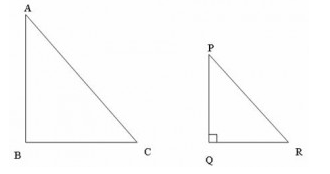
Two similar right triangles ABC and PQR are as shown in the figure.If AB= √3 , PQ= √3/2, BC=1. Find PR = ?
2
1
2√3
4
37.
Two friends A and B start from the same point in the Eastern and Northern directions at the same time. How far are they from each other when A has travelled 5 km and B has travelled 12 km. distance?
8 km
17 km
10 km
13 km
38.
Customers are asked to stand in the lines. If one customer is extra in a line, then there would be two less lines. If one customer is less in line, there would be three more lines. Find the number of students in the class
40
50
60
70
39.
If sum of the squares of zeros of the quadratic polynomial f(x) = x2 – 8x + k is 40, find the value of k.
14
12
-14
-12
40.
Polynomial will have zeroes
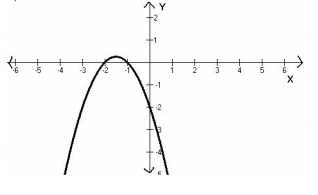
-1
2 and -1
-2 and -1
-5
41.
The distance between the points P (-6,7) and Q (-1,-5) is
15
12
13
10
42.
A die is thrown once. Find the probability of getting a number that is either composite or prime
6/6
5/6
3/6
4/6
43.
A bag contains 3 white and 5 red balls. If a ball is drawn at random, the probability that the drawn ball is red is
3/15
5/15
5/8
3/8
44.
If sun’s elevation is 60° then a pole of height 6 m will cast a shadow of length
3√2 m
2√3 m
6√3 m
√3 m
45.
A 20 m long ladder touches the wall at a height of 10 m. The angle which the ladder makes with the horizontal is
30°
45°
60°
90°
46.
Assertion In an Ap,Sn = n2 + n, then T20 = 40.
Reason In an Ap, an - an-1 = d.
Codes:
(a) If both Assertion and Reason are correct and Reason is the correct explanation of Assertion.
(b) If both Assertion and Reason are correct, but Reason is not the correct explanation of Assertion.
(c) If Assertion is correct but Reason is incorrect.
(d) If Assertion is incorrect but Reason is correct.
47.
Assertion: The equation x2 + x + 4 = 0 has equal roots.
Reason: Quadratic equation
Codes:
ax2 + bx + c = 0, a \(\neq \) 0 has equal roots if b2 -4ac = 0.
(a) If both Assertion and Reason are correct and Reason is the correct explanation of Assertion.
(b) If both Assertion and Reason are correct, but Reason is not the correct explanation of Assertion.
(c) If Assertion is correct but Reason is incorrect.
(d) If Assertion is incorrect but Reason is correct.
48.
Your friend Veer wants to participate in a 200 m race. He can currently run that distance in 51 s and with each day of practice it takes him 2s less. He wants to do in 31 s.

(i) Which of the following terms are in AP for the given situation?
(a) 51, 53, 55.... (b) 51, 49, 47 ....
(c) -51, -53, -55 .... (d) 51, 55, 59...
(ii) What is the minimum number of days he needs to practice till his goal is achieved?
(a) 10 (b) 12 (c) 11 (d) 9
(iii) Which of the following term is not in the AP of the above given situation?
(a) 41 (b) 30 (c) 37 (d) 39
(iv) If nth termn of an AP is given by an = 2n +3, then common difference of an AP is
(a) 2 (b) 3 (c) 5 (d) 1
(v) The value of x, for which 2x, x + 10, 3x + 2 are three consecutive terms of an AP
(a) 6 (b) -6 (c) 18 (d) -18
49.
Two hoardings are put on two poles of equal heights standing on either side of the road. From a point between them on the road the angle of elevation of the top of poles are 60° and 30° respectively. Height of the each pole is 20 m.
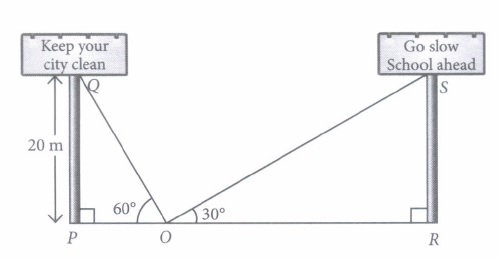
Based on the above information, answer the following questions. (Take \(\sqrt{3}\) = 1.73).
(i) Find the length of PO.
| (a) 20 m | \((b) 20 \sqrt{3} \mathrm{~m}\) | \((c) \frac{20}{\sqrt{3}} \mathrm{~m}\) | (d) None of these |
(ii) Find the length of RO.
| (a) 20 m | \((b) 20 \sqrt{3} \mathrm{~m}\) | \((c) \frac{20}{\sqrt{3}} \mathrm{~m}\) | (d) None of these |
(iii) The width of the road is
| (a) 31.23m | (b) 35.68 m | (c) 39.73 m | (d) 46.24 m |
(iv) If the angle of elevation made by pole PQ is 45°, then the length of PO =
| (a) 20 m | \((b) 20 \sqrt{3} \mathrm{~m}\) | \((c) \frac{20}{\sqrt{3}} \mathrm{~m}\) | (d) None of these |
(v) Angle formed by the line of sight with the horizontal when the point being viewed is above the horizontal level is known as
| (a) angle of depression | (b) angle of elevation | (c) right Angle | (d) reflex angle |
50.
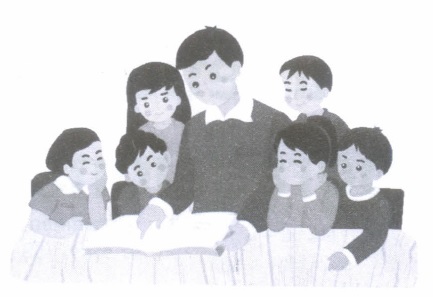
In a class the teacher asks every student to write an example of A.P. Two friends Geeta and Madhuri writes their progressions as -5, -2, 1,4, ... and 187, 184, 181, .... respectively. Now, the teacher asks various students of the class the following questions on these two progressions. Help students to find the answers of the questions.
(i) Find the 34th term of the progression written by Madhuri.
| (a) 286 | (b) 88 | (c) -99 | (d) 190 |
(ii) Find the sum of common difference of the two progressions.
| (a) 6 | (b) -6 | (c) 1 | (d) 0 |
(iii) Find the 19th term of the progression written by Geeta.
| (a) 49 | (b) 59 | (c) 52 | (d) 62 |
(iv) Find the sum of first 10 terms of the progression written by Geeta.
| (a) 85 | (b) 95 | (c) 110 | (d) 200 |
(v) Which term of the two progressions will have the same value?
| (a) 31 | (b) 33 | (c) 32 | (d) 30 |
1.
\(L H S=\frac{\cot A-\cos A}{\cot A+\cos A}=\frac{\frac{\cos A}{\sin A}-\cos A}{\frac{\cos A}{\sin A}+\cos A}\)
\(=\frac{\cos A\left(\frac{1}{\sin A}-1\right)}{\cos A\left(\frac{1}{\sin A}+1\right)}=\frac{\left(\frac{1}{\sin A}-1\right)}{\left(\frac{1}{\sin A}+1\right)}=\frac{\operatorname{cosec} A-1}{\operatorname{cosec} A+1}=\operatorname{RHS}\)
2.
In the polynomial x3-3, the highest power of the variable x is 3. Hence, the degree of the polynomial is 3.
3.
Multiplying Equation (2) by \(\frac{5}{3},\) we get
5x – 8y + 1 = 0
But, this is the same as Equation (1). Hence the lines represented by Equations (1) and (2) are coincident. Therefore, Equations (1) and (2) have infinitely many solutions Plot few points on the graph and verify it yourself.
4.
Given that, PE = 3.9 cm, EQ = 3 cm, PF = 3.6 cm, FR = 2.4 cm
\( \frac{P E}{E Q}=\frac{3.9}{3}=1.3 \)
\(\frac{P F}{F R}=\frac{3.6}{2.4}=1.5\)
Hence, \(\frac{P E}{E Q} \neq \frac{P F}{F R}\)
Therefore, EF is not parallel to QR
5.
The multiples of 7 lying between 500 and 900 are 504, 511, 518, ...., 896.
Clearly, it forms an AP, Here, a = 504
and d = 511 - 504 = 7
Last term, \({a}_{n}=896=l\)
\(\Rightarrow\) a + (n-1)d = 896
\(\Rightarrow\) 504 + (n-1)7 = 896
\(\Rightarrow\) (n-1) 7 = 896 - 504
\(\Rightarrow\) (n-1) 7 = 392
\(\Rightarrow\) n = 56 + 1
\(\Rightarrow\) n = 57
Now, \({S}_{57}=\frac{n}{2}(a+1)=\frac {57}{2}(504+896)\)
\([\because {S}_{n}=\frac {n}{2}(a+l)]\)
\(= \frac {57 \times 1400}{2}=39900\)
Hence, the sum of all multiples of 7 lying between 500 and 900 is 39900.
6.
120m
7.
n(S) = 52
Number of face cards = 4 X 3 = 12
Number of red face cards = 3 X 2 = 6
(i) Let A be the event of drawing a face card \(\therefore \)n(A) = 12
P(A)=\(\frac { 12 }{ 52 } =\frac { 3 }{ 13 } \)
(ii) Let B be the event of drawing a red face card \(\therefore \) n(B)=6,
P(B)=\(\frac { 6 }{ 52 } =\frac { 3 }{ 26 } \)
8.
∵ P(-1,3), Q(2,p) and C(5,-1) are colinear
∴ x1(y2-y3)+x2(y3-y1)+x3(y1-y2)=0
⇒ -1{p-(-1)}+2(-1-3)+5(3-p)=0 ⇒ -1(p+1)+2(-4)+5(3-p)=0
⇒ -p-1-8+15-5p =0 ⇒ -6p+6=0 ⇒ -6p=-6 ⇒ p=1
9.
Yes, (x-1) (x+2) +2=0
\(\Rightarrow x^{ 2 }+x-2+2=0\)
\(\Rightarrow x^{ 2 }+x=0\)
\(\therefore \) b2-4ac=1>0
Distinct real roots
10.
Find AB using suitable trigonometric ratio,
(i) \(\frac{40}{\sqrt{3}} \mathrm{~m}\)
(ii) \(\frac{20}{\sqrt{3}} \mathrm{~m}\)
11.
LHS = sec A (1 – sin A)(sec A + tan A) \(=\left(\frac{1}{\cos A}\right)(1-\sin A)\left(\frac{1}{\cos A}+\frac{\sin A}{\cos A}\right)\)
\(=\frac{(1-\sin \mathrm{A})(1+\sin \mathrm{A})}{\cos ^{2} \mathrm{~A}}=\frac{1-\sin ^{2} \mathrm{~A}}{\cos ^{2} \mathrm{~A}}\)
\(=\frac{\cos ^{2} \mathrm{~A}}{\cos ^{2} \mathrm{~A}}=1=\mathrm{RHS}\)
12.
Here, you may observe that \(\frac{\mathrm{AB}}{\mathrm{DE}}=\frac{\mathrm{AC}}{\mathrm{DF}}\) (each equal to \(\frac{2}{3}\)) and ∠ A (included between the sides AB and AC) = ∠ D (included between the sides DE and DF). That is, one angle of a triangle is equal to one angle of another triangle and sides including these angles are in the same ratio (i.e., proportion). Now let us measure ∠ B, ∠ C, ∠ E and ∠ F.
You will find that ∠ B = ∠ E and ∠ C = ∠ F. That is, ∠ A = ∠ D, ∠ B = ∠ E and ∠ C = ∠ F. So, by AAA similarity criterion, \(\Delta\) ABC ~ \(\Delta\) DEF. You may repeat this activity by drawing several pairs of such triangles with one angle of a triangle equal to one angle of another triangle and the sides including these angles are proportional. Everytime, you will find that the triangles are similar. It is due to the following criterion of similarity of triangles.
13.
Let the supplementary angles be x and y(x > y).
Then, x + y = 180 ...(i)
Now, according to the question,
x - y = 18 ...(ii)
From Eq. (ii), we have
y = x - 18 ...(iii)
On substituting the value of y from Eq. (iii) in Eq. (i),
we get
x + x - 18 = 180
\(\Rightarrow\) 2x = 198
\(\Rightarrow\) x = 99
On substituting x = 99 in Eq. (iii) we get
y = 99 - 18
\(\Rightarrow\) y = 81
Hence, the required angles are 99° and 81°.
14.
From the given polynomial we will find the value, the sum of the zeroes, and the multiple of the zeroes.
\(\alpha+\beta=\frac{-b}{a}=\frac{-8}{1}=-8\)
\(\alpha\times\beta=\frac{c}{a}=\frac{6}{1}=6\)
Sum of zeroes = \(\frac { 1 }{ \alpha } +\frac { 1 }{ \beta } =\frac { \alpha +\beta }{ \alpha \beta } =\frac { -8 }{ 6 } =\frac { -4 }{ 3 } \)
Product of zeroes = \(\frac { 1 }{ \alpha } \times \frac { 1 }{ \beta } =\frac { 1 }{ \alpha \beta } =\frac { 1 }{ 6 } \)
Now for making a polynomial
p(x) = x2 - \((\alpha+\beta)x+\alpha\beta\)
\(\therefore\) The polynomial is : \(p(x)=\frac { 1 }{ 6 } \left( 6{ x }^{ 2 }+8x+1 \right) \)
15.
Draw the figure according to the given conditions and use Pythagoras theorem to find the value of x, then required saved distance will be equal to the difference of (AC + BC) and 26.
8 km.
16.
(i) Examples of similar figures:
(a) All squared
(b) All regular hexagons
(ii) Examples of non-similar figures:
(a) Two isosceles triangles of different angle measures
(b) Two rhombus of different angle measures.
17.
Given quadratic equations is
\(9x^{ 2 }+3kx+4=0\)
On comparing with \(9x^{ 2 }+3kx+4=0\)
a = 9, b = 3k and c = 4
Now, \(D=b^{ 2 }-4ac=(3k)^{ 2 }-4(9)(4\)
=\(9k^{ 2 }-144\)
Sice roots of given equation are equal
\(\therefore D\ge 0\)
\(\Rightarrow 9k^{ 2 }-144\ge 0\Rightarrow 9(k^{ 2 }-16)\ge 0\)
\(\Rightarrow k^{ 2 }-16\ge 0\)
\(\Rightarrow (k-4)(k+4)\ge 0\quad \quad [\because a^{ 2 }-b^{ 2 }=(a+b)(a-b)]\)
\(\Rightarrow k\le -4\) and \(\Rightarrow k\ge -4\)
18.
Given that, S1, S2 and S3 are the sums of first n terms of three A.P.s whose first term of each A.P. is 1 and common differences are 1, 2 and 3 respectively.
\(\therefore\) S1 = \({n\over 2}\) [ 2(1) + ( n - 1 )1]
S1 = \({n\over2}\)[ n + 1 ] ...(i)
S2 = \({n\over2}[2(1)+(n-1)2]\)
S2 = \({n\over2}=[2n]={n}^{2}\)
And S3 = \({n\over 2}\) [ 2(1) + ( n - 1 )3]
= \({n\over 2}\) [ 3n - 1] ...(iii)
Now, S1 + S3 = \({n\over2}\) [ n + 1] + \({n\over2}\) [3n-1]
\(={n\over2}\) [ n + 1 + 3n -1 ]
= \({n\over 2}\) [4n] = 2n2
= 2S2 [ Using (ii) ]
19.
Salim's age = 38yr, daughter's age = 14yr
20.
Let us denote the number of pants by x and the number of skirts by y. Then the equations formed are :
y = 2x – 2 (1)
and y = 4x – 4 (2)
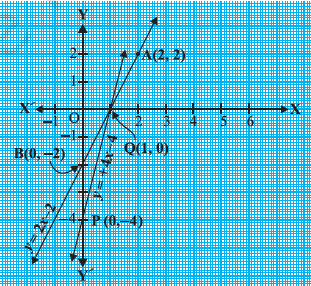
Let us draw the graphs of Equations (1) and (2) by finding two solutions for each of the equations.
They are given in Table
\(\begin{array}{|c|c|c|} \hline x & 2 & 0 \\ \hline y=2 x-2 & 2 & -2 \\ \hline \end{array}\)
\(\begin{array}{|c|r|r|} \hline x & 0 & 1 \\ \hline y=4 x-4 & -4 & 0 \\ \hline \end{array}\)
Plot the points and draw the lines passing through them to represent the equations, as shown in Figure
The two lines intersect at the point (1, 0). So, x = 1, y = 0 is the required solution of the pair of linear equations, i.e., the number of pants she purchased is 1 and she did not buy any skirt.
Verify the answer by checking whether it satisfies the conditions of the given problem.
21.
Given, in △ABC and △PQR, AD and PM are their medians, respectively.
\(\therefore \quad \frac{A B}{P Q}=\frac{A C}{P R}=\frac{A D}{P M}\) ...(i)
To prove △ABC ~ △PQR
Construction Produce AD to E such that AD = DE and produce PM to N such that PM = MN.
Join BE, CE, QN and RN.
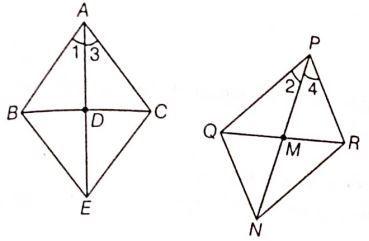
In above figures, quadrilaterals ABEC and PQNR are parallelograms because their diagonals bisect each other at D and M, respectively.
\(\therefore\) BE = AC and QN = PR
\(\begin{array}{ll} \Rightarrow & \frac{B E}{A C}=1 \quad \text { and } \frac{Q N}{P R}=1 \\ \end{array}\)
\(\begin{array}{ll} \Rightarrow & \frac{B E}{A C}=\frac{Q N}{P R} \text { or } \frac{B E}{Q N}=\frac{A C}{P R} \\ \end{array}\)
\(\begin{array}{ll} \Rightarrow & \frac{B E}{Q N}=\frac{A B}{P Q} \\ \end{array}\) [from Eq. (i)]
\(\begin{array}{ll} \text { or } & \frac{A B}{P Q}=\frac{B E}{Q N} \end{array}\) ....(ii)
From Eq. (i), we get
\(\frac{A B}{P Q}=\frac{A D}{P M}=\frac{2 A D}{2 P M}=\frac{A E}{P N}\) [since, diagonals bisect each other]
\(\Rightarrow \quad \frac{A B}{P Q}=\frac{A E}{P N}\) ...(iii)
From Eqs. (ii) and (iii),
\(\frac{A B}{P Q}=\frac{B E}{Q N}=\frac{A E}{P N}\)
\(\Rightarrow \quad \triangle A B E \sim \triangle P Q N \Rightarrow \angle 1=\angle 2\) ...(iv)
[since, corresponding angles of two similar triangles are equal]
Similarly, we can prove that
\(\begin{aligned} & \triangle A C E \sim \triangle P R N \\ \end{aligned}\)
\(\begin{aligned} \Rightarrow \quad \angle 3=\angle 4 \end{aligned}\) ....(v)
On adding Egs. (iv) and (v), we get
\(\begin{array}{rlrl} \angle 1+\angle 3 & =\angle 2+\angle 4 \\ \end{array}\)
\(\begin{array}{rlrl} \Rightarrow \angle B A C =\angle Q P R \\ \end{array}\)
and \(\begin{array}{rlrl} \frac{A B}{P Q} & =\frac{A C}{P R} \end{array}\) [from Eq. (i)]
\(\therefore\) \(\triangle ABC \sim \triangle PQR\) [by SAS similarity criterion]
Hence proved.
22.
Draw a right angled \(\Delta\)ABC, right angled at C. With reference to \(\angle A\), base = AC, hypotenuse = AB and with reference to \(\angle B\),base = BC and hypotenuse = AB
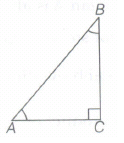
Given, cos A = cos B
\(\Rightarrow \quad \frac{A C}{A B}=\frac{B C}{A B} \quad \Rightarrow A C=B C\)
\(\therefore \angle B=\angle A\) [since, in a triangle angles opposite to equal sides are also equal]
Hence proved.
23.
Yes, 6
24.
(i) \((i)\frac { 1 }{ 2 } ,\frac { 3 }{ 4 } \)
(ii)\((i)-\frac { 1 }{ 2 } ,2\)
25.
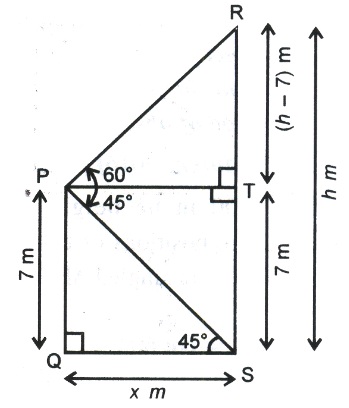
Let us assume that PQ is the building of height 7 m and RS is the cable tower of height h m , such that ㄥRPT=60o
∴ ㄥTPS=45o=ㄥQSP
∴ PQ=7m=TS
∴ RT=RS-TS=(h-7)m
Let QS=x m
Consider a rt . ΔPQS. we have
tan45o=\(\frac { PQ }{ QS } \)
⇒ 1=\(\frac { 7 }{ x } \)
⇒ x=7 ...........(i)
Now, PT=QS=x m=7 m
Again, consider art. ΔPTR, we have
tan600=\(\frac { RT }{ PT } \)
⇒ \(\sqrt { 3 } =\frac { h-7 }{ 7 } \) [cross-multiply]
⇒ h-7=7\(\sqrt { 3 } \)
⇒ h=7+7\(\sqrt { 3 } \)
⇒ h=7(\(\sqrt { 3 } \)+1)m
Hence, the height of the cable tower is 7(\(\sqrt { 3 } \) +1)m.
26.
(d)
3 units
27.
(d)
16 : 81
28.
(d)
cos A
29.
(d)
0
30.
(c)
12.56 sq units
31.
(c)
30 km/h and 120 km
32.
(a)
6
33.
(a)
No
34.
(d)
5,1/5
35.
(c)
√3
36.
(b)
1
37.
(d)
13 km
38.
(c)
60
39.
(b)
12
40.
(c)
-2 and -1
41.
(c)
13
42.
(b)
5/6
43.
44.
(b)
2√3 m
45.
(a)
30°
46.
(b) If both Assertion and Reason are correct, but Reason is not the correct explanation of Assertion.
47.
(d) If Assertion is incorrect but Reason is correct.
48.
(i) (b) In first day, Veer takes 51 s to complete the 200 m race. But in each day he takes 2 s lesser than the previous days.
Thus, AP series will formed
51, 49, 47, ...
(ii) (c) Since, Veer wants to achieve the race in 31 s. Let Veer takes n days to achieve the target.
\(\therefore\) Tn = a + (n- 1)d
Here, a = 51, d = 49 - 51 = -2
\(\therefore\) 31 = 51 + (n - 1)(-2)
\(\Rightarrow\) (n - 1) 2 = 20
\(\therefore\) (n - 1) = 10
\(\therefore\) n = 11
Hence, he needs minimum 11 days to achieve the goal.
(iii) (b) In an AP series, we get the series of odd terms. Hence, term 30 is not an AP.
(iv) (a) Given, an = 2n + 3
\(\therefore\) Common difference = an +1 - an
= 2(n + 1) + 3 - (2n + 3)
= 2n + 2 + 3 - 2n - 3 = 2
(v) (a) Given, terms 2x, x + 10, 3x + 2 are in AP.
\(\therefore \quad x+10=\frac{2 x+(3 x+2)}{2}\)
\(\Rightarrow\) 2x + 20 = 5x + 2
\(\Rightarrow\) 3x = 18 \(\Rightarrow\) x = 6
49.
(i) (c): \(\text { In } \Delta O P Q\), we have
\(\tan 60^{\circ}=\frac{P Q}{P O} \)
\(\Rightarrow \sqrt{3}=\frac{20}{P O} \)
\(\Rightarrow P O=\frac{20}{\sqrt{3}} \mathrm{~m}\)
(ii) (b): In \(\Delta\)ORS, we have
\(\tan 30^{\circ}=\frac{R S}{O R} \Rightarrow \frac{1}{\sqrt{3}}=\frac{20}{O R} \Rightarrow O R=20 \sqrt{3} \mathrm{~m}\)
(iii) (d): Clearly, width of the road = PR
\(\begin{array}{l}
=P O+O R=\left(\frac{20}{\sqrt{3}}+20 \sqrt{3}\right) \mathrm{m} \\
=20\left(\frac{4}{\sqrt{3}}\right) \mathrm{m}=\frac{80}{\sqrt{3}} \mathrm{~m}=46.24 \mathrm{~m}
\end{array}\)
(iv) (a): \(\text { In } \Delta O P Q \text { , if } \angle P O Q=45^{\circ} \text { , then }\)
\(\tan 45^{\circ}=\frac{P Q}{P O} \Rightarrow 1=\frac{20}{P O} \Rightarrow P O=20 \mathrm{~m}\)
(v) (b)
50.
Geeta's A.P. is -5, -2, 1,4, ...
Here, first term (a1) = -5 and common difference (d1) = -2 + 5 = 3
Similarly, Madhuri's A.P. is 187, 184, 181, ...
Here first term (a2) = 187 and common difference (d2) = 184 - 187 = -3
(i) (b): t34 = a2 + 33d2 = 187 + 33(-3) = 88
(ii) (d): Required sum = 3 + (-3) = 0
(iii) (a): t19 = a1 + 18d1 = (-5) + 18(3) = 49
(iv) (a) : \(S_{10}=\frac{n}{2}\left[2 a_{1}+(n-1) d_{1}\right]=\frac{10}{2}[2(-5)+9(3)]=85\)
(v) (b): Let nth terms of the two A.P:s be equal.
\(\therefore\) -5 + (n - 1)3 = 187 + (n - 1)(-3)
\(\Rightarrow\) 6(n - 1) = 192 \(\Rightarrow\) n = 33

10th Standard CBSE Syllabus & Materials
10th Standard CBSE
CBSE 10th Social Science PS - Federalism - New Model Questions Papers Study Material - QB365 Set A
NEW10th Standard CBSE
CBSE 10th Social Science PS - Power Sharing - New Model Questions Papers Study Material - QB365 Set A
NEW10th Standard CBSE
CBSE 10th Social Science GEO - Manufacturing Industries - New Model Questions Papers Study Material - QB365 Set A
NEW10th Standard CBSE
CBSE 10th Social Science GEO - Minerals and Energy Resources - New Model Questions Papers Study Material - QB365 Set A



NCERT Books

Syllabus

Exam Pattern

Sample Question Papers

Previous year Question Papers

Important Notes

MCQ Practice test

NCERT Exemplers

Case study Questions

Image Based Questions

Passage based Questions

HOT Questions

Value Based Questions

Model Questions Papers
NCERT ( Book Back ) Questions

Assertion and Reason
Important Questions And Answers

CBSE 10th Standard CBSE Subjects
CBSE Standards



