
 100% FREE ACCESS
10th Standard CBSE Syllabus & Materials
10th Standard CBSE
CBSE 10th Social Science ECO - Globalisation and the Indian Economy - New Model Questions Papers Study Material - QB365 Set A
NEW10th Standard CBSE
CBSE 10th Social Science ECO - Money and Credit - New Model Questions Papers Study Material - QB365 Set A
NEW10th Standard CBSE
CBSE 10th Social Science ECO - Sectors of the Indian Economy - New Model Questions Papers Study Material - QB365 Set A
NEW10th Standard CBSE
CBSE 10th Social Science ECO - Development - New Model Questions Papers Study Material - QB365 Set A
NEW10th Standard CBSE
CBSE 10th Social Science PS - Outcomes of Democracy - New Model Questions Papers Study Material - QB365 Set A
NEW10th Standard CBSE
CBSE 10th Social Science PS - Gender, Religion and Caste - New Model Questions Papers Study Material - QB365 Set A

Published on: 20/10/2025
Download CBSE Class 10th Standard CBSE Maths question papers, sample papers, important questions, and previous year solved papers in PDF format. Get free study materials, NCERT solutions, and exam preparation resources for Class 10th Standard CBSE Maths
Questions + Answers key
Take MCQ Maths Test
1.
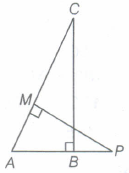
In the given figure, ABC and AMP are two right angled triangles, right angled at B and M, respectively. Prove that
\(\frac{CA}{PA}=\frac{BC}{MP}\)
2.
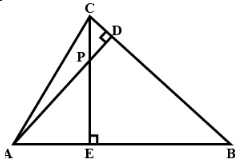
In the following figure, altitudes AD and CE of ΔABC intersect each other at the point P. Show that:
ΔPDC ∼ ΔBEC
3.
In the following figure, altitudes AD and CE of ΔABC intersect each other at the point P. Show that:
ΔAEP ∼ ΔADB
4.
In the following figure, altitudes AD and CE of ΔABC intersect each other at the point P. Show that:
ΔABD ∼ ΔCBE
5.
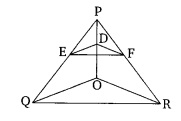
In the given figure, DE || OQ and DF || OR. Show that EF || QR.
6.
E and F are points on the sides PQ and PR respectively of a ΔPQR. For the following case, state whether EF || QR. PQ = 1.28 cm, PR = 2.56 cm, PE = 0.18 cm and PF = 0.36 cm
7.
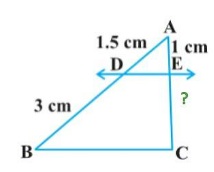
See the given Figure. DE || BC. Find EC
8.
In the given figure, ABC and AMP are two right angled triangles, right angled at B and M, respectively. Prove that
\(\triangle ABC\sim \triangle AMP\)
9.
E and F are points on the sides PQ and PR respectively of a ΔPQR. For the following case, state whether EF || QR. PE = 3.9 cm, EQ = 3 cm, PF = 3.6 cm and FR = 2.4 cm
10.
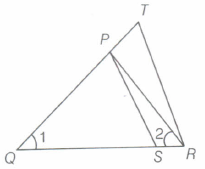
S and T are points on sides PR and QR of \(\triangle PQR\) , such that \(\angle P=\angle RTS\) . Show that \(\triangle RPQ\sim \triangle RTS\) .
11.
In the given figure, \(\frac { QR }{ QS } =\frac { QT }{ PR } \) and \(\angle 1=\angle 2\) . Show that \(\triangle PQS\sim \triangle TQR\) .
12.
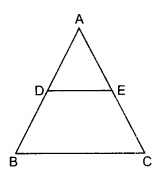
Using theorem (Thales theorem), prove that a line drawn through the mid-point of one side of a triangle parallel to another side, bisects the third side. (Recall that you have proved it in Class IX.)
13.
A girl of height 90 cm is walking away from the base of a lamp-post at a speed of 1.2 m/s. If the lamp is 3.6 m above the ground, find the length of her shadow after 4 seconds.
14.
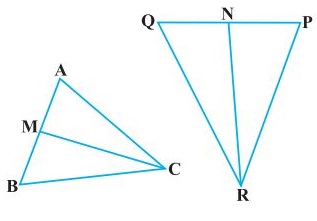
In figure CM and RN are respectively the medians of Δ ABC and Δ PQR. If Δ ABC ~ Δ PQR, prove that :
Δ AMC ~ Δ PNR
15.
D is a point on the side BC of \(\triangle ABC\) such that \(\angle ADC=\angle BAC\) . Show that CA2 = CB x CD.
16.
The diagonals of a quadrilateral ABCD intersect each other at the point O, such that \(\frac{\mathrm{AO}}{\mathrm{BO}}=\frac{\mathrm{CO}}{\mathrm{DO}}\). Show that ABCD is a trapezium.
17.
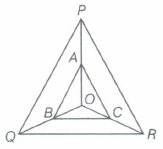
In the given figure, A, B and C are points on OP, OQ and OR respectively, such that \(AB\parallel PQ\) and \(AC\parallel PR\). Show that \(BC\parallel QR\).
1.
As, \(\triangle ABC\sim \triangle AMP\) [proved in part(i)]
\(\therefore d\frac{AC}{AP}=\frac{BC}{MP}\)
[since ratio of the corresponding sides of similar triangles are equal]
\(\Rightarrow \frac{CA}{PA}=\frac{BC}{MP}\)
2.
Given, AD and CE are altitudes which intersect each other at the point P.
In ΔPDC and ΔBEC,
∠PDC = ∠BEC [each 90°]
and ∠PCD = ∠BCE [Common angle]
\(\therefore\) ΔPDC ∼ ΔBEC [by AA similarity criterion]
3.
Given, AD and CE are altitudes which intersect each other at the point P.
In ΔAEP and ΔADB,
∠AEP = ∠ADB [Each 90°]
and ∠PAE = ∠BAD [Common angle]
\(\therefore\) ΔAEP ∼ ΔADB [by AA similarity criterion]
4.
Given, AD and CE are altitudes which intersect each other at the point P.
In ΔABD and ΔCBE,
∠ADB = ∠CEB [each 90°]
and ∠ABD = ∠CBE [Common angle]
\(\therefore\) ΔABD ∼ ΔCBE [by AA similarity criterion]
5.
In Δ POQ, DE || OQ [given]
\(\therefore \frac{P E}{E Q}=\frac{P D}{D O}\) ...(i)
[by basic proportionality theorem]
In ΔPOR, DF || OR [given]
\(\therefore \frac{P F}{F R}=\frac{P D}{D O}\) ...(ii)
[by basic proportionality theorem]
From Eqs. (i) and (ii), we get
\(\frac{P E}{E Q}=\frac{P F}{F R}\)
In ΔPQR, we have \(\frac{P E}{E Q}=\frac{P F}{F R}\)
∴ EF || QR
[by Converse of basic proportionally theorem]
Hence proved.
6.
PQ = 1.28 cm, PR = 2.56 cm, PE = 0.18 cm, PF = 0.36 cm
\( \frac{P E}{P Q}=\frac{0.18}{1.28}=\frac{18}{128}=\frac{9}{64} \)
\(\frac{P F}{P R}=\frac{0.36}{2.56}=\frac{9}{64} \)
Hence \(\frac{P E}{P Q}=\frac{P F}{P R}\)
Therefore EF is parallel to QR
7.
Let EC = x cm
It is given that DE || BC.
By using basic proportionality theorem, we obtain
\(\frac{A D}{D B}=\frac{A E}{E C}\)
\(\frac{1.5}{3}=\frac{1}{x}\)
\(x=\frac{3 \times 1}{1.5}\)
x = 2
∴ EC = 2 cm
8.
Given, \(\angle ABC={ 90 }^{ ° }\) and \(\angle AMP={ 90 }^{ ° }\)
In \(\triangle ABC\) and \(\triangle AMP\)
\(\angle ABC=\angle AMP\) [each 90°]
and \(\angle BAC=\angle MAP\) [common angle]
\(\therefore \triangle ABC\sim \triangle AMP\) [by AA similarity criterion]
9.
Given that, PE = 3.9 cm, EQ = 3 cm, PF = 3.6 cm, FR = 2.4 cm
\( \frac{P E}{E Q}=\frac{3.9}{3}=1.3 \)
\(\frac{P F}{F R}=\frac{3.6}{2.4}=1.5\)
Hence, \(\frac{P E}{E Q} \neq \frac{P F}{F R}\)
Therefore, EF is not parallel to QR
10.
Draw \(\triangle PQR\), such that S and T are points on sides PR and QR respectively. We join the points S and T.
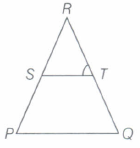
From the above figure, we have \(\triangle RPQ\) and \(\triangle RTS\) in which
\(\angle RPQ=\angle RTS\) [given]
\(\Rightarrow\angle PRQ=\angle TRS\) [common angle]
\(\therefore \triangle RPQ\sim \triangle RTS\) [by AA similarity criterion]
Hence proved.
11.
In \(\triangle PQR, \angle 1=\angle 2\) [given]
\(\Rightarrow \) PR = PQ [since, sides opposite to equal angles of a triangle are not equal]
Given that, \(\frac { QR }{ QS } =\frac { QT }{ PR } \Rightarrow \quad \frac { QR }{ QS } =\frac { QT }{ PQ } \)
[\(\because \) PQ = PR, proved above]
\(\Rightarrow \frac { QS }{ QR } =\frac { PQ }{ QT } \)
[on taking of the terms reciprocals] ... (i)
In \(\triangle PQS\) and \(\triangle TQR\), we have
\(\angle PQS=\angle TQR\) [common]
and \(\Rightarrow \frac { QS }{ QR } =\frac { QP }{ QT } \) [from Eq.(i)]
\(\therefore \triangle PQS\sim \triangle TQR\) [by SAS similarity criterion]
Hence proved.
12.
Consider \(\triangle ABC\), in which D is the mid-point of AB.
Then, \(\frac { AD }{ DB } =1\) ... (i)
Line l is drawn through D such that \(l\parallel BC\) and it meets AC at E.
By basic proportionality theorem,
\(\frac { AD }{ DB } =\frac { AE }{ EC } \)
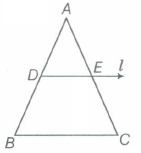
\(\Rightarrow \frac { AE }{ EC } =1\) [from Eq. (i)]
\(\Rightarrow AE=EC\)
So, E is the mid-point of AC.
Hence, a line drawn through the mid-point of one side of a triangle parallel to another side, bisects the third side.
Hence proved.
13.
Let AB denote the lamp-post and CD the girl after walking for 4 seconds away from the lamp-post.
From the figure, you can see that DE is the shadow of the girl. Let DE be x metres.
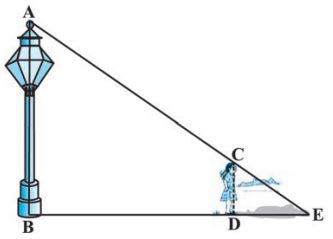
Now, BD = 1.2 m \(\times\) 4 = 4.8 m.
Note that in \(\Delta\) ABE and \(\Delta\) CDE,
\(\angle\)B and \(\angle\)D (Each is of 90° because lamp-post as well as the girl are standing vertical to the ground)
and \(\angle\)E = \(\angle\)E (Same angle)
So, \(\Delta \mathrm{ABE} \sim \Delta \mathrm{CDE}\) (AA similarity criterion)
Therefore, \(\frac{\mathrm{BE}}{\mathrm{DE}}=\frac{\mathrm{AB}}{\mathrm{CD}}\)
i.e., \(\frac{4.8+x}{x}=\frac{3.6}{0.9} \quad\left(90 \mathrm{~cm}=\frac{90}{100} \mathrm{~m}=0.9 \mathrm{~m}\right)\)
i.e., 4.8 + x = 4x
i.e., 3x = 4.8
i.e., x = 1.6
So the shadow of the girl after walking for 4 seconds is 1.6 m long.
14.
Δ ABC ~ Δ PQR (Given)
So, \(\frac{\mathrm{AB}}{\mathrm{PQ}}=\frac{\mathrm{BC}}{\mathrm{QR}}=\frac{\mathrm{CA}}{\mathrm{RP}}\) (1)
and \(\angle\) A = \(\angle\) P, \(\angle\) B = \(\angle\) Q and \(\angle\) C = \(\angle\) R (2)
But AB = 2 AM and PQ = 2 PN
(As CM and RN are medians)
So, from (1), \(\frac{2 \mathrm{AM}}{2 \mathrm{PN}}=\frac{\mathrm{CA}}{\mathrm{RP}}\)
i.e., \(\frac{\mathrm{AM}}{\mathrm{PN}}=\frac{\mathrm{CA}}{\mathrm{RP}}\) (3)
Also, \(\angle\) MAC = \(\angle\) NPR [From (2)] (4)
So, from (3) and (4),
Δ AMC ~ Δ PNR (SAS similarity) (5)
15.
Draw \(\triangle ABC\) such that D is a point on BC and join AD.
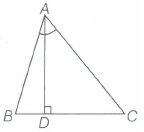
In \(\triangle ABC\) and \(\triangle DAC\) , we have
\(\angle BAC=\angle ADC\) [given]
and \(\angle ACB=\angle DCA\) [common angle]
\(\therefore \quad \triangle ABC\sim \triangle DAC\) [by AA similarity criterion]
\(\Rightarrow \frac{AC}{DC}=\frac{CB}{CA}\)
[since, corresponding sides of two similar triangles are proportional]
or \(\frac{CA}{CD}=\frac{CB}{CA}\Rightarrow\) CA x CA = CB x CD
\(\Rightarrow { CA }^{ 2 }=CB\times CD\)
Hence proved.
16.
Given ABCD is a quadrilateral. Its diagonal AC and BD intersect each other at O such that
\(\frac { AO }{ BO } =\frac { CO }{ DO } \Rightarrow \frac { AO }{ CO } =\frac { BO }{ DO } \) ....(i)
To prove ABCD is a trapezium
Construction Through O, we draw \(OE\parallel BA\). Let OE meets AD at E.
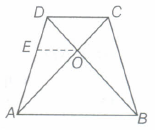
In \(\triangle DAB, EO\parallel AB\) [by construction]
\(\Rightarrow \frac { DE }{ EA } =\frac { DO }{ BO } \)
[by basic proportionality theorem]
or \(\frac { AE }{ ED } =\frac { BO }{ DO } \)
[on taking reciprocal of the terms] ...(ii)
From Eqs. (i) and (ii), we get
\(\frac { AO }{ CO } =\frac { AE }{ ED } \)
\(\Rightarrow OE\parallel DC\)
[by converse of basic proportionality theorem]
Now, \(BA\parallel OE\) and \(OE\parallel CD\)
\(\therefore AB\parallel DC\)
[since lines parallel to the same line are also parallel to each other]
Hence, quadrilateral ABCD is a trapezium.
Hence proved.
17.
In \(\triangle OPQ\), \(AB\parallel PQ\) [given]
\(\therefore \quad \frac { OA }{ AP } =\frac { OB }{ BQ } \) ... (i)
[by basic proportionality theorem]
Also, in \(\triangle OPR\), \(AC\parallel PR\) [given]
\(\therefore \quad \frac { OA }{ AP } =\frac { OC }{ CR } \) ... (ii)
From Eqs. (i) and (ii),
\(\frac { OB }{ BQ } =\frac { OC }{ CR } \Rightarrow \quad BC\parallel QR\)
[by converse of basic proportionality theorem]
Hence proved.

10th Standard CBSE Syllabus & Materials
10th Standard CBSE
CBSE 10th Social Science PS - Federalism - New Model Questions Papers Study Material - QB365 Set A
NEW10th Standard CBSE
CBSE 10th Social Science PS - Power Sharing - New Model Questions Papers Study Material - QB365 Set A
NEW10th Standard CBSE
CBSE 10th Social Science GEO - Manufacturing Industries - New Model Questions Papers Study Material - QB365 Set A
NEW10th Standard CBSE
CBSE 10th Social Science GEO - Minerals and Energy Resources - New Model Questions Papers Study Material - QB365 Set A



NCERT Books

Syllabus

Exam Pattern

Sample Question Papers

Previous year Question Papers

Important Notes

MCQ Practice test

NCERT Exemplers

Case study Questions

Image Based Questions

Passage based Questions

HOT Questions

Value Based Questions

Model Questions Papers
NCERT ( Book Back ) Questions

Assertion and Reason
Important Questions And Answers

CBSE 10th Standard CBSE Subjects
CBSE Standards



