
 100% FREE ACCESS
10th Standard CBSE Syllabus & Materials
10th Standard CBSE
CBSE 10th Social Science ECO - Globalisation and the Indian Economy - New Model Questions Papers Study Material - QB365 Set A
NEW10th Standard CBSE
CBSE 10th Social Science ECO - Money and Credit - New Model Questions Papers Study Material - QB365 Set A
NEW10th Standard CBSE
CBSE 10th Social Science ECO - Sectors of the Indian Economy - New Model Questions Papers Study Material - QB365 Set A
NEW10th Standard CBSE
CBSE 10th Social Science ECO - Development - New Model Questions Papers Study Material - QB365 Set A
NEW10th Standard CBSE
CBSE 10th Social Science PS - Outcomes of Democracy - New Model Questions Papers Study Material - QB365 Set A
NEW10th Standard CBSE
CBSE 10th Social Science PS - Gender, Religion and Caste - New Model Questions Papers Study Material - QB365 Set A

Published on: 26/10/2025
Download CBSE Class 10th Standard CBSE Science question papers, sample papers, important questions, and previous year solved papers in PDF format. Get free study materials, NCERT solutions, and exam preparation resources for Class 10th Standard CBSE Science
Questions + Answers key
Take MCQ Science Test
1.
Which diagram shows image formation of an object on a screen by a converging lens?
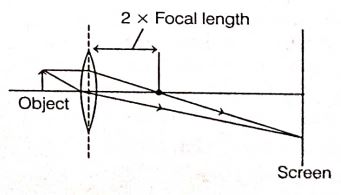
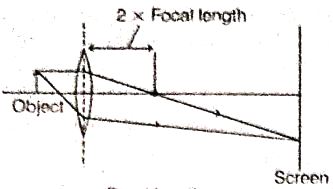
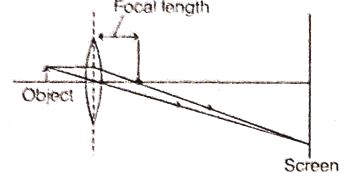
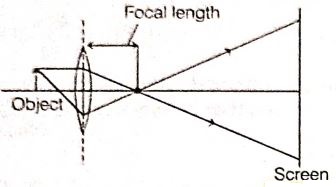
2.
Examples of responses to hormones are listed.
1. Growth of facial hair.
2. Increased blood pressure and pulse rate.
3. Widened pupils.
Which responses are caused by the hormone adrenaline?
1 and 2
1 and 3
2 and 3
1, 2 and 3
3.
An object of height 8 cm ls placed at a distance of 40 cm In front of a convex lens of focal length 20 cm. The size of image is _______.
12 cm
4 cm
-8 cm
16 cm
4.
If 10 mL of H2SO4 is mixed with 10 mL of Mg(OH)2 of the same concentration, the resultant solution will give the following colour with universal indicator.
Red
yellow
Green
Blue
5.
what is the nature of ozone?
It is deadly poisonous
It is fragrant
It is smooth
It causes purple smoke
6.
Which of the following is proper sequence of trophic levels?
Producers, Herbivores, Top carnivores, Carnivores
Top Carnivores, Carnivores, Herbivores, Producers
Carnivores, Top Carnivores, Producers, Herbivores
Herbivores, Carnivores, Producers, Top Carnivores
7.
A student of class 10, is not able to see clearly the black board question when seated at a distance of 5 m from the board, the defect he is suffering from is
Myopia
Hypermetropia
Presbyopia
Astigmatism
8.
Cytokinins are mostly present is:
Fruits
Flowers
Seeds
Fruits and seeds
9.
Which of the following salts has no water of crystallization?
Blue vitriol
Washing soda
Baking soda
Gypsum
10.
Freezing of water is a
Physical change
Chemical change
Both physical and chemical change
Exothermic reaction
11.
Which of the following phenomena contributes significantly to the reddish appearance of the sun at sunrise or sunset?
Dispersion of light
Scattering of light
Total internal reflection of light
Reflection of light from the earth
12.
Which one of the following is an artificial ecosystem?
Pond
Crop field
Lake
Forest
13.
Green dots present on a leaf are cell organelles called
Chlorophyll
Chloroplast
Stomach
Veins
14.
The filtration units of kidneys are called
Ureter
Urethra
Neurons
Nephrons
15.
In the reaction, SO2(g) + 2H2S(g) \(\rightarrow\) 2H2O(l) + S(s), the reducing agent is
SO2
H2S
H2O
S
16.
State the function of each of the following parts of the human eye :
(i) Cornea
(ii) Iris
(iii) Pupil
(iv) Retina
(b) Millions of people of the developing countries are suffering from corneal blindness. This disease can be cured by replacing the defective cornea with the cornea of a donated eye. Your school has organised a campaign in the school and its neighbourhood in order to create awareness about this fact and motivate people to donate their eyes after death. How can you along with your classmates contribute in this noble cause? State the objectives of organising such campaigns.
17.
Write the chemical formula of washing soda and baking soda. Which one of these two is an ingredient of antacids? How does it provide relief in stomach ache?
18.
Why is the flow of signals in a synapse from axonal end of one neuron to dendritic end of another neuron but not the reverse?
19.
Define a lens
20.
What is the insoluble substance formed in a chemical reaction called?
21.
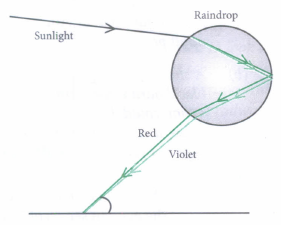
When and where do we see a rainbow? How is a rainbow formed? Draw a labelled diagram to illustrate the formation of a rainbow
22.
What is lymph?
23.
Why is the use of iodised salt advisable?
24.
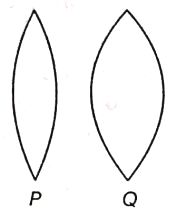
Manju has two convex lenses P and Q made of the same material as shown in the figure.
She is looking at printed text on a page using lens P. She notices that when she slowly takes the lens away from the page, the text turns upside down when the lens crosses a distance of 10 cm from the page.
(i) Which characteristic of lens P does the distance 10 cm signify?
(ii) If Manju does the same with lens Q, at what distance will the inversion of the image happen-less than, equal to or more than 10 cm? Justify your answer.
25.
Select the ones that belongs to the first trophic level?
Grasshopper, rose plant, cockroach, vulture, neem plant
26.
FeSO4.7H2O, green colour crystals on heating, changes colour. Why?
27.
State the difference between rods and cones cells in the retina of human eye. Draw a neat diagram of human eye.
28.
A student wanted to find out if starch was present in both leaves grown in direct sunlight and leaves grown in the shade. Plan an investigation to determine if starch is present in both types of leaf.
29.
What is meant by the water of crystallization? How many molecules of water are present in hydrated copper sulphate? Write its formula. What colour change do you observe when it is heated?
30.
Assertion: Pancreatic juice digests starch, proteins and fats.
Reason: Pancreatic juice contains digestive enzymes like pancreatic amylase, trypsin and lipase.
Codes
(a) Both A and R are true and R is correct explanation of the assertion.
(b) Both A and R are true but R is not the correct explanation of the assertion.
(c) A is true but R is false.
(d) A is false but R is true.
31.
Assertion: Paper cups are better option than plastic cups for serving tea. Reason: Paper cups are biodegradable and can even be disposed of by burning.
Reason: Paper cups are biodegradable and can even be disposed of by burning.
Codes
(a) Both A and R are true and R is correct explanation of the assertion.
(b) Both A and R are true but R is not the correct explanation of the assertion.
(c) A is true but R is false.
(d) A is false but R is true
32.
Assertion: Salt of KNO3 is formed by strong base and weak acid.
Reason: Salt of NH4CI is formed by weak base and strong acid.
Codes
(a) Both A and R are true, and R is correct explanation of the assertion.
(b) Both A and R are true, but R is not the correct explanation of the assertion.
(c) A is true, but R is false.
(d) A is false, but R is true.
33.
Assertion: Gustatory receptor detect taste while olfactory receptors detect smell.
Reason: Receptors helps in detecting the environment, they are present on the nerve cells.
Codes
(a) If both assertion and reason are true and the reason is correct explanation of assertion.
(b) If both assertion and reason are true but reason is not a correct explanation of assertion.
(c) If assertion is true and reason is false.
(d) If both assertion and reason are false.
34.
Assertion: Ferrous sulphate crystals (FeSO4•7H2O) lose water when heated.
Reason: The colour of the crystals changes and it is a decomposition reaction.
Codes
(a) If both assertion and reason are true and the reason is correct explanation of assertion.
(b) If both assertion and reason are true but reason is not a correct explanation of assertion.
(c) If assertion is true and reason is false.
(d) If both assertion and reason are false.
35.
The curve shows the amount of emission of chemicals in the air that depletes ozone layer from the year 1961 to 2014.
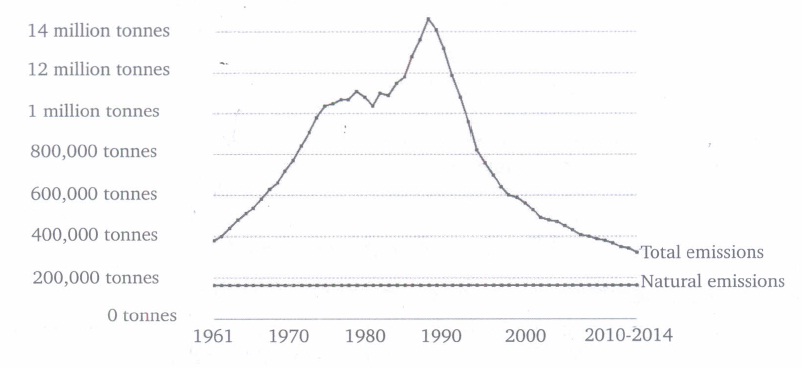
Answer the following questions based on the above information
(a) Where do we use the chemicals that would release the harmful chemicals in the air?
(b) Why the emission of harmful gases was less in 1960's and 2010 onwards?
(c) In which year was the ozone depletion maximum?
(i) 1970-1972 (ii) 1979-1980 (iii) 1988-1990 (iv) 1998-2000
(d) Chemical that depletes ozone layer is
(i) CFC (ii) CNC (iii) CMC (iv) CLC
36.
| Table A: Normal blood Pressure | ||
| Systolic Pressure Diastolic Pressure Pressure Range (mmHg) |
Diastolic Pressure(mmHg)· |
Pressure Range |
| 130 | 85 | High Normal Blood Pressure |
| 120 | 80 | Normal Blood Pressure |
| 110 | 75 | Low Normal Blood Pressure |
| Table B: Approx. Ideal BP According to Age Chart | ||
| Age | Female | Male |
| 10 | 111/73 | 112/73 |
| 13 | 117/75 | 117/76 |
| 14 | 120/75 | 119/77 |
| 15 | 120/76 | 120/78 |
| 19-24 | 120/79 | 120/79 |
| 25-29 | 120/80 | 12/180 |
| 30-35 | 122/81 | 123/82 |
| 40-45 | 124/83 | 125/83 |
| 50-55 | 129/85 | 128/85 |
| 60+ | 134/84 | 135/88 |
Answer the following questions based on the above information
(a) Refer to Table B showing the blood pressure of male and female. Infer the disease which can be diagnosed in a boy of 14 years who have same blood pressure as a 60 year old man.
(b) Identify the hormone whose level in the blood is responsible for raise in blood pressure in certain situations.
(c) Which of the following trend in blood pressure range is seen with advancement of age from teenage to old age?
(i) Increase
(ii) Remains same
(iii) Decrease
(iv) Fluctuates
(d) Which of the following is incorrect in case of high blood pressure?
(i) Increased resistance to blood flow
(ii) Decreased resistance to blood flow
(iii) Rupture of an artery
(iv) Internal bleeding
37.
To demonstrate the transpiration from the leaf surface, Saily took four banyan leaves. Both the surfaces of the A leaf, lower surface (with stomata) of Bleaf, upper surface (without stomata) of C leaf are vaselined. The Vaseline is not applied on the D leaf. Now, as shown in the figure the leaves are hanged so that they may transpire freely.
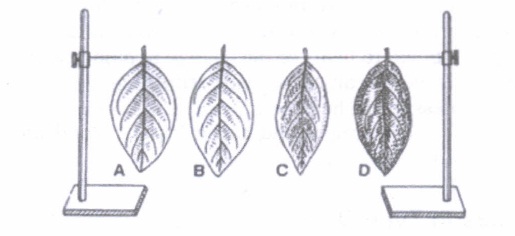
Comparison of transpiration. Demonstration by four leave
| Leaf number | Mass at start/g | Mass at end/g |
| A | 1.0 | 1.0 |
| B | 1.2 | 1.1 |
| C | 1.3 | 0.8 |
| D | 1.2 | 0.9 |
Answer the following questions based on the above information
(a) Was the Vaseline effective in prevention of water loss?
(b) Which surface allowed more loss of water?
(c) Percentage loss of mass in leaf C is-
(i) 38.5 (ii) 37.5 (iii) 36.5 (iv) 39.5
(d) The maximum loss of mass take place in leaf
(i) A (ii) B (iii) C (iv) D
38.
| S.No | Salt | Base | Acid | pH |
| 1. | Na2SO4 | NaOH | H2SO4 | =7 |
| 2. | NH4Cl | NH4OH | HCl | <7 |
| 3. | KNO3 | KOH | HNO3 | =7 |
| 4. | NaCl | NaOH | HCl | =7 |
Answer the following questions based on the above information
(a) Why is the pH of NH4 Cl less than 7?
(b) What is the nature of ammonium sulphate solution?
(c) NaHCO3 gives brisk-effervescence when reacts with
(i) HCl (ii) NH4OH (iii) NaOH (iv) K2CO3
(d) Which species formed on heating NaHCO3 is used to make bread and cakes fluffy, soft and spongy?
(i) Na2CO3 (ii) CO2 (iii) H2O (iv) H2CO3
39.
The reaction between MnO2 with HCI is depicted in the following diagram. It was observed that a gas with bleaching abilities was released.
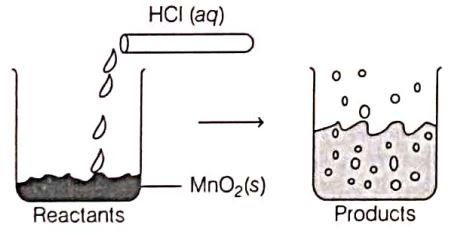
(i) ldentify the type of chemical reaction between MnO2 and HCI.
(ii) Which reagent does chlorine gas reacts with to form bleaching powder?
(iii) Write the balanced chemical reaction of part (i) and identify the oxidised and reduced species.
Or
(iii) (a) In the above discussed reaction, what is the nature of MnO2?
(b) What will happen, if we take dry HCI gas instead of aqueous solution of HCI?
40.
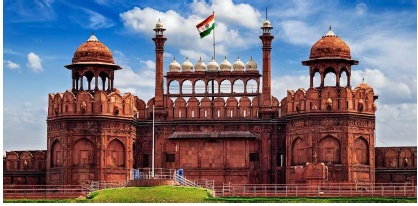
Mathematics teacher of a school took her 10th standard students to show Red fort. It was a part of their Educational trip. The teacher had interest in history as well. She narrated the facts of Red fort to students. Then the teacher said in this monument one can find combination of solid figures. There are 2 pillars which are cylindrical in shape. Also 2 domes at the corners which are hemispherical.7 smaller domes at the centre. Flag hoisting ceremony on Independence Day takes place near these domes.
(i) How much cloth material will be required to cover 2 big domes each of radius 2.5 metres? (Take π = 22/7)
| (a) 75 m2 | (b) 78.57 m2 | (c) 87.47 m2 | (d) 25.8 m2 |
(ii) Write the formula to find the volume of a cylindrical pillar :
| (a) \(\pi\)r2h | (b) \(\pi\)rl | (c) \(\pi\)r (l+r) | (d) 2\(\pi\)r |
(iii) Find the lateral surface area of two pillars if height of the pillar is 7 m and radius of the base is 1.4m.
| (a) 112.3 cm2 | (b) 123.2 m2 | (c) 90 m2 | (d) 345.2 cm2 |
(iv) How much is the volume of a hemisphere if the radius of the base is 3.5 m?
| (a) 85.9 m3 | (b) 80 m3 | (c) 98 m3 | (d) 89.83 m3 |
(v) What is the ratio of sum of volumes of two hemispheres of radius 1 cm each to the volume of a sphere of radius 2 cm?
| (a) 1:1 | (b) 1:8 | (c) 8:1 | (d) 1:16 |
41.
Each capillary cluster in the kidney is associated with the cup- shaped end of a tube that collects the filtered urine (see adjoining figure). Each kidney has large numbers of these filtration units called nephrons packed close together. Some substances in the initial filtrate, such as glucose, amino acids, salts and a major amount of water, are selectively re-absorbed as the urine flows along the tube. The amount of water reabsorbed depends on how much excess water there is in the body, and on how much of dissolved waste there is to be excreted. The urine forming in each kidney eventually enters a long tube, the ureter, which connects the kidneys with the urinary bladder. Urine is stored in the urinary bladder until the pressure of the expanded bladder leads to the urge to pass it out through the urethra. The bladder is muscular, so it is under nervous control, as we have discussed elsewhere. As a result, we can usually control the urge to urinate.
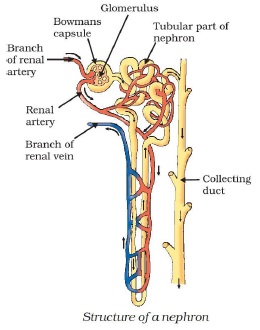
(i) Which of the following is the correct path taken by urine in our body ?
(a) kidney → ureter → urethra → bladder
(b) kidney → bladder → urethra → ureter
(c) kidney → ureter → bladder → urethra
(d) bladder → kidney → ureter → urethra
(ii) The excretory unit in the human excretory system is called :
| (a) nephron | (b) neuron | (c) nephridia | (d) kidneyon |
(iii) The substance which is not reabsorbed into the blood capillaries surrounding the tubule of a nephron is mainly
| (a) glucose | (b) amino acid | (c) urea | (d) water |
(iv) The procedure of cleaning the blood of a person by using a kidney machine is known as :
| (a) ketolysis | (b) hydrolysis | (c) dialysis | (d) photolysis |
(v) The kidneys in human beings are a part of the system for
| (a) nutrition | (b) respiration. | .(c) excretion. | (d) transportation |
42.
The various steps, representing organisms in a food chain, at which the transfer of food and energy takes place are called trophic levels. Trophic levels are mainly occupied by producers and consumers. Producers belong to the first trophic level while consumers occupy various trophic levels in a food chain. Consumers are heterotrophic organisms, that are of three types - herbivores, carnivores and decomposers. A simplified version of a food chain showing various trophic levels is represented as follows.
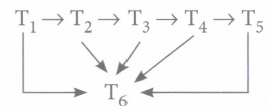
(i) T6 in the food chain is
| (a) decomposer | (b) carnivore |
| (c) herbivore | (d) omnivore |
(ii) If T2 is occupied by grasshopper in a particular food chain, then T3 and T4 will most probably be
| (a) bird, cow | (b) man, elephant |
| (c) frog, snake | (d) snake, frog |
(iii) In an ecosystem, trophic levels are formed by
| (a) herbivores only | (b) carnivores only |
| (c) omnivores only | (d) organisms linked in a food chain |
(iv) Which of the following limits the number of trophic levels in a food chain?
| (a) Decrease in energy at higher trophic levels | (b) Deficient food supply |
| (c) Polluted air | (d) Water |
(v) Nitesh went to a garden. There he saw some sparrows eating worms from the green grass. After sometime suddenly an eagle attacked the bird and killed it. Which one among these organisms belong to trophic level 2 and 3 respectively in the food chain operating there?
| (a) Worms, Sparrow | (b) Sparrow, Eagle |
| (c) Grass, Worms | (d) Worms, Eagle |
1.
(c)
2.
(c)
2 and 3
3.
(c)
-8 cm
4.
(c)
Green
5.
(a)
It is deadly poisonous
6.
(b)
Top Carnivores, Carnivores, Herbivores, Producers
7.
(c)
Presbyopia
8.
(d)
Fruits and seeds
9.
(c)
Baking soda
10.
(a)
Physical change
11.
(b)
Scattering of light
12.
(b)
Crop field
13.
(b)
Chloroplast
14.
(d)
Nephrons
15.
(b)
H2S
16.
(a) (i) Cornea - Refraction of the light rays falling on the eye.
(ii) Iris - To control the size of the pupil.
(iii) Pupil - To regulate and control the amount of light entering the eye.
(iv) Retina - To act as a screen to obtain the image of object and generate electrical signals which are sent to the brain via optic nerves.
(b) Ways of motivating people for the noble cause of eye donation are street play, banners, poster, door to door campaign, etc.
Objectives:
(i) To develop the habit of group work.
(ii) To work for a common cause.
(iii) To understand social issues and problems.
17.
washing soda - Na2CO3·10H2O
(Sodium carbonate decahydrate)
Baking soda - NaHCO3
(sodium bicarbonate )
Baking soda is used as an antacid it neutralises excess acid in the stomach and provides relief.
18.
The flow of signals through neurons takes place in the form of specialized chemicals; called neurotransmitters. The neurotransmitters. The neurotransmitters can only enter a neuron through dedicated receptor channels. Such receptor channels a5re only present at the dendritic end but not at the axonal end. Hence, the flow of signals in a synapse happens from axonal end of one neuron to dendritic end of another neuron but not in the reverse direction.
19.
A transparent material bounded by two surfaces of which one or both surfaces are spherical forms a lens.
20.
Precipitation reaction occurs when cations and anions in aqueous solution combine to form an insoluble ionic solid called a precipitate.
This insoluble substance formed is known as a precipitate.
21.
Rainbow is caused by dispersion of sunlight by tiny water droplets present in the atmosphere. The water droplets act like small prisms. They reflect the incident sunlight and then reflect it internally and finally refract it again when it comes out of the rain-drop. A rainbow is always formed in the direction opposite to that of the sun.
22.
It is an extracellular fluid used in transportation.
23.
Iodised salt in diet is advisable because it contains iodine, which is essential element for the synthesis of thyroxine hormone by thyroid gland. In case, iodine is deficient in our diet, there is a possibility of suffering from goitre.
24.
(i) Focal length / half the radius of curvature.
(ii) The inversion will happen at a distance less than 10 cm. A thicker lens a smaller focal length.
25.
Rose plant and neem plant
26.
The green colour of ferrous sulphate crystals is due to the presence of 7 water molecules (water of crystallization). :It loses the water of crystallization on heating, thus leading to change in colour.
27.
| Function | Location | Remarks | |
| Rods | Sensitive to low light intensity. Detects shades of grey | Found throughout the fovea retina except at the blind spot | Provides night vision |
| cones | Sensitive only to high intensity. Detects colour and cannot operate in poor light |
Concentrated in the fovea | They are sensitive to red, green and blue light |
Fovea: In the eye, a tiny pit located in the macula of the retina that provides the clearest vision of all. Only in the fovea are the layers of the retina spread aside to let light fall directly on the cones, the cells that give the sharpest image.
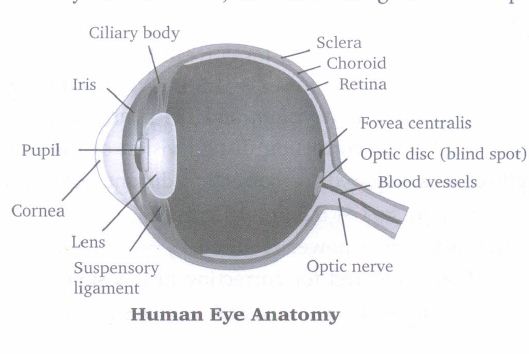
28.
Student. should pluck both the leaves and boil them separately in the alcohol kept in water bath to remove the chlorophyll. Wash both the leaves with distilled water and add few drops of iodine solution on both the leaves kept flat on white tile. The part of the leaf that turns blue black would show presence of starch in it.
29.
(i) Five molecules of water.
(ii) Formula - CuSO4.5H2O
[iii) When heated, its colour changes from blue to white.
30.
(a): Pancreas secretes pancreatic juice which contains digestive enzymes like pancreatic amylase, trypsin and lipase. The enzyme amylase breaks down the starch, the enzyme trypsin digests the proteins and the enzyme lipase breaks down the emulsified fats.
31.
(a) Both A and R are true and R is correct explanation of the assertion.
32.
\(\text { (d): } \mathrm{KOH}+\mathrm{HNO}_{3} \longrightarrow \mathrm{KNO}_{3}+\mathrm{H}_{2} \mathrm{O}\)\(\mathrm{NH}_{4} \mathrm{OH}+\mathrm{HCl} \longrightarrow \mathrm{NH}_{4} \mathrm{Cl}\)
(Strong base) (Strong acid) (Weak base) (Strong acid)
33.
(a) If both assertion and reason are true and the reason is correct explanation of assertion.
34.
(b) If both assertion and reason are true but reason is not a correct explanation of assertion.
35.
(a) Refrigerators and aerosols
(b) The use of CFC in refrigerators and aerosols had not started then and now it is banned.
(c) (iii) 1988-1990
(d) (i) CFC
36.
(a) Hypertension
(b) Adrenaline
(c) (i) Increase
(d) (ii) Decreased resistance to blood flow
37.
(a) Yes it was
(b) The lower surface of leaf
(c) (i) 38.5
(d) (iii) C
38.
(a) NH4Cl in its solution dissociates as weak base, NH4OH and strong acid, HCl. Thus, the solution is acidic and hence pH of solution is less than 7.
(b) NH4SO4 in its solution dissociates as strong acid, H2SO4 and weak base NH4OH. Thus, it is acidic in nature.
(c) (i) HCI (d) (ii) CO2
39.
(i) The chemical reaction between MnO2 and HCI is redox reaction.
(ii) Chlorine gas reacts with dry Ca (OH)2 to form bleaching powder as follows
Ca(OH)2 + Cl2 \(\rightarrow\) Ca(OCl)2 + H2O
(Bleaching powder)
(iii) The reaction is as follows
MnO2 + 4 HCl \(\rightarrow\) MnCl2 + 2H2O + Cl2 \(\uparrow\)
In this reaction, MnO2 is getting reduced to MnCl2 by losing oxygen atoms, while HCl is getting oxidised to H2O by gaining oxygen atom.
Or
(iii) (a) The nature of MnO2 is basic.
(b) If we take dry HCl gas instead of aqueous solution of HCI, then no reaction takes place.
MnO2 + HCl (dry gas) \(\rightarrow\) reaction will not occur.
40.
(i) (b) 78.57 m2
Radius of a dome, r = 2.5 cm
The dome is hemispherical in shape.
Then, cloth material required = 2 x Surface area of hemisphere
=2 x 2πr2
\(=4 \times \frac{22}{7} \times 2.5 \times 2.5\) = 78.57 m2
(ii) (a) \(\pi\)r2h
(iii) (b) 123.2 m2
Height of each pillar, h= 7m
Radius of base, r= 1.4 m
Lateral surface area or curved surface area of 2 pillars = 2 x 2\(\pi\)rh
\(=4 \times \frac{22}{7} \times 1.4 \times 7\)
= 123.2 m2
(iv) (d) 89.83 m3
Radius of hemisphere, r= 3.5m
Then, volume of a hemisphere,\(\mathrm{V}=\frac{2}{3} \pi r^{3}\)
\(=\frac{2}{3} \times \frac{22}{7} \times(3.5)^{3}\)
= 89.83 m2
(v) (b) 1:8
Volume of 2 hemispheres of radius \(1 \mathrm{~cm}=2 \times \frac{2}{3} \pi r^{3}=\frac{4}{3} \pi(1)^{3}=\frac{4}{3} \pi \mathrm{cm}^{3}\)
Volume of 1 sphere of radius \(2 \mathrm{~cm}=\frac{4}{3} \pi\left(r^{3}\right)=\frac{4}{3} \pi(2)^{3}=\frac{32}{3} \pi \mathrm{cm}^{3}\)
Then, required ratio \(=\frac{\frac{4}{3} \pi}{\frac{32}{3} \pi}=\frac{1}{8}\)
41.
(i) (c) kidney → ureter → bladder → urethra
(ii) (a) nephron
(iii) (c) urea
(iv) (c) dialysis
(v) (c) excretion.
42.
(i) (a): Decomposers work at every trophic level in a food chain as they feed on both producers and consumers.
(ii) (c)
(iii) (d) : In an ecosystem, trophic levels are formed by organisms linked in a food chain. The organisms deriving their energy from the same source belong to the same trophic level.
(iv) (a) : The quantum of available energy in a food chain successively gets decreased at each trophic level as a result of waste of energy in the form of heat. Second law of thermodynamics says that transformation of energy from one form to the other is inefficient and involves dissipation of unavailable energy. This phenomenon (loss of energy at successive trophic levels) restricts the size of food chain in an ecosystem to maximum of 4 or 5 steps or trophic levels.
(v) (a): Correct order of the food chain is
Grass - Worms - Sparrow - Eagle
T1 T2 T3 T4

10th Standard CBSE Syllabus & Materials
10th Standard CBSE
CBSE 10th Social Science PS - Federalism - New Model Questions Papers Study Material - QB365 Set A
NEW10th Standard CBSE
CBSE 10th Social Science PS - Power Sharing - New Model Questions Papers Study Material - QB365 Set A
NEW10th Standard CBSE
CBSE 10th Social Science GEO - Manufacturing Industries - New Model Questions Papers Study Material - QB365 Set A
NEW10th Standard CBSE
CBSE 10th Social Science GEO - Minerals and Energy Resources - New Model Questions Papers Study Material - QB365 Set A



NCERT Books

Syllabus

Exam Pattern

Sample Question Papers

Previous year Question Papers

Important Notes

MCQ Practice test

NCERT Exemplers

Case study Questions

Image Based Questions

Passage based Questions

HOT Questions

Value Based Questions

Model Questions Papers
NCERT ( Book Back ) Questions

Assertion and Reason
Important Questions And Answers

CBSE 10th Standard CBSE Subjects
CBSE Standards



