
 100% FREE ACCESS
10th Standard CBSE Syllabus & Materials
10th Standard CBSE
CBSE 10th Social Science ECO - Globalisation and the Indian Economy - New Model Questions Papers Study Material - QB365 Set A
NEW10th Standard CBSE
CBSE 10th Social Science ECO - Money and Credit - New Model Questions Papers Study Material - QB365 Set A
NEW10th Standard CBSE
CBSE 10th Social Science ECO - Sectors of the Indian Economy - New Model Questions Papers Study Material - QB365 Set A
NEW10th Standard CBSE
CBSE 10th Social Science ECO - Development - New Model Questions Papers Study Material - QB365 Set A
NEW10th Standard CBSE
CBSE 10th Social Science PS - Outcomes of Democracy - New Model Questions Papers Study Material - QB365 Set A
NEW10th Standard CBSE
CBSE 10th Social Science PS - Gender, Religion and Caste - New Model Questions Papers Study Material - QB365 Set A

Published on: 26/10/2025
Download CBSE Class 10th Standard CBSE Science question papers, sample papers, important questions, and previous year solved papers in PDF format. Get free study materials, NCERT solutions, and exam preparation resources for Class 10th Standard CBSE Science
Questions + Answers key
Take MCQ Science Test
1.
(i) Draw the electron dot structure for ethyne.
(ii) List two differences between the properties exhibited by covalent compounds and ionic compounds.
2.
Consider the following organic compounds.
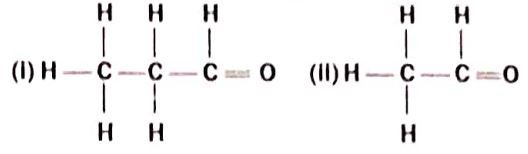
(a) Name the functional group present in their compounds.
(b) Write the general formula for the compounds of this functional group.
(c) State the relationship between these compounds and draw the structure of any other compound having similar functional group.
3.
The table shows the electronic structures of four elements.
| Element | Electronic stucture |
| P | 2, 6 |
| Q | 2, 8, 1 |
| R | 2, 8, 7 |
| S | 2, 8, 8 |
(i) ldentify which element(s) will form covalent bonds with carbon.
(ii) "Carbon reacts with an element in the above table to form several compounds." Give suitable reason.
4.
How can ethanol and ethanoic acid can be differentiated on the basis of their physical and chemical properties?
5.
What are oxidising agents?
6.
The formulae of four organic compounds are shown below. Choose the correct option.
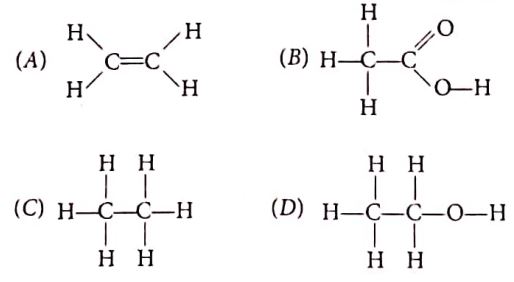
A and B are unsaturated hydrocarbons.
C and D are saturated hydrocarbons.
Addition of hydrogen in presence of catalyst changes A to C.
Addition of potassium permanganate changes B to D.
7.
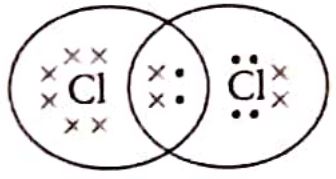
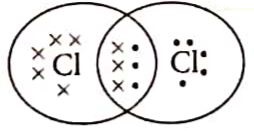
The electron dot structure of chlorine molecule is
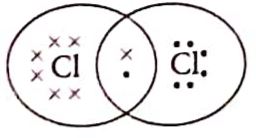
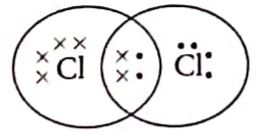
8.
The substance not responsible for the hardness of water is
sodium nitrate
calcium hydrogen carbonate
calcium carbonate
magnesium carbonate
9.
Identify the product formed when methane reacts with chlorine in the presence of sunlight is
C2Cl6
CH3Cl
CHCl4
None of these
10.
Which of the following is the correct representation of electron dot structure of nitrogen?
-q.jpg)
-q.jpg)
-q.jpg)
-q.jpg)
11.
Which of the following does not belong to the same homologous series?
CH4
C2H6
C3H8
C4H8
12.
\(CH_3- {CH_2 }-OH \xrightarrow [ ]{ Alkaline \ KMnO_4+Heat } CH_3- COOH\)
In the above given reaction, alkaline KMnO 4 acts as
reducing agent
oxidising agent
catalyst
dehydrating agent
13.
Butanone is a four-carbon compound with the functional group
carboxylic acid
aldehyde
ketone
alcohol
14.
Ethane, with the molecular formula C2H6 has
6 covalent bonds
7 covalent bonds
8 covalent bonds
9 covalent bonds
15.
Explain the given reactions with the examples.
(i) Hydrogenation reaction
(ii) Oxidation reaction
(iii) Substitution reaction
(iv) Saponification reaction
(v) Combustion reaction
16.
What are soaps? Explain the mechanism of the cleansing action of soaps? Soaps form scum with hard water. Explain why? How this problem is overcome by use of detergents
17.
Draw the electron dot structures for
(a) Ethanoic acid
(b) H2S
(c) Propanone
(d) F2
18.
Explain the nature of the covalent bond using the bond formation in CH3Cl.
19.
Write the name and structure of an aldehyde with four carbon atoms in its molecule.
20.
The molecular formula of 'A'. is C10H18 and 'B' is C18H36 Name the homologous series to which they belong
21.
Catenation is the ability of an atom to form bonds with other atoms of the same element. it is exhibited by both carbon and silicon. Compare the ability of catenation of the two elements. Give reasons.
22.
Explain the formation of scum when hard water is treated with soap.
23.
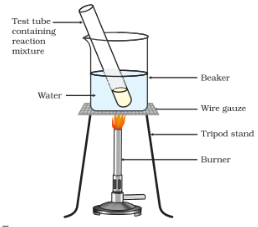
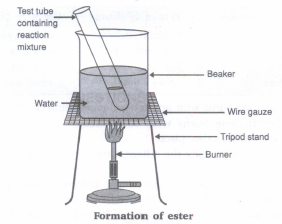
1. Take 1 mL ethanol (absolute alcohol) and 1 mL glacial acetic acid along with a few drops of concentrated sulphuric acid in a test tube.
2. Warm in a water-bath for at least five minutes as shown in fig..
3. Pour into a beaker containing 20-50 mL of water and smell the resulting mixture.
24.
1. Take some carbon compounds (naphthalene, camphor, alcohol) one by one on a spatula and burn them.
2. Observe the nature of the flame and note whether smoke is produced.
3. Place a metal plate above the flame. Is there a deposition on the plate in case of any of the compounds?
25.
The table given below shows six organic compounds A, B, C, D, E and F having different molecular formula:
| Organic compound | Molecular formula |
| A | C7H16 |
| B | C8H16 |
| C | C4H6 |
| D | C6H10 |
| E | C5H10 |
| F | C9H20 |
(i) Which of the following compounds belong to same homologous series?
| (a) E and F | (b) B and C | (c) A and B | (c) A and B |
(ii) Which of the following is the member of the same homologous series as E?
| (a) D | (b) A | (c) F | (d) B |
(iii) Identify the correct statements.
| (a) A and F are saturated hydrocarbons while all others are unsaturated hydrocarbons. |
| (b) C and D belong to a homologous series having general formula CnH2n |
| (c) B and E are alkynes. |
| (d) All the compounds have same physical and chemical properties. |
(iv) Compound B is
| (a) an alkane | (b) an alkene | (c) an alkyne |
(d) none of these. |
(v) Compound (F) has a general formula
| (a) CnH2n -2 | (b) CnH2n | (c) CnH2n+4 | (d) CnH2n+2 |
26.
Assertion: The functional group present in alcohols is -OH.
Reason: It is the same group as present in water, hence water and alcohol have similar properties.
Codes
(a) Both A and R are true, and R is correct explanation of the assertion.
(b) Both A and R are true, but R is not the correct explanation of the assertion.
(c) A is true, but R is false.
(d) A is false, but R is true.
27.
Assertion: Graphite is a good conductor of electricity.
Reason: It has one free valence electron.
Codes
(a) Both A and R are true, and R is correct explanation of the assertion.
(b) Both A and R are true, but R is not the correct explanation of the assertion.
(c) A is true, but R is false.
(d) A is false, but R is true.
1.
(i)
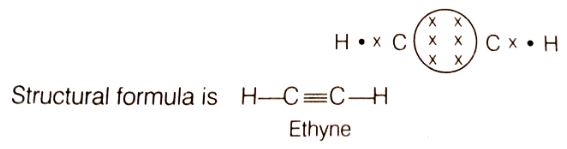
(ii)
| Covalent Compounds | Ionic Compounds |
| 1. They are generally volatile liquids or gases. | 1. They are generally crystalline solids. |
| 2. They have low melting and boiling points. | 2. They have high melting and boiling points |
2.
(a) (i)
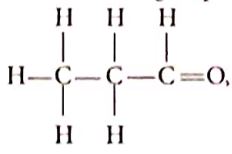
functional group is aldehyde. - CHO.
(ii)
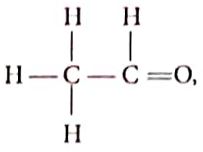
functional group is aldehyde. - CHO.
(b) General formula is CnH2nO.
(c) Both (i) and (ii) are forming a homologous series of compounds containing aldehyde functional group. Structure of fourth member of this homologous series is
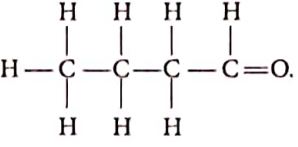
3.
(i) The elements P and R will form covalent bond with carbon because both the elements accept electrons to form ionic as well as covalent bonds.
While element Q (2, 8, 1) donates one electron to form ionic compounds and element 'S' (2, 8, 8) is stable due to complete octet in valence shell. Hence, they do not form covalent bond with carbon.
(ii) Carbon reacts with an element in table to form several compounds because of
(a) Tetravalency of carbon Carbon has electronic structure of (2, 4). Thus, it has four electrons in outermost shell. It is capable of bond formation with four other elements.
(b) Catenation Due to small size, C-C bond is strong. This allow carbon to form long chain compound of different size.
4.
(i) Distinction based on physical properties:
(a) Smell Ethanoic acid has a pungent smell.
Ethanol has a pleasant smell.
(b) Melting point Ethanol has lower melting point (156 K) than ethanoic acid (290 K).
(c) Physical state Ethanoic acid is solid (glacial acetic acid) in winters but ethanol is always a liquid.
(ii) Distinctions based on chemical properties:
(a) Reaction with sodium hydrogen carbonate On adding a small amount of sodium hydrogen carbonate to ethanoic acid, carbon dioxide gas is evolved with brisk effervescence. However, no such reaction noticed in case of ethanol.
CH3COOH + NaHCO3 \(\rightarrow\) CH3CO\(\bar{O}\)\(\overset{+}{N}\)a + CO2\(\uparrow\) H2O
Ethanoic acid
C2H5OH + NaHCO3 \(\rightarrow\) No reaction
Ethanol
(b) Reaction with caustic alkalies Ethanoic acid reacts with both sodium hydroxide (NaOH) and potassium hydroxide (KOH) to form corresponding salt and water. Ethanol fails to react with either of these.
CH3COOH + NaOH \(\rightarrow\) CH3CO\(\bar{O}\)\(\overset{+}{N}\)a + H2O
CH3COOH + KOH \(\rightarrow\) CH3CO\(\bar{O}\)\(\overset{+}{K}\) + H2O
5.
Substances that are capable of providing oxygen to other substances are called oxidising agents. Alkaline potassium permanganate (KMnO4) or acidified potassium dichromate (K2Cr2O7) act as an oxidising agent in oxidising alcohols into acids.
6.
(c)
Addition of hydrogen in presence of catalyst changes A to C.
7.
(c)
8.
(a)
sodium nitrate
9.
(b)
CH3Cl
10.
(d)
11.
(d)
C4H8
12.
(b)
oxidising agent
13.
(c)
ketone
14.
(b)
7 covalent bonds
15.
(i) Hydrogenation reaction The addition of hydrogen to an unsaturated compound to make it saturated is known as hydrogenation.
e.g. \(\underset{\text { Ethene }}{\mathrm{CH}_2}=\mathrm{CH}_2+\mathrm{H}_2 \xrightarrow[\mathrm{Ni}]{200^{\circ} \mathrm{C}} \underset{\text { Ethane }}{\mathrm{CH}_3-\mathrm{CH}_3}\)
(ii) Oxidation reaction The reaction in which an oxygen is added to the substance or removal of hydrogen is called oxidation reactions.
e.g. \(\mathrm{CH}_3 \mathrm{CH}_2 \mathrm{OH} \xrightarrow[\mathrm{K}_2 \mathrm{Cr}_2 \mathrm{O}_7]{[\mathrm{O]}} \mathrm{CH}_3 \mathrm{COOH}\)
In the above reaction oxygen is added to ethanol, CH3CH2OH therefore it is an oxidation reaction.
(iii) Substitution reaction The reaction in which a reagent substitutes (or replaces) an atom or a group of atoms from the reactant (substrate) are called substitution reactions.
e.g. \(\mathrm{CH}_4+\mathrm{Cl}_2 \xrightarrow{\text { Sunlight }} \mathrm{CH}_3 \mathrm{Cl}+\mathrm{HCl}\)
(iv) Saponification reaction When esters are hydrolysed in the presence of a base (NaOH) to get back an alcohol and sodium salt of an acid then reaction is called saponification reaction. It is used in the preparation of soaps.
e.g. \(\mathrm{CH}_3 \mathrm{COOCH}_3+\mathrm{NaOH} \longrightarrow\) \(\mathrm{CH}_3 \mathrm{CO\overline{\mathrm{O}}} \stackrel{+}{\mathrm{Na}}+\mathrm{CH}_3 \mathrm{OH}\)
(v) Combustion reaction Organic compounds burn in oxygen and yield majorly CO2, heat and light. This reaction is known as combustion reaction.
e.g. \(\mathrm{CH}_4+2 \mathrm{O}_2 \longrightarrow \mathrm{CO}_2+2 \mathrm{H}_2 \mathrm{O}+\text { Energy }\)
16.
Soaps are sodium salts of fatty acids. It is biodegradable and shows cleansing action by removing dirt.
Mechanism of cleansing action:
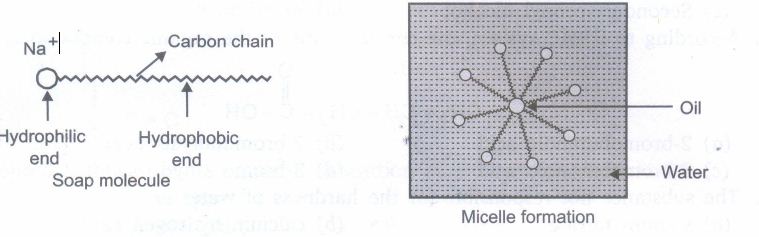
Soap molecule has two ends, the charged end that gets attracted towards water is called hydrophilic and the long carbon chain that repels water is called hydrophobic tail. When soap is dissolved in water, the carbon chain i.e., hydrophobic end gets attracted towards the oil, dirt and grease. The hydrophilic end stays away from this. ' The micelle formation takes place. The tail entangles dirt, oil or grease, if required, the agitation is done. Lot of rinsing is done with water so that water molecules attract charged (Na+) end and carries the soap molecules with dirt attached to it and clean the clothes, utensils, etc:
Scum formation: Hard water often contains salts of calcium and magnesium. Soap molecules react with the salts of calcium and magnesium and form a precipitate. This precipitate begins floating as an off-white layer over water. This layer is called scum. soaps lose their cleansing property in hard water because of formation of scum.
In case of detergents, the salts present in hard water does not react with the molecules of detergent to form insoluble scum, but the molecules of detergent remain as it is and helps in the cleansing action.
17.
-s.jpg)
-s.jpg)
18.
Carbon has 4 electrons in its valence shell. To complete its octet, it either needs to gain 4 electrons or lose 4 electrons to the other atom. Both these processes are impossible. Therefore, carbon atom achieve noble gas configuration by sharing 4 electrons with other atoms of itself or atoms of other elements. The bonds that are formed by sharing electrons are known as covalent bond. In covalent bonding, both atoms share the valence electrons, i.e. the shared electrons belong to the valence shells of both the atoms. CH3CI is called chloromethane, which contains 1 carbon atom, 3 hydrogen atoms and 1 chlorine atom.
Electronic configuration of carbon,6 = \(\overset{K}{2}\), \(\overset{L}{4}\)
Electronic configuration of hydrogen, 1 = \(\overset{K}{1}\)
Electronic configuration of chlorine, 17= \(\overset{K}{2}, \overset{L}{8}, \overset{M}{7}\)
Carbon atom has four outermost electrons, each hydrogen atom has one electron and chlorine has seven outermost electrons. Carbon shares its four outermost electrons with 3 hydrogen atoms and 1 chlorine atom to form CH3Cl as follows:
19.
Butanal
20.
'A' belongs to alkyne as general formula of alkyne is C2H2n−2
'B' belongs to alkene as general formula of alkene is C2H2n
21.
Both carbon and silicon have similar valence shell electronic configuration that is each has four electrons in the valence shell and hence show the phenomenon of catenation. But carbon being smaller than silicon forms stronger c-C than Si-Si bonds. Thus due to greater strength of C-C over Si-Si bonds, carbon shows catenation to a greater extent than silicon.
22.
Hard water contains calcium and magnesium ions. Soap is basically sodium or potassium salt of higher fatty acids. When soap is added to hard water, corresponding calcium and magnesium salts are formed, which being insoluble gets precipitated. These precipitates are called scum. Reactions taking place are shown as:
Ca2+ + 2RCOONa \(\rightarrow\) (RCOO)2 Ca\(\downarrow\) + 2Na+
Hard water Soap Calcium salt precipitate
Mg2+ + 2R COONa \(\rightarrow\) (RCOO)2Mg \(\downarrow\) + 2Na+
Hard water Soap Magnesium salt precipitate
23.
Take 1 mL ethanol and 1 mL glacial acetic acid along with a few drops of concentrated sulphuric acid in a test tube. Warm in a water-bath for at least five minutes. Pour into a beaker containing 20-50 mL of water.
1.Pleasant fruity smelling compound is obtained called ester. Such a chemical reaction is called esterification .
\(\underset{Ethanoic\ acid}{C{H}_{3}}-COOH+\underset{\ Ethanol}{C{H}_{3}-C{H}_{2}-C{H}_{2}OH}\underset{dehydrating\ agent}{\overset{Conc.{H}_{2}S{O}_{4}}{\leftrightharpoons }}\underset{Ester}{C{H}_{3}COO{C}_{2}{H}_{5}}+\underset{Water}{{H}_{2}O}\)
24.
Heating of different carbon compounds, observing the flame and smoke
| Carbon Compounds | Nature of flame | Deposits on Metal |
| Camphor | Smoky flame | Carbon deposits on metal |
| Alcohol | Non-sooty flame | No carbon |
| Acetone | Non-sooty flame | No carbon |
| Naphthalene | Smoky flame | Carbon deposits on metal |
Alcohol and acetone bums with non-sooty flame-complete combustion takes place.
Camphor, naphthalene burns with sooty flame-(unsaturated hydrocarbons) incomplete combustion takes place.
25.
(i) (d): A and F are alkanes; Band E are alkenes; C and D are alkynes.
(ii) (d): B is an alkene having general formula CnH2n, the homologous series to which E belongs.
(iii) (a) : C and D belong to a homologous series having general formula CnH2n-2 .Band E are alkenes. All the compounds have different physical and chemical properties.
(iv) (b): (B) is alkene.
(v) (d): (F) is an alkane.
26.
(c): In alcohols -OH group is attached to an alkyl group hence water and alcohol have different properties.
27.
(a) Both A and R are true, and R is correct explanation of the assertion.

10th Standard CBSE Syllabus & Materials
10th Standard CBSE
CBSE 10th Social Science PS - Federalism - New Model Questions Papers Study Material - QB365 Set A
NEW10th Standard CBSE
CBSE 10th Social Science PS - Power Sharing - New Model Questions Papers Study Material - QB365 Set A
NEW10th Standard CBSE
CBSE 10th Social Science GEO - Manufacturing Industries - New Model Questions Papers Study Material - QB365 Set A
NEW10th Standard CBSE
CBSE 10th Social Science GEO - Minerals and Energy Resources - New Model Questions Papers Study Material - QB365 Set A



NCERT Books

Syllabus

Exam Pattern

Sample Question Papers

Previous year Question Papers

Important Notes

MCQ Practice test

NCERT Exemplers

Case study Questions

Image Based Questions

Passage based Questions

HOT Questions

Value Based Questions

Model Questions Papers
NCERT ( Book Back ) Questions

Assertion and Reason
Important Questions And Answers

CBSE 10th Standard CBSE Subjects
CBSE Standards



