
 100% FREE ACCESS
10th Standard CBSE Syllabus & Materials
10th Standard CBSE
CBSE 10th Social Science ECO - Globalisation and the Indian Economy - New Model Questions Papers Study Material - QB365 Set A
NEW10th Standard CBSE
CBSE 10th Social Science ECO - Money and Credit - New Model Questions Papers Study Material - QB365 Set A
NEW10th Standard CBSE
CBSE 10th Social Science ECO - Sectors of the Indian Economy - New Model Questions Papers Study Material - QB365 Set A
NEW10th Standard CBSE
CBSE 10th Social Science ECO - Development - New Model Questions Papers Study Material - QB365 Set A
NEW10th Standard CBSE
CBSE 10th Social Science PS - Outcomes of Democracy - New Model Questions Papers Study Material - QB365 Set A
NEW10th Standard CBSE
CBSE 10th Social Science PS - Gender, Religion and Caste - New Model Questions Papers Study Material - QB365 Set A

Published on: 20/10/2025
Download CBSE Class 10th Standard CBSE Science question papers, sample papers, important questions, and previous year solved papers in PDF format. Get free study materials, NCERT solutions, and exam preparation resources for Class 10th Standard CBSE Science
Questions + Answers key
Take MCQ Science Test
1.
Plants use completely different process for excretion as compared to animals. Which one of the following processes is not followed by plants for excretion?
They can get rid of excess water by transpiration
They selectively filter toxic substances through their leaves
Waste products are stored as resins and gums in old xylem
They excrete waste substances into the soil around them
2.
An experiment is set up as shown. To perform the experiment, we put the top end of the tube C in mouth and 'breath in' and 'breath out' gently. ldentify in which of the boiling tube lime-water turns milky appreciably.
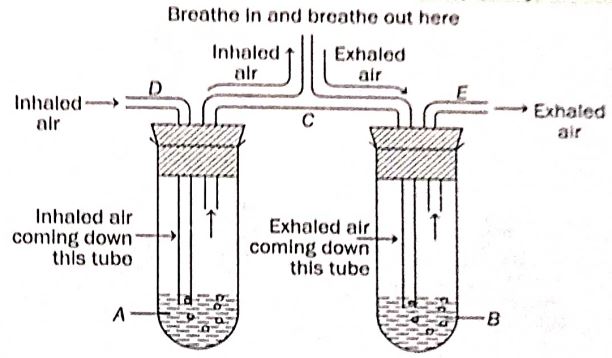
Tube A
tube B
Both tube A and tube B
Neither tube A nor tube B
3.
Observe the given flowchart and identify the blank A from the given options.
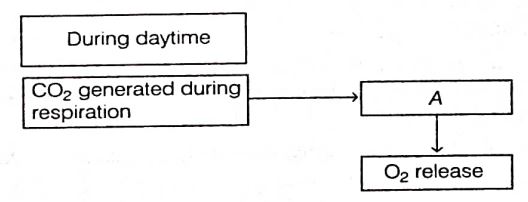
Respiration
Photosynthesis
Transpiration
Fermentation
4.
Select the option that Incorrectly matches the organ to digestive reactlon taking place in it.
| Organs | Digestive reactions |
| (a) Stomach | \(\ \quad \text { Protein } \xrightarrow{\text { Pepsin }} \text { Small polypeptides }\) |
| Organs | Digestive reactions |
| (b) Oesophagus | \(\text { Sucrose } \xrightarrow{\text { Sucrase }} \text { Glucose + Fructose }\) |
| Organs | Digestive reactions |
| (c) Mouth | \(\text { Starch } \xrightarrow{\text { Ptyalin }} \text { Maltose }\) |
| Organs | Digestive reactions |
| (d) Small intestine | \(\text { Sucrose } \xrightarrow{\text { Sucrase }} \text { Glucose + Fructose }\) |
5.
The bacterial and the viral infections that may be caused due to unsafe sex respectively are
Warts and HIV-AIDS
HIV-AIDS and Warts
Gonorrhoea and Syphilis
Syphilis and Warts
6.
Two convex lenses P and Q have focal length 0.50 m and 0.40 m respectively. Which of the following is true about the combined power of the two lenses?
P is equal to 4.5 D
P is less than 4.5 D
P is more than 4.5 D
P cannot be determined
7.
A lens has a power of + 4.0 D. It is
a convex lens of focal length 4 m
a concave lens of focal length 4 m
a convex lens of focal length 0.25 m
a concave lens of focal length 0.25 m
8.
Which statement explains why the shoot of a plant bends when exposed to light from one side?
Diffusion of auxin into cells that are in shade causes cell division of those cells
Diffusion of auxin out of cells in that are in shade causes cell division of those cells
Diffusion of auxin into cells that are in shade causes elongation of those cells
Diffusion of auxin out of cells in that are in shade causes elongation of those cells
9.
Mineral acids are stronger acids than carboxylic acids because
both mineral acids and carboxylic acids are completely ionised
both mineral acids and carboxylic acids are partially ionised
mineral acids are completely ionised while carboxylic acids are partially ionised
mineral acids are partially ionised while carboxylic acids are completely ionised
10.
The structural formula of cyclohexane is
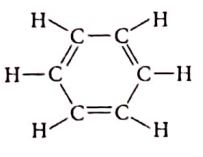
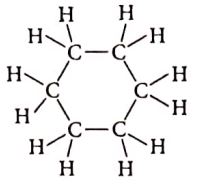
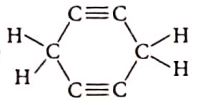
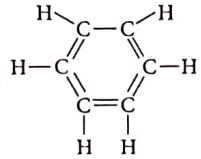
11.
Shown below is a container that is used in the transportation of goods over long distances.
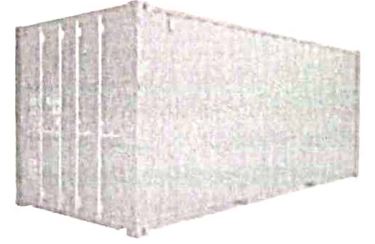
These containers are made of steel. Which property of steel is mainly used to make these containers?
Its ductility
Its malleability
Its metallic lustre
Its electrical conductivity
12.
In the given experimental set-up, if the experiment is carried out separately with each of the following solutions the cases in which the bulb will glow is
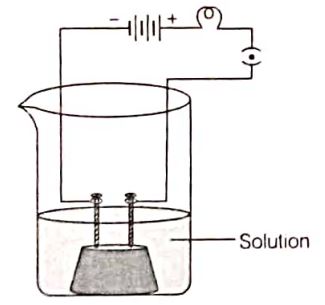
dilute hydrochloric acid
honey
glucose solution
alcohol
13.
Raman wants to draw a graph to show how the resistivity (ρ) of a wire changes with the length (l) of the wire. What should his graph look like?
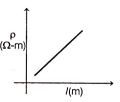
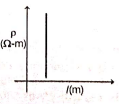
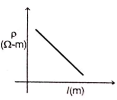
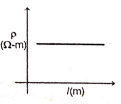
14.
In case of four wires of same material, the resistance will be minimum, if the diameter and length of the wire respectively are
D/2 and L/4
D/4 and 4L
2D and L
4D and 2L
15.
Which one of the following Is the correct set-up for studying the dependence of the current on the potential difference across a resistor and why?
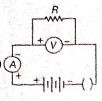
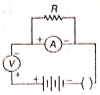
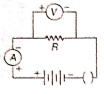
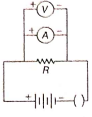
16.
If the resistance of wire A is four times resistance of wire B then the ratio of cross sectional areas of wires is
1:2
1:4
1:8
1:6
17.
Graphs between electric current and potential difference across two conductors A and B are shown in the figure. Which of the following conductor has more resistance?
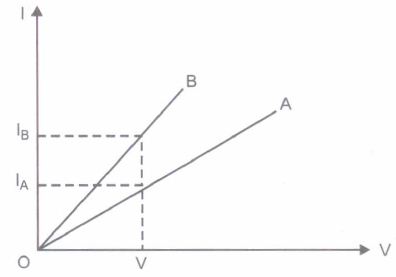
B
A
Both have equal resistance
None of these
18.
What sets electron into motion in an electric circuit
Battery/cell
Resistor
Rheostat
Ammeter
19.
A man has five resistors each of 1/5\(\Omega \) What is the maximum resistance he can obtain by connecting them?
1\(\Omega \)
5\(\Omega \)
\(\frac { 1 }{ 2 } \Omega \)
\(\frac { 2 }{ 5 } \Omega \)
20.
Seven identical lamps of resistance 220 \(\Omega\)each are connected to a 220 V line as shown in figure. Then reading of ammeter will be
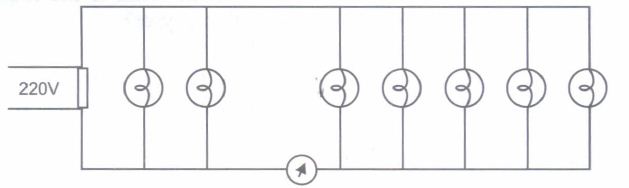
\(\frac { 1 }{ 10 } A\)
\(\frac { 2 }{ 5 } A\)
\(\frac { 3 }{ 10 } A\)
None of these
21.
The part of eye that determines the colour of the eye of a person is
Pupil
Cornea
Retina
Iris
22.
Colour blindness is caused due to
lack of rod cells
absence of optic nerve
lack or cone cells
none of these
23.
The phenomenon of light responsible for the working of the human eye is
reflection
refraction
power of accommodation
persistence of vision.
24.
Convex lens forms a real, point sized image at focus, the object is placed
at focus
between F and 2F
at infinity
at 2F
25.
The mirror that always gives virtual and erect image of the object but image of smaller size than the size of the object is
Plane mirror
Concave mirror
Convex mirror
none of these
26.
Power of a lens is - 4, its focal length is
4 m
- 40 cm
- 0.25 m
- 25 m.
27.
Which of the following can be called a characteristic?
Plants can photosynthesise
We have 2 eyes
Mango tree is multicellular
All of these
28.
With whom we associate theory of evolution
Charles Darwin
Mendel.
Stanley Miller
Harold Urey
29.
A section of DNA providing information for one protein is called
Nucleus
Chromosomes
Trait
Gene
30.
Identify the organism
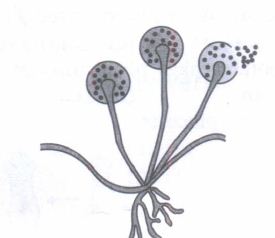
Rhizobium
Rhizopus
Rhizoid
Mushroom
31.
Union of male and female gametes forms
Egg
Embryo
Zygote
Spore
32.
Why are the testes located outside the abdominal cavity in scrotum
Because sperm formation requires more spaces.
Because sperm formation requires a lower temperature
Because sperm formation requires a higher temperature.
None of the above.
33.
In which of the following plant bud in notches of leaves help in its propagation?
Radish
Bryophyllum
Bougainvillea
Jasmine
34.
The female reproductive part of the flower consists of
Stigma, Anther, Filament
Style, Ovary, Thalamus
Stigma, Ovary, Style
Anther, Corolla, Filament
35.
Where does fertilisation occur in human females
Uteru
Cervix
Oviduct
None of these
36.
Deficiency of iodine in our body causes:
Goitre
Swollen neck
Absence of thyroxin
All of these
37.
Two plant hormones which regulate growth of plant are:
Cytokinin and Auxin
Abscisic acid and Auxin
Auxin and Gibberellin
All of these
38.
In multicellular organisms, control and coordination activities are performed by
Movements
Physio-chemical reactions
Specialised tissues
Glycogen
39.
Name the artificial method for the removal of liquid nitrogenous waste from body
Excretion
Dialysis
Urination
All of these
40.
CO2 is transported in our body through
Haemoglobin
Blood
Water
Cd)All of these
41.
Covalent compounds
have high melting and boiling points
are mostly soluble in water
are formed between atoms of metals and non-metals
are formed by the sharing of electrons in the bonding atoms
42.
Which is denatured spirit?
ethanol only
ethanol and methanol (50%)
ethanol and methanol (5%)
methanol only
43.
Which of the following is used to oxidise ethanol to ethanoic acid
Alkalme KMnO4
Cone. H2SO4
Acidified K2Cr2O7
All of above
44.
An alloy of Zn and Cu is dissolved in dil. HCl. Hydrogen gas is evolved. In this evolution of gas
only zinc reacts with dil. HCl
only copper reacts with dil. HCl
both zinc and copper react with dil. HCI
only copper reacts with water
45.
Soda-acid fire extinguishes the fire by
cutting the supply of air
raising ignition temperature
removing combustible substance
none of these
46.
An element 'X' forms a solid oxide which dissolves in water forming solution which turns blue litmus paper red, 'X' is
Ca
Cu
Fe
P
47.
The composition of aqua regia is
conc. H2SO4 and conc. HCl in ratio of 1 : 3
conc. HNO3 and cone. HCI in ratio of 1 : 3
conc. HNO3 and cone, HCI in ratio of 3 : 1
conc. H2SO4 and cone. HNO3 is ratio of 3 : 1
48.
The aqueous solution of which of the following salt will have higher OH- ions?
NaCI
Na2SO4
CH3COONa
None of these
49.
Which one of the following will turn blue litmus red?
Vinegar
Lime water
Baking soda solution
Washing soda solution
50.
Dissolving of quick lime in water is accompanied by
Formation of precipitate
Evolution of heat
Change in colour
Change in state
51.
A drop of colourless liquid is poured over blue litmus paper and it turns to red. The colourless liquid is
sodium chloride solution
pure water
potassium hydroxide solution
dilute hydrochloric acid
52.
The preparation of water from hydrogen and oxygen gas is accompanied by:
Evolution of coloured gas
Formation of precipitate
Formation of ashes
Change in state
53.
Reaction between Ammonium chloride and Barium hydroxide is
Exothermic reaction
Chemical change
Endothermic reaction
None of these
54.
Which information is not conveyed by a balanced chemical equation?
Physical states of reactants and products
Symbols and formulae of all the substances involved in a particular reaction
Number of atoms/molecules of the reactants and products formed
Whether a particular reaction is actually feasible or not
55.
A prism ABC (with BC as base) is placed in different orientations. A narrow beam of white light is incident on the prism as shown in Figure. In which of the following cases, after dispersion, the third colour from the top corresponds to the colour of the sky?
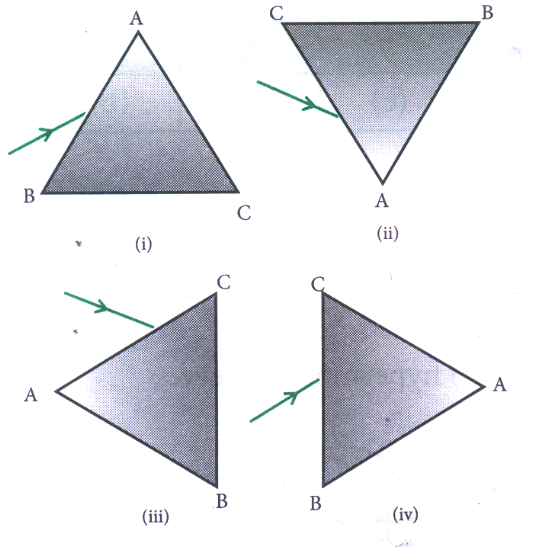
(i)
(ii)
(iii)
(iv)
56.
Which of the following ray diagrams is correct for the ray of light incident on a concave mirror as shown in Figure?
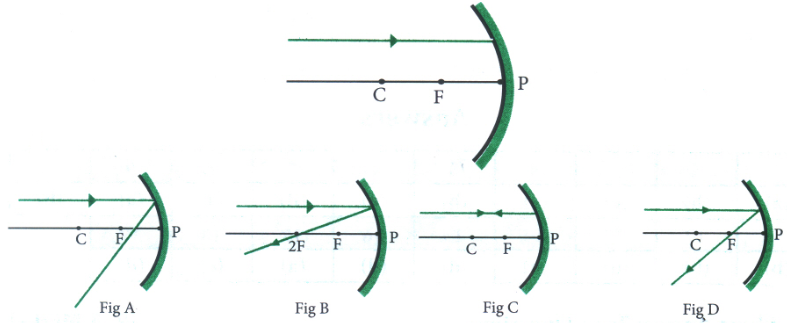
Fig. A
Fig. B
Fig. C
Fig. D
57.
Which of the following phenomena contributes significantly to the reddish appearance of the sun at sunrise or sunset?
Dispersion of light
Scattering of light
Total internal reflection of light
Reflection of light from the earth
58.
A student sitting on the bench can read the letters written on the blackboard but is not able to read the letters written in his text book. Which of the following statement is correct?
The near point of his eyes has receded away
The near point of his eyes has come closer to him
The far point of his eyes has come closer him
The far point of his eyes has receded away
59.
Rays from Sun converge at a point 15 cm in front of a concave mirror. Where an object should be placed so that size of its image is equal to the size of the object?
30 cm in front of the mirror
15 cm in front of the mirror
between 15 cm and 30 cm in front of the mirror
more than 30 cm in front of the mirror.
60.
A 10 mm long awl pin is placed vertically in front of a concave mirror. A 5 mm long image of the awl pin is formed at 30 cm in front of the mirror. The focal length of this mirror is.
- 30 cm
- 20 cm
- 40 cm
- 60 cm
61.
Select the correct statement
Tendril of a pea plant and phylloclade of Opuntia are homologous.
Tendril of a pea plant and phylloclade of Opuntia are analogous
Wings of birds and limbs of lizards are analogous
Wings of birds and wings of bat are homologous
62.
An example of homologous organs is
Our arm and a dog's fore-leg
Our teeth and an elephant's tusks.
Potato and runners of grass.
all of the above
63.
The first member of alkyne homologous series is
Ethyne
Ethane
Propyne
Methane
64.
Tiny pores present on the surface of the leaf are called
Stomata
Guard cells
Chloroplast
None of these
65.
Electrical wires have a coating of an insulating material. The material, generally used is
Sulphur
Graphite
PVC
All can be used
66.
Although metals form basic oxides, which of the following metals form an amphoteric oxide?
Na
Ca
Al
Cu
67.
Reaction between X and Y, forms compound Z. X loses electron and Y gains electron. Which of the following properties is not shown by Z?
Has high melting point
Has low melting point
Conducts electricity in molten state
Occurs as solid
68.
An electrolytic cell consists of
(i) Positively charged cathode
(ii) Negatively charged anode
(iii) Positively charged anode
(iv) Negatively charged cathode
(i) and (ii)
(iii) and (iv)
(i) and (iii)
(ii) and (iv)
69.
Aluminium is used for making cooking utensils. Which of the following properties of aluminium are responsible for the same?
(i) Good thermal conductivity
(ii) Good electrical conductivity
(iii) Ductility
(iv) High melting point
(i) and (ii)
(i) and (iii)
(ii) and (iii)
(i) and (iv)
70.
Which of the following is not an involuntary action?
Vomiting
Salivation
Heart beat
Chewing
71.
The growth of tendril in pea plants is due to
Effect of light
Effect of gravity
Rapid cell divisions in tendrillar cells that are away from the support
Rapid cell divisions in tendrillar cells in contact with the support
72.
Which is the correct sequence of parts in human alimentary canal?
Mouth \(\longrightarrow\)Stomach\(\longrightarrow\)Small intestine \(\longrightarrow\) Oesophagus \(\longrightarrow\) large intestine
Mouth \(\longrightarrow\) oesophagus \(\longrightarrow\) stomach \(\longrightarrow\) large intestine \(\longrightarrow\) small intestine
Mouth \(\longrightarrow\) stomach \(\longrightarrow\) oesophagus \(\longrightarrow\) small intestine \(\longrightarrow\) large intestine
Mouth \(\longrightarrow\) oesophagus \(\longrightarrow\) stomach \(\longrightarrow\)small intestine \(\longrightarrow\) large intestine
73.
Ohm's law is valid only when
Graph between V and I is a straight line
Temperature increases
Temperature decreases
Temperature remains constant.
74.
Materials which allow larger current to flow through them are called
Alloy
Semiconductors
Insulators
Conductors
75.
Methane on combustion gives
neither CO2 nor H2O
CO2
both CO2 and H2O
H2O
76.
In which of the following chemical equations, the abbreviations represent the correct states of the reactants and products involved temperature?
2H2(l) + O2(l) \(\rightarrow\) 2H2O(g)
2H2(g) + O2(l) \(\rightarrow\) 2H2O(l)
2H2(g) + O2(g) \(\rightarrow\) 2H2O(l)
2H2(g) + O2(g) \(\rightarrow\) 2H2O(g)
77.
Which of the following statement is not correct?
All metal carbonates react with acid to give a salt, water and carbon dioxide
All metal oxides react with water to give salt and acid
Some metals react with acids to give salt and hydrogen
Some non-metal oxides react with water to form an acid
78.
Which of the following is not a mineral acid?
Hydrochloric acid
Citric acid
Sulphuric acid
Nitric acid
79.
Which among the following is /are double displacement reaction(s) ?
(i) Pb + CuCl2 \(\rightarrow\) PbCl2 + Cu
(ii) Na2SO4 + BaCl2 \(\rightarrow\) BaSO4 + 2NaCl
(iii) C + O2 \(\rightarrow\) CO2
(iv) CH4 + 2O2 \(\rightarrow\) CO2 + 2H2O
(i) and (iv)
(ii) only
(i) and (ii)
(iii) and (iv)
80.
A sample of soil is mixed with water and allowed to settle. The clear supernatant solution turns the pH paper yellowish-orange. Which of the following would change the colour of this pH paper to greenish-blue?
Lemon juice
Vinegar
Common salt
An antacid
1.
(b)
They selectively filter toxic substances through their leaves
2.
(b)
tube B
3.
(b)
Photosynthesis
4.
(b)
| Organs | Digestive reactions |
| (b) Oesophagus | \(\text { Sucrose } \xrightarrow{\text { Sucrase }} \text { Glucose + Fructose }\) |
5.
(d)
Syphilis and Warts
6.
(a)
P is equal to 4.5 D
7.
(c)
a convex lens of focal length 0.25 m
8.
(c)
Diffusion of auxin into cells that are in shade causes elongation of those cells
9.
(c)
mineral acids are completely ionised while carboxylic acids are partially ionised
10.
(b)
11.
(b)
Its malleability
12.
(a)
dilute hydrochloric acid
13.
(d)
14.
(d)
4D and 2L
15.
(c)
16.
(b)
1:4
17.
(b)
A
18.
(a)
Battery/cell
19.
(a)
1\(\Omega \)
20.
(d)
None of these
21.
(a)
Pupil
22.
(b)
absence of optic nerve
23.
(b)
refraction
24.
(c)
at infinity
25.
(c)
Convex mirror
26.
(c)
- 0.25 m
27.
(d)
All of these
28.
(a)
Charles Darwin
29.
(d)
Gene
30.
(b)
Rhizopus
31.
(c)
Zygote
32.
(b)
Because sperm formation requires a lower temperature
33.
(b)
Bryophyllum
34.
(c)
Stigma, Ovary, Style
35.
(d)
None of these
36.
(d)
All of these
37.
(d)
All of these
38.
(b)
Physio-chemical reactions
39.
(b)
Dialysis
40.
(b)
Blood
41.
(d)
are formed by the sharing of electrons in the bonding atoms
42.
(c)
ethanol and methanol (5%)
43.
(d)
All of above
44.
(a)
only zinc reacts with dil. HCl
45.
(a)
cutting the supply of air
46.
(d)
P
47.
(b)
conc. HNO3 and cone. HCI in ratio of 1 : 3
48.
(c)
CH3COONa
49.
(a)
Vinegar
50.
(b)
Evolution of heat
51.
(d)
dilute hydrochloric acid
52.
(d)
Change in state
53.
(c)
Endothermic reaction
54.
(d)
Whether a particular reaction is actually feasible or not
55.
(b)
(ii)
56.
(d)
Fig. D
57.
(b)
Scattering of light
58.
(a)
The near point of his eyes has receded away
59.
(a)
30 cm in front of the mirror
60.
(b)
- 20 cm
61.
(a)
Tendril of a pea plant and phylloclade of Opuntia are homologous.
62.
(d)
all of the above
63.
(a)
Ethyne
64.
(c)
Chloroplast
65.
(c)
PVC
66.
(c)
Al
67.
(b)
Has low melting point
68.
(b)
(iii) and (iv)
69.
(d)
(i) and (iv)
70.
(d)
Chewing
71.
(c)
Rapid cell divisions in tendrillar cells that are away from the support
72.
(d)
Mouth \(\longrightarrow\) oesophagus \(\longrightarrow\) stomach \(\longrightarrow\)small intestine \(\longrightarrow\) large intestine
73.
(a)
Graph between V and I is a straight line
74.
(d)
Conductors
75.
(c)
both CO2 and H2O
76.
(c)
2H2(g) + O2(g) \(\rightarrow\) 2H2O(l)
77.
(b)
All metal oxides react with water to give salt and acid
78.
(b)
Citric acid
79.
(b)
(ii) only
80.
(d)
An antacid

10th Standard CBSE Syllabus & Materials
10th Standard CBSE
CBSE 10th Social Science PS - Federalism - New Model Questions Papers Study Material - QB365 Set A
NEW10th Standard CBSE
CBSE 10th Social Science PS - Power Sharing - New Model Questions Papers Study Material - QB365 Set A
NEW10th Standard CBSE
CBSE 10th Social Science GEO - Manufacturing Industries - New Model Questions Papers Study Material - QB365 Set A
NEW10th Standard CBSE
CBSE 10th Social Science GEO - Minerals and Energy Resources - New Model Questions Papers Study Material - QB365 Set A



NCERT Books

Syllabus

Exam Pattern

Sample Question Papers

Previous year Question Papers

Important Notes

MCQ Practice test

NCERT Exemplers

Case study Questions

Image Based Questions

Passage based Questions

HOT Questions

Value Based Questions

Model Questions Papers
NCERT ( Book Back ) Questions

Assertion and Reason
Important Questions And Answers

CBSE 10th Standard CBSE Subjects
CBSE Standards



