
 100% FREE ACCESS
10th Standard CBSE Syllabus & Materials
10th Standard CBSE
CBSE 10th Social Science ECO - Globalisation and the Indian Economy - New Model Questions Papers Study Material - QB365 Set A
NEW10th Standard CBSE
CBSE 10th Social Science ECO - Money and Credit - New Model Questions Papers Study Material - QB365 Set A
NEW10th Standard CBSE
CBSE 10th Social Science ECO - Sectors of the Indian Economy - New Model Questions Papers Study Material - QB365 Set A
NEW10th Standard CBSE
CBSE 10th Social Science ECO - Development - New Model Questions Papers Study Material - QB365 Set A
NEW10th Standard CBSE
CBSE 10th Social Science PS - Outcomes of Democracy - New Model Questions Papers Study Material - QB365 Set A
NEW10th Standard CBSE
CBSE 10th Social Science PS - Gender, Religion and Caste - New Model Questions Papers Study Material - QB365 Set A

Published on: 22/10/2025
Download CBSE Class 10th Standard CBSE Science question papers, sample papers, important questions, and previous year solved papers in PDF format. Get free study materials, NCERT solutions, and exam preparation resources for Class 10th Standard CBSE Science
Questions + Answers key
Take MCQ Science Test
1.
The following diagram displays a chemical reaction.
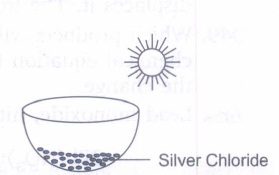
Observe carefully and answer the following questions
(a) Identify the type of chemical reaction that will take place and define it. How will the colour of the salt change?
(b) Write the chemical equation of the reaction that takes place.
(c) Mention one commercial use of this salt.
2.
A compound 'X' of sodium is commonly used in kitchen for making crispy pakoras. It is also used for curing acidity in the stomach. Identify 'X'. What is its chemical formula? State the reaction which takes place when it is heated during cooking.
3.
(a) Write chemical equations.
(i) When carbon dioxide gas is passed through lime water.
(ii)When excess of carbon dioxide gas is passed through lime water.
(b) List two natural forms of calcium carbonate.
4.
2g ferrous sulphate crystals are heated in a dry boiling tube.
(i) List any two observations.
(ii) Name the type of chemical reaction taking place.
(iii) Write the chemical equation of the reaction.
5.
Write the chemical formula of bleaching powder. Write balanced chemical equation involved in the preparation of bleaching powder and write its three uses.
6.
What is meant by the water of crystallization? How many molecules of water are present in hydrated copper sulphate? Write its formula. What colour change do you observe when it is heated?
7.
(i) Write the name given to bases that are highly soluble in water. Give an example.
(ii) How is tooth decay related to pH? How can it be prevented?
(iii) Why does bee-sting cause pain and irritation? Rubbing of baking soda on the sting area gives relief. How?
8.
Five solutions A, B, C, D and E when tested with universal indicator showed pH as 4, 1, 11, 7 and 9 respectively. Which solution is ?
(i) neutral
(ii) strongly alkaline
(iii) strongly acidic
(iv) weakly acidic
(v) weakly alkaline
Arrange the pH in increasing order of H+ion concentration.
9.
Why is respiration considered an exothermic reaction? Explain
10.
Write the balanced equation for the following chemical reactions.
(i) Hydrogen + Chlorine \(\rightarrow\) Hydrogen chloride
(ii) Barium chloride + Aluminium sulphate \(\rightarrow\) Barium sulphate + Aluminium chloride
(iii) Sodium + Water \(\rightarrow\) Sodium hydroxide + Hydrogen
1.
(a) Photochemical decomposition reaction: Those reactions in which a compound breaks down into simple substances in presence of light are called photochemical decomposition reaction. The colour of salt will change from white to grey.
(b) \( 2 \mathrm{AgCl}(\mathrm{s}) \stackrel{\text { Sunlight }}{\longrightarrow} 2 \mathrm{Ag}(\mathrm{s})+\mathrm{Cl}_{2}(\mathrm{~g}) \)
(c) Silver chloride is used in photography.
2.
'X' is sodium hydrogen carbonate (baking soda)
Chemical formula \(\longrightarrow \) NaHCO3
During cooking \(\longrightarrow \) It decomposes to sodium carbonate, carbon dioxide and water
2NaHCO3(s)\(\overset { heat }{ \longrightarrow } \) Na2CO3 + CO2 + H2O
3.
(a) (i) Ca(OH)2 + CO2\(\longrightarrow \) CaCO3 + H2O
(ii) Ca(OH)2(aq) + CO2(g)\(\longrightarrow \) CaC03(s) +H2O(I)
CaCO3(s) + H2O(I) + CO2(g) \(\longrightarrow \) Ca(HCO3)2 (aq)
(b) Aragonite and calcite
4.
(i) Before heating, it is pale green.
After heating, it is brown or reddish brown.
Two observations are:
(a) Change in state and colour
(b) Evolution of gas
(ii) Decomposition reaction
2FeSO4(s) \(\overset { Heat }{ \rightarrow } \) Fe2O3(s) + S02(g) + SO3(g)
5.
Chemical formula - CaOCI2
Chemical equation - Ca(OH)2 + CI2 ⟶ CaOCI2 + H2O
Uses:
(i) For bleaching cotton and linen in textile industry
(ii) As an oxidising agent in a chemical industry. Y,
(iii) For disinfecting water.
6.
(i) Five molecules of water.
(ii) Formula - CuSO4.5H2O
[iii) When heated, its colour changes from blue to white.
7.
(i) Alkali. e.g., NaOH (Sodium hydroxide).
(ii) Tooth decay starts when the pH of the mouth is lower than 5·5.It can be prevented by using tooth pastes which are generally basic.
(iii) Bee-sting has acid that causes pain and irritation. Baking soda is alkaline, neutralises the acid and gives relief.
8.
| Solution | A | B | C | D | E |
| pH Value | 4 | 1 | 11 | 7 | 9 |
| (i) D | (ii) C | (iii) B | (iv) A | (v) E |
pH in increasing order of H+ion concentration is C < E < D < A < B
9.
The food taken by the living beings is ultimately broken down to glucose by the digestive system. The glucose so formed is slowly oxidised to carbon dioxide and water with the release of heat energy. Thus, respiration is an exothermic reaction.
C6H12O6(aq) + 6O2(g) \(\rightarrow\) 6CO2(g) + 6H2O(l) + energy
(Glucose)
10.
(i) H2 + Cl2 \(\rightarrow\) 2HCI
(ii) 3BaCl2 + Al2(SO4)3 \(\rightarrow\) 3BaSO4 \(\downarrow\)+ 2AlCl3
(iii) 2Na + 2H2O \(\rightarrow\) 2NaOH + H2

10th Standard CBSE Syllabus & Materials
10th Standard CBSE
CBSE 10th Social Science PS - Federalism - New Model Questions Papers Study Material - QB365 Set A
NEW10th Standard CBSE
CBSE 10th Social Science PS - Power Sharing - New Model Questions Papers Study Material - QB365 Set A
NEW10th Standard CBSE
CBSE 10th Social Science GEO - Manufacturing Industries - New Model Questions Papers Study Material - QB365 Set A
NEW10th Standard CBSE
CBSE 10th Social Science GEO - Minerals and Energy Resources - New Model Questions Papers Study Material - QB365 Set A



NCERT Books

Syllabus

Exam Pattern

Sample Question Papers

Previous year Question Papers

Important Notes

MCQ Practice test

NCERT Exemplers

Case study Questions

Image Based Questions

Passage based Questions

HOT Questions

Value Based Questions

Model Questions Papers
NCERT ( Book Back ) Questions

Assertion and Reason
Important Questions And Answers

CBSE 10th Standard CBSE Subjects
CBSE Standards



