
 100% FREE ACCESS
10th Standard CBSE Syllabus & Materials
10th Standard CBSE
CBSE 10th Social Science ECO - Globalisation and the Indian Economy - New Model Questions Papers Study Material - QB365 Set A
NEW10th Standard CBSE
CBSE 10th Social Science ECO - Money and Credit - New Model Questions Papers Study Material - QB365 Set A
NEW10th Standard CBSE
CBSE 10th Social Science ECO - Sectors of the Indian Economy - New Model Questions Papers Study Material - QB365 Set A
NEW10th Standard CBSE
CBSE 10th Social Science ECO - Development - New Model Questions Papers Study Material - QB365 Set A
NEW10th Standard CBSE
CBSE 10th Social Science PS - Outcomes of Democracy - New Model Questions Papers Study Material - QB365 Set A
NEW10th Standard CBSE
CBSE 10th Social Science PS - Gender, Religion and Caste - New Model Questions Papers Study Material - QB365 Set A

Published on: 22/10/2025
Download CBSE Class 10th Standard CBSE Science question papers, sample papers, important questions, and previous year solved papers in PDF format. Get free study materials, NCERT solutions, and exam preparation resources for Class 10th Standard CBSE Science
Questions + Answers key
Take MCQ Science Test
1.
Answer the questions on the basis of your understanding of the following passage and related studied concepts.
Two human beings who can both roll their tongues produced 11 children. 3 of these children could not roll their tongues and 8 children could roll their tongues.
(i) Which trait (rolling or not rolling) is controlled by the recessive allele?
(ii) State all possible genotypes of the F1-generation of the cross.
(iii) Show the inheritance of the tongue rolling in humans in the given example using a suitable cross. What percentage of offspring will show the same genotype as the parents?
Or
(iii) If one of the parents could not roll their tongue, with the help of a cross, calculate the ratio of tongue rollers to non-tongue rollers in the offspring.
2.
Answer the questions on the basis of your understanding of the following table and related studied concepts.
Pooja has green eyes while her parents and brother have black eyes. Pooja's husband Ravi has black eyes while his mother has green eyes and father has black eyes.
(i) On the basis of the above given information, is the green eye colour a dominant or recessive trait? Justify your answer.
(ii) What is the possible genetic makeup of Pooja's brother's eye colour?
(iii) What is the probability that the offspring of Pooja and Ravi will have green eyes? Also, show the inheritance of eye colour in the offspring with the help of a suitable cross.
Or
(iii) 50% of the offspring of Pooja's brother are green eyed. With the help of cross show how this is possible?
3.
Answer the questions on the basis of your understanding of the following table and related studied concepts.
Study the table in which the levels of Thyroid Stimulating Hormone (TSH) in women are given and answer the questions that follow on the basis of understanding of the following paragraph and the related studied concepts.
| Age | Range Normal (mU/L) | Low (mU/L) |
| 18-29 years | 0.4-2.34 mU/L | <0.4 mU/L |
| 30-49 years | 0.4-4.0 mU/L | <0.4 mU/L |
| 50-79 years | 0.46-4.68 mU/L | <0.46 mU/L |
Women are at greater risk for developing abnormal TSH levels during menstruation, while giving birth and after going through menopause. Around 5% of women in the United States have some kinds of thyroid problem compared to 3% of men.
Despite claims that high TSH increases your risk for heart disease. A 2013 study found no link between high TSH and heart diseases. But a 2017 study showed that older women are especially at risk for developing thyroid cancer if they have high TSH levels along with thyroid nodules.
(i) A 35 year old woman has TSH level 6.03 mU/L. What change should she bring in her diet to control this level?
(ii) When do women face a greater risk of abnormal TSH level?
(iii) State the consequence of low TSH level.
(iv) Name the mineral that is responsible for synthesis of hormone secreted by thyroid gland.
4.
Study the figure given below and answer the questions that follows.
Figure given below shows that how the root and shoot of a seed develop in response to stimuli.
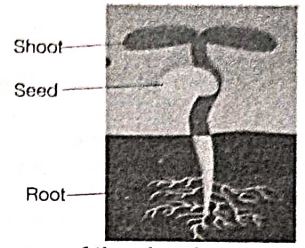
(i) State the name of the plant hormone that causes the root and shoot to develop in the way shown in the figure.
(ii) Explain how the plant hormone controls the growth response of the shoot?
(iii) ldentify the stimulus that causes the roots to grow in the direction shown in the figure and state the name of this response.
Or
(iii) ldentify the stimulus that cause the shoot to grow in the direction shown in the figure.
State the name of this response.
5.
For the male gamete to be able to combine with the female gamete, it is necessary that first the pollen grains from the anther of stamen should be carried to the stigma of carpel. The transfer of pollen grains from the anther of a stamen to the stigma of a carpel is called pollination. Thus, pollination is said to take place when pollen grains are carried from the anther to the stigma of the flower. The internal parts for pollination of a flower is shown below with labelled P, Q, R and S.
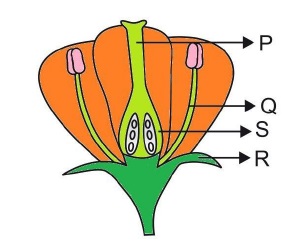
(i) The correct labeling of the internal part 'P' for pollination of a flower is
| (a) Stigma | (b)Filament | (c) Sepal | (d) Ovary |
(ii) The correct labeling of the internal part 'Q' for pollination of a flower is
| (a) Stigma | (b)Filament | (c) Sepal | (d) Ovary |
(iii) The correct labeling of the internal part 'R' for pollination of a flower is
| (a) Stigma | (b)Filament | (c) Sepal | (d) Ovary |
(iv) Which is the male reproductive organ of the plant?
| (a) Stigma | (b)Stamen | (c) Carpel | (d) Ovary |
(v) Which is the female reproductive organ of the plant?
| (a) Stigma | (b)Stamen | (c) Carpel | (d) Ovary |
6.
Reproduction is a process by which living organisms are able to produce young ones of their new kind. Living organisms reproduce by two ways - asexual reproduction and sexual reproduction. Asexual reproduction involves the production of an offspring from a single parent without the fusion of gametes. This mostly occurs in unicellular organisms, some plants and certain multicellular organisms. There are various types of asexual reproduction.
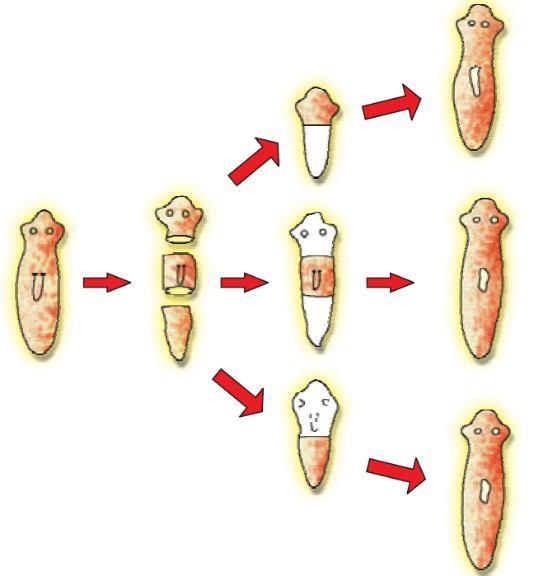
(i) The type of reproduction shown in the figure is
| (a) budding | (b) fragmentation | (c) regeneration | (d) fission. |
(ii) Which of the following is correct example of the process shown in the given figure?
| (a) Hydra | (b) Planaria | (c) Amoeba | (d) Both (a) and (b) |
(iii) A feature of reproduction that is common to Amoeba, yeast and bacteria is that
| (a) they are all unicellular | (b) they are all multicellular |
| (c) they reproduce only sexually | (d) they reproduce asexually |
(iv) Asexual reproduction is
(a) a fusion of specialised cells
(b) a method by which all types of organism reproduce
(c) a method producing genetically identical offspring
(d) a method in which more than one parent are involved.
(v) From the given list of organisms, those which reproduce by the asexual method are:
| (a) Aspergillus | (b) Dog | (c) Papaya | (d) Paramecium |
7.
In fruittlies, the gene for wing shape has two alleles, an unusual allele for curled wings (c) and the normal allele for straight wings (C). The given phenotypes are observed for each genotype.
| Genotype | Phenotype |
| CC | Normal, straight wings |
| Cc | Wings curled up at the ends, has difficulty flying |
| cc | Unable to hatch from egg |
(i) Which of the following crosses would produce live offspring from 50% of the eggs?
| (a) CC x Cc | (b) CC x CC |
| (c) CC x cc | (d) Cc x cc |
(i) (d)
(ii) (a)
(iii) (a): 25% of the total number of eggs will not
hatch (genotype cc). 50% of the offspring will be curlywinged
(Cc) and 25% of the offspring are straightwinged
(CC).
(iv) (c)
(v) (b)
(ii) Which of the following crosses would be able to produce offspring that would fly normally from 50% of the egg?
| (a) CC x Cc | (b) Cc x Cc |
| (c) CC x cc | (d) Cc x cc |
(iii) Two curly winged flies are crossed, and they produce 150 eggs. What is the proportion of straight-winged flies expected among the live offspring?
| (a) 25% | (b) 33% |
| (c) 50% | (d) 75% |
(iv) Normal straight winged flies are self crossed and they produce 120 eggs. What is the proportion of curly winged flies expected among the live offspring?
| (a) 25% | (b) 75% |
| (c) 0% | (d) 100% |
(v) Which of the following crosses would be able to produce offspring that has curled wings only?
| (a) CC x Cc | (b) CC x cc |
| (c) Cc x Cc | (d) Cc x cc |
8.
Purebred pea plant with smooth seeds (dominated characteristic) were crossed with purebred pea plant with wrinkled seeds (recessive characteristic). The F1 generation was self pollinated to give rise to the F2 generation.
(i) What is the expected observation of the F1 generation of plants?
(a) 1/2 of them have smooth seeds and 1/2 of the have wrinkled seeds.
(b) 1/4 of them have wrinkled seeds and 3/4 of them have smooth seeds.
(c) 3/4 of them have wrinkled seeds and 1/4 of them have smooth seeds.
(d) All of them have smooth seeds.
(ii) What is the expected observation of the F2 generation of plants?
(a) 1/2 of them have smooth seeds and 1/2 of them have wrinkled seeds.
(b) 1/4 of them have wrinkled seeds and 3/4 of them have smooth seeds.
(c) 3/4 of them have wrinkled seeds and 1/4 of them have smooth seeds.
(d) All of them have smooth seeds.
(iii) If a genotype consists of different types of alleles, it is called
| (a) homozygous | (b) heterozygous |
| (c) monoallelic | (d) uniallelic |
(iv) The alternative form of gene is called
| (a) dominant character | (b) recessive character |
| (c) alternative genes | (d) allele. |
(v) Which of the following will be the genotypic ratio of given F2 generation?
| (a) 1: 3 | (b) 3: 1 |
| (c) 1: 2 : 1 | (d) 1: 1 : 1 |
9.
Gregor Mendel conducted hybridisation experiments on garden peas for seven years and proposed the laws of inheritance in living organisms. He investigated characters in the garden pea plant that were manifested as two opposing traits, e.g., tall or dwarf plants, yellow and green seeds, etc.
(i) Among the seven pairs of contrasting traits in pea plant as studied by Mendel, the number of traits related
to flower, pod and seed respectively were
| (a) 2,2,2 | (b) 2,2,1 |
| (c) 1,2,2 | (d) 1,1,2. |
(ii) The colour based contrasting traits in seven contrasting pairs, studied by Mendel in pea plant were
| (a) 1 | (b) 2 |
| (c) 3 | (d) 4. |
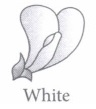
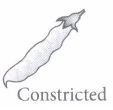
(iii) Refer to the given table of contrasting traits in pea plants studied by Mendel.
| Character | Dominant trait | Recessive trait |
| (i) Seed colour |  |
 |
| (ii) Flower colour | 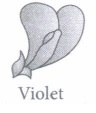 |
 |
| (iii) Pod shape | 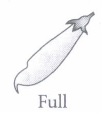 |
 |
| (iv) Flower position | 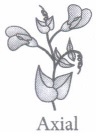 |
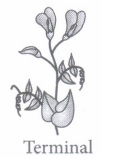 |
Which of the given traits is correctly placed?
(a) (i), (ii) and (iii) only
(b) (ii), (iii) and (iv) only
(c) (ii) and (iii) only
(d) (i), (ii), (iii) and (iv)
(iv) Some of the dominant traits studied by Mendel were
(a) round seed shape, green seed colour and axial flower position
(b) terminal flower position, green pod colour and inflated pod shape
(c) violet flower colour, green pod colour and round seed shape
(d) wrinkled seed shape, yellow pod colour and axial flower position.
(v) Which of the following characters was not chosen by Mendel?
| (a) Pod shape | (b) Pod colour |
| (c) Position of flower | (d) Position of pod |
10.
X, Y and Z are three sexually transmitted diseases (STDs). X and Z are caused by bacteria whereas Y is caused by virus P. Virus P lowers the immunity of a person and leads to an incurable disease. X starts as painless sores on genitals rectum or mouth. Z causes painful urination and abnormal discharge from genitals.
(i) Select the option that correctly identifies disease X, Y and Z?
| X | Y | Z |
| (a) AIDS | Syphilis | Gonorrhoea |
| (b) Syphilis | AIDS | Gonorrhoea |
| (c) Gonorrhoea | Syphilis | AIDS |
| (d) Syphilis | Gonorrhoea | AIDS |
(ii) Identify virus P from the given paragraph.
(a) Human papilloma virus
(b) Human adenovirus
(c) Human immunodeficiency virus
(d) Human cytomegalovirus
(iii) What are the symptoms of disease Y?
(a) Weight loss
(b) Fever or night sweats
(c) Fatigue and weakness infections
(d) All of these
(iv) Select the incorrect statement regarding diseases X and Y.
(a) Both X and Y can spread from infected mother to unborn baby during pregnancy
(b) Both X and Y can spread from infected partner to healthy partner by unprotected sex
(c) Y can also spread through use of contaminated needles and blood transfusion
(d) None of these.
(v) How can disease Y be prevented?
(a) By following polygamy and having protected sex
(b) Use of sterilised needles for injecting medicines, blood tests, etc
(c) Collecting blood from unknown donors without background check by blood bank professionals
(d) All of these.
11.
Radhika collected some pond water which was dark green in colour in a test tube. She took out green coloured mass from it and separated its filaments by using needles. She broke some filaments into small fragments and put them in a Petri dish containing clean water. She observed that after few days the small fragments gave rise to complete filaments.
(i) What do you think the mass of green filament was?
(a) It was a mass of Spirogyra filament
(b) It was a colony of Volvox algae
(c) It was kelp, i.e., large brown algae
(d) It was a mass of fungal filaments or hyphae.
(ii) The small fragment gave rise to new filament. What does it indicate?
(a) Spirogyra reproduces asexually through fragmentation
(b) Spirogyra reproduces asexually through vegetative propagation
(c) Spirogyra reproduces asexually through budding
(d) Spirogyra reproduces asexually through fission
(iii) Organism which reproduces in similar way as Spirogyra is
| (a) yeast | (b) sea anemone |
| (c) Entamoeba | (d) all of these. |
(iv) Select the correct statement.
(a) Only multicellular organisms can undergo fragmentation
(b) Both unicellular and multicellular organisms can undergo fragmentation
(c) Fragmentation is sexual mode of reproduction
(d) Fragmentation is found only in algae.
(v) Which among the given organisms do not reproduce by fragmentation?
| (a) Riccia | (b) Selaginella |
| (c) Aurelia | (d) Marchantia |
12.
There are two organisms X and Y that produce new offspring from single parent only.Organisms X when reaches its maximum growth, divides its body into two new organisms.
The parent organism does not exist any more and two new daughter organisms grow fully and divide again. Organism Y form a small outgrowth on its body called bud which detaches and develops into new organism .
Read the above paragraph and answer the questions that follow.
(I) Select the option that correctly identifies organisms X and Y.
| X | Y |
| (a) Amoeba | Yeast |
| (b) Paramecium | Hydra |
| (c) Leishmania | Sycon |
| (d) All of these |
(ii) Select the correct statement.
(a) Organism X reproduces asexually whereas organism Y reproduces sexually
(b) Organism X must be multicellular whereas organism Y should be unicellular
(c) Both organisms X and Y reproduce asexually
(d) Both organisms X and Yare always multicellular organisms
(iii) Identify the mode of reproduction in organisms X and Y.
| (a) X - Multiple fission Y - Binary fission |
(b) X - Binary fission |
|
(c) X - Regeneration |
(d) X - Fragmentation Y - Multiple fission |
(iv) Which of the following is incorrect?
(a) Plasmodium reproduces by the same method as is adopted by organism X.
(b) Organism X could be any multicellular plant like Riccia, Sphagnum, etc.
(c) If organism Y is Hydra, then it may also reproduce through regeneration.
(d) Both (a) and (b)
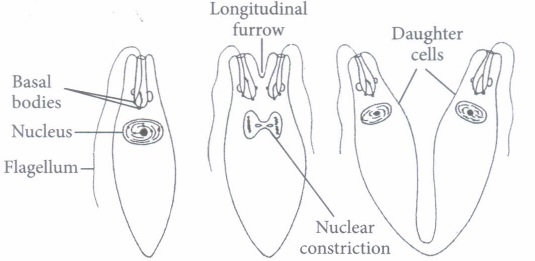
(v) Which organism reproduces by the method shown in the given figure?
| (a) Planaria | (b) Amoeba |
| (c) Euglena | (d) Paramecium |
1.
(i) Trait for 'not rolling' is controlled by the recessive allele.
(ii) There are three possible genotypes in F1 -generation.
1. TT (tongue roller)
2. tt (tongue roller)
3. tt (non-tongue roller)
(iii) As both parents can roll their tongues, they are heterozygous (Tt) for this particular trait.
Therefore, 50% of the offspring will the same genotype as the parents. This can be explain as.
 |
T | t |
| T | TT | T t |
| t | T t | t t |
Genotypic percentage:
25% = T T
50% = T t
25% = t t
Or
(iii) If one of the parents was non-roller their genotype would be tt.The ratio of tongue roller to non-tongue roller can be explain as.
| t | t | |
| T | Tt Tongue roller |
Tt Tongue roller |
| t | tt Non-tongue roller |
tt Non-tongue roller |
Thus, the ratio of tongue roller to non-tongue roller offspring = 1 : 1
2.
(i) Yes, green eye colour is recessive, as it will express only in homozygous condition.
(ii) BB, Bb
(iii) The probability that the offspring of Pooja and Ravi will have green eyes is 50%. It can be explained with the help of genetic cross given below
|
B | b |
| b | Bb (Black) |
bb (Green) |
| b | Bb (Black) |
bb (Green) |
Or
(iii) Brother is heterozygous (Bb) and wife is green (bb). Wife bb * Bb brother
|
B | b |
| b | Bb | bb |
| b | Bb | bb |
50% of the offspring can have green eye colour as per the cross shown. The cross below shows that 50% of Pooja's brother's offspring are green eyed.
3.
(i) The woman who has TSH 6.03 mU/L should take iodine rich diet and should use iodised salt.
(ii) Women are at a greater risk for developing abnormal TSH levels during menstruation, while giving birth and after going through menopause.
(iii) Low TSH level causes goitre disease.
(iv) Iodine is required for synthesis of thyroxine by thyroid gland.
4.
(i) Auxin causes the root and shoot to develop in the way shown in the above figure.
(ii) Auxin is synthesised at the shoot tip. When plant is exposed to unidirectional light auxin diffuses to shady side and causes all elongation. In this way, auxin controls the growth response of the shoot.
(iii) Gravity the response is called geotropism.
Or
(iii) Light the respones is called phototropism.
5.
(i) (a) Stigma
(ii) (b)Filament
(iii) (c) Sepal
(iv) (b)Stamen
(v) (c) Carpel
6.
(i) (c) regeneration
Regeneration is the process by which small cut parts of body organism grow to form whole new organisms.
(ii) (d) Both (a) and (b)
Simple animals like Hydra and Planaria can be cut into any number of pieces and each piece grows into a complete organism by regeneration.
(iii) (d) they reproduce asexually
(iv) (c) a method producing genetically identical offspring
In asexual reproduction, the young one receives all its genes from one parent, so offspring produced are genetically identical to the parents.
(v) (c) (i) and (iv)
Aspergillus and Paramecium reproduce by spore formation and fission respectively. All these are methods of asexual reproduction. Dog and papaya reproduces through sexual methods.
7.
(i) (d)
(ii) (a)
(iii) (a): 25% of the total number of eggs will not hatch (genotype cc). 50% of the offspring will be curlywinged (Cc) and 25% of the offspring are straightwinged (CC).
(iv) (c)
(v) (b)
8.
(i) (d)
(ii) (b)
(iii) (b): Factors representing the alternate or same form of a character are called alleles. In heterozygous individuals or hybrids, a character is represented by two contrasting alleles. Out of the two contrasting alleles, only one is able to express its effect in the individual. It is called dominant allele. The other allele which does not show its effect in the heterozygous individual is called recessive allele, e.g., in case of hybrid tall pea plants (Tt). 'T' is dominant allele whereas 't' is recessive allele.
(iv) (d): Factors representing the alternate or same form of a character are called alleles. In heterozygous individuals or hybrids, a character is represented by two contrasting alleles. Out of the two contrasting alleles, only one is able to express its effect in the individual. It is called dominant allele. The other allele which does not show its effect in the heterozygous individual is called recessive allele, e.g., in case of hybrid tall pea plants (Tt). 'T' is dominant allele whereas 't' is recessive allele.
(v) (c): In given case, genotypic ratio of F2 progeny will be 1: 2 : 1 where, one is homozygous dominant, two are heterozygous dominant and one is homozygous recessive.
9.
(i) (a): Characters studied by Mendel are as follows:
| Trait studied | Dominant | Recessive | |
| 1 | Plant height | Tall (T) | Dwarf (t) |
| 2 | Flower position | Axial (A) | Terminal (a) |
| 3 | Flower colour | Violet (V) or (W) | White (v) or (w) |
| 4 | Pod shape | Full or Inflated (I) or (C) | Constricted (i) or (c) |
| 5 | Pod colour | Green (G) or (Y) | Yellow (g) or (y) |
| 6 | Seed shape | Round (R) or (W) | Wrinkled (r) or (w) |
| 7 | Seed colour | Yellow (Y) or (G) | Green (y) or (g) |
(ii) (c)
| Trait studied | Dominant | Recessive | |
| 1 | Plant height | Tall (T) | Dwarf (t) |
| 2 | Flower position | Axial (A) | Terminal (a) |
| 3 | Flower colour | Violet (V) or (W) | White (v) or (w) |
| 4 | Pod shape | Full or Inflated (I) or (C) | Constricted (i) or (c) |
| 5 | Pod colour | Green (G) or (Y) | Yellow (g) or (y) |
| 6 | Seed shape | Round (R) or (W) | Wrinkled (r) or (w) |
| 7 | Seed colour | Yellow (Y) or (G) | Green (y) or (g) |
(iii) (d)
| Trait studied | Dominant | Recessive | |
| 1 | Plant height | Tall (T) | Dwarf (t) |
| 2 | Flower position | Axial (A) | Terminal (a) |
| 3 | Flower colour | Violet (V) or (W) | White (v) or (w) |
| 4 | Pod shape | Full or Inflated (I) or (C) | Constricted (i) or (c) |
| 5 | Pod colour | Green (G) or (Y) | Yellow (g) or (y) |
| 6 | Seed shape | Round (R) or (W) | Wrinkled (r) or (w) |
| 7 | Seed colour | Yellow (Y) or (G) | Green (y) or (g) |
(iv) (c)
| Trait studied | Dominant | Recessive | |
| 1 | Plant height | Tall (T) | Dwarf (t) |
| 2 | Flower position | Axial (A) | Terminal (a) |
| 3 | Flower colour | Violet (V) or (W) | White (v) or (w) |
| 4 | Pod shape | Full or Inflated (I) or (C) | Constricted (i) or (c) |
| 5 | Pod colour | Green (G) or (Y) | Yellow (g) or (y) |
| 6 | Seed shape | Round (R) or (W) | Wrinkled (r) or (w) |
| 7 | Seed colour | Yellow (Y) or (G) | Green (y) or (g) |
(v) (d)
| Trait studied | Dominant | Recessive | |
| 1 | Plant height | Tall (T) | Dwarf (t) |
| 2 | Flower position | Axial (A) | Terminal (a) |
| 3 | Flower colour | Violet (V) or (W) | White (v) or (w) |
| 4 | Pod shape | Full or Inflated (I) or (C) | Constricted (i) or (c) |
| 5 | Pod colour | Green (G) or (Y) | Yellow (g) or (y) |
| 6 | Seed shape | Round (R) or (W) | Wrinkled (r) or (w) |
| 7 | Seed colour | Yellow (Y) or (G) | Green (y) or (g) |
10.
(i) (b): X could be Syphilis, Y could be AIDS and Z could be gonorrhoea.
(ii) (c): Human immunodeficiency virus (HIV) cause immunodeficiency syndrome a condition characterised by progressive failure of immune system allowing life threatening conditions.
(iii) (d)
iv) (d)
(v) (b): Sterilised needles are free from any kinds of germs.
11.
(i) (a): Spirogyra is a green filamentous alga that is found in huge numbers in ponds and lakes.
(ii) (a): When mature Spirogyra breaks into two or more pieces, then each fragment develops into an individual.
(iii) (b)
(iv) (a): Only multicellular organisms having simple body organisation can undergo fragmentation. It is asexual mode of reproduction.
(v) (c)
12.
(i) (d): According to the given passage, organisms X and Y reproduce by binary fission and budding respectively. Amoeba, Paramecium and Leishmania reproduce by binary fission whereas Hydra, Sycon and yeast reproduce by budding.
(ii) (c): Both organisms X and Y are reproducing asexually i.e., by binary fission and budding respectively.Unicellular organisms can undergo binary fission whereas both unicellular (yeast) and multicellular (Hydra) organisms reproduce by budding.
(iii) (b)
(iv) (d): Plasmodium reproduces by multiple fission. Multicellular plants do not reproduce through binary fission.
(v) (c): Euglena reproduces by longitudinal binary fission.

10th Standard CBSE Syllabus & Materials
10th Standard CBSE
CBSE 10th Social Science PS - Federalism - New Model Questions Papers Study Material - QB365 Set A
NEW10th Standard CBSE
CBSE 10th Social Science PS - Power Sharing - New Model Questions Papers Study Material - QB365 Set A
NEW10th Standard CBSE
CBSE 10th Social Science GEO - Manufacturing Industries - New Model Questions Papers Study Material - QB365 Set A
NEW10th Standard CBSE
CBSE 10th Social Science GEO - Minerals and Energy Resources - New Model Questions Papers Study Material - QB365 Set A



NCERT Books

Syllabus

Exam Pattern

Sample Question Papers

Previous year Question Papers

Important Notes

MCQ Practice test

NCERT Exemplers

Case study Questions

Image Based Questions

Passage based Questions

HOT Questions

Value Based Questions

Model Questions Papers
NCERT ( Book Back ) Questions

Assertion and Reason
Important Questions And Answers

CBSE 10th Standard CBSE Subjects
CBSE Standards



