
 100% FREE ACCESS
10th Standard CBSE Syllabus & Materials
10th Standard CBSE
CBSE 10th Social Science ECO - Globalisation and the Indian Economy - New Model Questions Papers Study Material - QB365 Set A
NEW10th Standard CBSE
CBSE 10th Social Science ECO - Money and Credit - New Model Questions Papers Study Material - QB365 Set A
NEW10th Standard CBSE
CBSE 10th Social Science ECO - Sectors of the Indian Economy - New Model Questions Papers Study Material - QB365 Set A
NEW10th Standard CBSE
CBSE 10th Social Science ECO - Development - New Model Questions Papers Study Material - QB365 Set A
NEW10th Standard CBSE
CBSE 10th Social Science PS - Outcomes of Democracy - New Model Questions Papers Study Material - QB365 Set A
NEW10th Standard CBSE
CBSE 10th Social Science PS - Gender, Religion and Caste - New Model Questions Papers Study Material - QB365 Set A

Published on: 31/07/2018
Based on the chapter Carbon and Its Compounds, some of the important questions are covered in this question paper. The questions are prepared from the book back and the creative questions.
Students, subscribe and get plenty of question paper with answer key. For subscription please click here.
Download CBSE Class 10th Standard CBSE Science question papers, sample papers, important questions, and previous year solved papers in PDF format. Get free study materials, NCERT solutions, and exam preparation resources for Class 10th Standard CBSE Science
Questions + Answers key
Take MCQ Science Test
1.
Structural formula of ethyne is
-q.jpg)
-q.jpg)
-q.jpg)
-q.jpg)
2.
The name of the compound CH3 - CH2 - CHO is
Propanal
Propanone
Ethanol
Ethanal
3.
In the soap micelles
the ionic end of soap is on the surface of the cluster while the carbon chain is in the interior of the cluster.
ionic end of soap is in the interior of the cluster and the carbon chain is out of the cluster.
both ionic end and carbon chain are in the interior of the cluster
both ionic end and carbon chain are on the exterior of the cluster
4.
Buckminsterfullerene is an allotropic form of
Phosphorous
Sulphur
Carbon
Tin
5.
Butanone is a four-carbon compound with the functional group
carboxylic acid
aldehyde
ketone
alcohol
6.
What is an homologous series? Explain with an example.
7.
Differentiate between addition reactions and substitution reactions shown by hydrocarbons.
8.
Given below are the formulae of some functional groups
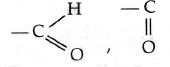
9.
Name the functional group present in CH3COCH3 and state the name of this compound
10.
Write the number of covalent bonds in the molecules of butane C4H10
11.
Name the following compounds
(i) \(CH_{ 3 }-CH_{ 2 }-OH\)
(ii) \(CH_{ 3 }-C=O\)
12.
Write the name and formula of the 2nd member of homologous series having general formula CnH2n+2
13.
Write the name and the structural formula of the compound formed when ethanol is heated at 443 K with excess of conc. H2SO4 . State the role of conc. H2SO4 in this reaction. Write chemical equation for this reaction.
14.
Name the oxidizing agent used for the conversion of ethanol to ethanoic acid. Distinguish between ethanol and ethanoic on the basis of
(i) litmus test.
(ii) reaction with sodium hydrogen carbonate.
15.
Write a chemical equation in each case to represent the following types of chemical reactions of organic compounds:
(i) Organic reactions
(ii) Addition reactions
(iii) Substitution reactions
16.
With the help of balance chemical equations explain what happens when ethanol is heated with (i) alkaline solution of potassium permanganate, (ii) excess concentrated sulphuric acid at 443 K. Mention any two uses of ethanol.
17.
Give reasons for the following observations:
(a) The element carbon forms a very large number of compounds.
(b) Air holes of a gas burner have to be adjusted when the heated vessels get blackened by the flame.
(c) Use of synthetic detergents causes pollution of water.
18.
Write the name and formula of the 2nd member of homologous series having general formula CnH2n .
19.
Write the name and formula of the 2nd member of the series of carbon compounds whose general formula is CnH2n.
20.
Write the name and formula of the first member of the carbon compounds having functional group -COOH.
21.
Draw the structure of the hexanal molecule, C5 H11CHO.
22.
Name the carbon compound which on heating with excess of concentrated sulphuric acid at 443 K gives ethene.
23.
Unsaturated hydrocarbons contain multiple bonds between the two C-atoms and show addition reactions. Give the test to distinguish ethane from ethene.
24.
Intake of small quantity of methanol can be lethal. Comment.
25.
An organic compound 'X' is a constituent of wine and beer. The compound X on heating with potassium dichromate forms another organic compound 'Y'. Identify the compound X and Y.
26.
Explain why carbon forms compounds mainly by covalent bond. Explain in brief two main reasons for carbon forming a large number of compounds. Why does carbon form strong bonds with most other elements?
27.
Explain isomerism. State any four characteristics of isomers. Draw the structures of possible isomers of butane, C4H10
28.
a) What are hydrocarbons? Give examples
b) Give the structural differences between saturated and unsaturated hydrocarbons with two example each.
c) What is a functional group? Give example of four different functional groups.
1.
(a)
2.
(a)
Propanal
3.
(a)
the ionic end of soap is on the surface of the cluster while the carbon chain is in the interior of the cluster.
4.
(c)
Carbon
5.
(c)
ketone
6.
A series of similarly constituted compounds in which the members present have the same functional group and similar chemical properties and any two successive members in a particular series differ in their molecular formula by ( - CH2) unit, is called a homologous series.
e.g. alkane series CnH2n+2
| CH4 C3H8 C5H12 |
Methane Propane Pentane |
C2H6 C4H10 |
Ethane Butane |
7.
(i) Reactions between unsaturated hydrocarbons with simple substances to form a single saturated product are addition reactions.
(ii) Those reactions in which one or more hydrogen of a saturated hydrocarbon is replaced by an atom or a group of atoms are substitution reactions.
8.
Aldehyde, ketone.
9.
Functional group: Ketone, name of the compound: Propanone.
10.
Thirteen covalent bonds.
11.
(i) Ethanol, (ii) Ethanal.
12.
Name - Ethane
Formula - C2H6
13.
(i) When ethanol is heated with excess of concentrated sulphuric acid at 443K, it gets dehydrated to form ethene.
\(\underset { Ethanol }{ { CH }_{ 3 }-{ CH }_{ 2 } } OH\xrightarrow [(Dehydration) ]{ conc. H_2SO_4;443K } \underset { Ethene }{ { CH }_{ 2 }={ CH }_{ 2 } } +H_2O\)
In this reaction, concentrated sulphuric acid acts as a dehydrating agent which removes water molecules from the ethanol molecule.
14.
Alkaline potassium permanganate of acidified potassium dichromate.
(i) Ethanol will not affect litmus paper Ethanoic acid will turn blue litmus paper red.
(ii) Ethanol will not react with sodium hydrogen carbonate. Ethanoic acid will give brisk effervescence due to colourless, odourless carbon dioxide gas.
15.
(i)Oxidation reaction:
\(\underset{Ethanol}{CH_3CH_2OH}+2[O]\xrightarrow[KMnO_4]{Alkaline}\underset{Ethanoic\ acid}{CH_3COOH}+H_2O\)
(ii)Addition reaction
\(\underset{Ethene}{CH_2=CH_2}+H_2\xrightarrow[573K]{Bi}CH_3-CH_3\)
(iii)Substitution reaction:
\(\underset{Methane}{CH_4+CL_2}\xrightarrow{Sunlight}\underset{Methyl\ chloride}{CH_3CL}+HCl_3\)
16.
(i) Ethanol gets oxidised to ethanoic acid.
\(\underset{Ethanol}{CH_3CH_2OH}+2[O]\xrightarrow{Alkaline\ KMnO_4}\underset{Ethanoic\ acid}{CH_3COOH}+H_2O\)
(ii)Ethene will be formed
\(\underset{Ethanol}{CH_3CH_2OH}\xrightarrow[443K]{conc. H_2SO_4}\underset{Ethane}{CH_2=CH_2}+{H_2O}\)
Uses:
(i) It is used in tonics and cough syrups.
(ii) It is used as fuel.
(iii) It is used as solvent
(iv) It is used in wine, beer and whisky
17.
(a) Carbon forms large number of compounds since carbon is small in size and can form stable covalent bonds (catenation) and it shows tetravalency.
(b) Air holes of a gas burner are made open (adjusted) so that air can pass through, which is needed for complete combustion, so that heated vessels do not get blackened.
(c) Some synthetic detergents are non-biogradable, therefore, cause pollution of water.
18.
CnH2n = Alkene
2nd member = C3H6 (Propene)
19.
C3H6H2C = CH - CH3
Propene is second member of series whose general formula is CnH2n.
20.

21.

22.
CH3CH2OH, ethanol
23.
Bromine solution in CCl4 has an orange colour. When it is added dropwise to ethene, the orange colour disappears due to the formation of the colourless ethylene dibromide. This reaction is not shown by ethane as it is addition reaction.
\(\mathrm{CH}_2=\mathrm{CH}_2+\mathrm{Br}_2 \longrightarrow \mathrm{CH}_2-\mathrm{CH}_2\)
Ethene Bromine | |
(orange Br Br
colour) Ethylene dibromide
(colourless)
The two can be distinguished also by subjecting them to the flame. Saturated hydrocarbon (ethane) generally gives a clear flame while unsaturated hydrocarbon (ethene) gives a yellow flame with lots of black smoke.
24.
Drinking of methanol is lethal because in the liver, it gets oxidized to methanol which rapidly reacts with the compounds of the cell. As a result, protoplasm gets coagulated in much the same way as an egg gets coagulated on boiling or cooking. Consequently, the man dies.
25.
Compound X is ethanol and Compound Y is acetic acid or ethanoic acid.
26.
The atomic number of carbon is 6 which means that a neutral atom of carbon retains 6 electrons. So, the electronic configuration of carbon is KL. Since carbon has 4 electrons in its outermost shell so, it should either loss or gain 4 electrons to achieve the inert gas configuration and become stable.
(1) It could gain four electrons forming C4- anion. But it would be difficult for the nucleus with six protons to hold on to ten electrons due to inter electronic repulsion.
(2) It could lose 4 electrons froming C4+ cation. But it would require a large amount of energy to remove four electrons from its outermost shell. Thus, it forms compounds mainly by covalent bonds.
Two properties of carbon which lead to huge number of carbon compounds are:
(1) Catenation: Catenation is the unique property of carbon atoms to form bonds with other atoms of carbon giving rise to large molecules.
(2)Tetravalency: Since carbon has a valency of 4, it is capable of bonding with 4 other atoms of carbon or atoms of some other monovalent element.
The reason for the formation of strong bonds by the carbon atoms is their small atomic size. Due to the small size of carbon atoms their nuclei hold the shared pairs of electrons between atoms strongly, leading to the formation of strong covalent bonds. The carbon atoms also form strong covalent bonds with the atoms of other elements such as hydrogen, oxygen, nitrogen, sulphur, chlorine and other elements.
27.
Isomerism is a phenomenon due to which some compounds have same molecular formula but different structural formulae .
Characteristics:
(i) They differ in structural formula
(ii) They differ in melting point
(iii) They differ in boiling point
(iv) They differ in solubility in same solven.
28.
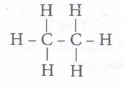
a) Compounds of carbon and hydrogen only are called hydrocarbons. For example
methane (CH4), ethane (C2H6), ethene (C2H4), ethyne (C2H2), cydohexane
(C6H12), benzene (C6H6) etc.
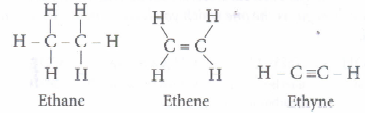
b) Saturated hydrocarbons contains only C - C and C - H single covalent bonds while
unsaturated hydrocarbons contain at least one C = C double bond (besides C - C
and C - H single covalent bonds) or one triple bond.
c) That portion of the organic molecule which largely determine its chemical properties is called the functional group. For example, -OH (alcoholic group),  (keto group) - CHO (aldehyde group), -COOH (carboxyl group).

10th Standard CBSE Syllabus & Materials
10th Standard CBSE
CBSE 10th Social Science PS - Federalism - New Model Questions Papers Study Material - QB365 Set A
NEW10th Standard CBSE
CBSE 10th Social Science PS - Power Sharing - New Model Questions Papers Study Material - QB365 Set A
NEW10th Standard CBSE
CBSE 10th Social Science GEO - Manufacturing Industries - New Model Questions Papers Study Material - QB365 Set A
NEW10th Standard CBSE
CBSE 10th Social Science GEO - Minerals and Energy Resources - New Model Questions Papers Study Material - QB365 Set A



CBSE 10th Standard CBSE Subjects
CBSE Standards





