
 100% FREE ACCESS
10th Standard CBSE Syllabus & Materials
10th Standard CBSE
CBSE 10th Social Science ECO - Globalisation and the Indian Economy - New Model Questions Papers Study Material - QB365 Set A
NEW10th Standard CBSE
CBSE 10th Social Science ECO - Money and Credit - New Model Questions Papers Study Material - QB365 Set A
NEW10th Standard CBSE
CBSE 10th Social Science ECO - Sectors of the Indian Economy - New Model Questions Papers Study Material - QB365 Set A
NEW10th Standard CBSE
CBSE 10th Social Science ECO - Development - New Model Questions Papers Study Material - QB365 Set A
NEW10th Standard CBSE
CBSE 10th Social Science PS - Outcomes of Democracy - New Model Questions Papers Study Material - QB365 Set A
NEW10th Standard CBSE
CBSE 10th Social Science PS - Gender, Religion and Caste - New Model Questions Papers Study Material - QB365 Set A

Published on: 20/10/2025
Download CBSE Class 10th Standard CBSE Social Science question papers, sample papers, important questions, and previous year solved papers in PDF format. Get free study materials, NCERT solutions, and exam preparation resources for Class 10th Standard CBSE Social Science
Questions + Answers key
Take MCQ Social Science Test
1.
State two reasons to say that caste alone cannot determine election results in India.
2.
Explain the various forms that communalism can take in politics.
3.
"The fact that people are complaining itself is a testimony of the success of democracy". Justify the statement with three appropriate points.
4.
What is transparency?
5.
Locate and label the following on the political outline map of India:
(a) Kandla - sea port
(b) A major sea port in Gujarat
(c) Vishakhapatnam - sea port
(d) Kochi - sea port
(e) A major sea port in Kerala
(f) Chhatrapati Shivaji international airport
(g) Tuticorin.
6.
Which of the following statements is not true about Democracy?
People wish to be ruled by representatives elected by them.
It is free from corruption.
It is expected to produce good governments.
Is guarantees the rights of citizens.
7.
Consider the statements given below and choose the Correct answer.
Statement I Political mobilisation on religious lines is one of the frequent forms of communalism.
Statement Il In electoral politics, it appeals to the interests or emotions of voters of one religion in preference to others.
Statement I is correct and statement II is incorrect.
Statement I is incorrect and Statement II is correct.
Both statements I and II are incorrect.
Both statements I and II are correct.
8.
Which of the following statements suggest that it is not politics that gets caste-ridden, it is the caste that gets politicised? Identify.
I. When governments are formed, political parties take care that representatives of different castes find a place in it.
II. Each caste incorporates neighbouring castes which were earlier excluded.
IlI. Various caste groups enter coalition with other castes.
IV. Political parties and candidates in elections make appeals to caste sentiments.
Statements I and Il are appropriate.
Statements II and III are appropriate.
Statements IV is correct.
All the statements are appropriate.
9.
| List I | List II |
| A. A system that values men more and gives them power over women. |
1 Urbanisation |
| B. Law that deals with marriage and divorce. | 2 Occupational mobility |
| C. New generation takes up occupations other than their ancestors. |
3 Family Law |
| D. Shift of population from rural areas to urban areas. | 4 Patriarchy |
| A | B | C | D |
| 4 | 3 | 2 | 1 |
| A | B | C | D |
| 4 | 2 | 3 | 1 |
| A | B | C | D |
| 3 | 4 | 2 | 1 |
| A | B | C | D |
| 2 | 4 | 1 | 3 |
10.
What is the literacy rate among women and men respectively in India?
54% and 76%
46% and 51%
76% and 85%
37% and 54%
11.
What is the average child sex ratio in India?
923
926
935
933
12.
Which one of the following social reformers fought against caste inequalities?
Periyar Ramaswami Naiker
Swami Dayanand Saraswati
Raja Ram Mohan Roy
Ishwar Chandra Vidyasagar
13.
Which South Asian Country remains least doubtful about the suitability of democracy for its country?
Sri Lanka
India
Pakistan
Bangladesh
14.
Democracies have successfully eliminated
conflicts among people
economic inequalities
idea of political inequality
difference of opinion about how marginalized sections are to be treated
15.
People complaining about democracy show that
People are aware
democracy is useless
leaders is useless
leaders are inefficient
16.
"Democracy stands much superior to any other form of government in promoting dignity and freedom of the individual.", Support the statement giving three suitable points.
17.
Write a note on women's political representation in our country.
18.
"I am not religious, why should I bother about communalism and secularism"? Comment on this statement.
19.
Which options are more appropriate in democracy?
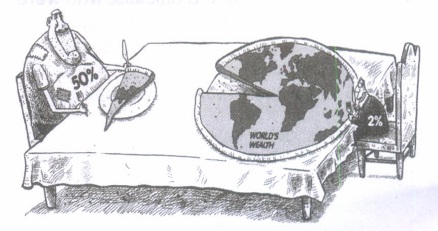
(a) It is reasonable to expect democracies to reduce economic disparities.
(b) In democracy all citizens have a share in wealth and lead a better life.
(c) Democracy leads to a just distribution of goods and opportunities.
(d) Democracies do not appear to be very successful in reducing economic inequalities.
20.
Assertion (A)Democracy transforms people from the status of a subject into that of a citizen.
Reason (R) Most individuals believe that their vote makes a difference to the way the government is run and to their own self-interest.
Codes
(a) Both A and R are true and R is the correct explanation of A
(b) Both A and R are true, but R is not the correct explanation of A
(c) A is true, but R is false
(d) A is false, but R is true
1.
The two reasons which show that caste alone cannot determine election results in India are
(i) No party wins the votes of all the voters of a caste or community. When people say, the caste is a 'vote bank' of one party, it usually means that a large proportion of voters from that caste vote for that party.
(ii) No parliamentary constituency in the country has a clear majority of one single caste. So, every candidate and party needs to win the confidence of more than one caste and community to win elections.
2.
Different forms of the communal politics:
(a) The most common expression of communalism is in everyday beliefs. These routinely involve religious prejudices, stereotypes of religious communities and belief in the superiority of one's religion over other religious. This is so common that we often fail to notice it, even when we believe in it.
(b) A communal mind often leads to political dominance of one's own religious community. For those belonging to majority community, it takes the form of majoritarian dominance. For those belonging to the minority community, it can take the form of a desire to form a separate political unit.
(c) Political mobilization on religious lines is another frequent form of communalism. This involves the use of sacred symbols, religious leaders and emotional appeal, in order to bring the followers of one religion together in the political arena. In electoral politics, this often involves special appeal of votes in the name of religion.
(d) Sometimes communalism takes its most ugly form of communal violence, riots and massacre. India and Pakistan suffered some of the worst communal riots at the time of the Partition. The post-independence period has also seen large-scale communal violence.
3.
(i) As people get some benefits of democracy, they ask for more and want to make democracy even better. That is why when we ask people about the way democracy functions, they will always come up with more expectations, and many complaints.
(ii) The fact that people are complaining itself is a testimony to the success of democracy, it shows that people have developed awareness and the ability to expect and to look critically at power holders and the high and the mighty.
(iii) A public expression of dissatisfaction with democracy shows the success of the democratic project: it transforms people from the status of a subject under a King into that of a citizen.
(iv) Most individuals today believe that their vote makes a difference to the way the government is run and to their own self-interest.
4.
In a democratic government, a citizen has the right and the means to examine the decisions taken by the govt. It is known as transparency.
5.
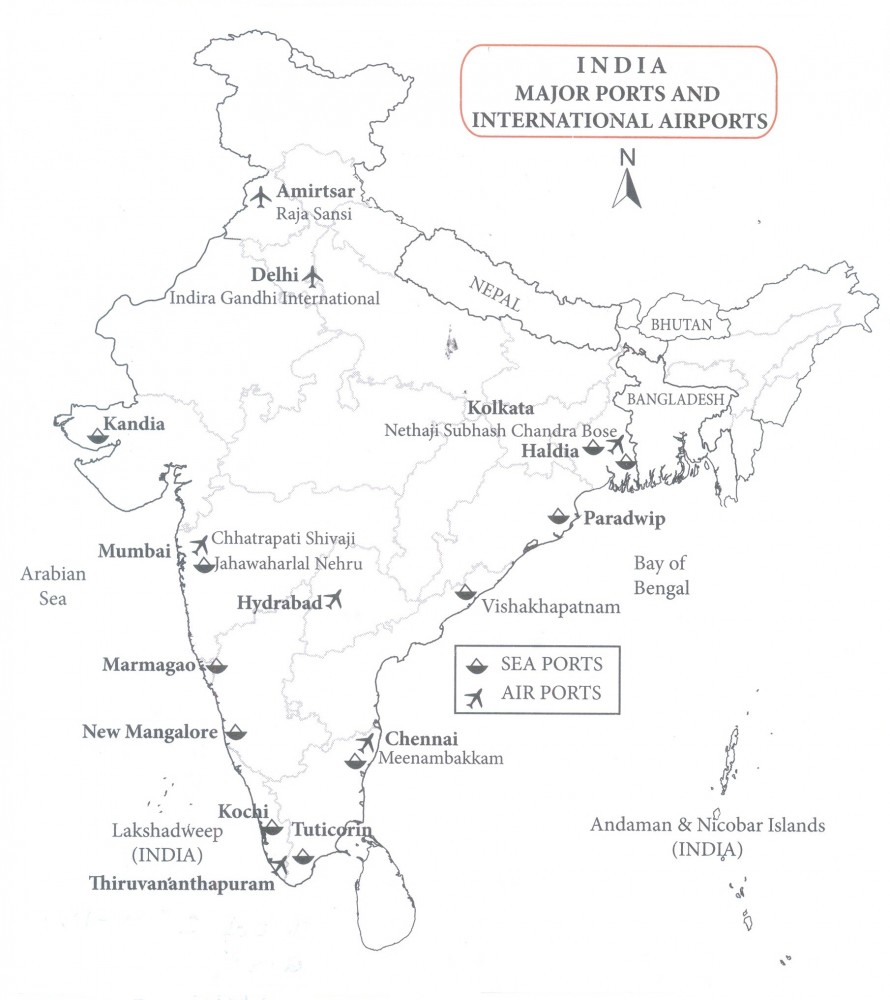
6.
(b)
It is free from corruption.
7.
(d)
Both statements I and II are correct.
8.
(b)
Statements II and III are appropriate.
9.
(b)
| A | B | C | D |
| 4 | 2 | 3 | 1 |
10.
(a)
54% and 76%
11.
(d)
933
12.
(a)
Periyar Ramaswami Naiker
13.
(d)
Bangladesh
14.
(c)
idea of political inequality
15.
(a)
People are aware
16.
In our society, every individual wants to receive respect from fellow beings. In this respect, democratic form of government stands much superior to any other form of government in promoting dignity and freedom of the individual in the following ways
(i) Often conflict arises among individuals because some feel that they are not treated with equal respect in comparison to others. It is very common in non-democratic countries. But in democracy, respect and freedom are the basis of it. Democracy throughout the world has recognised this atleast in principle.
(ii) Most societies were historically male dominating. The status of women was not satisfactory. After long struggles by women, democracy throughout the world has recognised equal treatment and respect to women at least in principles. In democracy, it becomes easier for women to wage a struggle against what is now unacceptable legally and morally for them.
(iii) Democracy in India has strengthened the claims of the disadvantaged and discriminated castes for equal status and opportunity, which is not possible in any non-democratic country.
17.
(i) There are many feminists and women's movements worked to ensure more women as elected representatives.
(ii) In India, the proportion of women in the legislature has been very low. For example, the percentage of elected women members in Lok Sabha has crossed 10 percent of its total strength for the first time in 2009. Their share in the state assemblies is less than 5 percent. In this respect India is among the bottom group of nations in the world
(iii) On way to solve this problem is to make it legally binding to have a fair proportion of women in the elected bodies. This is what the Panchayat Raj has done in India.
(iv) Women organizations and activists have been demanding a similar reservation of at least one-third of seats in the Lok Sabha Assemblies for women.
18.
If we are not religious, it means we don't believe in God, i.e. there are no deities. Communalism is a social phenomena which is based on the idea that religion is the principal basis of social community.
It believes that people who follow different religions cannot belong to the same social community. Sometimes it takes its ugliest form in communal violence, riots and massacre. So, communalism needs to be combated.
Secularism means, there is no state religion. State should respect all religions. India does not have an official state religion. So, whether I am religious or not, I must be secular and should not favour or discriminate against any religion. This attitude only can maintain a healthy atmosphere in our country.
19.
(d) Democracies do not appear to be very successful in reducing economic inequalities.
20.
(a) Both A and R are true and R is the correct explanation of A

10th Standard CBSE Syllabus & Materials
10th Standard CBSE
CBSE 10th Social Science PS - Federalism - New Model Questions Papers Study Material - QB365 Set A
NEW10th Standard CBSE
CBSE 10th Social Science PS - Power Sharing - New Model Questions Papers Study Material - QB365 Set A
NEW10th Standard CBSE
CBSE 10th Social Science GEO - Manufacturing Industries - New Model Questions Papers Study Material - QB365 Set A
NEW10th Standard CBSE
CBSE 10th Social Science GEO - Minerals and Energy Resources - New Model Questions Papers Study Material - QB365 Set A



NCERT Books

Syllabus

Exam Pattern

Sample Question Papers

Previous year Question Papers

Important Notes

MCQ Practice test

NCERT Exemplers

Case study Questions

Image Based Questions

Passage based Questions

HOT Questions

Value Based Questions

Model Questions Papers
NCERT ( Book Back ) Questions

Assertion and Reason
Important Questions And Answers

CBSE 10th Standard CBSE Subjects
CBSE Standards



