
 100% FREE ACCESS
10th Standard CBSE Syllabus & Materials
10th Standard CBSE
CBSE 10th Social Science ECO - Globalisation and the Indian Economy - New Model Questions Papers Study Material - QB365 Set A
NEW10th Standard CBSE
CBSE 10th Social Science ECO - Money and Credit - New Model Questions Papers Study Material - QB365 Set A
NEW10th Standard CBSE
CBSE 10th Social Science ECO - Sectors of the Indian Economy - New Model Questions Papers Study Material - QB365 Set A
NEW10th Standard CBSE
CBSE 10th Social Science ECO - Development - New Model Questions Papers Study Material - QB365 Set A
NEW10th Standard CBSE
CBSE 10th Social Science PS - Outcomes of Democracy - New Model Questions Papers Study Material - QB365 Set A
NEW10th Standard CBSE
CBSE 10th Social Science PS - Gender, Religion and Caste - New Model Questions Papers Study Material - QB365 Set A

Published on: 26/10/2025
Download CBSE Class 10th Standard CBSE Social Science question papers, sample papers, important questions, and previous year solved papers in PDF format. Get free study materials, NCERT solutions, and exam preparation resources for Class 10th Standard CBSE Social Science
Questions + Answers key
Take MCQ Social Science Test
1.
Examine how industrial pollution of freshwater can be reduced
2.
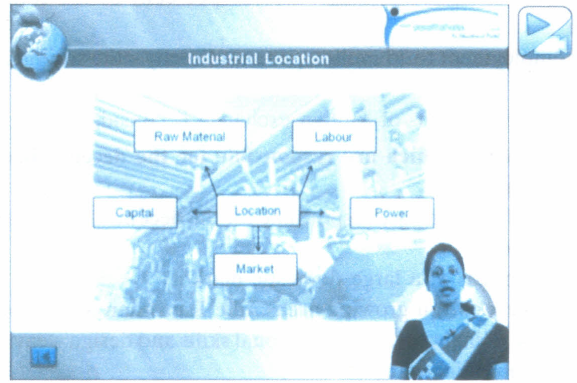
Explain any three factors that influence the location of an industry.
3.
What is the meaning of a manufacturing industry? Why is it considered the backbone of economic development? Give two reasons.
4.
Why is iron and steel industry considered as a basic industry?
5.
State the importance of jute textile industry in India.
6.
Explain the distribution of cotton textile industries.
7.
Why the sugar industries are located near to sugarcane producing areas?
8.
What is manufacturing?
9.
Why has 'Chotanagpur Region' maximum concentration of iron and steel industries? Explain any three reasons.
10.
What are the similarities between information technology industry in Bangalore and California?
11.
Which public sector plant in India is located near a port?
12.
State one negative effect of industrialization.
13.
Name one inorganic chemical.
14.
Oil India Limited (OIL) belongs to which type of industry?
15.
Give an example of a small scale industry.
16.
Name two industries belonging to the category of heavy industries.
17.
In which sector are the manufacturing industries placed?
18.
Why has the 'National Manufacturing Competitiveness Council' been set up?
19.
Which are the 3 major sectors of fabric production in India? Mention the share of each sector.
20.
Explain any three problems faced by Iron and Steel Industry in India.
21.
'Agriculture' and 'Industry' are complementary to each other. Explain with five example.
22.
Explain any three problems faced by cotton textile industries in India.
23.
Classify industries on the basis of : (a) Captial investment, (b) Ownership (c) Bulk and weight of raw material and (d) Finished product.
24.
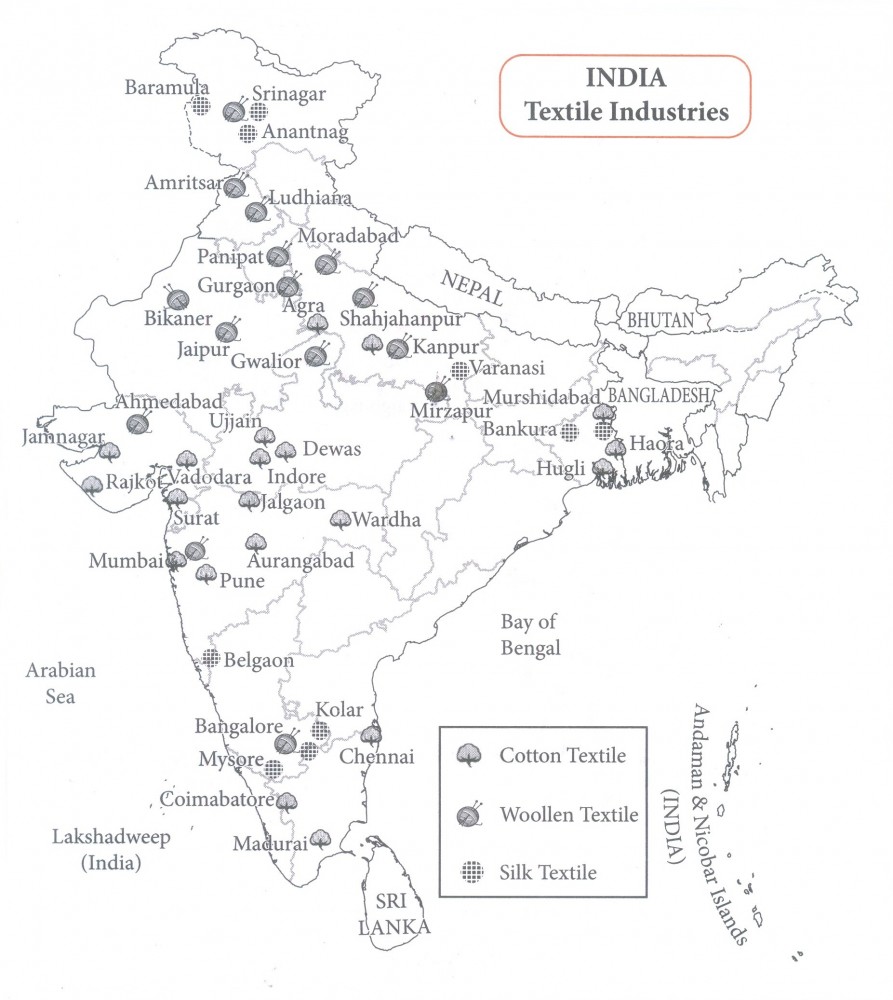
Study and observe the following centres on the given outline map of India showing distribution of cotton, silk and woollen industry.
25.
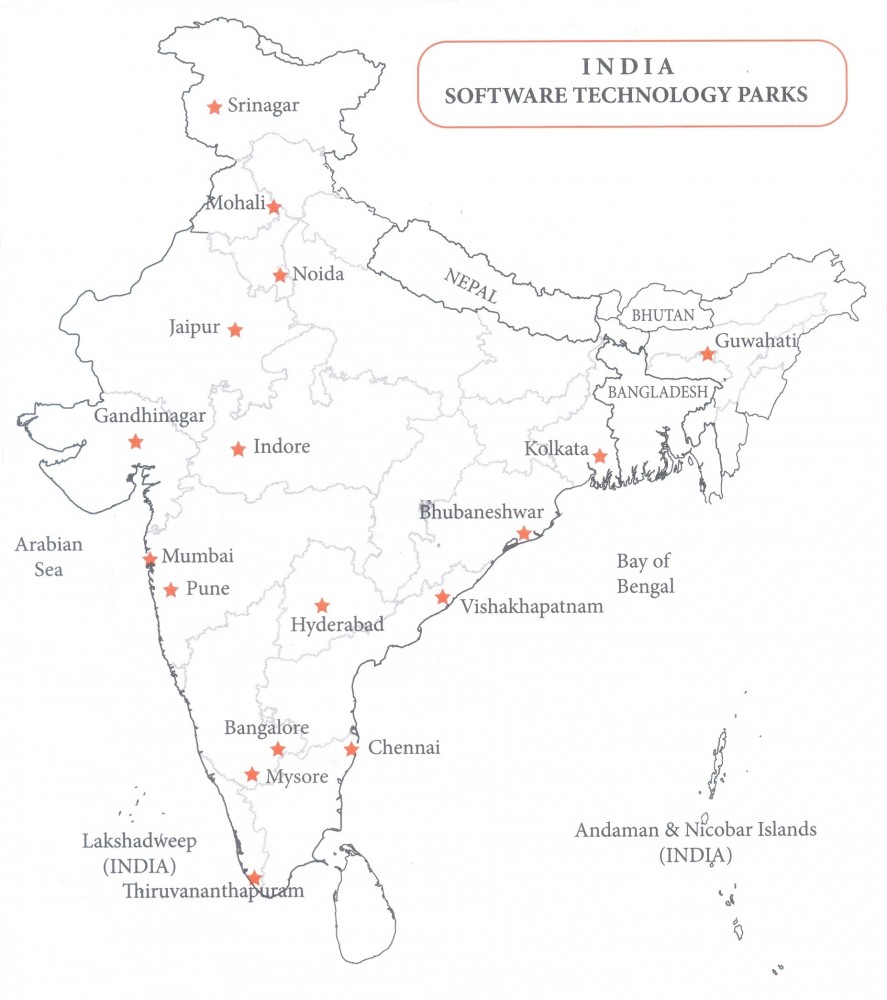
Study the given outline map of India showing major Software Technology Parks in India.
26.
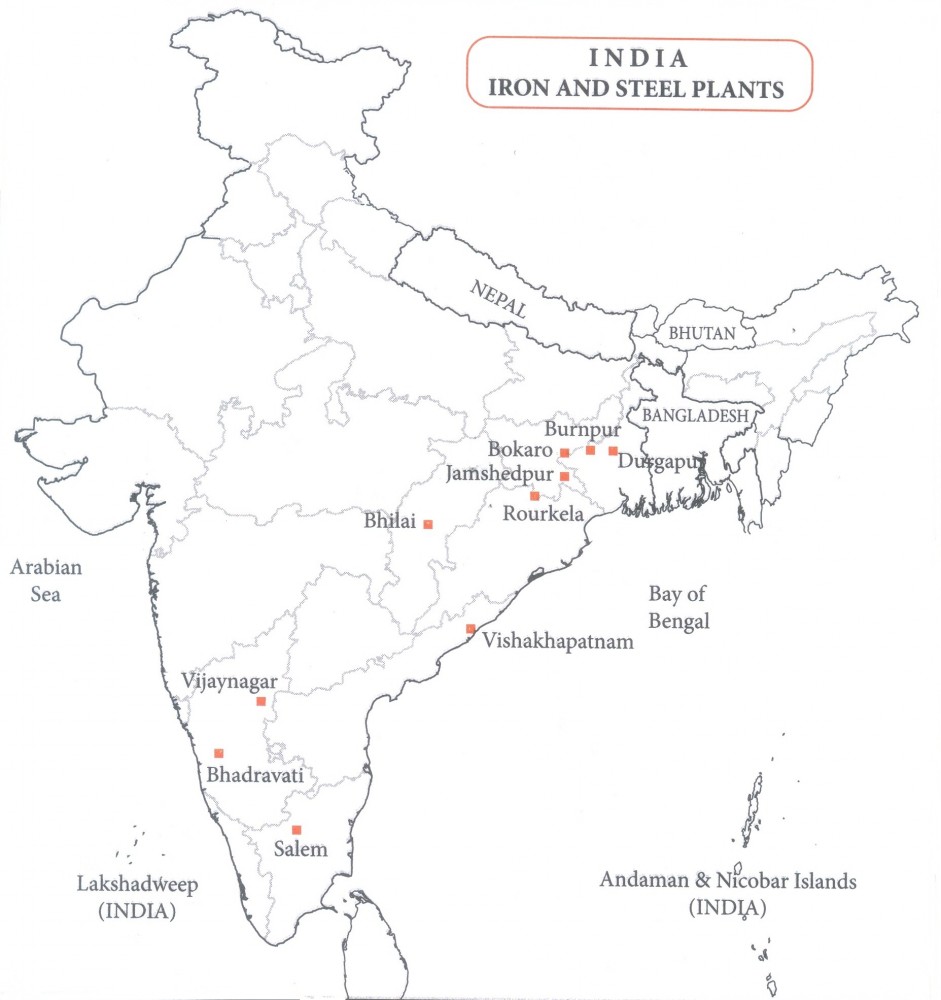
Study the given outline map of India showing major Iron and Steel Plants in India.
1.
Three ways to reduce freshwater pollution can be
(i) Restructuring the manufacturing processes in various industries to reduce or eliminate pollutants through pollution prevention methods.
(ii) Creating man-made cooling ponds designed to cool heated effluent waters of industries by evaporation, condensation and radiation.
(iii) Filtration of the sewage in water treatment plants before dumping it into water bodies.
2.
Following are the three factors that influence the location of an industry.
(a) Nearness to raw materials, i.e. coal, iron etc, is an important factor of industrial location.
(b) Market offers an important locational factor.
(c) Besides, plenty of capital can attract an industry to any location
3.
Production of good in the factories in large quantities after processing from raw materials to more valuable products, is called manufacturing industry. Manufacturing industry is considered as the backbone of economic development because of the following reasons.
(a) It helps in modernizing agriculture which is the backbone of our economy.
(b) Export of manufactured goods expands trade and commerce and brings the much needed foreign exchange.
4.
(1) Since all the other industries - heavy, medium and light, depend on it for their machinery.
(2) Steel is needed to manufacture a variety of engineering goods.
(3) Steel is needed for construction material, defence and medical equipments.
(3) Steel is needed for telephonic, scientific equipment and a variety of consumer goods.
(4) Production and consumption of steel is often regarded as the index of a country's development. (any three)
5.
(i) The jute industry supports 2.61 lakh workers directly.
(ii) It also supports another 40 lakhs small and marginal farmers who are engaged in cultivation of jute and Mesta.
(iii) India is the largest producer of raw jute and jute goods and stands at second place as an exporter after Bangladesh.
6.
(a) There are about 1946 cotton and human made fibre textile mills in the country as on 30th November 2011. Of this 80% are in the private sector, the rest in the public and cooperative sectors.
(b) Cotton textile industries are spread over 80 towns and cities in India, but most of them are concentrated in Maharashtra, Gujarat, West Bengal, Uttar Pradesh, Madhya Pradesh and Tamil Nadu.
(c) While spinning continued to be concentrated in Maharashtra, Gujarat and Tamil Nadu weaving is in decentralized sector.
7.
(a) Sugar industries are based on sugarcane as the raw material, which is very heavy. So industries are close to its producing areas.
(b) Moreover sugarcane is a perishable and weight losing products. It should be processed without delay to prevent losing of sugar content.
8.
Manufacturing is production of goods in large quantities after processing raw materials into ready-to-use, more valuable products.
9.
(i) This region is rich in the raw material needed to produce the steel such as iron ore, coal, limestone, etc.
(ii) These raw material are heavy and bulky therefore difficult and costly to transport to the plant.
(iii) This region has well connected railway lines which offter easy transportation of the finished products for their distribution to the markets and consumers.
(iv) This region gets its power supply from Damodar valley.
(v) Availability of cheap labour from surrounding regions.
10.
(a) Bangalore is located in Deccan Plateau while Silicon Valley in California is located next to the Rocky Mountains.
(b) Both have clean environment.
(c) Pleasant climate throughout the year.
(d) In the vicinity of educational, scientific and technological centres.
(e) Close to major roads and airports.
(f) Good access to markets.
(g) Both have skilled work force.
(h) Low or affordable cost of living.
11.
The Vishakhapatnam steel plant is located near a port.
12.
Pollution is one of the negative effects of industrialization.
13.
Sulphuric acid is an inorganic chemical.
14.
Oil India Limited belongs to the Joint sector industries.
15.
Soap making or manufacturing sewing machines are examples of small scale industries.
16.
Shipbuilding and iron and steel industries.
17.
Manufacturing industries are placed in the secondary sector.
18.
The trend of growth rate in the manufacturing sector over the last decade has been around 7 % per annum. The desired growth rate over the next decade is 12%. The NMCC has been set up to improve productivity with government policy intervention and efforts by industry.
19.
Mill sector (3.5 %) Power loom (84.1) Handloom (11.1) Others (1.3).
20.
(i) Integrated steel plants are different from mini steel plants in many aspects.
(a) An integrated steel plant is large and handles everything in one complex from integrating raw materials to steel making, rolling and shaping.
(b) On the other hand, a mini steel plant is smaller, has electric furnaces, uses steel scrap and sponge iron, and has re-rollers that use steel ingots as well. It produces mild and alloy steel of given specifications.
The problems faced by this industry are:
(a) high production costs and limited availability of coking coal
(b) lower productivity of labour
(c) irregular supply of energy
(d) poor infrastructure. Recent developments that have led to a rise in the production capacity of this industry are liberalisation and Foreign Direct Investment, with help from private entrepreneurs.
(ii) Industrial pollution of the environment is of four types: air, water, land and noise. Air pollution is caused by smoke released by chemical and paper factories, brick kilns, refineries and smelting plants, and burning of fossil fuels in factories ignoring pollution norms. Water pollution is caused by the discharging of organic and inorganic industrial wastes and effluents into rivers. This form of pollution is caused by paper, pulp, chemical, textile, dyeing, petroleum refineries, tanneries and electroplating industries. The major solid wastes released into rivers in India are fly ash, phospo - gypsum, and iron and steel slags. Thermal pollution of water is another form of water pollution, caused by the emission of hot water from factories and thermal plants into rivers and ponds. Dumping of solid wastes renders the soil infertile and useless too. Lastly, noise pollution results from industrial and construction activities, machinery, generators, and saws, pneumatic and electric drills.
(iii) The steps to be taken to minimise environmental degradation by industry are as follows:
(a) To control water pollution, industrial effluents need to be treated on all three levels (primary, secondary and tertiary); the use of water for processing should be minimised via reuse and recycling; rainwater can be harvested to meet water requirements, and ground water usage should be regulated by law.
(b) For the minimisation of air pollution, smoke stacks should be fitted to factories with electrostatic precipitators, fabric filters, scrubbers and inertial separators. Also, smoke can be reduced by using oil or gas instead of coal.
(c) Noise pollution can be controlled by fitting generators with silencers, redesigning machinery to reduce noise, and using earplugs and earphones besides other noise absorbing material.
21.
The agro-industries in India have given a major boost to agriculture -
(i) Agro-based industries have given a boost to agriculture by raising its productivity.
(ii) Agro-based industries depend on the agriculture for their raw materials such as cotton, sugarcane, jute etc.
(iii) Agriculture depends on industries for products such as irrigation pumps, fertilizers, insecticides, pesticides, machines and tools, etc.
(iv) Industrial development helps agriculture in increasing their production and make production processes very efficient.
22.
Three problems faced by cotton textile industries in India are
(i) Power supply is erratic. Regular power supply without breaks is essential for this industry.
(ii) Output of labour is low because the machinery is outdated. Particularly in the weaving and processing sectors, the machinery needs to be upgraded.
(iii) This industry faces stiff competition from the synthetic fibre industry in terms of cost and convenience of use.
23.
(a) On the basis of capital investment:
Large scale industries make large capital investment of more than one crore of rupees. They employ large numbers of people and use a large number of machineries, e.g. cotton textile. Small scale industries involve capital outlay of less than one crore rupees, employ a smaller number of labourers and use few power driven machineries, e.g. cycle parts manufacturing.
(b) On the basis of ownership:
Public sector industries are owned and operate by government agencies, e.g. Rourkela Steel Plant.
Private sector industries are owned and operated by an individual or a group of individuals, e.g. Bajaj Auto Ltd.
Joint sector industries are jointly run by the state and individual entrepreneurs e.g. Oil India Ltd. Cooperative sector industries are owned and managed by the producers and share the profits and losses proportionately, e.g., sugar industry in Maharastra.
(c) On the basis of bulk or weight or raw material and finished products:
Heavy industries use bulky raw material and finished products are also heavy, e.g., iron and steel industry.
Light industries use light raw materials and their finished products are also light, eg. electrical industries producing bulbs.
24.
25.
26.

10th Standard CBSE Syllabus & Materials
10th Standard CBSE
CBSE 10th Social Science PS - Federalism - New Model Questions Papers Study Material - QB365 Set A
NEW10th Standard CBSE
CBSE 10th Social Science PS - Power Sharing - New Model Questions Papers Study Material - QB365 Set A
NEW10th Standard CBSE
CBSE 10th Social Science GEO - Manufacturing Industries - New Model Questions Papers Study Material - QB365 Set A
NEW10th Standard CBSE
CBSE 10th Social Science GEO - Minerals and Energy Resources - New Model Questions Papers Study Material - QB365 Set A



NCERT Books

Syllabus

Exam Pattern

Sample Question Papers

Previous year Question Papers

Important Notes

MCQ Practice test

NCERT Exemplers

Case study Questions

Image Based Questions

Passage based Questions

HOT Questions

Value Based Questions

Model Questions Papers
NCERT ( Book Back ) Questions

Assertion and Reason
Important Questions And Answers

CBSE 10th Standard CBSE Subjects
CBSE Standards



