
 100% FREE ACCESS
10th Standard CBSE Syllabus & Materials
10th Standard CBSE
CBSE 10th Social Science ECO - Globalisation and the Indian Economy - New Model Questions Papers Study Material - QB365 Set A
NEW10th Standard CBSE
CBSE 10th Social Science ECO - Money and Credit - New Model Questions Papers Study Material - QB365 Set A
NEW10th Standard CBSE
CBSE 10th Social Science ECO - Sectors of the Indian Economy - New Model Questions Papers Study Material - QB365 Set A
NEW10th Standard CBSE
CBSE 10th Social Science ECO - Development - New Model Questions Papers Study Material - QB365 Set A
NEW10th Standard CBSE
CBSE 10th Social Science PS - Outcomes of Democracy - New Model Questions Papers Study Material - QB365 Set A
NEW10th Standard CBSE
CBSE 10th Social Science PS - Gender, Religion and Caste - New Model Questions Papers Study Material - QB365 Set A

Published on: 26/10/2025
Download CBSE Class 10th Standard CBSE Social Science question papers, sample papers, important questions, and previous year solved papers in PDF format. Get free study materials, NCERT solutions, and exam preparation resources for Class 10th Standard CBSE Social Science
Questions + Answers key
Take MCQ Social Science Test
1.
__________ received special impetus under the Pradhan Mantri Grameen Sadak Yojana.
2.
Who was Francis Garnier?
3.
Explain any three factors that influence the location of an industry.
4.
'Transport, communication and trade are complementary to each other'. Explain with four examples.
5.
State any three merits of roadways.
6.
What are software technology parks? State any two points of significance of Information Technology in India?
7.
What are the uses of copper? Name any two leading copper producing state in India.
8.
What was Khilafat issue or why did Mahatma Gandhi support the Khilafat movement?
9.
Analyze the circumstances which led Gandhiji to choose the abolition of salt tax as the most important demand of the Civil Disobedience Movement.
10.
What was the problem faced by the French in the sphere of education regarding medium of instruction?
11.
Why was the decade of 1820s known as great economics hardship in Europe? Explain any three reasons.
12.
13.
Mention the several barriers to economic growth in Vietnam as observed by Bernard.
14.
How did Vietnamese differ on the question of modernisation and nationalism?
15.
Describe the major problems in the field of education for the French in Vietnam.
16.
When does thermal pollution take place?
Sun heats up the lakes and ponds
Hot water from factories drains into rivers and ponds
When hot oil drains into rivers and lakes
None of these
17.
Which of the following is not true regarding the impact of the First World War?
Defence expenditure resulted in increased taxes.
Forced recruitment of soldiers was introduced in the villages.
Income tax was introduced and custom duties increased.
The hardship ended with the war as the British introduced the Rowlatt Act.
18.
What has raised uncertainties about the security of energy supply in the future?
Rising prices of oil and gas
Lack of water resources
Limited use of non-renewable fossil fuels
Increasing use of renewable energy resources
19.
Which of the following powers was not interested in extending their own control over the Balkans?
England
Russia
Germany
Switzerland
20.
Which of the following is not true regarding the regime of Ngo-Dinh-Dien in south Vietnam?
He built a repressive and authoritarian government
He bid the foundation of a democratic form of government
Anyone who opposed him was jailed and killed
He permitted Christianity but outlawed Buddhism
21.
Explain the importance of Socialism in the course of Indian National movement.
22.
What is referred to as Absolutism?
23.
To which all categories do iron and steel industries fall?
24.
Which is the most abundantly available fossil fuel India? Name its four major forms
25.
Discuss the lives of the aristocrats and the new middle class in 19th century France.
26.
What solution was suggested by the Dalit leaders to solve the problems of the depressed classed? How did Dr.BR Ambedkar try to improve the condition of depressed classes? Explain any three points.
27.
Why is conservation of minerals essential? Explain any four measures to conserve minerals.
28.
Write a short note on (a) Personal written communication (b) Telecom network of India.
29.
Why do industries tend to locate themselves near cities or urban centres?
30.
When and why was Poona pact signed?
31.
What are the challenges faced by the jute industry in India?
32.
(i) Why are the means of transportation and communication called the lifelines of a nation and its economy?
(ii) Write a note on the changing nature of the international trade in the last fifteen years.
33.
Name any three major iron ore belts found in India. Write main features of each.
34.
Describe the process of unification of Italy.
35.
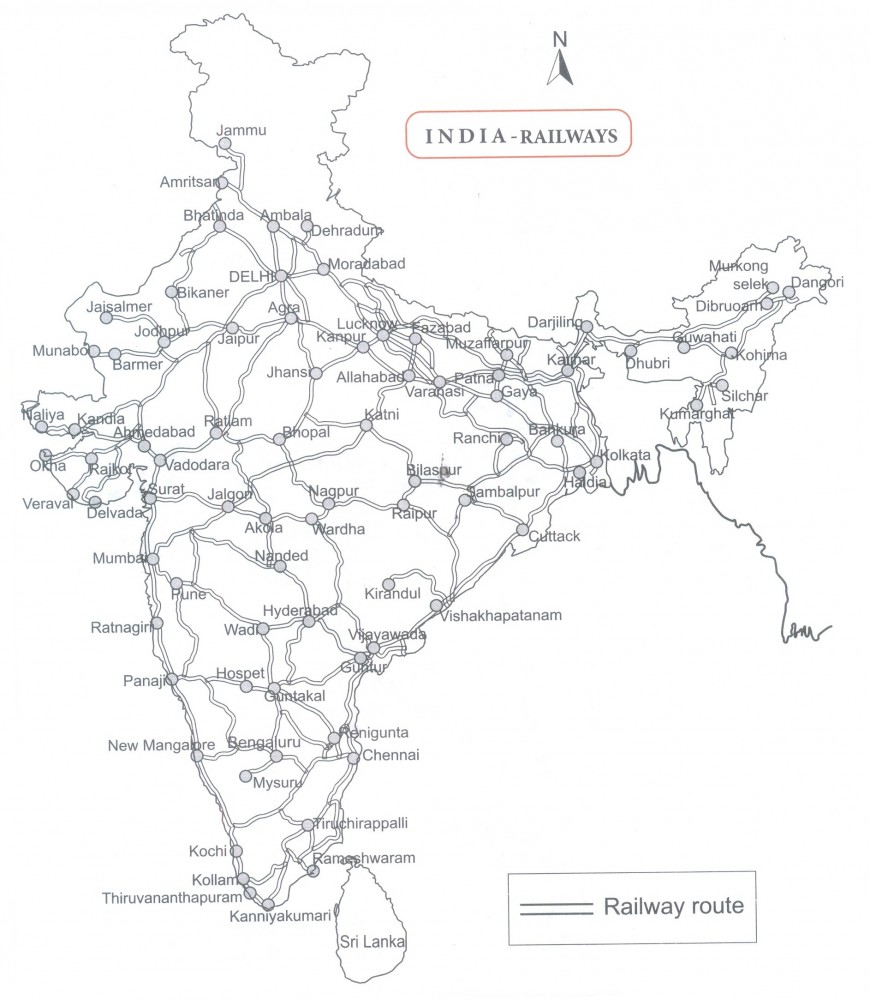
Study the railways network in India.
36.
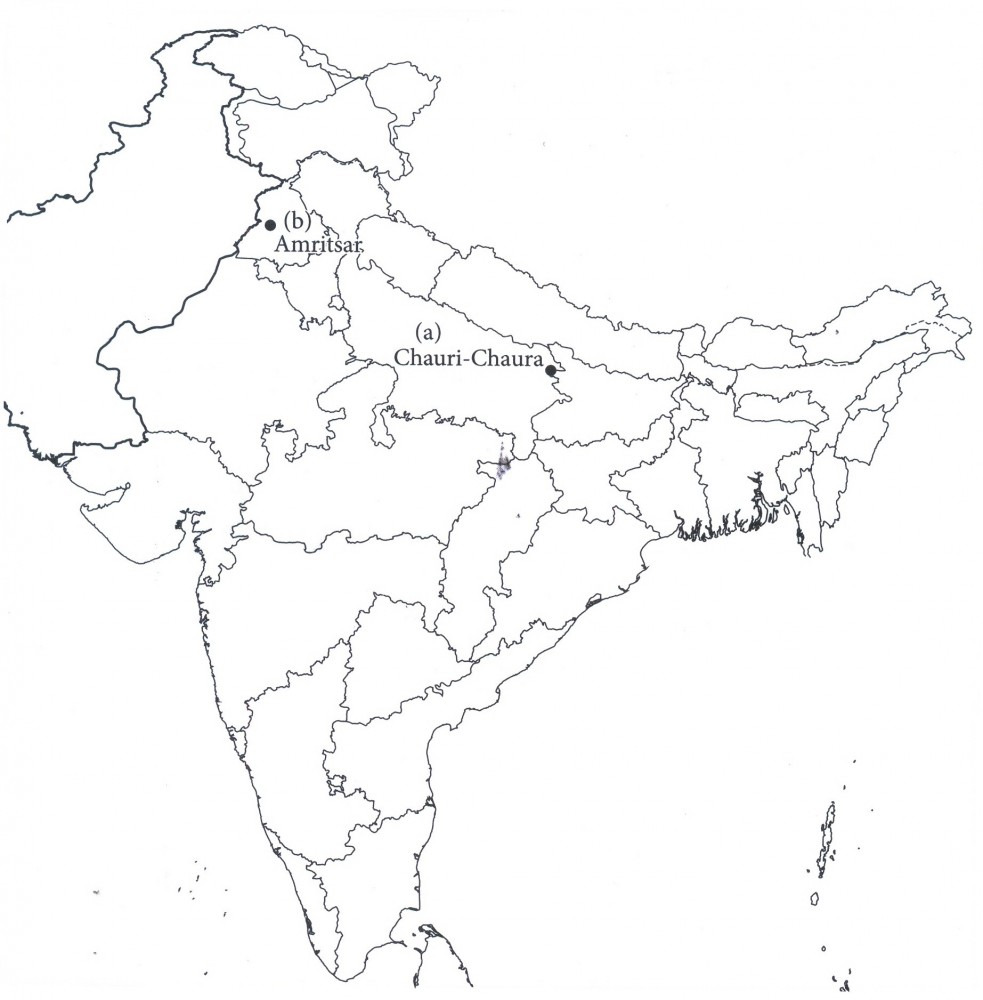
Locate and label the following items with appropriate symbols on the same map:
(a) Chauri-Chaura-The place of calling off the Non-Cooperation Movement (N.C.M.)
(b) Amritsar-The place where Jallianwalla Bagh incident took place.
37.
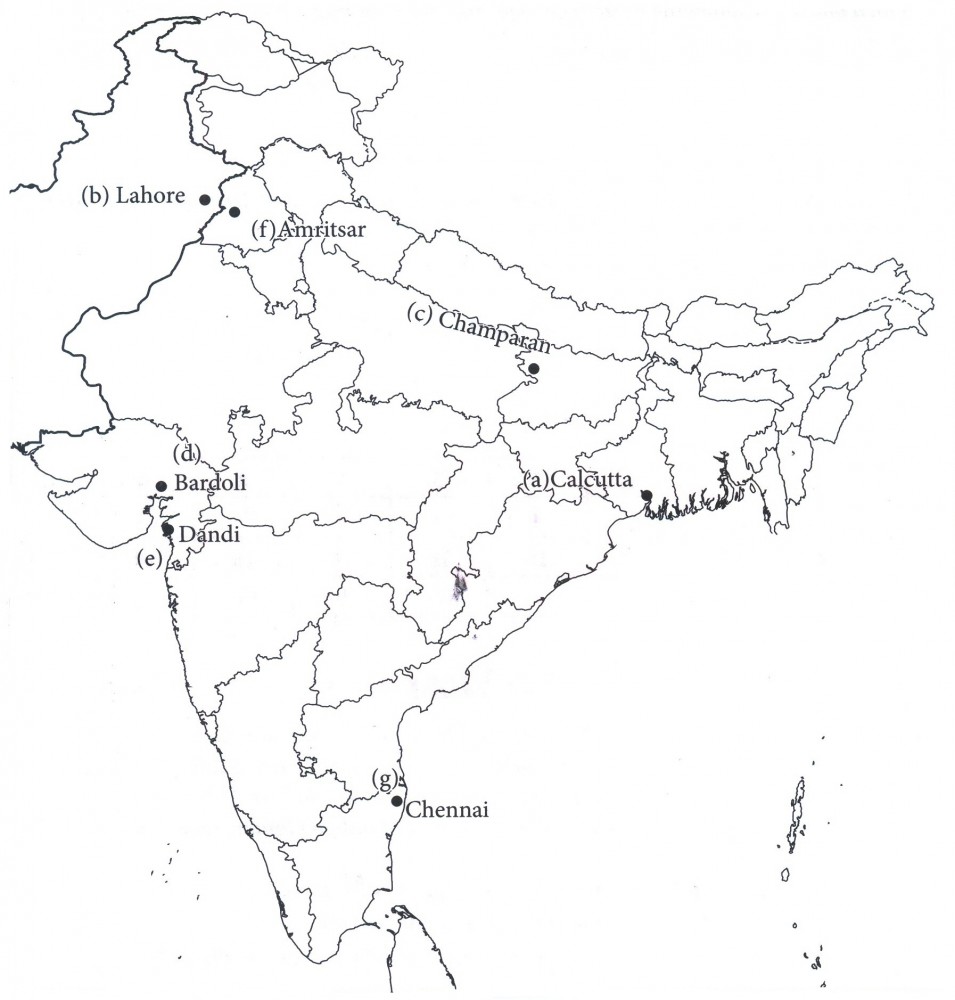
Locate and label the following on the given political outline map of India:
(a) A place where session of Indian National Congress was held in September 1920.
(b) A place where session of Indian National Congress was held in 1929.
(c) A place in Bihar where Satyagraha Movement of indigo planters took place.
(d) Baradoli, the place, from where No tax campaign was started.
(e) A place in Gujarat where Gandhiji violated the Salt law.
(f) a place in Punjab where Jalianwalla Bagh incident took place (or) Amritsar
(g) Chennai (Madras)
38.
Study the given outline map of India showing major Iron and Steel Plants in India.
39.
Study and Observe the following map of conventional source of energy. Write the names of coal mines and oil fields with respective states.
1.
()
Rural Roads.
2.
()
Francis Garnier was a French officer who led an attack against the ruling Nguyen dynasty.
3.
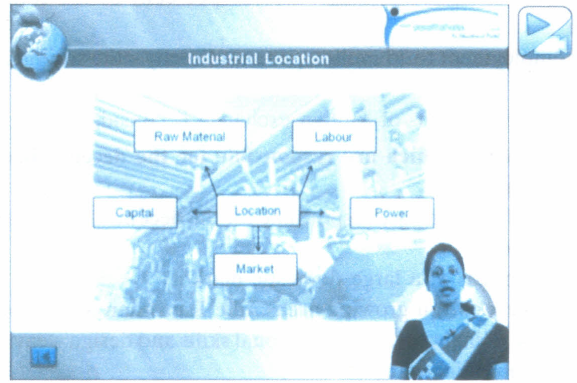
Following are the three factors that influence the location of an industry.
(a) Nearness to raw materials, i.e. coal, iron etc, is an important factor of industrial location.
(b) Market offers an important locational factor.
(c) Besides, plenty of capital can attract an industry to any location
4.
(i) It linked with the country with the rest of the world.
(ii) Roadways, railways, newspaper, internet etc have been contributing to socio-economic progress in many ways.
(iii) Trades from local to international levels have boosted the economy.
(iv) It enriched life with many amenities that comforts life.
5.
Three merits of roadways are
(a) They provide us door-to-door service.
(b) It is easier to construct roads at low cost as compared to railways.
(c) They provide a feeder service to link other means of transportation.
6.
Software technology parks provide single window services and high data communication facility to software experts. The two significant points of IT industries are as follows:
(i) It generates huge employment. Up to March 31, 2005, it employed over one million persons, 30 percent of which are women.
(ii) The industry has been a major foreign exchange earner through growing Business processes outsourcing (BPO) sources.
7.
Being malleable, ductile and a good conductor, copper mainly used in electrical cables, electronics and chemical industries. The Blight mines in Madhya Pradesh, Khetri mines in Rajasthan and Singbhum district of Jharkhand are leading producers of copper.
8.
The First World War had ended with the defeat of Ottoman Turks and there were rumors that a harsh peace treaty was going to be imposed on the Ottoman emperor - the spiritual head of the Islamic world. A khilafat Committee was formed in Bombay in March 1919. The Ali brothers Muhammad Ali and Shaukat Ali had discussion with Mahatma Gandhi about the possibility of a united mass action on the issue. Gandhiji saw this as an opportunity to bring Muslims under the umbrella of a unified national movement.
9.
The salt March was an effective symbol of resistance against colonialism because it was done in revolt against salt, used by the rich and the poor alike. The tax on salt, and the government monopoly over its production was a severely oppressive administrative move. The salt March was effective also because Gandhiji met a large number of commoners during the march and he taught them the true meaning of swaraj and non-violence. By peacefully defying a law and making salt against government orders, Gandhiji set forth an example to the whole nation of how the oppressor could be confronted in a non-violent manner. This also led to the Civil Disobedience Movement in 1930.
10.
(i) The elites in Vietnam were powerfully influenced by Chinese culture. To consolidate their power, the French had to counter the Chinese influence. So they systematically dismantled the traditional educational system.
(ii) french schools were established for the Vietnamese.
(iii) One group emphasised the need to use the French language as the medium of instruction. Through this the Vietnamese would be introduced to the French culture and civilisation. This would help to create an 'Asiatic France solidly tied to European France.'
(iv) The educated people in Vietnam would respect the Frech sentiments and ideals.
(v) Other group was opposed to French being the only medium of instruction. The Vietnamese should be taught in lower classes and French in the higher classes.
(vi) The few who learnt French and acquired Frech culture were to be rewarded with French citizenship.
11.
(a) Enormous increase in population leading to unemployment.
(b) Migration of people from rural areas to urban area for job.
(c) Products of small producers engaged in textile production from homes were displaced due to imports of cheap machine-made textile goods.
(d) Peasants struggled due to feudal dues and obligations.
(e) Bad harvests and rising of food prices added to poverty in towns.
12.
13.
(i) Bernard suggested that there were several barriers to economic growth in Vietnam, such as high population levels, low agricultural productivity and extensive indebtedness amongst the peasants.
(ii) Land reforms were necessary to reduce rural poverty and increase agricultural productivity.
14.
Both Phan Boi Chau and Chu Trinh were nationalists. Both of them wanted to free Vietnam from colonial occupation but in different ways.
Difference:
PHAN BOI CHAU
(a) He accepted monarchy.
(b) He did not want to revolt against monarchy.
(c) He wanted to get the help of monarchy to oppose French rule.
(d) He supported Vietnamese culture and opposed western ideas.
(e) He wanted to establish a constitutional monarchy.
PHAN CHU TRINH
(a) He wishes to overthrow monarchy.
(b) He planned an uprising against monarchy.
(c) He did not want to take the help of monarchy.
(d) He supported modern ideas like liberty, fraternity and equality.
(e) He wanted to establish a democratic republic.
15.
Civilizing Mission: The French, like the British, claimed they were bringing modern civilization to the Vietnamese. They wanted to introduce modern ideas to the colony even if this meant destroying local cultures, religion and traditions as it was seen as outdated and prevented development. The French needed educated labour force but once educated it would create problems for them - they might lose their jobs and they might question colonial domination.
Talking Modern: The elites in Vietnam were influenced by the Chinese culture. To consolidate the French power, they had to counter the Chinese influence. They had to dismantle the traditional system of education and establish French Schools for the Vietnamese. They wanted to replace the Chinese language. French language to be the medium of instruction was felt by policy makers. Others opposed it and suggested Vietnamese be taught in the lower classes and French in the higher classes. Only a small fraction of population could enroll in schools and only a few could pass school leaving examinations. Their school text books glorified.French and the colonial rule. The Vietnamese were represented as primitive, backward, capable of manual labour, first to work in the fields and were skilled copyists and not creative.
Western style of Education: The Tonkin Free School was started in 1907 to provide Western Style of Education. This education included classes in Science, hygiene and French. They encouraged the Western style such as having a short haircut as against their traditional long hair.
Resistance in Schools: Vietnamese teachers and students who were rapidly increasing in numbers opposed the curriculum either through open opposition or silent resistance. The Vietnamese teachers subtly modified and criticized the texts. The students fought against the colonial governmen's efforts in providing the posts of white-collar jobs only for the French. In 1920 s, students were forming various political parties such as the Party of Young Annan and publishing nationalist journals ("Annanese student"). The schools became the hubs of the formation of political ideas and revolutions. The Vietnamese intellectuals feared the loss of both the Vietnamese territory and culture. They believed that the native culture and customs were being devalued and the development of a master-slave mentality was on the progress in the country. The colonial education and its resistance ultimately added to the larger picture of the entire revolution.
16.
(b)
Hot water from factories drains into rivers and ponds
17.
(d)
The hardship ended with the war as the British introduced the Rowlatt Act.
18.
(a)
Rising prices of oil and gas
19.
(d)
Switzerland
20.
(b)
He bid the foundation of a democratic form of government
21.
Trade unions , spread of socialistic ideas , formation of communist party.
22.
Unrestricted, despotic and authoritarian monarchial system of rule of rule or government is referred to as absolutism.
23.
Mineral based, Basic, Heavy, large scale industries.
24.
a) Coal
b) (i) Anthracite
(ii) Lignite
(iii) Bituminous
(iv) peat
25.
The landed aristocracy dominated all social and political spheres. They were united by a common lifestyle. Huge estates and large town-houses were owned by them. French was the language they preferred in the high society and diplomatic circles. Marriages connected the aristocratic families. Though they formed a small group, they dominated with power.
In the western and some parts of Central Europe, commercial classes began to emerge because of setting up of industries and beginning of trade. This class caused the emergence of new social groups like the middle class and the working class. The middle class included industrialists, businessmen and professionals. They were less in number. It was the liberal and educated middle-class that encouraged national unity and abolition of aristocratic privileges.
26.
The dalit leaders sought a political solution to the problems faced by the depressed classes. They organised themselves and demanded reservation of seats in educational institutions so that they could be a part of the decision-making process. Dr. B R Ambedkar believed that it was only through political empowerment that the situation of the depressed classes could be made better. He tried to improve the condition of depressed classes in the following ways.
(a) He organised the dalits into an organisation called the Depressed Classes Association in 1930.
(b) He demanded separate electorates for dalits at the second Round Table Conference, which was finally conceded by the British.
(c) He signed the Poona Pact with Gandhiji and gave up the demand for separate electorates but secured reserved seats for dalits in the provincial and central legislative councils to be voted in general election
27.
Minerals are required in all spheres of our life in agriculture, industries and for domestic purposes. We are rapidly consuming the mineral resources that required millions of years to be formed and concentrated. The geological processes of mineral formation are so slow that the rates of replenishment are infinitely small in comparison to the present rates of consumption. They are finite resources that are non-renewable, yet are getting exhausted due to rapid exploitation. Continued extraction bring down their quality as well as increases costs of extraction. To save these valuable resources from exhaustion and to preserve them for future generations as well, we should conserve our mineral resources. Methods of conserving minerals are as follows.
(a) Causing minimum wastage of minerals during the process of mining and processing of minerals.
(b) Improved technologies to utilize low-grade ores at low cost.
(c) Using minerals in a planned manner by adopting the policy of recycle and reuse. Recycling of metals, using scrap metals and other substitutes to reduce exploitation of the present deposits.
(d) Looking for some other eco-friendly options for its replacement like CNG.
28.
(a) The personal written communication is handled by the Indian postal network. Cards and envelopes are considered first-class mail and book packets, registered newspapers and periodicals are called second class mail. The first-class mail is air lifted while the second class mail is carried by surface transport. For quick delivery of mails in cities and large towns, six mail channels have been introduced. They are called Rajdhani Channel, Metro Channel, Green Channel, Business Channel, Bulk Mail Channel and Periodical Channel.
(b) India has one of the largest telecom networks in Asia. It has about 37,565 telephone exchanges spread all over the country. Apart from the towns and cities, more than two-thirds of the villages have already been covered with Subscriber Trunk Dialling (STD) telephone facility. There is uniform rate of STD facility all over India and provisions have been made to extend 24 hours SID facility to all villages. It has been possible by integrating development in Space Technology with Communication Technology. A number of private companies have entered the field of telecommunication and this has resulted in the availability of better facility to the customs.
29.
(i) Some cities provide markets to the industrial products.
(ii) Cities also provide services such as banking, insurance, consultants and financial advice, transport, labour, etc. to the industry.
(iii) Cities or urban centres provide benefits of agglomeration economics.
(iv) Coastal Urban places help in overseas trade.
30.
(i) Dr.B.R. Ambedkar organized the dalits into the Depressed Classes Association in 1930. He clashed with Mahatma Gandhi at the second Round Table Conference by demanding separate electorates for dalits.
(ii) When the British government conceded Ambedkar's demand, Gandhiji began a fast unto death. He believed that separate electorates for dalits would slow down the process of their integration into society.
(iii) Ambedkar ultimately accepted Gandhiji's position and the result was the Poona Pact of September 1932.
(iv) It gave the Depressed Classes reserved seats in provincial and central legislative councils, but they were to be voted in by the general electorate.
31.
(i) Stiff competition in the international market from synthetic substitutes.
(ii) Stiff competition from other competitors like Bangladesh, Brazil, Philippines, Egypt and Thailand.
(iii) The internal demand needs to be increased; however it has increased recently due to the Government policy of mandatory use of jute packaging.
(iv) There is urgent need to increase the jute productivity and the quality.
(v) The jute farmer needs to get good prices for their jute crops.
(vi) The yield per hectare to be improved,
(vii) To stimulate demand the jute products needs to be diversified.
32.
(i) The means of transportation and communication are called the lifelines of a nation and its economy because
An efficient and well-developed system of transport is essential for proper utilisation of the available natural resources.
A well-developed system of transportation like roadways and railways maintain the movement of persons and goods to different regions of the country.
The means of communication help in sending and receiving messages, thus, playing a vital role in the running of the country efficiently.
Railways provide a number of different activities to people like business, sightseeing pilgrimage as well as transportation of goods over longer distances.
Pipelines are used for transporting crude oil, petroleum products and natural gas to refineries, factories and big thermal power plants.
Waterways are cheapest means of transport. These are most suitable for carrying heavy and bulky goods.
Air transport provides fastest service even in those areas which are inaccessible by other means of transport.
(ii) The changing nature of the international trade in the last fifteen years can be seen through the following points Exchange of commodities and goods in foreign trade has increased due to exchange of information and knowledge.
The exchange of information and knowledge has also improved trade relations of India with the rest of the world.
Due to its advanced software knowledge and excellence in the field of information technology, India has emerged as a software giant at the international level. Now, India is earning a huge amount of foreign exchange through the export of information technology.
India has trade relations wíth all the major trading blocks and all geographical regions of the world.
India has become a major exporter of a number of commodities. For example, agriculture and allied products, gems and jewellery, chemicals and related products and so on.
Tourism industry has also remerged as a big industry in India. It helps in the development of international understanding about our culture and heritage.
33.
(a) Odisha- Jharkhand Belt:
Badampahar mines in the Mayurbhanj and Kendujhar districts of Orissa have high grade hematite ore. Additionally, hematite iron ore is mined in Gua and Noamundi in Singhbhum district of Jharkhand.
(b) Durg- Bastar-ChandrapurBelt:
This belt lies in Chhattisgarh and Maharashtra. The Bailadila range of hills in the Bastar district of Chhattisgarh has very high grade hematite ore. This hilly range as 14 deposits of super high grade hematite ore. Iron from these mines is exported to Japan and South Korea via Vishakapatnam port.
(c) Bellary-Chitradurga-Chikmaglur- Tumkur Belt:
This belt lies in Karnataka. The Kudremukh mines located in the Western Ghats are a 100 percent export unit. The ore from these mines is transported as slurry through a pipeline to a port near Mangalore.
(d) Maharashtra-Goa Belt:
This belt includes the state of Goa and Ratnagiri district of Maharashtra. The ores in these mines are not of very high quality. They' are exported through Marmagao port.
34.
During the middle of the nineteenth century, Italy was divided into seven states, of which only one, Sardinia-Piedmont, was ruled by an Italian princely house. The north was ruled by Austrian Habsburgs, the centre by the Pope and the southern regions by the Bourbon kings of Spain. Italian language had varieties of dialects; therefore, it was not stable in its form. During the 1830s, Giuseppe Mazzini had sought to put together a coherent programme for a unitary Italian Republic. He had also formed a secret society called 'Young Italy' for the dissemination of his goals. The failure of revolutionary uprisings both in 1831 and 1848 fell on Sardinia-Piedmont under its ruler King Victor Emmanuel II to unify the Italian states through war. A unified Italy offered them the possibility of economic development and political dominance. Chief Minister Cavour who led the movement to unify the regions of Italy was neither a revolutionary nor a democrat. With a tactful diplomatic alliance with France by Cavour, Sardinia-Piedmont succeeded in defeating the Austrian forces in 1859. In 1859, a large number of armed volunteers under the leadership of Giuseppe Garibaldi joined the fray. In 1860, Sardinia- Piedmont's forces marched into south Italy and the Kingdom of the Two Sicilies and drove out the Spanish rulers. In 1861, Victor Emmanuel was declared as the king of united Italy and Rome was declared the capital of Italy.
35.
36.
37.
38.
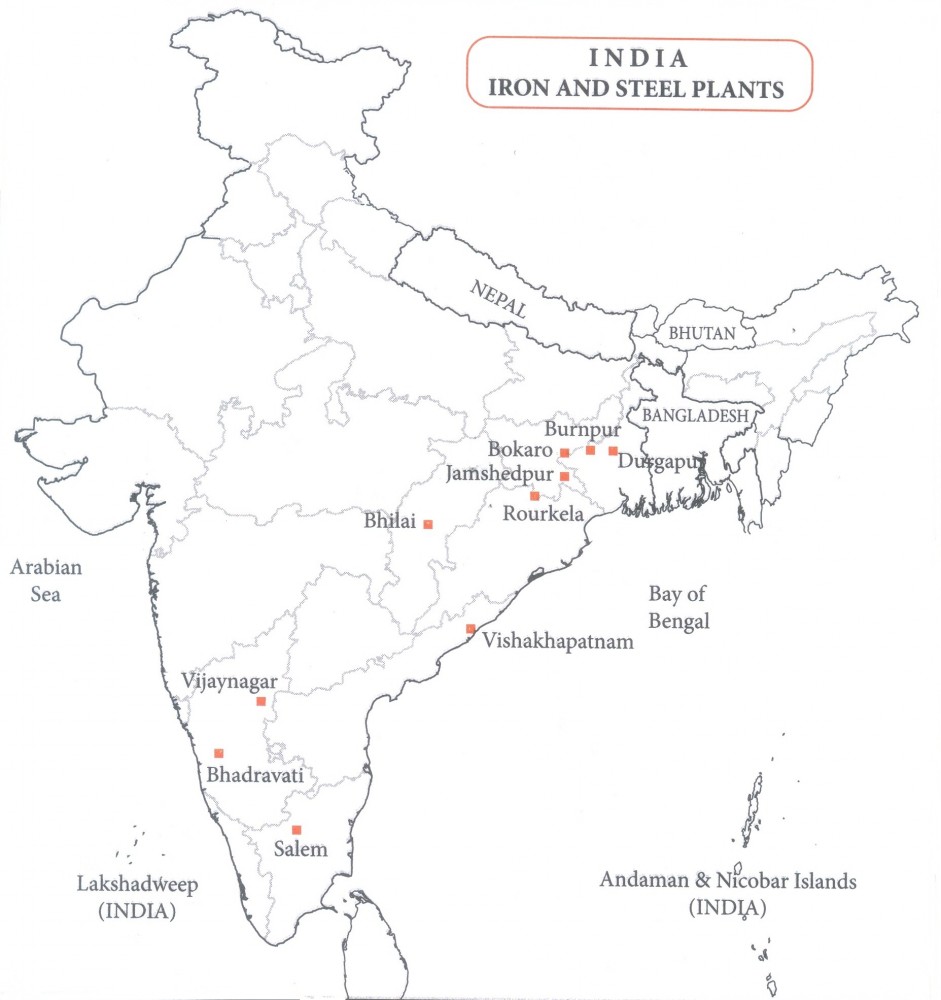
39.
Coal fields
(a) Bokaro, Jharia: Jharkhand
(b) Talcher: Odisha
(c) Neyveli: Tamil Nadu
Oil fields
(a) Ankaleshwar: Gujarat
(b) Digboi: Assam
(c) Mumbai high, Bassein: Maharashtra

10th Standard CBSE Syllabus & Materials
10th Standard CBSE
CBSE 10th Social Science PS - Federalism - New Model Questions Papers Study Material - QB365 Set A
NEW10th Standard CBSE
CBSE 10th Social Science PS - Power Sharing - New Model Questions Papers Study Material - QB365 Set A
NEW10th Standard CBSE
CBSE 10th Social Science GEO - Manufacturing Industries - New Model Questions Papers Study Material - QB365 Set A
NEW10th Standard CBSE
CBSE 10th Social Science GEO - Minerals and Energy Resources - New Model Questions Papers Study Material - QB365 Set A



NCERT Books

Syllabus

Exam Pattern

Sample Question Papers

Previous year Question Papers

Important Notes

MCQ Practice test

NCERT Exemplers

Case study Questions

Image Based Questions

Passage based Questions

HOT Questions

Value Based Questions

Model Questions Papers
NCERT ( Book Back ) Questions

Assertion and Reason
Important Questions And Answers

CBSE 10th Standard CBSE Subjects
CBSE Standards



