
 100% FREE ACCESS
10th Standard CBSE Syllabus & Materials
10th Standard CBSE
CBSE 10th Social Science ECO - Globalisation and the Indian Economy - New Model Questions Papers Study Material - QB365 Set A
NEW10th Standard CBSE
CBSE 10th Social Science ECO - Money and Credit - New Model Questions Papers Study Material - QB365 Set A
NEW10th Standard CBSE
CBSE 10th Social Science ECO - Sectors of the Indian Economy - New Model Questions Papers Study Material - QB365 Set A
NEW10th Standard CBSE
CBSE 10th Social Science ECO - Development - New Model Questions Papers Study Material - QB365 Set A
NEW10th Standard CBSE
CBSE 10th Social Science PS - Outcomes of Democracy - New Model Questions Papers Study Material - QB365 Set A
NEW10th Standard CBSE
CBSE 10th Social Science PS - Gender, Religion and Caste - New Model Questions Papers Study Material - QB365 Set A

Published on: 20/10/2025
Download CBSE Class 10th Standard CBSE Social Science question papers, sample papers, important questions, and previous year solved papers in PDF format. Get free study materials, NCERT solutions, and exam preparation resources for Class 10th Standard CBSE Social Science
Questions + Answers key
Take MCQ Social Science Test
1.
| List I | List II |
| A. Democracy is preferable | 1. Pakistan |
| B. Sometime dictatorship exists | 2. Brazil |
| C. High degree of economic inequality | 3. India |
| A | B | C |
| 3 | 1 | 2 |
| A | B | C |
| 2 | 1 | 3 |
| A | B | C |
| 3 | 2 | 1 |
| A | B | C |
| 1 | 3 | 2 |
2.
What is the average child sex ratio in India?
923
926
935
933
3.
Which one of the following social reformers fought against caste inequalities?
Periyar Ramaswami Naiker
Swami Dayanand Saraswati
Raja Ram Mohan Roy
Ishwar Chandra Vidyasagar
4.
Consider the following statements on the meaning of communal politics. Communal politics is based on the belief that:
A. One religion is superior to that of others
B. People belonging to different religions can live together happily as equal citizens.
C. Followers of a particular religion constitute one community.
D. State power cannot be used to establish the domination of one religious group over others.
What is the statements is /are correct?
A, B, C and D
A, B and D
A and C
B and D
5.
In India seats are reserved for women in
Lok Sabha
State Legislative Assemblies
Cabinets
Panchayati Raj bodies
6.
A democratic government is a ............ government.
powerful
fruitful
repressive
legitimate
7.
In which South Asia country is dictatorship preferred over democracy?
Bangladesh
Pakistan
Nepal
Sri Lanka
8.
In the context of democracies, which of the following ideas is correct. Democracies have successfully eliminated:
conflicts among people
economic inequalities among people
differences of opinion about how marginalised are to be treated
the idea of political inequality
9.
What is a secular state? How does the constitution ensure that India remains a secular state?
10.
What is the status of women's representation in India's legislative bodies?
11.
"Democratic government is legitimate government?" Support the statement with arguments.
12.
How do democracies accommodate social diversity? Explain.
13.
How does democracy help reduce inequality and poverty?
14.
How far is it correct to say that it is not politics that gets caste ridden, but it is the caste that gets politicised? Explain.
15.
"Democracy is a better form of government." Support the statement with three arguments.
16.
On the political map of India, locate, mark and label any four of the following with appropriate symbols.
(i) The port developed after independence to ease the volume of trade on Mumbai port.
(ii) Rajiv Gandhi International Airport
(iii) Vishakhapatnam port
(iv) Indira Gandhi International Airport
(v) Chennai port
(iv) Raja Sansi International Airport
17.
Assertion (A)Democracy transforms people from the status of a subject into that of a citizen.
Reason (R) Most individuals believe that their vote makes a difference to the way the government is run and to their own self-interest.
Codes
(a) Both A and R are true and R is the correct explanation of A
(b) Both A and R are true, but R is not the correct explanation of A
(c) A is true, but R is false
(d) A is false, but R is true
18.
Assertion (A) Idea of Secularism constitutes one of the foundations of our country.
Reason (R) The Constitution prohibits discrimination on grounds of religion.
Codes
(a) Both A and R are true and R is the correct explanation of A
(b) Both A and R are true, but R is not the correct explanation of A
(c) A is true, but R is false
(d) A is false, but R is true
1.
(a)
| A | B | C |
| 3 | 1 | 2 |
2.
(d)
933
3.
(a)
Periyar Ramaswami Naiker
4.
(c)
A and C
5.
(d)
Panchayati Raj bodies
6.
(d)
legitimate
7.
(b)
Pakistan
8.
(d)
the idea of political inequality
9.
This is because:
(a) There is no official religion of the Indian state.
(b) The Constitution provides to all individuals and communities freedom to profess, practice and propagate any religion, or not to follow any religion.
(c) The Constitution allows the state to intervene in the matters of religion in order to ensure equality within religious communities.
10.
In India, the women's participation in the political area is very low. The women's strength in the Lok Sabha is 14.36%. Their share in State Assemblies is less than 5%. The share of women legislators in India is behind those of several developing countries of Latin America and Africa.
In the panchayats and municipalities, it is legally binding to fill one-third of the seats by women candidates. This has resulted in 10 lakh elected women representatives in rural bodies which is more than urban local bodies.
11.
Democratic government is legitimate government. It may be slow, less efficient, not always very responsive or clean but a democratic government is people's own government. This is not true in case of dictatorship. In a democratic government citizens have fundamental rights and duties but in dictatorship it is not so. In a democratic form of government, the decision making process is slow. Because it is follow by the procedures and its decisions are more acceptable to the people. This is not seen in the dictatorship type of government.
12.
(i) It is necessary to understand that democracy is not simply a rule by majority opinion.
The majority always needs to work with the minority so that governments function to represent the general view. Majority and minority opinions are not permanent.
(ii) It is also necessary that rule by majority does not become rule by majority community in terms of religion or race or linguistic group, etc.
(iii) Rule by majority means that in case of every decision or in case of every election, different persons and groups may and can form a majority. Democracy remains democracy only as long as every citizens has a chance of being in majority at some point of time. If someone is barred from being in majority on the basis of birth, then the democratic rule cases to be accommodative for that persons or group.
13.
(i) Economic inequality and poverty are the twin problems of India. Different political parties are committed to remove these since it is included in their election manifesto.
These are responsive to the needs of the people. The elected Government from time to time started a number of poverty alleviation programmes to reduce poverty in India.
(ii) More over many employment scheme like Rural Works Programme, National Rural Employment Programme etc. are started by democratic Government in India.
14.
It is correct to say that it is not politics that gets caste ridden, but it is the caste that gets politicised. Caste can take various forms in politics
(i) Each caste group tries to become bigger by incorporating within it neighbouring castes or -sub-castes which were earlier excluded from it.
(ii) Various caste groups are required to enter a coalition with other castes or communities and thus enter a dialogue and negotiation.
(iii) New kinds of caste groups have come up in the political arena like 'backward' and 'forward' caste groups.
(iv) Caste plays different kinds of roles in politics. In some cases, politics gives many disadvantaged communities the opportunity to demand their share of power.
(v) Politics has helped people from OBC and Dalit castes to gain better access to decision-making.
(vi) But sometimes exclusive attention to caste can produce negative results like tensions, conflicts and violence in our society.
15.
People prefer democracy because:
(i) People are their own masters. In a democracy, every individual has a right to vote and choose his representatives in the government. The government is of the people and the laws are made by the people in the government. Laws are made to protect the liberty and freedom of the people.
(ii) In a democracy, no particular religion, region, race or language is given special preference. All individuals are given equal rights and freedom, and there is no discrimination.
(iii) The government is not by force. The opposition parties are allowed to criticise the government.
(iv) Since every individual is given equal rights, there is less danger of conflicts in society. There are less conflict based on caste, religion or region and less social tensions in society. In politics, dignity of the individual is cared for.
16.
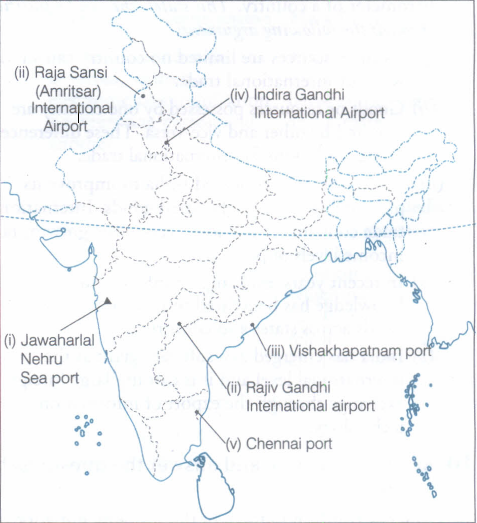
17.
(a) Both A and R are true and R is the correct explanation of A
18.
(a) Both A and R are true and R is the correct explanation of A

10th Standard CBSE Syllabus & Materials
10th Standard CBSE
CBSE 10th Social Science PS - Federalism - New Model Questions Papers Study Material - QB365 Set A
NEW10th Standard CBSE
CBSE 10th Social Science PS - Power Sharing - New Model Questions Papers Study Material - QB365 Set A
NEW10th Standard CBSE
CBSE 10th Social Science GEO - Manufacturing Industries - New Model Questions Papers Study Material - QB365 Set A
NEW10th Standard CBSE
CBSE 10th Social Science GEO - Minerals and Energy Resources - New Model Questions Papers Study Material - QB365 Set A



NCERT Books

Syllabus

Exam Pattern

Sample Question Papers

Previous year Question Papers

Important Notes

MCQ Practice test

NCERT Exemplers

Case study Questions

Image Based Questions

Passage based Questions

HOT Questions

Value Based Questions

Model Questions Papers
NCERT ( Book Back ) Questions

Assertion and Reason
Important Questions And Answers

CBSE 10th Standard CBSE Subjects
CBSE Standards



