
 100% FREE ACCESS
10th Standard CBSE Syllabus & Materials
10th Standard CBSE
CBSE 10th Social Science ECO - Globalisation and the Indian Economy - New Model Questions Papers Study Material - QB365 Set A
NEW10th Standard CBSE
CBSE 10th Social Science ECO - Money and Credit - New Model Questions Papers Study Material - QB365 Set A
NEW10th Standard CBSE
CBSE 10th Social Science ECO - Sectors of the Indian Economy - New Model Questions Papers Study Material - QB365 Set A
NEW10th Standard CBSE
CBSE 10th Social Science ECO - Development - New Model Questions Papers Study Material - QB365 Set A
NEW10th Standard CBSE
CBSE 10th Social Science PS - Outcomes of Democracy - New Model Questions Papers Study Material - QB365 Set A
NEW10th Standard CBSE
CBSE 10th Social Science PS - Gender, Religion and Caste - New Model Questions Papers Study Material - QB365 Set A

Published on: 29/11/2018
In this question paper, some of the important questions from the entire syllabus. The questions are covered from the creative questions as well as previous year question paper.
Download CBSE Class 10th Standard CBSE Social Science question papers, sample papers, important questions, and previous year solved papers in PDF format. Get free study materials, NCERT solutions, and exam preparation resources for Class 10th Standard CBSE Social Science
Questions + Answers key
Take MCQ Social Science Test
1.
"Solar energy is expected to play an important role in India". Give three arguments in support of the statement.
2.
Why do we need local government?
3.
'No system is ideal for all countries and all situations'. Explain.
4.
As an industry, how has tourism a bright future in India? Explain.
5.
Compare the images of Bharat Mata in this chapter with the image of Germanium in Chapter 1.
6.
What were the provisions of the Treaty of Vienna of 1815?
7.
Suppose your parents want to purchase gold jewellery along with you, then which logo will you look for on the jewellery?
8.
With which country were the organisations Young Italy and Carbonari associated?
9.
Why did government of India put barriers to foreign trade and investment after independence?
10.
Which movement saw the active participation of women for the first time?
11.
What are the main features of Mica which makes it indispensable?
12.
From which mineral is aluminium obtained?
13.
Which industry was symbol of the new era?
14.
Who was Alluri Sitarama Raju?
15.
List four non-conventional energy resources.
16.
Who took the lead in the Revolution of Liberals (1848)?
17.
Mention any too economic obstacles that the liberal-nationalists wanted to overcome. In what way did the Zollverein customs union of 1934 try to overcome these shortcomings?
18.
Explain the resources on the basis of exhaustibility with the help of examples.
19.
Mention any two features of Gudem rebellion? What methods did the tribals adopt to gain Swaraj?
20.
Why is conservation of mineral resources essential? Explain any three methods to conserve them
21.
Explain the reasons for social differences.
22.
Explain the various types of challenges being faced by modern democracies of the world.
23.
In the outline map of the India, show the following multi-purpose projects or dams.
(a) Bhakra
(b) Damodar Valley
(c) Nagarjuna Sagar
(d) Hirakud
(e) Chambal
24.
Which type of challenge do established democracies face?
25.
State the difference between Bolivia's war and Nepal's popular movement?
1.
India has a great potential of solar energy. If used in the appropriate way, it can prove beneficial in future in the following ways.
(a) Solar energy will be able to minimise the dependent of rural households on firewood and dung cakes.
(b) Contribute to environmental conservation.
(c) Supply adequate manure for agriculture.
2.
(i)Large number of problems and issues are best solved at best solved at the local level. People have better knowledge of problems in their localities. They also have better ideas on where to spend money and how to manage things more efficient.
(ii)Besides, at the local level it is possible for the people to directly participate in decision making. This to inculcate a habit of democratic participation. Forming Local government is the best way to realize one important principle of democracy, namely local self-government.
3.
No system is ideal for all countries and in all situations because party system is not something any country can choose. It evolves over a long time, depending on the nature of society, its social and regional divisions, its history of politics and its system of elections. Each country develops a party system that is conditioned by its special circumstances.
4.
Tourism industry has a bright future in India because of its increasing contribution to foreign exchange (Rs. 21828 crore) number of foreign tourists (2.6 million) and direct employment of 15 million people in tourism industry.
5.
The image of Bharat Mata as painted by Abanindranath Tagore shows her as bestowing learning, food and clothing. She bears aesthetic quality as denoted by the mala held by her. This is similar to the image of Germania as painted by Philip Veit, where she holds a sword, but looks more feminine. The other painting of Bharat Mata is more manly in its representation. In it, she is shown as bearing power and authority as denoted by the lion and elephant beside her. The latter image is more akin to the image of Germania by Lorenz Clasen, where she wields a sword and shield, and looks ready to fight.
6.
(a) The Bourbon dynasty restored to power in France.
(b) France was disposed of its conquered territories.
(c) King down of Netherlands, which included Belgium, was sent up in the North and Genoa was set up in the South for Preventing French expansion in future.
(d) Prussia was given new territories, including a portion of Saxony.
(e) Austria got control over Northern Italy.
(f) Russia got Poland.
(g) Napoleon's confederation of 39 states was not changed.
7.
Hallmark
8.
Organisations like Young Italy and Carbonari were associated with Italy.
9.
Indian government put barriers to foreign trade and investment because it was considered necessary to protect the producers within the country from foreign competition
10.
The active participation of women was first seen during the Civil Disobedience Movement.
11.
The essential features of mica that make it indispensable are its electric strength, insulating properties and resistance to high voltage.
12.
Aluminium is obtained from Bauxite.
13.
Cotton
14.
He was the leader of the movement of tribal peasants of Gudem Hills of Andhra Pradesh.
15.
Solar energy, wind power, biogas and geo-thermal energy.
16.
The educated middle classes took the lead in the Revolution of Liberals (1848).
17.
During the early nineteenth century, Europe was closely allied to the ideology of liberalism. Two economic obstacles that the liberal-nationalists wanted to overcome were:
(a) Restricted movement of goods and capital;.
(b) Existence of countless small principalities and different currencies, weights and measures.
These barriers created obstacles to economic exchange and growth of the new commercial classes. To sort out this problem, a customs union called zollverein was formed by Prussia in 1834 along with most of the German states. The following steps were taken to resolve this issue:
(i) Tariff barriers were abolished.
(ii) Number of currencies operating were reduced to two.
(iii) A network of railways was created for harnessing economic interests.
18.
Renewable Resources
1. These Resources are those which once mined and used can be regenerated.
2. These Resources which may be obtained continuously.
3. Example: Land, water plants etc.
Non Renewable Resources
1. These Resources are those which once mined and used cannot be regenerated
2. All mineral Resources are limited.
3. Examples:Coal, mineral-oil etc.
19.
In the Gudem Hills of Andhra Pradesh, a militant guerrilla movement spread against the colonial government who had closed large forest areas, preventing people from entering the forests to graze their cattle, or to collect fuel wood and fruits. The enraged the hill people. Their livelihoods were affected and their traditional rights were being denied. When the government began forcing them to contribute beggar for road building, the hill people revolted.
Later a person named Alluri Sitaram Raju claimed that he had a variety of special powers: he could make correct astrological predictions and heal people. Captivated by Raju, the rebels proclaimed that he was an incarnation of God. Raju talked of the greatness of Mahatma Gandhi, but he asserted that India could be liberated only by the use of force,
The Gudem rebels attacked police stations, attempted to kill British officials and carried on guerrilla warfare for achieving swaraj. Raju was captured and executed in 1924, and over time became a folk hero.
20.
(a) Conservation of minerals resources is essential because:
(i) The formation of minerals takes a long geological period of millions of years.
(ii) They are finite, i.e. limited in nature.
(iii) Many of them are non-renewable and exhaustible.
(iv) The rate of replenishment of minerals is infinitely small in comparison to rate of consumption.
(v) They have to be preserved for our future generations because they are very important for industrial development of the nation.
(b) Methods of conserving mineral resources.
(i) We should use minerals in a planned and sustainable manner.
(ii) Improved technologies need to be evolved to allow use of low grade ores at low cost.
(iii) Recycling of metals.
(iv) Using scrap metals and other substitutes.
(v) Wastages in mining, processing and distribution should be minimized.
(vi) Controlled export of minerals.
21.
(a) Social differences by birth: We all experience social differences based on accident of birth in our everyday lives. We belong to a community simply because we were born into it. People around us are male or female, they are tall and short, have different kinds of complexions, or have different physical abilities or disabilities.
(b) Social differences by choice: Some of the differences are based on our choices. For example, some people choose to follow a religion other than the one in which they were born. Most of us choose what to study, which occupation to take up and which games or cultural activities to take part. All these lead to formation of social groups that are based on our choices.
22.
(i) Politics through religion: Religious communities on their own can find ways of peaceful existence, but increasing political interference has led to a greater religious intolerance. This intolerance becomes dangerous when politicians interfered with people's passions. For example, Sectarian tensions mixed with the rivalries of the 2007 'elections in Punjab, when activists of various Sikh bodies clashed with the followers of the Sirsa based Dera Sacha Sauda, which had close ties with the Congress Party, over an advertisement the Dera placed in various dailies depicting its chief dressed as Guru Gobind Singh, the 10th Sikh Guru.
(ii) Caste War: Caste wars are not going to disappear from the democratic map of India because politics is moving consistently on narrow sectarian lines. At present, it is difficult to decide if caste is altering politics or politics is shifting caste equations. For example, caste alienation has been deepened by the reservation for Jats and the government needs to rethink about its reservation policy.
(iii) Remove economic inequality: To remove economic inequality the need is delivery of basic social and physical infrastructure. we still have poor infrastructure. Inspector Raj and labour policy that discourages employment. It is the failure of the State which is major cause of concern. The present growth is in stride with the rapidly changing global environment but for the poor to really benefit the country needs more functioning schools and health centres. Our concern in India should be to lift poor people into the middle class.
(iv) Gender division: Gender discrimination and women's political representation are not given adequate attention. In India proportion of women in legislatures has been very low.
(v) Corruption: The Indian democracy has faced with routine cases of corruption. For example. 2G scam, CWG scam, fodder scam, to mention a few. In substantive terms it may be reasonable to expect from democracy a government that is attentive to the needs and demands of the people and is largely free of corruption. But unfortunately the record of Indian democracy is not impressive and clean.
23.
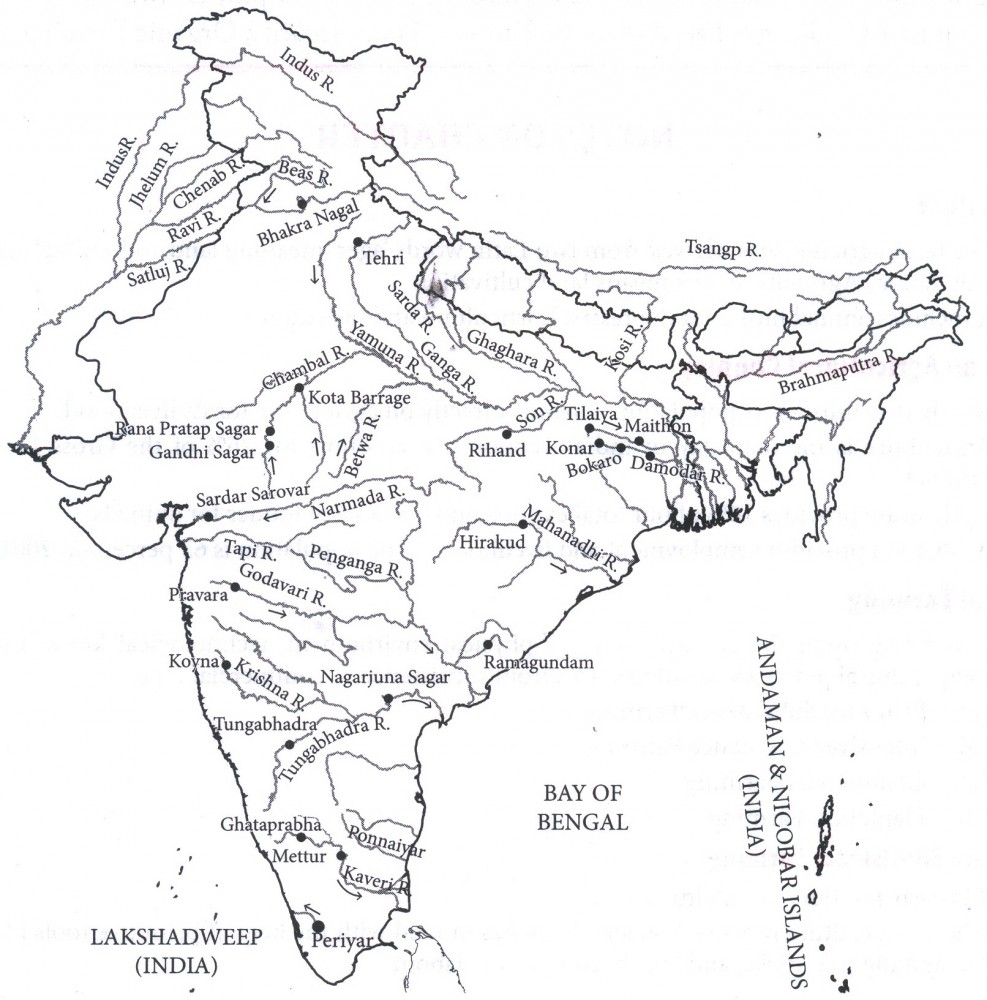
24.
()
Most of the established democracies face the challenge of expansion of democracy, which involves applying democratic principles across all the regions, social groups, etc.
25.
()
Bolivia's water war about one specific policy, while the popular struggle in Nepal was about the foundations of country's politics.

10th Standard CBSE Syllabus & Materials
10th Standard CBSE
CBSE 10th Social Science PS - Federalism - New Model Questions Papers Study Material - QB365 Set A
NEW10th Standard CBSE
CBSE 10th Social Science PS - Power Sharing - New Model Questions Papers Study Material - QB365 Set A
NEW10th Standard CBSE
CBSE 10th Social Science GEO - Manufacturing Industries - New Model Questions Papers Study Material - QB365 Set A
NEW10th Standard CBSE
CBSE 10th Social Science GEO - Minerals and Energy Resources - New Model Questions Papers Study Material - QB365 Set A



CBSE 10th Standard CBSE Subjects
CBSE Standards





