
 100% FREE ACCESS
10th Standard CBSE Syllabus & Materials
10th Standard CBSE
CBSE 10th Social Science ECO - Globalisation and the Indian Economy - New Model Questions Papers Study Material - QB365 Set A
NEW10th Standard CBSE
CBSE 10th Social Science ECO - Money and Credit - New Model Questions Papers Study Material - QB365 Set A
NEW10th Standard CBSE
CBSE 10th Social Science ECO - Sectors of the Indian Economy - New Model Questions Papers Study Material - QB365 Set A
NEW10th Standard CBSE
CBSE 10th Social Science ECO - Development - New Model Questions Papers Study Material - QB365 Set A
NEW10th Standard CBSE
CBSE 10th Social Science PS - Outcomes of Democracy - New Model Questions Papers Study Material - QB365 Set A
NEW10th Standard CBSE
CBSE 10th Social Science PS - Gender, Religion and Caste - New Model Questions Papers Study Material - QB365 Set A

Published on: 15/02/2019
Quadratic Equations Important Questions
Download CBSE Class 10th Standard CBSE Maths question papers, sample papers, important questions, and previous year solved papers in PDF format. Get free study materials, NCERT solutions, and exam preparation resources for Class 10th Standard CBSE Maths
Questions + Answers key
Take MCQ Maths Test
1.
If x = - \(\frac{1}{2}\), is a solution of the quadratic equation 3x2 + 2kx- 3 = 0, find the value of k
2.
Find the roots of the following quadratic equations by applying the quadratic formula:
abx2+(b2 -ac)x-bc=0, a, b\(\ne\)0
3.
If the discriminant of \(3x^{ 2 }+2x+a=0\) is double the discriminant of \(x^{ 2 }-4x+2=0\) then find the value of a.
4.
If 1 is a root of the equations \(ay^{2}+ ay + 3 = 0\) and \(y^{2}+y + b = 0\) , then find ab.
5.
Solve for x ;
\({1\over x-2 } + {2\over x - 1} = {6\over x} ; x\ne 0, 1, 2\)
6.
Two consecutive positive even integers, the sum of whose squares is 340, we need to find integers. Represent the above situation in the form of quadratic equation.
7.
State whether the following quadratic equations have two different real roots. Justify your answer. (x-1)(x+2)+2=0
8.
Determine whether the given quadratic equations have real roots, if so, find the roots: \(2x^2+5\sqrt3x+6=0\)
9.
A man bought a certain number of toys for Rs.180, he kept one for his own use and sold the rest for one rupee each more than he gave for them, besides getting his own toy for nothing he made a profit of Rs.10. Find the number of toys.
10.
Solve for x: \({2x\over x-3}+{1\over 2x+3}+{3x+9\over (x-3)(2x+3)}=0\)
11.
Solve the following quadratic equation by fractorisation: 12abx2-(9a2-8b2)x-6ab=0
12.
Find the roots of the following quadratic equations by fractorisation: 100x2-20x+1=0
13.
Check whether the equation is quadratic or not : x2+5x-3=0
14.
Check whether the following equations are quadratic: (x2+1)(x+2)=(x+3)2
15.
Check whether the following are quadratic equations: (x – 3)(2x +1) = x(x + 5)
16.
A passenger, while boarding the plane, slipped from the stairs and got hurt. The pilot took the passenger in the emergency clinic at the airport for treatment. Due to this, plane got delayed by hall an hour. To reach the destination 1500 km away in time, so that the passengers could catch the connecting flight, the speed of the plane was increased by 250 km/ hour than the usual speed. What is the usual speed of the Plane? What value is depicted in this question?
17.
A journey of 192 krn from a town A to town B takes 2 hours more by an ordinary passenger train than a super fast train. If the speed of the faster train is 16 krn!h more, find the speed of the faster and the passenger train.
18.
Solve for x
\(\sqrt { 3x^{ 2 } } -2\sqrt { 2 } x-2\sqrt { 3 } =0\)
19.
Solve the following quadratic equation for x :
\(4\sqrt { 3 } x^{ 2 }+5x-2\sqrt { 3 } =0\)
20.
Check whether the following are quadratic equations or not.
(i) (x-1)(x+2)=(x-3)(x+1)
(ii) (x+2)2=4(x+3)
21.
Find the values of k for which the following equation has equal roots.
\((k-12)x^{ 2 }+2(k-12)x+2=0\)
22.
The product of two consecutive integers is 20. Using quadratic equation .find the integers.
23.
Which of the following are quadratic equations?
\((i)x+\frac { 3 }{ x } =x^{ 2 }\)
\((ii)2x^{ 2 }-5x-x^{ 2 }-2x+3\)
\((iii)x^{ 2 }-\frac { 1 }{ x^{ 2 } } =5\)
\((iv)x^{ 2 }-3x-\sqrt { x } +4=0\)
\((v)\sqrt { 2 } x^{ 2 }+7x+5\sqrt { 2 } =0\)
24.
Solve the equation: \({4x\over x-2}-{3x\over x-1}=7{1\over2}\)
25.
A fast train takes 3 hours less than a slow train for a journey of 600km. If the speed of the slow train is 10km/hr less than that of the fast train, find the speeds of the two trains.
26.
If (- 5) is a root of the quadratic equation 2x2+ 9x + 15 = 0 and the quadratic equation p(x2+ x + k = 0 has equal roots, then find the values of p and k.
27.
If x = - 4 is a root of the equation x2+ 2x + 4p = 0, find the values of k for which the equation x2+ px(l + 3k) + 7(3 + 2k) = 0 has equal roots
28.
A student scored a total of 32 marks in class tests in mathematics and science. Had he scored 2 marks less in science and 4 more in mathematics, the product of his marks would have been 253. Find his marks in two subjects.
29.
Sum of the areas of two squares is 400cm2 . If the difference of their perimeter is 16 cm, then find the sides of two squares.
30.
The speed of a boat in still water is 15 km/h. It can go 30 km upstream and return downstream to the original point in 4h and 30 min. Find the speed of the stream.
31.
A train travelling at a uniform speed at a uniform speed for 360 km, would have taken 48 min less to travel the same distance , if its speed was 5 km/h more .Find the original speed of the train.
32.
Find the roots of the following quadratic equations by factorisation.
\(2x^{ 2 }-x\frac { 1 }{ 8 } =0\)
33.
Check whether the following quadratic equations.
(x-3)(2x+1)=x(x+5)
34.
Find three consecutive positive integers whose product is equal to sixteen times their sum.
35.
The quadratic equation \(x^{2} - 10 x + 2 = 0\) has ........... roots.
36.
A quadratic equation has atleast two roots .
37.
A quadratic equation in the variable x is of the form \(ax^{2} + bx + c =0, a \neq 0\), where a, b and c are real numbers.
38.
Factors of \(x^{2} - 2x + 1\) .
1.
Putting x = -\(\frac{1}{2}\). in 3x2 + 2kx - 3 = 0
\(3\left( -\frac { 1 }{ 2 } \right) ^{ 2 }+2k\left( -\frac { 1 }{ 2 } \right) -3=0\)
⇒ \(\frac{3}{4}\) - k- 3 = 0
⇒ k = \(\frac{3}{4}\)- 3
⇒ k = \(\frac{3-12}{4}\)
⇒ k = \(\frac{-9}{4}\)
2.
Find D then use formula \(\frac { -b\pm \sqrt { D } }{ 20 } \) .\(\frac { c }{ b } ,\frac { -b }{ a } \)
3.
-1
4.
Since 1 is a root of equation ay2+ay+3=0,
\(\therefore\) a(1)2+a(1)+3=0
\(\Rightarrow\) 2a+3=0 \(\Rightarrow\) a=\(\frac {-3}{2}\)
Also, 1 is a root y2+y+b=0
\(\therefore\) (1)2+(1)+b=0
\(\Rightarrow\) 2+b=0 \(\Rightarrow\) b=-2
Now, ab=\(\left( \frac { -3 }{ 2 } \right) \)(-2)=3
Hence, the value of ab is 3.
5.
\(x = {4 \over 3}\) or 3
6.
\(x^{2}+2x - 168 = 0\)
7.
Yes, (x-1) (x+2) +2=0
\(\Rightarrow x^{ 2 }+x-2+2=0\)
\(\Rightarrow x^{ 2 }+x=0\)
\(\therefore \) b2-4ac=1>0
Distinct real roots
8.
(i) 2x2+ \(5\sqrt { 3\quad } +6\quad =0\)
Here a =2, b = \(5\sqrt { 3\quad } \) ,c=6
D=b2-4ac
\(\Rightarrow D=(5\sqrt { 3 } )^{ 2 }-4\times 2\times 6\)
=75-48=27 \(\Rightarrow D>0\)
\(\therefore \) Equation has real roots given by
\(x=\frac { -b+\sqrt { D } }{ 2a } ,\frac { -b-\sqrt { D } }{ 2a } \)
\(\Rightarrow x=\frac { -5\sqrt { 3 } +\sqrt { 27 } }{ 2\times 2 } ,\frac { -5\sqrt { 3 } -\sqrt { 27 } }{ 2\times 2 } \)
\(=\frac { -\sqrt { 3 } }{ 2 } ,-2\sqrt { 3 } \)
9.
Let number of toys be x
\(\therefore \) Cost of one toy = \(\frac { 180 }{ x } \)
Number of toys sold = x-1
Selling price per toy = Rs \(\left( \frac { 180 }{ x } +1 \right) \)
Total SP =CP+profit
ATQ (x-1) \(\left( \frac { 180 }{ x } +1 \right) \)=180+10
\(\Rightarrow (x-1)\left( \frac { 180 }{ x } +1 \right) =190\)
\(\Rightarrow x^{ 2 }+179x-180=190x\)
\(\Rightarrow x^{ 2 }-11x-180=0\)
\(\Rightarrow (x-20)(x+9)=0\)
\(\Rightarrow x=20,-9\)
\(\Rightarrow x=20\) [Rejected x=-9]
10.
\(\frac { 2x }{ x-3 } +\frac { 1 }{ 2x+3 } +\frac { 3x+9 }{ (x-3)(2x+3) } =0\)
\(\Rightarrow \quad \frac { 2x(2x+3)+x-3+3x+9 }{ (x-3)(2x+3) } =0\)
\(\Rightarrow\) 4x2+6x+x-3+3x+9=0
\(\Rightarrow\) 4x2+10x+6=0
\(\Rightarrow\) 2x2+5x+3x+3=0
\(\Rightarrow\) 2x(x+1)-3(x+1)=0
\(\Rightarrow\) (x+1)(2x+3)=0
When x=a, given equation is not defned, \(\therefore\) x=-1
11.
12abx2-(9a2-8b2)x-6ab=0 \(\Rightarrow\) 12abx2-9a2x+8b2x-6ab=0
\(\Rightarrow\) 3ax(4bx-3a)+2b(4bx-3a)=0 \(\Rightarrow\) (4bx-3a)(3ax+2b)=0
\(\Rightarrow\) 4bx-3a=0 or 3ax+2b=0 \(\Rightarrow\) x=\(\frac { 3a }{ 4b } \) or x=\(\frac { -2b }{ 3a } \)
12.
100x2-20x+1=0
100x2-10x-10x+1=0
10x(10x-1)-1(10x-1)=0
(10x-1)(10x-1)=0
10x-1=0 or 10x-1=0
\(x={1\over 10}\) or \(x={1\over 10}\)
Hence the roots are \({1\over 10},{1\over 10}\)
13.
x2+5x-3=0
Degree of the equation is 2,
It is a quadratic equation.
14.
The given equation is, (x2+1)(x+2)=(x+3)2
x3+2x2+x+2=x2+6x+9
x3+x2-5x-7=0
It is of degree 3 and is not of the form ax2+bx+c=0
Hence, given equation is not a quadratic equation.
15.
Given equation (x-3)(2x+1)=x(x+5)
2x2 + x - 6x - 3 = x2 + 5x
\(\Rightarrow\) 2x2 + x - 6x - 3 - x2 - 5x = 0
\(\Rightarrow\) x2 - 10x - 3 = 0 has its highest power 2
Hence it is a quadratic equation.
16.
Let the usual speed of plane be x km/h,
\(\frac { 1500 }{ x } -\frac { 1500 }{ x+250 } =\frac { 1 }{ 2 } \)
\(\Rightarrow x^{ 2 }+250x-750000=0\)
\((x+1000)(x-750)=0\)
x = 750
Speed of plane = 750 km/h.
Values depicted here are:
(i) Helping the needy.
(ii) Quick help to the injured.
17.
By question \(T_{ passenger }=\frac { 192 }{ x } \)
\(\Rightarrow \frac { 192 }{ x } -\frac { 192 }{ x+16 } =2\)
\(\Rightarrow 192(x+16)-192x=2(x^{ 2 }+16x)\)
\(\Rightarrow 192x+192\times 16-192x=2(x^{ 2 }+16x)\)
\(\Rightarrow x^{ 2 }+48x-32x-1536=0\)
\(\Rightarrow x(x+48)-32(x+48)=0\)
\(\Rightarrow x(x-32(x+48)=0\)
\(\Rightarrow (x-32)(x+48)=0\)
x=32 or -48
Since speed can't be negative, therefore - 48 is not possible.
:. Speed of passenger train = 32 km/!h % and Speed of fast train = 48 km/h.
18.
\(\sqrt { 3x^{ 2 } } -2\sqrt { 2 } x-2\sqrt { 3 } =0\)
\(\Rightarrow \sqrt { 3 } x^{ 2 }-3\sqrt { 2 } x+\sqrt { 2x } -2\sqrt { 3 } =0\)
\(\Rightarrow \sqrt { 3x } (x-\sqrt { 6 } )+\sqrt { 2 } (x-\sqrt { 6 } )=0\)
\(\Rightarrow (x-\sqrt { 6 } )(\sqrt { 3 } x+\sqrt { 2 } )=0\)
\(x=\sqrt { 6 } ,x=-\sqrt { \frac { 2 }{ 3 } } \)
Alternative method
\(\sqrt { 3x^{ 2 } } -2\sqrt { 2 } x-2\sqrt { 3 } =0\)
we know that \(2\sqrt { 2 } \) can be written as \(3\sqrt { 2 } -\sqrt { 2 } \)
\(\Rightarrow \sqrt { 3 } x^{ 2 }-\sqrt { 3\sqrt { 3 } } \sqrt { 2x } -\sqrt { 2 } \sqrt { 2 } \sqrt { 3 } =0\)
\(\Rightarrow \sqrt { 3 } x[x-\sqrt { 3 } \sqrt { 2 } ]+\sqrt { 2 } [x-\sqrt { 2 } \sqrt { 3 } =0\)
\(\Rightarrow \sqrt { 3 } x[x-\sqrt { 6 } ]+\sqrt { 2 } [x-\sqrt { 6 } ]=0\)
\(\Rightarrow x=\sqrt { 6 } orx=\frac { \sqrt { 2 } }{ \sqrt { 3 } } =-\sqrt { \frac { 2 }{ 3 } } \)
19.
\(4\sqrt { 3 } x^{ 2 }+5x-2\sqrt { 3 } =0\)
\(\Rightarrow 4\sqrt { 3 } x^{ 2 }+8x-3x-2\sqrt { 3 } =0\)
\(4x(\sqrt { 3 } x+2)-\sqrt { 3 } (\sqrt { 3 } (\sqrt { 3x+2)=0 } \)
\(\Rightarrow (\sqrt { 3 } x+2)(4x-\sqrt { 3 } )=0\)
\(\Rightarrow x=-\frac { 2 }{ \sqrt { 3 } } \frac { \sqrt { 3 } }{ 4 } \)
20.
(i) Given, (x-1)(x+2)=(x-3)(x+1) ....(i)
Here, in LHS (x-1) and (x+2) are in product and in RHS (x-3) and (x+1) are also in product. So, first, we simplify their product.
LHS=(x-1)(x+2)=x2+2x-x-2=x2+x-2
RHS=(x-3)(x+1)=x2+x-3x-3=x2-2x-3
On substituting these values in Eq(i), we get
x2+x-2=x2-2x-3
x2-x2+x+2x-2+3=0
3x+1=0
It is not of the form ax2+bx+c=0, \(a\neq 0\). Since, here a=0 and it is an equation of degree 1.
Hence, the given equation does not represent a quadratic equation.
(ii) Given, (x+2)2=4(x+3) ...(ii)
Here, the term (x+2) has power 2. So, first expand it.
LHS=(x+2)2=x2+4+4x=4x+12
x2+4x-4x+4-12=0
x2-8=0 or x2+0x-8=0
It is of the form ax2+bx+c=0, \(a\neq 0\)
Hence, given equation represents a quadratic equation.
21.
Given quadratic equation is
\((k-12)x^{ 2 }+2(k-12)x+2=0\)
On comparing with \(ax^{ 2 }+bx+x=0,\) we get
a=k-12,b=2(k-12) and c=2
Now, \(D=b^{ 2 }-4ac\)
=\([2(k-12)]^{ 2 }-4(k-12)(2)\)
\(=4(k-12)^{ 2 }-8(k-12)\)
=\((k-12)[4(k-12)-8]\)
= \((k-12)(4k-48-8)\)
=(k-12)(4k-56)
22.
-5,-4 or 4,5
23.
(i) No
(ii) Yes
(iii) No
(iv) No
(v) Yes
24.
\(\frac { 4x }{ x-2 } -\frac { 3x }{ x-1 } =7\frac { 1 }{ 2 } \)
\(\Rightarrow \frac { 4x(x-1)-3x(x-2) }{ (x-2)(x-1) } =\frac { 15 }{ 2 } \)
\(\Rightarrow \frac { 4x^{ 2 }-4x-3x^{ 2 }+6x }{ x^{ 2 }-3x+2 } =\frac { 15 }{ 2 } \)
\(\Rightarrow 2(x^{ 2 }+2x)=15(x^{ 2 }-3x+2)\)
\(\Rightarrow 2x^{ 2 }+4x=15x^{ 2 }-45x+30\)
\(\Rightarrow 13x^{ 2 }+49x+30=0\)
\(\Rightarrow 13x-39x-10x+30=0\)
\(\Rightarrow (x-3)(13x-10)=0\)
\(\Rightarrow x=3\quad x=\frac { 10 }{ 13 } \)
25.
Let speed of fast train be x km/h \(\Rightarrow \) speed of slow train be(x-10)km/h
ATQ \(\frac { 600 }{ x-10 } -\frac { 600 }{ x } =3\) \(\Rightarrow \) \(\frac { 600x-600x+6000 }{ x(x-10) } =3\)
\(\Rightarrow \quad 6000=3x(x-10) \Rightarrow \ 2000={ x }^{ 2 }-10x\)
\(\Rightarrow x^{ 2 }-10x-2000=0\Rightarrow { x }^{ 2 }-50x+40x-2000=0\)
\(\Rightarrow (x-50)(x+40)=0\Rightarrow x=50,\quad -40\) (rejected)
Speed of fast train = 50 Km/h and speed of slow train = 50 - 10 =40 Km/h
26.
Since (-5) is a root of siven quadratic equation 2x2 + px - 15= 0and the qudratic equation P(x2 + x) + k = 0 has equal roots, then find the values of p and k
2(-5)2+p(-5)-15=0
50+5p-15=0
5p=35p=7
Now p(x2+x)+k =0 has equal roots
Px2+px+k=0
So (b)2--4ac=0
(p)2-4p\(p\times k=0\)
(7)2-4x7xk=0
28k=49
\(k=\frac { 49 }{ 28 } =\frac { 7 }{ 4 } \)
p=7 k=\(\frac { 7 }{ 4 } \)
27.
If x = - 4 is a root of the equation x2+ 2x + 4p = 0
p=-2
Equation x2 - 2 (1+ 3k) x + 7 (3+ 2k) = 0 has equal roots.
4(1 + 3k)2 - 28(3 + 2k) = 0
\(\Rightarrow 9k^{ 2 }-8k-20=0\)
\(\Rightarrow (9k+10)(k-2)=0\)
\(\Rightarrow k=\frac { -10 }{ 9 } ,2\)
28.
Let marks in Mathematics = x
Therefore, marks in Science ::; 32 - x
\(\Rightarrow (32-x-2)(x+4)=253\)
\(\Rightarrow (30-x)(x+4)=253\)
\(\Rightarrow 26x-x^{ 2 }+120=253\)
\(\Rightarrow x^{ 2 }-26x+133=0\)
\(\Rightarrow x^{ 2 }-19x-7x+133=0\)
\(x(x-19)-7(x-19)=0\)
x=7 or x=19
If x = 7 \hen marks in Mathematics =7
marks in Science = 25
and if x = 19, then
marks in Mathematics = 19
marks in Science = 13.
29.
12,16
30.
Let speed of the stream = x km/h
Given, speed of boat in still water = 15 km/h
Speed of boat upstream = (15 - x)km/h
and speed of boat downstream = (15 + x) km/h
According to the question,
\(\frac { 30(15+x)+30(15-x) }{ (15-x)(15+x) } =\frac { 9 }{ 2 } \)
\( \frac { 450+30x+450-30x }{ { \left( 15 \right) }^{ 2 }-{ x }^{ 2 } } =\frac { 9 }{ 2 } \)
\(\frac { 900 }{ 225-{ x }^{ 2 } } =\frac { 9 }{ 2 }\)
\(\frac { 900\times 2 }{ 9 } =225-{ x }^{ 2 }\)
\(200=225-{ x }^{ 2 }\)
\({ x }^{ 2 }-225+200=0\)
\({ x }^{ 2 }-25=0\)
\({ x }^{ 2 }=25\)
\(x=\pm 5\)
But speed cannot be negative.
x = 5
Hence speed of stream is 5km/h.
31.
45 km/h.
32.
Given equation is \(2x^{ 2 }-x\frac { 1 }{ 8 } =0\)
On multiplying both sides by 8, we get \(16x^{ 2 }-8x+1=0\)
\(\Rightarrow 16x^{ 2 }-4x-4x+1=0\)
\(\left[ \because (-4)X(-4)=16\quad and\quad -4-4=-8 \right] \)
\(\Rightarrow 4x(4x-1)-1(4x-1)=0\)
\(\Rightarrow 4x-1=0\Rightarrow x=\frac { 1 }{ 4 } \)
and 4x-1=0 \(\Rightarrow x=\frac { 1 }{ 4 } \)
Hence the roots of the equation \(2x^{ 2 }-x+\frac { 1 }{ 8 } =0\)are \(\frac { 1 }{ 4 } \quad and\quad \frac { 1 }{ 4 } \)
33.
Given equation is, (x-3)(2x+1)=x(x+5)
\(\Rightarrow 2x^{ 2 }-6x+x-3=x^{ 2 }+5x\)
\(\Rightarrow 2x^{ 2 }-6x+x-3=x^{ 2 }+5x=0\)
\(\Rightarrow x^{ 2 }-10x-3=0\)
Which is of the form \(ax^{ 2 }+bx+c=0\) where and b,c are any real numbers.Hence,it is a quadratic equation.
34.
Let Integers be x,x+1 and x+2
ATQ x(x+1) (x+2) =16(x+x+1+x+2)
\(\Rightarrow (x^{ 2 }+x)(x+2)=16(3x+3)\)
\(\Rightarrow x^{ 3 }+2x^{ 2 }+x^{ 2 }+2x=48+48 \)
\(\Rightarrow x^{ 3 }+3x^{ 2 }-46x-48=0\)
LHS when x=-1, we have
(x+1) is a factor
For others factor
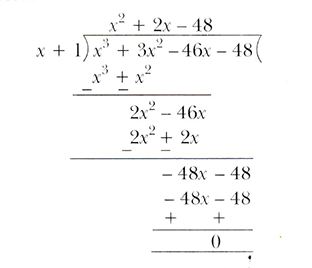
\(\therefore x^{ 3 }+3x^{ 2 }-46x-48=0\)
\(\Rightarrow (x+1)(x^{ 2 }+2x-48=0)\)
\(\Rightarrow (x+1)(x+8)(x-6)=0\)
\(\Rightarrow x=-1,x=-8,x=6\)
Rejecting -ve values x = 6 \(\therefore \) positive integers are 6,
35.
()
Real and distinct
[ \(\because\) discriminant = \(b^{2} - 4ac\)
= \((-10)^{2} - 4 \times 1 \times 2\)
= 100 - 8
= 92 > 0 ]
36.
(b)
37.
(a)
38.
()
(x - 1) (x - 1)

10th Standard CBSE Syllabus & Materials
10th Standard CBSE
CBSE 10th Social Science PS - Federalism - New Model Questions Papers Study Material - QB365 Set A
NEW10th Standard CBSE
CBSE 10th Social Science PS - Power Sharing - New Model Questions Papers Study Material - QB365 Set A
NEW10th Standard CBSE
CBSE 10th Social Science GEO - Manufacturing Industries - New Model Questions Papers Study Material - QB365 Set A
NEW10th Standard CBSE
CBSE 10th Social Science GEO - Minerals and Energy Resources - New Model Questions Papers Study Material - QB365 Set A



CBSE 10th Standard CBSE Subjects
CBSE Standards





