
 100% FREE ACCESS
10th Standard CBSE Syllabus & Materials
10th Standard CBSE
CBSE 10th Social Science ECO - Globalisation and the Indian Economy - New Model Questions Papers Study Material - QB365 Set A
NEW10th Standard CBSE
CBSE 10th Social Science ECO - Money and Credit - New Model Questions Papers Study Material - QB365 Set A
NEW10th Standard CBSE
CBSE 10th Social Science ECO - Sectors of the Indian Economy - New Model Questions Papers Study Material - QB365 Set A
NEW10th Standard CBSE
CBSE 10th Social Science ECO - Development - New Model Questions Papers Study Material - QB365 Set A
NEW10th Standard CBSE
CBSE 10th Social Science PS - Outcomes of Democracy - New Model Questions Papers Study Material - QB365 Set A
NEW10th Standard CBSE
CBSE 10th Social Science PS - Gender, Religion and Caste - New Model Questions Papers Study Material - QB365 Set A

Published on: 14/02/2020
10th Standard CBSE Science Board Exam Model Question paper III 2019-2020
Download CBSE Class 10th Standard CBSE Science question papers, sample papers, important questions, and previous year solved papers in PDF format. Get free study materials, NCERT solutions, and exam preparation resources for Class 10th Standard CBSE Science
Questions + Answers key
Take MCQ Science Test
1.
Which one of the following elements exhibit maximum number of valence electrons?
Na
Al
Si
P
2.
\(CH_3- {CH_2 }-OH \xrightarrow [ ]{ Alkaline \ KMnO_4+Heat } CH_3- COOH\)
In the above given reaction, alkaline KMnO 4 acts as
reducing agent
oxidising agent
catalyst
dehydrating agent
3.
Carbohydrate in humans is stored in the form of
Glycogen
Starch
Glucose
Maltose
4.
A rectangular coil of copper wire is rotated in a magnetic field. The direction of the induced current changes once in each
Two revolutions
One revolution
Half revolution
One-fourth revolution
5.
A solar water heater cannot be used to get hot water on
A sunny day
A cloudy day
A hot day
A windy day
6.
If the current through a resistor is increased by 100% (assume that temperature remains unchanged), the increase in power dissipated will be
100%
200%
300%
400%
7.
Which of the following metals are obtained by electrolysis of their chlorides in molten state?
(i) Na (ii) Ca (iii) Fe (iv) Cu
(i) and (iv)
(iii) and (iv)
(i) and (iii)
(i) and (ii)
8.
Select the mis-matched pair.
Adrenaline : Pituitary gland
Testosterone : Testes
Estrogen : Ovary
Thyroxin : Thyroid gland
9.
In which of the following chemical equations, the abbreviations represent the correct states of the reactants and products involved temperature?
2H2(l) + O2(l) \(\rightarrow\) 2H2O(g)
2H2(g) + O2(l) \(\rightarrow\) 2H2O(l)
2H2(g) + O2(g) \(\rightarrow\) 2H2O(l)
2H2(g) + O2(g) \(\rightarrow\) 2H2O(g)
10.
The pH of the gastric juices released during digestion is
less than 7
more than 7
equal to 7
equal to 0
11.
(i) Solution of a substance 'X' is used for testing carbon dioxide. Write the equation of the reaction of 'X' with carbon dioxide.
(ii) How is 'X' obtained? Write chemical equation.
12.
(a) In the following reactions, name the reactants, which undergoes oxidation and reduction:
(i) CuO(s) + H2(g) \(\longrightarrow \) Cu(s) + H2O(g)
(ii)CuO(s) + Zn(s) \(\longrightarrow \) ZnO(s) + Cu(s)
(b) State one industrial application of reduction.
13.
List three properties of sodium in which it differs from the general physical properties of most metals.
14.
Distinguish between permanent magnet and electromagnet.
15.
Distinguish between an electric motor and generator?
16.
What is 'translocation'? Why is it essential for plants?Where in plants are the following synthesized:
(i)Sugar (ii)Hormones
17.
How are oxygen and carbon dioxide transported in human beings? How are lungs designed to maximize the area for exchange of gases?
18.
Give reasons for the following :
(i) Metals are regarded as electro-positive elements
(ii) When a piece of copper metal is added to a solution of zinc sulphate, no change takes place, but the blue colour of copper sulphate fades away when a piece of zinc is placed in its solution.
(iii) Articles made of alimunium do not corrode even though aluminium is an active metal.
19.
(a) State one limitation of solar energy available from solar cells.
(b) What is the minimum wind velocity required to obtain useful energy with a windmill?
(c) Define the term 'nuclear fission'.
20.
(a) Why is the Solar Cooker box covered with a plane glass plate?
(b) Why is energy of water flowering in a river considered to be an indirect form of solar energy?
(c) How is the fission of nucleus brought about?
21.
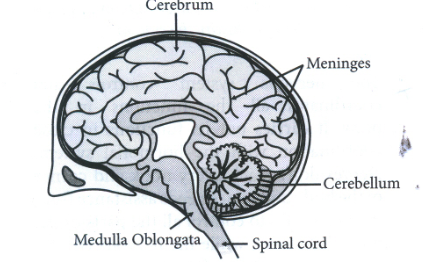
Draw a diagram of human brain and label on it the following of its parts:
(i) Cerebrum
(ii) Meninges
(iii) Medulla Oblongata
(iv) Cerebellum
22.
How does chemical coordination take place in animals?
23.
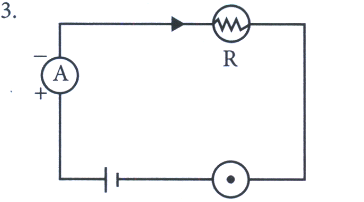
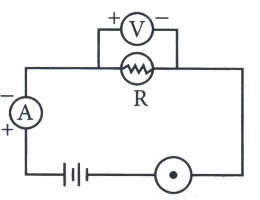
Differentiate between ammeter and voltmeter.
24.
(a) Distinguish between the terms "overloading and short circuiting" as used in domestic circuits.
(b) Why are the coils of electric toasters made of an alloy rather than a pure metal?
25.
What is the function of receptors in our body? Think of situations where receptors do not work properly. What problems are likely to arise?
26.
(a) State the relation between hydrogen ion concentration of an aqueous solution and its pH.
(b) The pH of an aqueous solution decreases from 3 to 2. Calculate how many times the hydrogen ion concentration of the solution will change.
27.
Silver articles develop black coating and copper articles develop green coating. Which chemical phenomenon is responsible for this coating?
28.
Write a balanced chemical equation:
\({ FeSO }_{ 4 }\overset { Heat }{ \rightarrow } { Fe }_{ 2 }{ O }_{ 3 }(s)+S{ O }_{ 2 }(g)+{ SO }_{ 3 }(g)\)
29.
Name a non-metal which is lustrous and a metal which is non-lustrous.
30.
Name the metal which has very low melting point and can melt with heat of your palm?
31.
If an element A is placed in group 14, what will be the formula and the nature of bonding of its chloride?
32.
Write the name and formula of the first member of the carbon compounds having functional group -COOH.
33.
State two characteristic features of carbon which when put together give rise to large number of carbon compounds.
34.
What is the difference in the molecular formula of any two consecutive members of a homologous series of organic compounds?
35.
What is a compass needle?
36.
Which are the most common chemical reaction in a body?
37.
Name the rule used to determine the direction of induced current.
38.
What are life processes?
39.
What does an electric current carrying wire behaves like?
40.
Define metals.
41.
How do autotrophs obtain CO2 and N2 to make their food?
42.
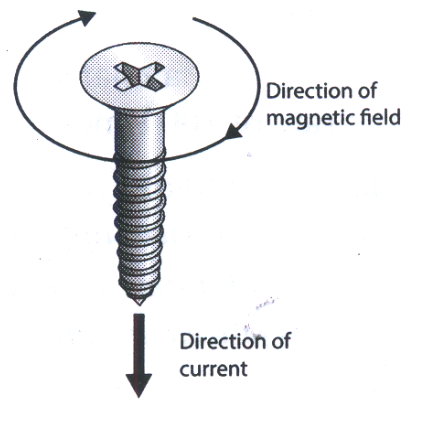
Under what conditions permanent electromagnet is obtained if a current carrying solenoid is used? Support your answer with the help of a labelled circuit diagram.
43.
What will happen if platelets were absent in the blood?
44.
A non-metal X exists in two different forms Y and Z, Y is the hardest natural substance, whereas Z is a good conductor of electricity. Identify X, Y and Z.
45.
What is synapse?
46.
Name the part of brain in which hypothalamus is located.
47.
What are cranial nerves?
48.
What is the advantage of the third wire of earth connection in domestic electric appliances?
49.
What is a voltmeter?
50.
What is meant by the statement, "Potential difference between points A and B in an electric field is 1 volt"?
51.
State modern periodic law of classification of elements.
52.
Chlorine, bromine and iodine form a Dobereiner's triad. The atomic masses of chlorine and iodine are 35.5 and 126.9 respectively. Predict the atomic mass of bromine.
53.
Lithium, sodium and potassium form a Dobereiner's triad. The atomic masses of lithium and potassium are 7 and 39 respectively. Predict the atomic mass of sodium.
54.
Which is the ultimate source of energy?
55.
What are the applications of solar cells?
56.
Which one of the following is a renewable resource?
Natural gas, Petrroleum, Ground water, Coal
57.
(i) Define pH scale. Draw a figure showing a variation of pH with the change in concentration of H+(aq) and OH- (aq) ions.
(ii) Mention the range of pH of the acidic solution, basic solution, and neutral solution respectively.
58.
Draw the possible isomers of the compound it molecular formula C3H6O and also give their electron dot structures.
59.
(a) What is corrosion of metals? Name one metal which does not corrode and one which corrodes on being kept in atmosphere.
(b) How will you show that the rusting of iron needs oxygen and moisture at the same time?
60.
How do carbohydrates, proteins and fats get digested in human beings?
61.
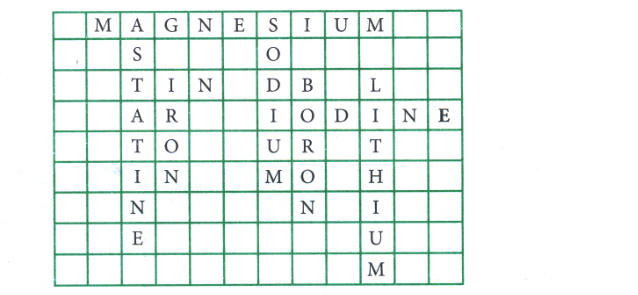
Complete the following cross word puzzle shown in the below Figure
Across:
(1) An element with atomic number 12.
(3) Metal used in making cans and member of Group 14.
(4) A lustrous non-metal which has 7 electrons in its outermost shell.
Down:
(2) Highly reactive and soft metal which imparts yellow colour when subjected to flame and is kept in kerosene.
(5) The first element of second Period.
(6) An element which is used in making fluorescent bulbs and is second member of Group 18 in the Modern Periodic Table.
(7) A radioactive element which is the last member of halogen family.
(8) Metal which is an important constituent of steel and forms' rust when exposed to moist air.
(9) The first metalloid in Modern Periodic Table whose fibres are used in making bullet-proof vests.
 image.png)
1.
(d)
P
2.
(b)
oxidising agent
3.
(a)
Glycogen
4.
(c)
Half revolution
5.
(b)
A cloudy day
6.
(c)
300%
7.
(d)
(i) and (ii)
8.
(a)
Adrenaline : Pituitary gland
9.
(c)
2H2(g) + O2(g) \(\rightarrow\) 2H2O(l)
10.
(a)
less than 7
11.
(i) Substance X-Calcium Hydroxide.
Ca(OH)2(aq) + CO2(g)\(\longrightarrow \) CaCO3(s) + H2Cl
(White ppt.)
(ii) Calcium hydroxide is obtained by reaction of calcium oxide and water.
CaO(s) + H2O(l) \(\longrightarrow \)Ca(OH)2(aq) + Heat
12.
(a) (i) The reactants are copper oxide and hydrogen. Copper oxide undergoes reaction and hydrogen (H2) undergoe oxidation.
(ii) The reactants are copper oxide and zinc. Zinc undergoes oxidation and copper oxide undergoes reduction.
(b) Calcium carbonate is reduced in industries to get CaO and CO2.
13.
Three properties of sodium are:
(i) Sodium is so soft that it can be cut with a knife.
(ii) It has low density.
(iii) It has low melting point.
14.
| Electromagnet | Permanent Magnet |
| 1. It is temporary magnet and can be demagnetized | 1. It is a permanent magnet and cannot be demagnetized |
| 2. Magnetic strength can be changed. | 2. its strength is fixed. |
| 3. Its polarity can also be changed. | 3. Its polarity is fixed. |
| 4. It is prepared from soft iron. | 4. It is prepared from hard steel. |
15.
The major differences between an electric motor and generator are stated below:
Electric Motor:
1. It converts electrical energy into mechanical energy.
2. It needs electrical energy for its works.
3. They are used as water pumps, marble grinders etc.
Generator:
1. It converts mechanical energy into electrical energy
2. It needs mechanical energy for its working.
3. They are used as water pumps, marble grinders etc.
4. diesel generator, hydro-electric generator are the examples of it.
16.
The transport of soluble products of photosynthesis is known as translocation. Translocation in plants occurs by means of the vascular tissue known as phloem. Translocation is necessary because without it, the food prepared by the leaves cannot reach other parts of the plant.
(i)In plants, the synthesis of sugars takes place in the leaves by the process of photosynthesis.
(ii)Hormones are synthesised away from their targrt site.
17.
(i) Oxygen enters the human body through the nasal passage and reaches the lungs.
(ii) Numerous alveoli are present in the lungs. These alveoli are surrounded by many blood capillaries. From the alveoli, 02 is taken up by the red blood cells present in the blood capillaries.
(iii) Similarly, the CO2 from the various tissues is transported to the alveoli.
(iv) This CO2 is then released through the nasal passage during exhalation. Alveoli are the sites of exchange of gases. Each lung contains 300- 350 million alveoli.
These alveoli increase the surface area for gaseous exchange, making the process of respiration more efficient.
18.
(i) Metals are regarded as electropositive elements because they lose electrons to form metal cations.
(ii) When a piece of copper metal is added to .a solution of zinc sulphate, no change takes place since copper is less reactive than zinc and hence will not displace it from zinc sulphate solution. When some zinc is put into blue copper sulphate solution, the blue colour of the copper sulphate solution fades gradually due to the formation of colourless zinc sulphate and red-brown copper metal is deposited on the zinc strip. The reaction takes place as zinc is more reactive than copper.
\(\underset { Copersulphate\\ \quad (Blue) }{ { CuSO }_{ 4 }(aq) } +\underset { Zinc }{ Zn } \rightarrow \underset { ZincSulphate\\ (Colourless) }{ { ZnSO }_{ 4 }(aq) } +\underset { Copper\\ (Red-brown) }{ Cu(s) } \)
(iii) Articles made of aluminium do not corrode even though aluminium is an active metal as a protective layer of aluminium oxide is formed over the aluminium metal.
19.
(a) The solar cells are costly and hence the energy available from them expensive.
(b) 15 km/h is the minimum wind velocity required to obtain useful energy with a windmill.
(c) Nuclear fission is the process in which a radioactive atom splits up into smaller nuclei when struck with low energy neutrons.
20.
(a) The solar cooker box is covered with a plane glass plate so as to prevent heat from escaping.
(b) Sun is said to be the ultimate and the original source for most of the energy present on the earth. When sun rays fall on oceans and other water bodies, the water present in the water bodies gets evaporated and rises up in the atmosphere. In the upper part of the atmosphere, this water vapour gets condensed and forms douds, which give rain on the high lands. Therefore, the rain water runs over the Sand surface towards the large water bodies. This running water over the land surfaces is called river. Therefore, the energy of running water actually originates from the solar energy. This is why solar energy of water flowing in a river is considered to be an indirect form of solar energy.
(c) The fission of nucleus is brought about by splitting the nucleus of heavy atoms, such as uranium or plutonium, with low-energy neutron bombardment.
21.
22.
Chemical coordination is performed by hormones, which are chemical messengers secreted by endocrine glands.
These hormones coordinate the activities of living organisms and also their growth.
The timing and the amount of hormones released are regulated by the feedback mechanism.
23.
| Ammeter | Voltmeter |
| 1. Ammeter is an instrument used to measure current in a circuit. | Voltmeter is used to measure potential difference between two points. |
| 2. It is connected in series in a circuit. | It is connected in parallel in a circuit. |
 |
 |
24.
(a) Short circuiting is the term used for defining the situation in which the neutral and live wires of an electric circuit come in direct contact. When too many electrical appliances are connected to a single socket, the appliances drawn much more current or power that the permissible limit from the main supply. This situation is termed as overloading.
(b) Resistivity of an alloy is much higher than its constituent metals Moreover, alloys do not oxidise as easily as the constituent metals at high temperature. Because of these reasons, coils of electric testers are made of an alloy rather than a pure meta.
25.
The function of receptors in our body is very important as they collect informations about changes in the environment around us. Receptors then pass the same information in the form of nerve impulse to the central nervous system, where the information is processed and the ultimate response is given. Now, for example, if the gustatory receptors of our tongue do not work properly, we will not be able to know the taste of different types of foods (whether it is sweet, salty, sour or bitter, etc.)
26.
(a) Following is the relation between hydrogen ion concentration of an aqueous solution and its pH.
(b) If the pH of the solution decreases from 3 to 2, then
\({pH_1\over pH_2}={-log[H^+]\over -log[H^+]_2}\)
\(\therefore {-log[H^+]_1\over -log [H^+]_2}={3\over 2}\)
\(\therefore {[H^+]_1\over [H^+]_2}={10^{-3}\over 10^{-2}}\)
or, \([H^+]_2=10[H^+]_1\)
Hence, hydrogen ion concentration will increase 10 times.
27.
Silver coin with atmospheric sulphur and green coating is of copper carbonate which is formed due to the reaction of copper with moist carbon dioxide from the air.
28.
Balanced Equation
\(2{ FeSO }_{ 4 }\overset { Heat }{ \rightarrow } { Fe }_{ 2 }{ O }_{ 3 }(s)+S{ O }_{ 2 }(g)+{ SO }_{ 3 }(g)\)
29.
Non-metal (lustrous) = Iodine (I)
Metal (non-lustrous) = Sodium (Na)
30.
Gallium.
31.
Since element A is placed in group 14, therefore, its valence is 14 - 10 = 4 . Further, since it is difficult to either lose all the four valence or gain four more electrons, therefore, it prefers to share these four electrons to acquire the stable electronic configuration of the nearest inert gas. Thus the nature of the chloride of element A is covalent.
32.

33.
(i) Catenation
(ii) Tetravalency of carbon
34.
-CH2 - is the difference in the molecular formula of any two consecutive members of a homologous series of organic compounds.
35.
A compass needle is a small bar magnet.
36.
Oxidation-reduction reaction
37.
Direction of induced current is given by Fleming's right hand rule according to this rule, stretch the thumb, fore-finger and the middle finger of the right hand such that they are mutually perpendicular.
If the fore-finger points in the direction of magnetic field the thumb shows the direction of motion and middle finger points in the direction of induced current.
38.
The processes that together perform the maintenance functions of living organisms are called life processes.
39.
It behaves like a magnet.
40.
Elements which lose electrons to form positive ions are called metals.
41.
CO2 is obtained from leaves through stomata pores and N2 is obtained in combined form, e.g. nitrates, through roots in dissolved form.
42.
We know that for making an electromagnet we need to place a soft iron core inside a solenoid. Soft iron is a ferro-magnetic material and hence it augments the magnetic property of solenoid by thousands of times. Thus, for making a permanent electromagnet, we need to place a soft iron core inside a solenoid.
43.
If platelets are not present in the blood, then clotting at the site of injury will not take place. This will result in continuous bleeding and could be fatal for the organism.
44.
X - Carbon; Y - Diamond and Z - Graphite
45.
The functional junction between two neurons is called synapse.
46.
Hind brain
47.
Nerves which originated from the brain are called cranial nerves.
48.
Earth wire is used to provide a low resistance conducting path to any charge that gets leaked into the body of the appliance.
49.
A measuring instrument used to measure potential difference between two points in an electric circuit.
50.
It means that 1 joule of work will be done in order to move 1 coulomb of charge from point A to B.
51.
()
Modern periodic law states "that the properties of elements are a period function of the atomic numbers"
52.
()
Atomic mass of Br = 35.5 + 126.9 / 2
= 162.4 / 2 = 81.2
53.
()
Atomic mass of Na = 7+39 / 2 = 46 / 2 = 23
54.
()
Sun is the ultimate source of energy.
55.
()
Solar cells are used in traffic lights, artificial satellites, solar calculators etc.
56.
()
Among natural gas, petroleum, ground water and coal, only ground water is a renewable resource. It returns in the water cycle.
57.
(i) Scale for measuring [H+] concentration in a solution is called pH scale.
(ii) pH of Neutral solution is 7
pH of Acidic solution is 0 to below 7
pH of Basic solution is 7 to 14
58.
-s.jpg)
-s.jpg)
59.
(a) The eating up of metals by the action of air and moisture on their surface is called corrosion.
(i) Metal which does not corrode on being kept in the atmosphere is gold.
(ii) Metal which corrodes on being kept in the atmosphere is iron.
(b) Take three boiling tubes and label them as A, B, and C. Place clean iron nails, free from rust, in each tube. Add water to tube A in such a manner that some parts of the nails are exposed to air and seal it with the help of a rubber cork. Add boiled water to tube B in such a way that the nails are completely submerged. Then, pour some amount of kerosene oil in the tube and seal it with the help of a rubber cork. Add anhydrous calcium chloride to tube C and then seal it. Leave the tubes undisturbed for two weeks and observe the changes.
60.
The salivary glands secrete saliva. The saliva contains water, salts, mucus and an enzyme ptyalin. The enzyme ptyalin, also glycogen and convert them into maltose. The mucus and water makes the food soft and slippery for the formation of bolus and also protects soft lining of alimentary canal. Thus the digestion of starch i.e., carbohydrate begins in the mouth. Since,the food remains in the mouth only for a short time and so, the digestion of food remains incomplete.
\(Starch(Carbohydrates)+Glycogen\overset { Ptyalin }{ \longrightarrow } Maltose\)
The partially digested food is further digested in the stomach. The food is broken down into smaller pieces and churned to form a semi-solid paste. The wall of the stomach contains three tubular glands. These glands secrete gastric juice. The gastric juice contains hydrochloric acid, mucus, pepsin, gastric lipase and rennin.
Hydrochloric acid:
It softens the food
It makes food acidic for the function of pepsin
It stops the action of salivary amylase
It kills germs and bacteria to disinfect the food
It converts inactive pepsinogen and prorennin into active pepsin and rennin.
\(InactivePepsinogen\overset { HCI }{ \longrightarrow } ActivePepsin\\ InactivePro-rennin\overset { HCI }{ \longrightarrow } Activerenin\)
Pepsin: It hydrolyses proteins into soluble proteoses and peptones only in presence of hydrochloric acid.
\(Protein\overset { Pepsin }{ \longrightarrow } Peptones+Proteoses\)
Rennin: It is active only in infants. The main function of rennin is that it converts soluble milk protein casein into insoluble protein called paracasein. Due to this, milk stays in stomach for longer duration.
\(\underset { (solublemilkprotein) }{ Casein } \overset { Rennin }{ \longrightarrow } \underset { (Insoluble) }{ Paracasein } \)
Mucus: The main function of mucus is to protect the inner lining of stomach from corroding action of hydrochloric acid as well as from pepsin enzyme.
Small Intestine: It is the seat of major digestion and absorption. Small intestine receives the secretion of two glands namely,
(i) Liver, (ii) Pancreas
Liver: It is the largest gland of the body. It is reddish brown in colour. It has soft pear - shaped sac called gall bladder. The gall bladder secretes bile juice. Bile is alkaline containing bile pigment. Thus, bile is stored in the gall bladder. It helps to emulsify or break the fats or lipids present in the food.
The bile performs the following functions:
(i) It breaks the larger globules of fat into small globules to make the enzyme to act and digest them.
(ii) It prevents putrefaction of food.
(iii) The bile creates a medium for the pancreatic juice to act on food by neutralizing the acidity in the food.
Pancreas: Pancreas secretes a digestive fluid called pancreatic juice. This juice contains digestive enzymes such as trypsin, nucleases, pancreatic lipase and pancreatic amylase. The enzyme trypsin digests the proteins, the enzyme pancreatic amylase breaks down the starch and the enzyme lipase breaks down the emulsified
facts. Pancreas produces two important hormones namely,
(i) Insulin, (ii) Glucagon
Insulin is essential for using glucose and storing it into glycogen. Glucagon is essential for conversion of glycogen into glucose. The alkaline medium is favourable
for the action of pancreatic enzymes.
\(Starch\xrightarrow [ ]{ Pancreaticamylase } Maltose\\ Fat\xrightarrow [ ]{ Lipase } Fattyacids+Glycerol\\ Proteins\xrightarrow [ ]{ Trypsin } Peptides\)
Secretion of intestinal juice by liver and pancreatic glands
The intestinal juice contains a number of enzymes which complete the digestion process. Here, the complex carbohydrates are converted into glucose, proteins are converted into amino acids and fats are converted into fatty acids and glycerol. All these end products i.e., amino acids, glucose, fatty acids and glycerol are small
and water soluble molecules. This complete digestion of food takes place by biological catalysts called enzymes. The intestinal juice includes - maltase, invertase, lactase etc.
\(Peptides\xrightarrow [ ]{ Trypsin } Aminoacids\\ Sucrose\xrightarrow [ ]{ Invertase } Glucose+Fructose\\ Maltose\xrightarrow [ ]{ Maltose } Glucose+Glucose\\ Lactose\xrightarrow [ ]{ lactose } Glucose+Galactose\)
61.

10th Standard CBSE Syllabus & Materials
10th Standard CBSE
CBSE 10th Social Science PS - Federalism - New Model Questions Papers Study Material - QB365 Set A
NEW10th Standard CBSE
CBSE 10th Social Science PS - Power Sharing - New Model Questions Papers Study Material - QB365 Set A
NEW10th Standard CBSE
CBSE 10th Social Science GEO - Manufacturing Industries - New Model Questions Papers Study Material - QB365 Set A
NEW10th Standard CBSE
CBSE 10th Social Science GEO - Minerals and Energy Resources - New Model Questions Papers Study Material - QB365 Set A



CBSE 10th Standard CBSE Subjects
CBSE Standards





