
 100% FREE ACCESS
10th Standard CBSE Syllabus & Materials
10th Standard CBSE
CBSE 10th Social Science ECO - Globalisation and the Indian Economy - New Model Questions Papers Study Material - QB365 Set A
NEW10th Standard CBSE
CBSE 10th Social Science ECO - Money and Credit - New Model Questions Papers Study Material - QB365 Set A
NEW10th Standard CBSE
CBSE 10th Social Science ECO - Sectors of the Indian Economy - New Model Questions Papers Study Material - QB365 Set A
NEW10th Standard CBSE
CBSE 10th Social Science ECO - Development - New Model Questions Papers Study Material - QB365 Set A
NEW10th Standard CBSE
CBSE 10th Social Science PS - Outcomes of Democracy - New Model Questions Papers Study Material - QB365 Set A
NEW10th Standard CBSE
CBSE 10th Social Science PS - Gender, Religion and Caste - New Model Questions Papers Study Material - QB365 Set A

Published on: 30/09/2019
How do Organisms Reproduce
Download CBSE Class 10th Standard CBSE Science question papers, sample papers, important questions, and previous year solved papers in PDF format. Get free study materials, NCERT solutions, and exam preparation resources for Class 10th Standard CBSE Science
Questions + Answers key
Take MCQ Science Test
1.
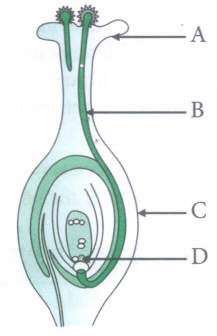
(a) Name the parts labelled as A,B,C and D in the diagram given below:
(b) What is pollination? State its significance.
(c) How does fertilisation occur in flowers? Name the parts of the floower that develop into
(i) seed, and (ii) fruit after fertilisation.
2.
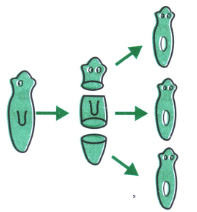
Why are budding, fragmentation and regeneration all considered as asexual types of reproduction? With neat diagrams explain the process of regeneration in Planaria.
3.
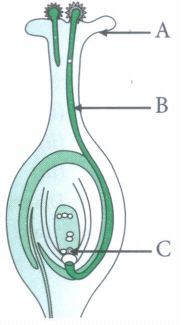
(a)Identify A, B and C in the given diagram and write their functions.
(b)Mention the role of gamete and zygote in sexually reproducing organisms.
4.
Reproduction is essentially a phenomenon that is not survival of an individual but for the stability of a species. Justify.
5.
Describe sexually transmitted diseases and mention the ways to prevent them.
6.
What is the placenta? Mention its role during pregnancy?
7.
How does fertilisation take place? Fertilisation occurs once in a month. Comment.
8.
What are various ways to avoid pregnancy? Elaborate any one method.
9.
Distinguish between a gamete and zygote. Explain their roles in sexual reproduction.
10.
Write two points of difference between asexual and sexual types of reproduction. Describe why variations are observed in the offspring formed by sexual reproduction.
1.
(a) A - Stigma B - Pollen tube C - Ovary D - Ovule (ovum)
(b) The transfer of pollen grains from anther (male sexual part) of a flower to the stigma part of the pistil (female sexual part) is known as pollination. Signification of pollination. It may be the cause of variation in a species of a plant.
(c) Fertilisation in flower. A pollen grain contains two male gametes. When a pollen grain falls on the stigma of the carpel, it grows a pollen tube downwards into the
style. One of the male gametes reaches the ovary through pollen tube and fuses with female gamete present in the ovule. This fertilisation of the two germ cells forms a zygote. The zygote is capable of growing into a new plant. The other male gamete fuses with two polar nuclei to form endosperm nucleus. This fusion is called triple fusion. The zygote grows into an embryo and an endosperm nucleus grows into endosperm (the food storage tissue of seed).
(i) All the eggs in the ovule present in the ovary of a flower gets fertilised by male gametes from pollen grains and grow to become seeds.
(ii) The ovary of flower develops and becomes fruit.
2.
Budding, fragmentation and regeneration are considered as asexual types of reproduction because gamete formation does not happen during these modes of reproduction and a single parent carries out the process of reproduction.
The above figures shows regeneration in planaria:
When the body of planaria is cut off into several part, each part regenerates its complementary part to develop into a new individual.
3.
(a) A - Stigma: The top part of carpel is called stigma. Stigma is for receiving the pollen grains from the anther of stamen during pollination.
B - Pollen tube: When a pollen grain falls on the stigma, it bursts open and grows a pollen tube downward through the style towards the female gamete in the ovary. A male gamete moves down the pollen tube.
C - Female gamete (ovum): It is a special reproductive female sex cell which combines with male gamete to form zygote.
(b) Sexual reproduction takes place by the combination of special reproductive cells called sex cells. These cells are of two types male sex cells and female sex cells, which are coming from two different parents a male and a female. The cells involved in sexual reproduction are called gametes. In sexual reproduction, a male gamete fuses with a female gamete to form a new cell called zygote. This zygote then grows and develops into a new organism in due course of time.
4.
(a) Organisms need energy for survival which they obtain from life processes such as nutrition and respiration.
(b) reproduction needs a lot of energy
(c) Genetic material is transferred from one generation to the next as a result of reproduction through DNA copying.
(d) DNA copying takes place with high constancy and considerable variations, that is, advantages to the species for stability in the changing environment.
5.
A disease which can be transmitted through sexual contact is called sexually transmitted disease or STD. Lack of hygiene is usually a major factor in providing conditions for spread of STDs. But unprotected sex with multiple and unknown partners is the biggest reason for the spread of STDs. Some of the ways to prevents STDs are as follows
(a) Being faithful to one's life partner
(b) Avoiding sexual contact with unknown person.
(c) Using condom during sexual intercourse
(d) Maintain personal hygiene.
6.
(a) Special tissue connection between embryo and uterine wall.
(b) Possesses villi that increase the surface area.
(c) Facilitate passage of nutrition and oxygen to embryo from mother through blood.
(d) Waste substances produced by embryo are removed through placenta into mother's blood.
7.
During the ovulation cycle, one egg is released by either of the ovaries. The egg reaches the fallopian tube. The sperm enters the vagina during mating. From there, it enters the uterus through cervix and reaches fallopian tube. Numerous sperms reach the fallopian tube but only one sperm is required for fertilization.
Since only one egg is released in a single ovulation cycle and ovulation cycle happens once in a month, so fertilization occurs once in a month.
8.
There are various methods to avoid pregnancy. The physical barrier methods prevent the entry of sperm into the uterus. The hormonal pills prevent transfer of egg to the uterus. Copper-T is a method which prevents entry of sperms in the fallopian tube and thus prevents fertilization. Surgical methods are permanent methods to stop the chances of pregnancy.
Copper-T : Copper-T is in the shape of 'T' and is made of copper. Copper is known to have contraceptive properties. Moreover, copper-T makes a barrier in the at the opening of the fallopian tubes in the uterus and thus prevents sperms from entering the fallopian tubes to prevent fertilization.
9.
Gamete is formed as a result of meiosis in gametogenic cells. Zygote is formed after fusion of two different kinds of gametes. Different types of gametes are formed by different parents. Zygote is formed in the female reproductive part only.
Role of gamete in sexual reproduction: Gamete formation results in halving of number of chromosomes which is necessary to maintain the number of chromosomes in an organism which reproduces sexually.
Role of zygote in sexual reproduction: Zygote formation makes the number of chromosome equal to the somatic cells. further, it is the zygote which undergoes mitosis to develop into an embryo and subsequently into a new individual.
10.
Two points of difference between asexual and sexual reproduction are as follows:
(a) A single parent is involved in asexual reproduction, while two parents are involved in sexual reproduction.
(b) Meiosis does not happen in asexual reproduction during gamete formation.
reason of variations in offspring produced by sexual reproduction: Two sets of genes are contributed by different parents, which bring different sets of characters in the offspring.

10th Standard CBSE Syllabus & Materials
10th Standard CBSE
CBSE 10th Social Science PS - Federalism - New Model Questions Papers Study Material - QB365 Set A
NEW10th Standard CBSE
CBSE 10th Social Science PS - Power Sharing - New Model Questions Papers Study Material - QB365 Set A
NEW10th Standard CBSE
CBSE 10th Social Science GEO - Manufacturing Industries - New Model Questions Papers Study Material - QB365 Set A
NEW10th Standard CBSE
CBSE 10th Social Science GEO - Minerals and Energy Resources - New Model Questions Papers Study Material - QB365 Set A



CBSE 10th Standard CBSE Subjects
CBSE Standards





