
 100% FREE ACCESS
10th Standard CBSE Syllabus & Materials
10th Standard CBSE
CBSE 10th Social Science ECO - Globalisation and the Indian Economy - New Model Questions Papers Study Material - QB365 Set A
NEW10th Standard CBSE
CBSE 10th Social Science ECO - Money and Credit - New Model Questions Papers Study Material - QB365 Set A
NEW10th Standard CBSE
CBSE 10th Social Science ECO - Sectors of the Indian Economy - New Model Questions Papers Study Material - QB365 Set A
NEW10th Standard CBSE
CBSE 10th Social Science ECO - Development - New Model Questions Papers Study Material - QB365 Set A
NEW10th Standard CBSE
CBSE 10th Social Science PS - Outcomes of Democracy - New Model Questions Papers Study Material - QB365 Set A
NEW10th Standard CBSE
CBSE 10th Social Science PS - Gender, Religion and Caste - New Model Questions Papers Study Material - QB365 Set A

Published on: 14/02/2020
10th Standard CBSE Social Science board Exam Model Question Paper II 2019-2020
Download CBSE Class 10th Standard CBSE Social Science question papers, sample papers, important questions, and previous year solved papers in PDF format. Get free study materials, NCERT solutions, and exam preparation resources for Class 10th Standard CBSE Social Science
Questions + Answers key
Take MCQ Social Science Test
1.
Why did the imperialist powers like France decide to take steps to develop the colonies?
2.
What were Gandhiji's experiments with satyagraha?
3.
Define the terms: a) Favourable balance of trade b) Unfavourable balance of trade.
4.
Name six mail channels introduced by Indian postal network.
5.
Examine the contribution of manufacturing industry to national economy.
6.
What are software technology parks? State any two points of significance of Information Technology in India?
7.
Why is energy needed?
8.
Why was the decade of 1820s known as great economics hardship in Europe? Explain any three reasons.
9.
What are the limitations of the Civil Disobedience Movement?
10.
What is a mineral?
11.
How did Paul Bernard argue in favour of economic development of Vietnam? Explain.
12.
What views did the conservatives hold?
13.
What solution was suggested by the Dalit leaders to solve the problems of the depressed classed? How did Dr.BR Ambedkar try to improve the condition of depressed classes? Explain any three points.
14.
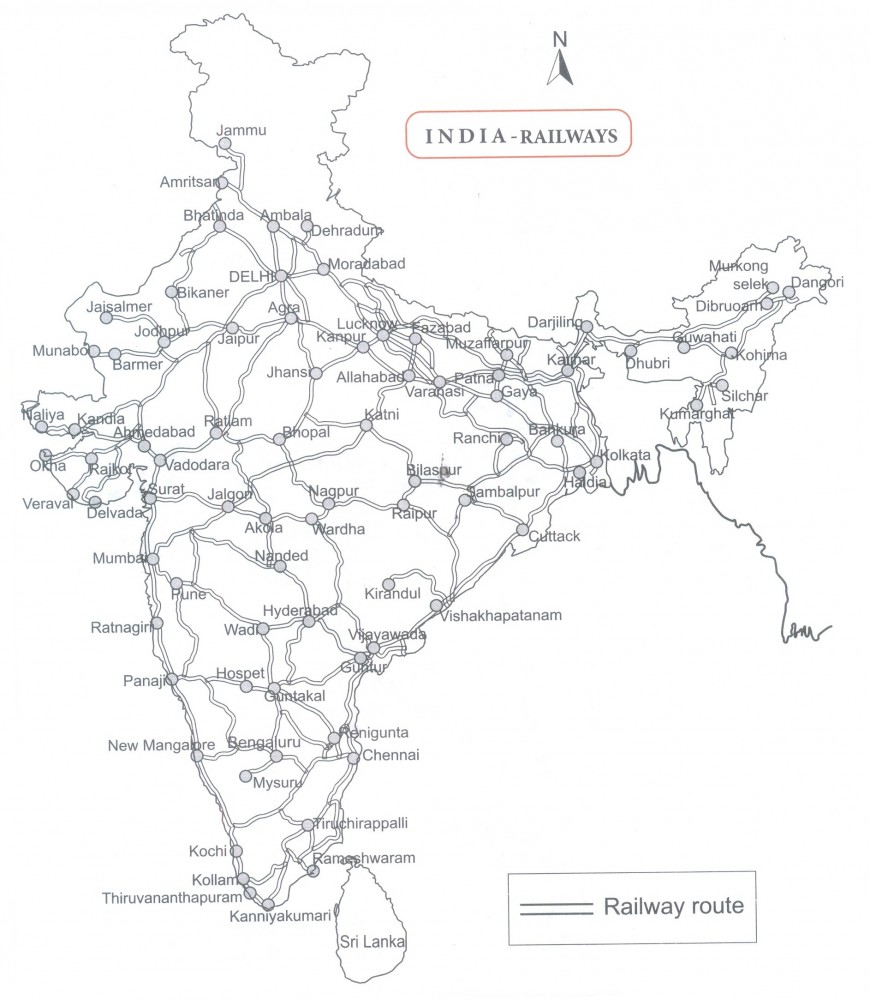
"The distribution pattern of the Indian Railway Network is influenced by the physiographic factors". Examine the statement.
15.
Explain the any four factors which influence the location of an industry.
16.
"The civil disobedience movement was different from the non-cooperation movement". Support the statement with examples.
17.
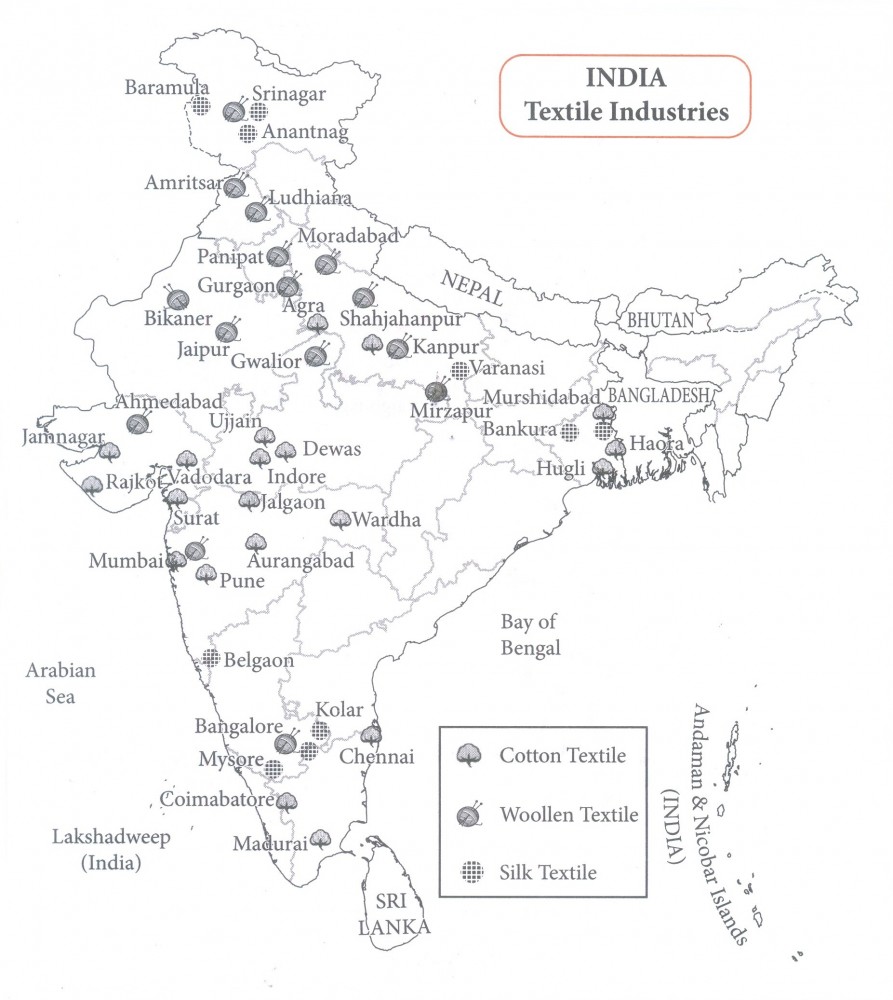
Mention the major drawbacks and problems of cotton textile industry in India.
18.
(i) Why are the means of transportation and communication called the lifelines of a nation and its economy?
(ii) Write a note on the changing nature of the international trade in the last fifteen years.
19.
How is energy a basic requirement for the economic development of the country? Explain with examples
20.
Describe the distribution of coal in India.
21.
What changes did Napoleon introduce to make the administrative system more efficient in the territories ruled by him?
22.
Name the busiest railway junction in Northern India?
23.
In which state of India are the Balaghat copper mines situated?
24.
What was the national anthem of Britain?
25.
Study the railways network in India.
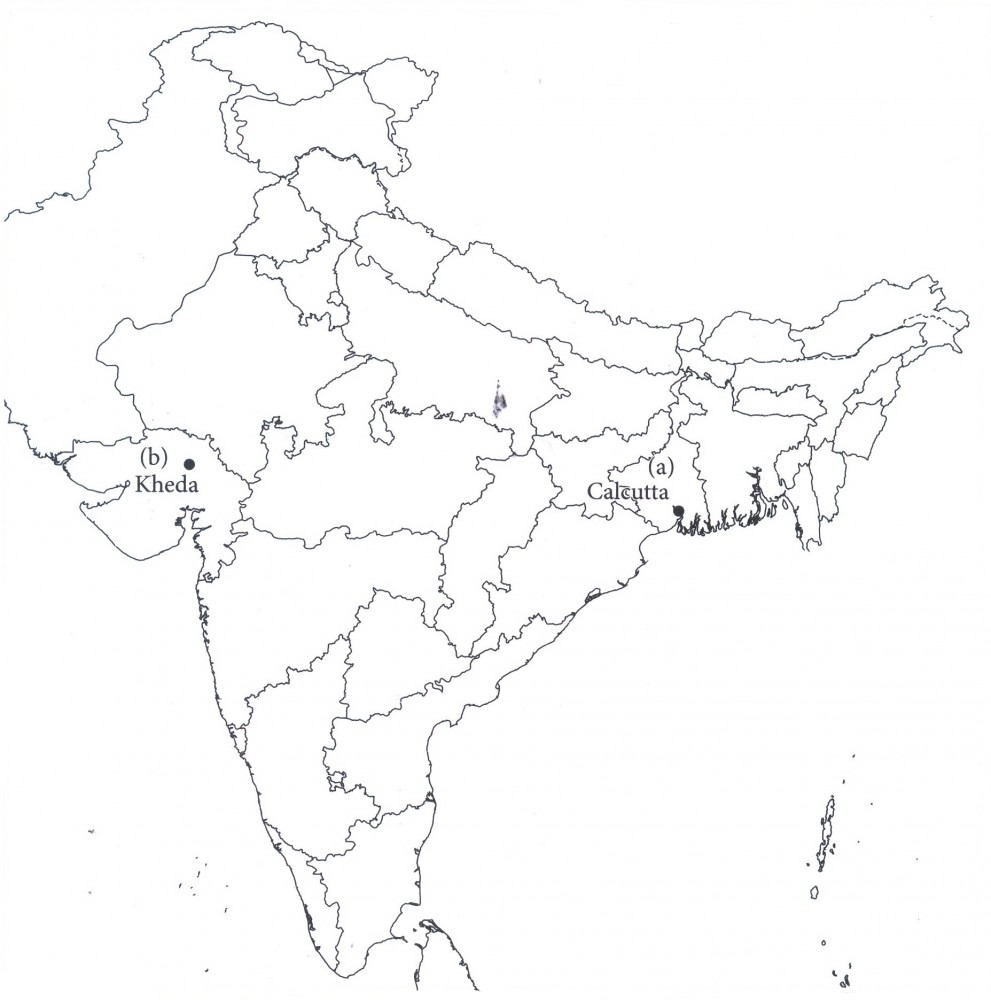
26.
Two features - A and B are marked in the given political outline map of India. Identify these features with the help of the following information and write their correct names on the lines marked in the map:
(a) The place where Indian national Congress Session was held in September 1920.
(b) The place where the Peasant Satyagraha was help in Gujarat.
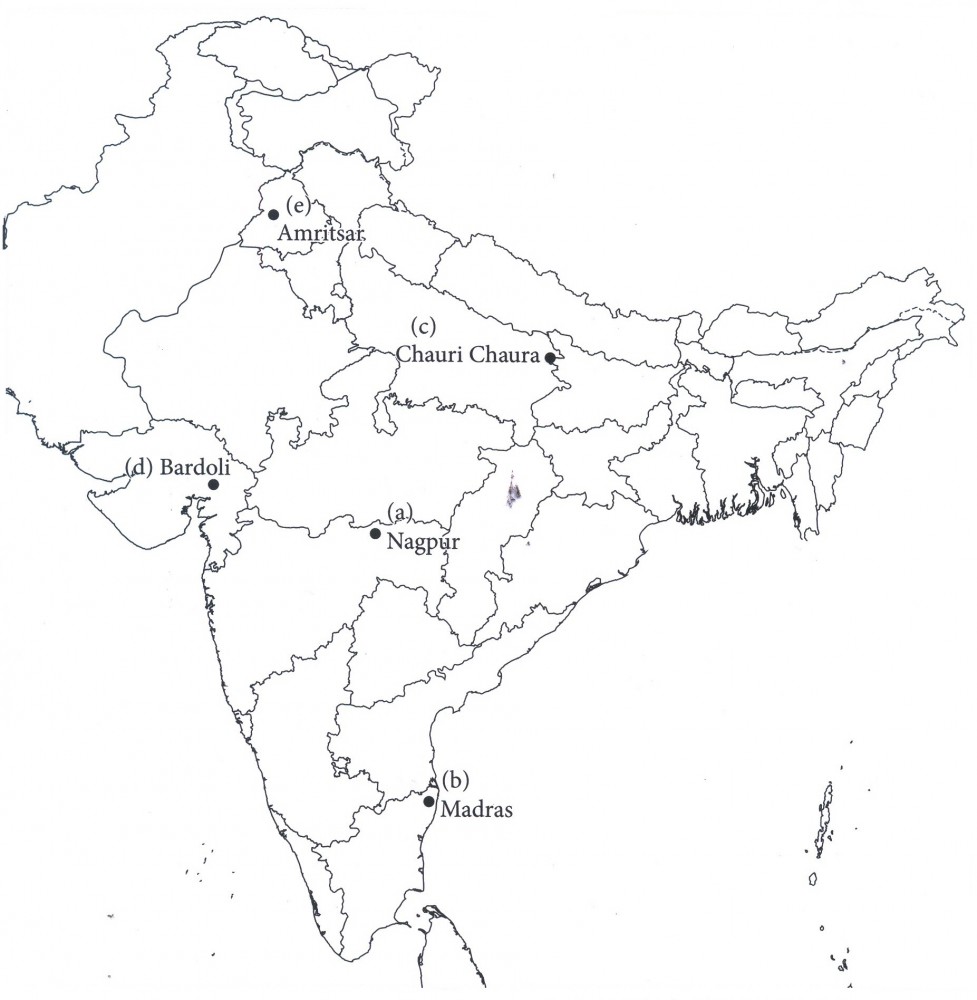
27.
Five features with serial nos. (i) to (v) are marked in the given outline political map of India. Identify these features with the help of the following information and write their correct names on the lines marked in the map:
(a) A place where Indian National Congress Session was held in Dec. 1920.
(b) A place where Indian National Congress Session was held in 1927.
(c) A place where violence occurred due to which Mahatma Gandhi suddenly called off the Non-cooperation Movement.
(d) A place of peasants' Satyagraha in Gujarat.
(e) A place associated with Jallianwalla Bagh massacre.
28.
Study and observe the following centres on the given outline map of India showing distribution of cotton, silk and woollen industry.
29.
Study and Observe the following map of conventional source of energy. Write the names of coal mines and oil fields with respective states.
30.
Observe and study the following map showing distribution of minerals. Write the names of states where mica mines are located
31.
What channel is India's national television channel, which has been popular for a very long time?
Doordarshan
Star Plus
Sony Entertainment Television
Sony Entertainment Television
32.
Which of the following is a non-metallic mineral?
Lead
Tin
Limestone
Copper
33.
Who were the 'Sanatanis'?
Saints
Dalits
High-caste Hindus
None of these
34.
When did Vietnam get independence?
1887
1945
1873
1858
35.
The French nation was represented by which female allegory?
Liberty
Germania
Britannia
Marianne
36.
Largest producer of Jute and Jute made goods
Bangladesh
India
Sri Lanka
Brazil
37.
How did the French form the Indo-China?
38.
How did the entry of USA mark a new phase in the Vietnam War?
39.
What was the main motive of the French to develop the infrastructural projects in Vietnam? How far were they successful?
1.
Colonies were meant to serve the interests of the colonisers. Paul Bernard stated that colonies had to be acquired to accumulate profits and needed to be developed for this purpose. Developed economy of the colonies will further increase the living standard of the people which would make them buy more goods and thus expand colonial market. This would lead to huge profits for French business.
2.
After returning from South Africa, Gandhiji undertook his experiments with satyagraha in India.
(a) In 1916, he inspired the peasants of Champaran in Bihar against the oppressive plantation system.
(b) In 1917, in support of the peasants of Kheda district in Gujarat, he organised a satyagraha against revenue payment at the time of crop failure and plague epidemic. He demanded relaxation from revenue collection.
(c) In 1918, in Ahmedabad, he organised satyagraha favouring the demands of the cotton mill workers.
3.
The difference between export and import is known as balance of trade. Difference between favourable and unfavourable balance of trade:
| S.No | Favourable balance of trade | Unfavourable balance of trade |
| 1. | If the value of exports is more than the value of imports. | If the value of imports is greater than the value of exports. |
| 2. | It is regarded good for the economic development. | It is seen harmful for the domestic economy. |
4.
(i) Rajdhani Channel
(ii) Metro Channel
(iii) Green Channel
(iv) Business Channel
(v) Bulk Mail Channel
(vi) Periodical Channel.
5.
Over the last two decades, the share of manufacturing sector has stagnated at 17% of GDP - out of a total of 27% for the industry which includes 10% for mining, quarrying, electricity and gas. The trend of growth rate over the last decade has been around 7% per annum. Since 2003 it has shown the increased growth rate of 9-10% per annum. The desired growth rate over the next decade is 12%.
6.
Software technology parks provide single window services and high data communication facility to software experts. The two significant points of IT industries are as follows:
(i) It generates huge employment. Up to March 31, 2005, it employed over one million persons, 30 percent of which are women.
(ii) The industry has been a major foreign exchange earner through growing Business processes outsourcing (BPO) sources.
7.
(i) Energy is the requirement for economic development
(ii) Every sector of national economy agriculture, industry, transport and commerce need greater inputs of energy.
(iii) In the domestic sector also, energy demands, in the form of electricity, are growing because of increasing use of electrical gadgets and appliances.
8.
(a) Enormous increase in population leading to unemployment.
(b) Migration of people from rural areas to urban area for job.
(c) Products of small producers engaged in textile production from homes were displaced due to imports of cheap machine-made textile goods.
(d) Peasants struggled due to feudal dues and obligations.
(e) Bad harvests and rising of food prices added to poverty in towns.
9.
The Civil Disobedience Movement was called off without the fulfilment of the demand of the rich peasant communities. Many rich peasant communities decided not to join the restarted Civil Disobedience Movement. The Congress was unwilling to support the "no rent" campaigns due to the fear of upsetting the rich peasants and landlords. The spread of militant activities, worries of prolonged business disruptions, growing influences of socialism amongst the young Congress members and the failure of the Round Table Conference led to the withdrawal of support to the movement by the business class. Industrial workers did not participate in the Civil Disobedience Movement except in Nagpur. The dalits (untouchables) did not participate as the Congress sided with the conservative high-caste Hindus. Muslim organizations and communities also sparsely participated in the movement. The Muslims alienated from the movement due to the fear of the dominance of the Hindu majority. During the course of the civil- disobedience movement, many dalit leaders separately demanded reservation of seats in the educational institutions and separate electorate for the legislative council elections. Dr B.R. Ambedkar organised the dalits into the Depressed Classes Association in 1930, clashed with Mahatma Gandhi at the second Round Table Conference by demanding separate electorates for dalits. Gandhiji began a fast unto death for opposing the. demand of separate electorates for dalits because he believed that this would disunite the Indian masses.
10.
A mineral is a homogenous, naturally occurring substance. It has definite chemical composition comprising of one or more elements.
11.
(i) According to him, the development of economy will raise the standard people and people would buy more foods. The market would consequently expand, leading to better profit for French business.
(ii) According to Bernard, there were several barriers to economic growth in Vietnam, such a large population, low agricultural productively and extensive indebtedness amongst the peasants.
(iii) To reduce the poverty and increase agricultural productivity, it was necessary to carry out land reforms.
(iv) Industrialisation was alone essential for creating more jobs as agriculture was not likely to ensure sufficient employment opportunities.
12.
Conservatism was adopted by the European governments after defeating Napoleon in 1815. They favoured it to preserve the established traditional institutions of state and society like monarchy, church, social hierarchies institutions of state and society like monarchy, church, social hierarchies, property and family. There were some who did not want to adopt the pre-revolutionary system, rather they favoured Napoleonic changes and wanted to adopt modernisation as it would rather contribute to strength traditional institutions and state power and make it much more effective. Conservatives began to believe that aristocratic monarchies if Europe too would be strengthen from a modern army, an efficient bureaucracy, a dynamic economy and the abolition of feudalism and serfdom.
13.
The dalit leaders sought a political solution to the problems faced by the depressed classes. They organised themselves and demanded reservation of seats in educational institutions so that they could be a part of the decision-making process. Dr. B R Ambedkar believed that it was only through political empowerment that the situation of the depressed classes could be made better. He tried to improve the condition of depressed classes in the following ways.
(a) He organised the dalits into an organisation called the Depressed Classes Association in 1930.
(b) He demanded separate electorates for dalits at the second Round Table Conference, which was finally conceded by the British.
(c) He signed the Poona Pact with Gandhiji and gave up the demand for separate electorates but secured reserved seats for dalits in the provincial and central legislative councils to be voted in general election
14.
The distribution pattern of the Railway network in the country has been largely influenced by physiographic, economic and administrative factors.
(i) The density railway network is high in the northern plains because they are vast level land, have high population density and rich agricultural resources. But, a large number of rivers create obstacles because it requires construction of bridges across their wide beds.
(ii) In the hilly terrains of the peninsular region, railway tracts are laid through low hills, gaps or tunnels therefore it difficult to construct railway lines.
(iii) The Himalayan mountainous regions are unfavorable for the construction of railway lines due to high relief, sparse population and lack of economic opportunities.
(iv) It is difficult to lay railway lines on the sandy plain of western Rajasthan, swamps of Gujarat, forested tracks of Madhya Pradesh, Chhattisgarh, Odisha and Jharkhand.
(v) Sinking of track in some areas and landslides makes it difficult for railways.
15.
(i) Market: Areas/regions having high purchasing power provide large market therefore such as luxury items producing industries are located in these regions.
(ii) Raw material: Raw material used by industries should be cheap and easy to transport.
(a) E.g. Industries based on cheap, bulky and weight-losing material (ores) are located close to the sources of raw material such as steel, sugar and cement industries.
(b) E.g. Industries using perishable raw material are located closer to the source of the raw material such as Agro-processing and dairy industries.
(iii) Labour Supply: Some types of manufacturing require skilled labour therefore IT industries are located near urban-educational centres where skilled labours are easily available.
(iv) Sources of energy: Industries which use more power are located close to the source of the energy supply such as the aluminium industry.
(v) Transportation and Communication Facilities: Speedy and efficient transport facilities reduce the cost of transport. Therefore industries are attracted in regions having good transport facilities.
(vi) Government Policy: Governments adopt 'regional policies' to promote 'balanced' economic development and hence set up industries in backward and tribal areas.
(vii) Agglomeration Economies: Many industries takes benefit from nearness to a leader-industry and other industries.
16.
The Civil Disobedience Movement was different from the Non-Cooperation Movement. The main differences between these two movements are
| Civil Disobedience Movement | Non-cooperation Movement |
| Civil Disobedience Movement was launched in 1930. | The Non-Cooperation Movement was launched in 1921 by Gandhiji. |
| The Civil Disobedience Movement was first supported by the Industrialists like GD Birla, Purshottamdas Thakur. | The Non-Cooperation Movement started with middle class participation. |
| The growing proximity of the Congress party and Hindu Mahasabha prevented the Muslims to participate in Civil Disobedience Movement. | Due to Khalifa issues Muslim community participated in Non-Cooperation on large scale |
| The Civil Disobedience Movement was withdrawn in 1931, when Gandhi signed 'Gandhi-Irwin' pact. | The Non-Cooperation Movement was withdrawn by Gandhiji due to violent incident at Chauri Chaura. |
| Large scale participation of women is one of the most significant features of the Civil Disobedience Movement. | In Non-Cooperation Movement, women did not participate in large scale. |
17.
Cotton textile industry in India suffers from some problems:
(i) India has world class production and quality in spinning, but weaving supplies low quality of fabric because they are fragmented small units. This mismatch is major drawback.
(ii) Many of our spinners export cotton yarn while apparel/garment manufactures have to import fabric.
(iii) Although we the production of staple cotton has increased but we still need to import good quality staple cotton.
(iv) Cotton textile industries face the problem of erratic Power Supply which decreases the labour productivity.
(v) Machinery needs to be upgraded in the weaving and processing sectors in particular.
(vi) Output of labour is low due to poor machines and power supply.
(vii) There is a stiff competition with the synthetic fibre industry.
18.
(i) The means of transportation and communication are called the lifelines of a nation and its economy because
An efficient and well-developed system of transport is essential for proper utilisation of the available natural resources.
A well-developed system of transportation like roadways and railways maintain the movement of persons and goods to different regions of the country.
The means of communication help in sending and receiving messages, thus, playing a vital role in the running of the country efficiently.
Railways provide a number of different activities to people like business, sightseeing pilgrimage as well as transportation of goods over longer distances.
Pipelines are used for transporting crude oil, petroleum products and natural gas to refineries, factories and big thermal power plants.
Waterways are cheapest means of transport. These are most suitable for carrying heavy and bulky goods.
Air transport provides fastest service even in those areas which are inaccessible by other means of transport.
(ii) The changing nature of the international trade in the last fifteen years can be seen through the following points Exchange of commodities and goods in foreign trade has increased due to exchange of information and knowledge.
The exchange of information and knowledge has also improved trade relations of India with the rest of the world.
Due to its advanced software knowledge and excellence in the field of information technology, India has emerged as a software giant at the international level. Now, India is earning a huge amount of foreign exchange through the export of information technology.
India has trade relations wíth all the major trading blocks and all geographical regions of the world.
India has become a major exporter of a number of commodities. For example, agriculture and allied products, gems and jewellery, chemicals and related products and so on.
Tourism industry has also remerged as a big industry in India. It helps in the development of international understanding about our culture and heritage.
19.
(i) Energy is the basic requirement for economic development.
(ii) Every sector of national economy agriculture, industry, transport and commerce needs greater inputs of energy.
(iii) In the domestic sector also energy demands in the form of electricity are growing because of increasing use of electric gadgets and appliances.
(iv) The economic development plans implemented since independence necessarily required increasing amount of energy.
(v) Because of all these, per capita consumption of energy is continuously increasing.
20.
(a) In India, coal is the most abundantly available fossil fuel. Coal is found in a variety of forms depending on the degress of compression and the depth and time of burial. As per these basis, coal deposits are found mainly of two geological ages. These are
(i) Gondwana Coal Deposits These are about 200 million years old. The major coal deposit in India are Gondwana coal which are high quality metallurgical coal.
These coal deposits are located in Damodar Valley (West Bengal-Jharkhand). Jharia, Raniganj and Bokaro are important coal deposit fields. Besides, the Godavari, Mahanadi, Son and Wardha valleys also contain such coal deposits.
(ii) Tertiary Coal Deposits These are around 55 million years old. Tertiary coal deposits are found in the North-Eastern states of Meghalaya, Assam, Arunachal Pradesh and Nagaland. This coal is of lower quality than the Gondwana coal.
21.
Napoleon introduced the following changes to make the administrative system more efficient in the areas ruled by him
(i) He established the Civil Code of 1804, also known as the Napoleonic Code. This did away with all privileges based on birth. It established equality before law and secured the right to property.
(ii) He simplified administrative divisions.
(iii) He abolished the feudal system and freed peasants from serfdom and manorial dues.
(iv) In towns, guild systems were removed.
(v) Transport and communication systems were improved.
Due to the above measures, peasants, artisans, businessmen and workers enjoyed a new found freedom. Businessmen and small-scale producers realised that uniform laws, a common currency and standardised weights and measures would facilitate movement and exchange of goods between regions.
22.
New Delhi is the busiest railway junction in Northern India.
23.
Balaghat copper mines are situates in Madhya Pradesh.
24.
The national anthem of Britain was "God save our Noble King".
25.
26.
27.
28.
29.
Coal fields
(a) Bokaro, Jharia: Jharkhand
(b) Talcher: Odisha
(c) Neyveli: Tamil Nadu
Oil fields
(a) Ankaleshwar: Gujarat
(b) Digboi: Assam
(c) Mumbai high, Bassein: Maharashtra
30.
(i) Nellore: Andra Pradesh
(ii) Gaya: Bihar
(iii) Ajmer, Bewar : Rajasthan
(iv) Hazaribagh, Kodarma: Jharkhand
31.
(a)
Doordarshan
32.
(c)
Limestone
33.
(c)
High-caste Hindus
34.
(b)
1945
35.
(d)
Marianne
36.
(b)
India
37.
()
After the Franco-Chinese war, the French troops assumed control of Tonkin and Anaam in 1887, and thus formed Indo-China.
38.
The US entry into the war marked a new phase that proved costly to the Vietnamese as well as to the Americans in the following ways.
(a) Over 35 lakh US services personnel served in Vietnam.
(b) Even though US had advanced technology and good medical supplies, casualties among them were also high. Thousands were killed and many more were wounded.
(c) The US used heavy weapons and tanks backed by the most powerful bombers of the time-B52s.
(d) The wide spread attacks and use of chemical weapons like Napalm, Agent Orange, and phosphorous bombs destroyed many villages and decimated jungles. Civilians died in large numbers.
(f) Back in USA, government faced huge opposition. The war had caused moral confusion all over the world.
39.
The following were the objectives of the French in the development of infra structural 1- projects in Vietnam.
(a) They wanted to ensure regular supply of natural resources and other necessary goods to make more profits.
(b) They began by building canals and draining lands in the Mekong delta to increase cultivation for increased export of rice in the international market.
(c) To facilitate trade, various projects were started to transport goods and move military garrisons.
(d) Trans-Indo-China rail network linking northern Vietnam with southern part was constructed to control the entire region. They were successful to some extent. Paul Bernard's suggestions were not liked by the colonisers. They did little to develop Vietnam as they were more interested in making profits.

10th Standard CBSE Syllabus & Materials
10th Standard CBSE
CBSE 10th Social Science PS - Federalism - New Model Questions Papers Study Material - QB365 Set A
NEW10th Standard CBSE
CBSE 10th Social Science PS - Power Sharing - New Model Questions Papers Study Material - QB365 Set A
NEW10th Standard CBSE
CBSE 10th Social Science GEO - Manufacturing Industries - New Model Questions Papers Study Material - QB365 Set A
NEW10th Standard CBSE
CBSE 10th Social Science GEO - Minerals and Energy Resources - New Model Questions Papers Study Material - QB365 Set A



CBSE 10th Standard CBSE Subjects
CBSE Standards





