
 100% FREE ACCESS
10th Standard CBSE Syllabus & Materials
10th Standard CBSE
CBSE 10th Social Science ECO - Globalisation and the Indian Economy - New Model Questions Papers Study Material - QB365 Set A
NEW10th Standard CBSE
CBSE 10th Social Science ECO - Money and Credit - New Model Questions Papers Study Material - QB365 Set A
NEW10th Standard CBSE
CBSE 10th Social Science ECO - Sectors of the Indian Economy - New Model Questions Papers Study Material - QB365 Set A
NEW10th Standard CBSE
CBSE 10th Social Science ECO - Development - New Model Questions Papers Study Material - QB365 Set A
NEW10th Standard CBSE
CBSE 10th Social Science PS - Outcomes of Democracy - New Model Questions Papers Study Material - QB365 Set A
NEW10th Standard CBSE
CBSE 10th Social Science PS - Gender, Religion and Caste - New Model Questions Papers Study Material - QB365 Set A

Published on: 30/09/2019
Nationalism in India
Download CBSE Class 10th Standard CBSE Social Science question papers, sample papers, important questions, and previous year solved papers in PDF format. Get free study materials, NCERT solutions, and exam preparation resources for Class 10th Standard CBSE Social Science
Questions + Answers key
Take MCQ Social Science Test
1.
Explain the reasons for the lukewarm response of some Muslim organisations to the Civil Disobedience Movement.
2.
What solution was suggested by the Dalit leaders to solve the problems of the depressed classed? How did Dr.BR Ambedkar try to improve the condition of depressed classes? Explain any three points.
3.
Name two prominent industrialists who supported the Civil Disobedience Movement. Why did the initial enthusiasm of the merchants and industrialists fade away during the later stages of the Civil Disobedience Movement?
4.
Discuss the events of the Civil Disobedience movement.
5.
How did the people and colonial government react to the Civil Disobedience Movement? Explain.
6.
What were the developments that led to the launching of the Civil Disobedience Movement?
7.
Write a short note on the Non-Cooperation Movement.
8.
Mention the features of the Gudem Hills rebellion? What methods were adopted by the tribals to gain swaraj?
9.
Explain any five effects of Non-Cooperation Movement on the economy of India.
10.
Assess the role of Mahatma Gandhi in the nationalist movement with special reference to the methods adopted by him.
1.
When Gandhiji called for the Civil Disobedience Movement, the Muslims had lukewarm, response because of the following reasons.
(a) The failure of Non-Cooperation-Khilafat Movement led to a large number of Muslims to wave out from the nationalist struggle.
(b) The Congress was more closely associated with the Hindu nationalists groups like the Hindu Mahasabha, which distanced Muslims from the nationalist activities.
(c) The relationship between the Hindus and the Muslims worsened when the two began organising religious processions with militant fervour.
(d) Each community began to provoke other community leading to communal clashes and riots. This further increased differences between the two communities.
(e) There were attempts at negotiations and compromise by Congress and Muslim League, but these could not get success. Some or the other differences derailed the efforts.
(f) Muslim leaders and intellectuals were concerned about their minority status in India and feared that their culture and identity would be suppressed by the domination of Hindu majority.
(g) Muslims were disappointed with the way the Civil Disobedience Movement ended without any concrete outcome. So when the Civil Disobedience Movement was again launched, Muslims under the clouds of distrust and suspicion, could not respond to the mass struggle.
2.
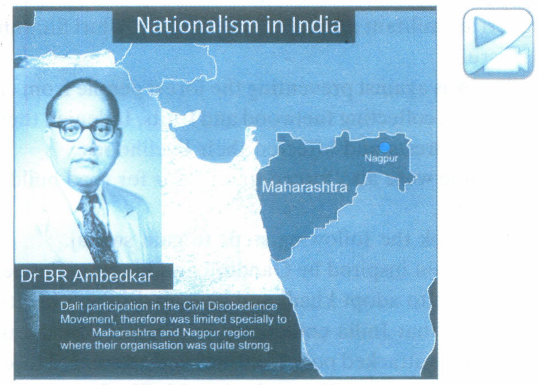
The dalit leaders sought a political solution to the problems faced by the depressed classes. They organised themselves and demanded reservation of seats in educational institutions so that they could be a part of the decision-making process. Dr. B R Ambedkar believed that it was only through political empowerment that the situation of the depressed classes could be made better. He tried to improve the condition of depressed classes in the following ways.
(a) He organised the dalits into an organisation called the Depressed Classes Association in 1930.
(b) He demanded separate electorates for dalits at the second Round Table Conference, which was finally conceded by the British.
(c) He signed the Poona Pact with Gandhiji and gave up the demand for separate electorates but secured reserved seats for dalits in the provincial and central legislative councils to be voted in general election
3.
The two prominent industrialists who supported the Civil Disobedience movement were Purshottamdas Thakurdas and G.D. Birla.
The initial enthusiasm of the merchants and industrialist faded away during the later stages of the Civil Disobedience Movement because of the following reasons.
(a) The businessmen saw Swaraj as freedom from colonial restrictions on business and expansion of trade and industry without constraints.
(b) The failure of the Round Table Conference demoralised the Business groups who lost the enthusiasm to be part of any such movement.
(c) The spread of militant activities worried the business classes as there were long disruptions in business due to frequent bandhs and hartals.
(d) They were also afraid of the growing influence of socialism among the younger members of the Congress.
4.
Different people reacted differently to the Civil Disobedience Movement.
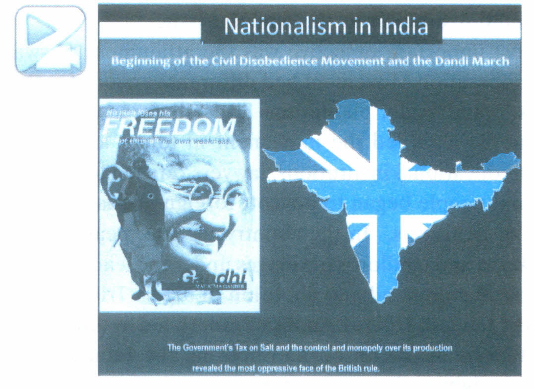
(a) It began with Gandhiji breaking salt law at Dandi. People, also openly defied the colonial laws like breaking salt laws, manufacturing salt and staging demonstrations in front of government salt factories.
(b) There was large scale boycott of foreign cloth and picketing of liquor shops. Peasants refused to pay revenue and chaukidari taxes.
(c) Village officials resigned and at many places forest people violated forest laws by going into Reserve Forests to collect wood and graze cattle.
On the other hand, colonial government too reacted with ruthless and brutal suppression.
(a) Fearing the intensity of the movement and huge loss to the government property. The government arrested many eminent nationalist leaders like Gandhiji and Khan Abdul Gaffar Khan. This led to violent clashes at many places.
(b) Peaceful satyagrahis were attacked, women and children were beaten and many were arrested.
(c) The Congress was declared illegal.
5.
Different people reacted differently to the Civil Disobedience Movement.
(a) It began with Gandhiji breaking salt law at Dandi. People, also openly defied the colonial laws like breaking salt laws, manufacturing salt and staging demonstrations in front of government salt factories.
(b) There was large scale boycott of foreign cloth and picketing of liquor shops. Peasants refused to pay revenue and chaukidari taxes.
(c) Village officials resigned and at many places forest people violated forest laws by going into Reserve Forests to collect wood and graze cattle.
On the other hand, colonial government too reacted with ruthless and brutal suppression.
(a) Fearing the intensity of the movement and huge loss to the government property. The government arrested many eminent nationalist leaders like Gandhiji and Khan Abdul Gaffar Khan. This led to violent clashes at many places.
(b) Peaceful satyagrahis were attacked, women and children were beaten and many were arrested.
(c) The Congress was declared illegal.
6.
Congress decided to launch a nationwide Civil Disobedience Movement because of the following reasons.
(a) Lord Irwin showed reluctance towards the eleven demands raised by Gandhiji. This led to the famous Salt March and beginning of the Civil Disobedience Movement.
(b) Worldwide economic depression slashed agricultural prices. This led to a decline in demand and exports. Peasants were the hardest hit by this crisis. On that, the government was not ready to lower the revenue demand. (c) The only-British commission called the Simon Commission was sent to India to look into the developments of the constitutional system. Indians got enraged as it had no Indian member in it. There were widespread agitations against the commission.
(d) Lord Irwin's proposal of granting dominion status and discussion at the Round Table Conference could not satisfy the nationalists.
(e) Finally at the Lahore session of Congress in 1929, it was decided to launch the Civil Disobedience Movement. This movement was sought to be related with the problems people faced in their daily life.
7.
Non-Cooperation Movement was launched by Gandhiji's in 1920.He had the following three basic objectives.
(a) He wanted remedial action from the British for the wrong done in Jallianwalla Bagh.
(b) He wanted a solution to the Khilafat issue.
(c) The most important objective was the attainment of swaraj.
The Non-Cooperation Movement had different versions for the people living in the urban areas, countryside, plantations and hilly areas. With the call of Gandhiji, educated middle class led the movement in towns and cities. The teachers and students left educational institutions, lawyers refused to practise in the government law courts and people began to boycott foreign goods. This had a great economic impact on the Britishers. In the countryside too, peasants organised movements against talukdars and landlords in villages under the leadership of Baba Ramchandra to reduce revenue demand and abolition of begar. Tribal people started an armed struggle in the Gudem Hills of Andhra Pradesh led by Alluri Sitaram Raju. Workers in the plantations of Assam began opposing the Inland Emigration Act of 1859 to retain their right to free movement. At some places the movement turned violent. The tragic incident at Chauri-Chaura forced Gandhiji to call off the movement. Here the crowd attacked the police station and set it on fire, killing many policemen. Gandhiji felt that Indians need to be trained for a non-violent mass movement.
8.
The following were the features of the Gudem Hills rebellion.
(a) It was a guerrilla militant movement initiated by Alluri Sitaram Raju against the colonial misrule.
(b) This rebellion was against preventing the forest people entering the forests for grazing cattle, collecting fuel wood and fruits. It denied them their traditional rights over the forests and affected their livelihoods.
(c) The tribal people were also forced to do begar for road building which enraged the forest people.
The tribal people took the following steps to gain swaraj.
(a) Alluri Sitaram Raju inspired by Gandhiji and his Non-Cooperation Movement persuaded people to adopt khadi and give up drinking habits. But at the same time he asserted that India could only be liberated by the use of force.
(b) The Gudem rebels attacked police stations and attempted to kill British officials. They carried on their guerilla warfare and inflict losses on the British.
9.
The following was the economic impact of the Non-Cooperation Movement on the economy of India.
(a) The factory-manufactured cheap and abundant foreign goods were boycotted, liquor shops were picketed and foreign cloth burnt in huge bonfires.
(b) Import of foreign cloth decreased to half causing huge economic loss to the Britishers.
(c) The merchants and traders refused to trade in foreign goods or finance foreign trade even though it meant loss of profits to them.
(d) As the Non-Cooperation Movement spread, more and more people began to discard, imported clothes and use Indian made clothes.
(e) Production of Indian textiles went up which was good for Indian industrialisation and economy.
10.
After returning from South Africa, Gandhiji played a leading role in the Indian National Movement from 1916 till his death.
(a) He successfully involved the masses in the Satyagraha movements at Champaran, Kheda and Ahmedabad to raise the voice of the peasants and workers.
(b) He organised nationwide movements like Non-Cooperation and CivilDisobedience and Quit India Movement to pressurise the colonial government to withdraw from India.
(c) He mobilised the people to unite for a mass struggle. His call was responded to with whole-hearted support. ,
(d) He took up the causes of depressed classes and called them Harijans and dignified their work.
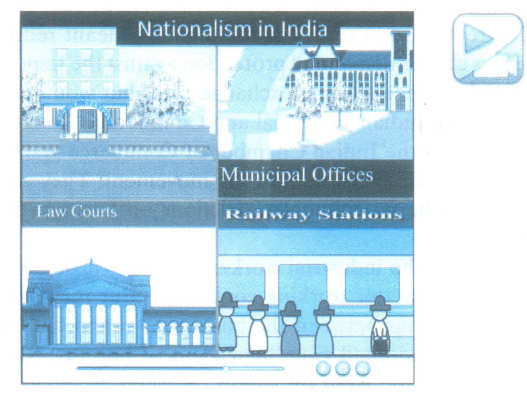
(e) His unique method of Satyagraha based on truth and non-violence was appreciated even by the Britishers. His method included boycott of British Institutions like legislative councils, law courts, schools, colleges, etc., picketing the shops selling foreign goods, renunciation of titles awarded by the British, non-payment of taxes, etc.

10th Standard CBSE Syllabus & Materials
10th Standard CBSE
CBSE 10th Social Science PS - Federalism - New Model Questions Papers Study Material - QB365 Set A
NEW10th Standard CBSE
CBSE 10th Social Science PS - Power Sharing - New Model Questions Papers Study Material - QB365 Set A
NEW10th Standard CBSE
CBSE 10th Social Science GEO - Manufacturing Industries - New Model Questions Papers Study Material - QB365 Set A
NEW10th Standard CBSE
CBSE 10th Social Science GEO - Minerals and Energy Resources - New Model Questions Papers Study Material - QB365 Set A



CBSE 10th Standard CBSE Subjects
CBSE Standards





