
 100% FREE ACCESS
10th Standard CBSE Syllabus & Materials
10th Standard CBSE
CBSE 10th Social Science ECO - Globalisation and the Indian Economy - New Model Questions Papers Study Material - QB365 Set A
NEW10th Standard CBSE
CBSE 10th Social Science ECO - Money and Credit - New Model Questions Papers Study Material - QB365 Set A
NEW10th Standard CBSE
CBSE 10th Social Science ECO - Sectors of the Indian Economy - New Model Questions Papers Study Material - QB365 Set A
NEW10th Standard CBSE
CBSE 10th Social Science ECO - Development - New Model Questions Papers Study Material - QB365 Set A
NEW10th Standard CBSE
CBSE 10th Social Science PS - Outcomes of Democracy - New Model Questions Papers Study Material - QB365 Set A
NEW10th Standard CBSE
CBSE 10th Social Science PS - Gender, Religion and Caste - New Model Questions Papers Study Material - QB365 Set A

Published on: 29/12/2018
Class X Model Question
Download CBSE Class 10th Standard CBSE Social Science question papers, sample papers, important questions, and previous year solved papers in PDF format. Get free study materials, NCERT solutions, and exam preparation resources for Class 10th Standard CBSE Social Science
Questions + Answers key
Take MCQ Social Science Test
1.
How does democracy accommodate social diversity? Explain any three ways.
2.
"Increase in the number of states or regional parties strengthened democracy in India." Comment.
3.
Enumerate the measures to protect the rights of the consumers.
4.
When and why was the Rio-de-Janeiro Earth summit held?
5.
Why is the cotton textile industry the largest industry in India today? Give any three reasons.
6.
From the text, find out the per capita income level of middle-income countries as per WDR 2006.
7.
Clearly Explain the local government structure.
8.
Give an account on any three hydraulic structures of ancient India.
9.
Explain the Civil Rights movement in the USA.
10.
Point out one feature in the practice of federalism in India that is similar to and one feature that is different from that of Belgium.
11.
Write about the pollution problems of Calcutta in 19th century.
12.
In India, about 80% of farmers are small farmers, who need for cultivation.
(a) Why might banks be unwilling to lend to small farmers?
(b) What are the other sources from which the small farmers can borrow?
(c) Explain with an example how the terms of credit can be unfavorable for the small farmer.
(d) Suggest some ways by which small farmers can get cheap credit.
13.
Define balance of trade. Distinguish between favourable balance of trade and unfavourable balance of trade.
14.
Justify with three points that democracy evolves through popular struggles.
15.
Choose three examples to show the contribution of culture to the growth of nationalism in Europe.
16.
What was the impact of French colonial domination in Vietnam?
17.
What is a debt-trap?
18.
Why one cannot refuse a payment made in rupees in India?
19.
When was RTI Act enacted in India?
20.
Why is democracy preferred as the better form of government than dictatorship?
21.
What is the percentage of land division in India?
22.
Where do we find Khadins and Johads?
23.
What is the % of hydroelectricity produced in India?
24.
When was BSP formed?
25.
In which State are the 'Balaghat' Copper mines located?
26.
Discuss the lives of the aristocrats and the new middle class in 19th century France.
27.
"Constant complaints by people can be seen as a testimony to the success of an democracy." Explain.
28.
Name the national political party which espouses secularism and welfare of weaker section and minorities. Mention any four features of that party.
29.
"The distribution pattern of the Indian Railway Network is influenced by the physiographic factors". Examine the statement.
30.
Why are sugar industries migrating to South India?
31.
Describe any four features of Civil Disobedience Movement of 1930.
32.
How can democracy be reformed and deepened? Suggest some guidelines.
33.
In the outline map of the India, show the following multi-purpose projects or dams.
(a) Bhakra
(b) Damodar Valley
(c) Nagarjuna Sagar
(d) Hirakud
(e) Chambal
34.
In the outline map of India, identify the following rice producing states.
(a) West Bengal
(b) Andhra Pradesh
(c) Uttar Pradesh
(d) Tamil Nadu
35.
What led to the disintegration of Yugoslavia, into six independent countries?
36.
How did the French form the Indo-China?
37.
Name the important component for comparing different countries
1.
Democracy accommodates diversities in the following ways.
(a) Democracy develops competitive attitude: Democracy usually develops a procedure to conduct competition among the social differences. This reduces the possibility of social tensions becoming explosive or violent.
(b) Democracy evolves mechanisms to negotiate: No society can fully and permanently resolve conflicts among different groups, but we can certainly learn to respect these differences and can also evolve a mechanism to negotiate the differences. Democracies are best suited to produce this outcome.
(c) Democracy represents the general view: The majority always needs to work with the minority so that governments function to represent the general view. Hence, majority and minority opinions are not permanent.
2.
As India is a federal state, more regional parties mean more influence of state parties in national politics. Now, regional parties have a say in political policies as they win elections in their states.
In the present political scenario, no single national party has been able to form a government on its own strength since 1996.
Parties had to form alliances with the regional parties to form a coalition government at the centre. This has broadened the concept of popular participation and strengthened the federation and democracy in our country.
3.
(a) Legislative measures.
(b) Administrative measures.
(c) Technical measures.
4.
1992.Rio-de-Janeiro(Brazil)
To achieve sustainable development in order to combat environment damage, poverty and disease, it laid emphasis on global cooperation mutual needs and shared responsibilities.
5.
The cotton industry is the largest industry in India today because of the following reasons.
(a) The cotton textile industry contributes 14 per cent of the total industrial production.
(b) It provides employment to 35 million persons directly - the second largest after agriculture.
(c) Its share in GDP in terms of foreign exchange is considerable.
6.
Sri Lanka: $4390, India:$3139, Pakistan:$2225
7.
(i) The local government structures goes right up to the district level.
(ii) A few gram panchayats are grouped together to form what is usually called a panchayat samiti or block or mandal.
(iii) The members of this representative body are elected by all panchayat members in that area. All the panchayat samitis or mandals in a district together constitute the zilla parished.
(iv) Most members of the zilla parishad are elected.
(v) Members of the Lok Sabha and MLAs of that district and some other officials of other district level bodies are also its members.
(vi) Zilla parishad chair person is the political head of the zilla parishad.
(vii) Local government bodies exist for urban areas as well
(viii) Municipalities are set up in towns.
(ix) Big cities are constituted into municipal corporations.
(x) Municipal chairperson is the political head of the municipality.
(xi) In a Municipal corporation such an officer is called the Mayor.
8.
Four examples of hydraulic structures in India developed in ancient times are:
(i) For channelling the floodwater of Ganga, water harvesting system was built near Allahabad in the first century B.C.
(ii) Dams, lakes and irrigation systems were built during the time of Chandragupta Maurya.
(iii) Sophisticated irrigation systems were found in Orissa, Andhra Pradesh, Karnataka and Maharashtra.
(iv) In the 11th century, Bhopal Lake, one of the largest artificial lakes of its time, was built.
(v) The tank in Hauz Khas, Delhi was constructed by Iltutmish for supplying water to Siri Fort area in the 14th century.
9.
(i) Civil Rights movement in the USA took place between 1954 and 1968.
(ii) It refers to a set of events and reform movements aimed at abolishing legal racial discrimination against African-Americans.
(iii) It was led by Martin Luther King Jr.
(iv) This movement practiced non violent methods of civil disobedience against racially discriminatory laws and practices.
10.
One similar feature of federalism between India and Belgium is that both are holding together federations, where the Central Government tends to be more powerful vis-a-vis the states or regions. One different feature of federalism between India and Belgium is that in Belgium, there are three kinds of government
(i) Government at the Centre
(ii) Government at the State level
(iii) The Community Government
The Community Government has powers regarding cultural, educational and language related issues. But in India, the third kind of government is not a Community Government. It is the local self-government (Municipalities or Panchayats).
11.
(i) Calcutta or Kolkata had a long history of air pollution. Its inhabitants inhaled grey smoke, particularly in the winter. Since the cry was built on marshy land, the resulting fog combined with smoke to generate a thick black smog.
(ii) Burning of dung and wood fuel were the main sources of air pollution.
(iii) Colonial authorities at first intended to clear the place of miasmas, or harmful vapours , but the railway lines introduced in 185, brought a dangerous new pollutant into the picture - coal from Ranging. The high content of ash in the Indian coal was a problem. Many place were made to banish the dirty mills from the city, but without any results.
(iv) Calcutta (Kolkata) was the first city to get smoke nuisance legislation in 1863.
(v) The inspectors of the Bengal smoke Nuisance Commission finally managed to control the industrial smoke. Controlling domestic smoke, however, was for more difficult.
12.
(a) Small farmers have no collateral to pledge against loans and since farming is a high risk activity, banks are unwilling to lend to small farmers.
(b) Small farmers can take loans from cooperatives. SHGs (if they are members) or informal sector credit sources like moneylenders, traders, relatives, friends, etc.
(c) An example of unfavourable terms of credit is given below
Shiva is a small farmer who borrows money at the rate of 4% per month (i.e. 48% per annum) from a local moneylender to grow his crop this is a very high rate of interest.
If the crop fails due to a severe drought then Shiva has to sell part of his land to repay the loan. Thus, his condition becomes worse than before.
(d) Small farmers can get cheap credit from sources like Grameen banks, agricultural cooperatives, SHGs, etc.
13.
The difference between export and import is known as balance of trade. Difference between favourable and unfavourable balance of trade:
| S.No | Favourable balance of trade | Unfavourable balance of trade |
| 1. | If the value of exports is more than the value of imports. | If the value of imports is greater than the value of exports. |
| 2. | It is regarded good for the economic development. | It is seen harmful for the domestic economy. |
14.
(i)In Poland, Lech Walesa led the mass movement under the banner of 'Solidarity' part.Eventually the party mobilised a successful popular struggle which overthrew the existing dictatorial regime.
(ii)In Nepal, the movement for democracy was aimed at regaining popular control over the government from the king.
(iii)In Bolivia, the World Bank pressurised the government to give up its control of municipal water supply.The government sold these rights for the city of Cochabamba to a multinational company(MNC).After the struggle of Bolivians, the contract with the MNC was canceled and water supply was restored to the municipality at old rates.
15.
Examples of contribution of culture to the growth of nationalism in Europe are
(i) The idea of a nation can be created through stories, poems and writings. Music too can help in expressing nationalist feelings or sentiments. Collecting and recording the different forms of folk culture was important for building a national consciousness. Being a part of the lives of the common people, folk culture enabled nationalist to carry the message of nationalism to a large and diverse audience. For example, Karol Kurpinski celebrated the national struggle through his operas and music turning Folk dances like the Polonaise and Mazurka into nationalist symbol.
(ii) Romanticism, a cultural movement which emerged in Europe, sought to develop a particular form of nationalist sentiments or national feelings. The main aim of Romantic artists was to create a sense of a shared collective heritage and a common cultural past.
(iii) Language also played an important role in developing the national sentiments or nationalist feeling. For example, in Poland, language began to be used as a weapon of national resistance. The wide scale use of Polish language came to be seen as a symbol of struggle against national dominance.
16.
(i) The colonisation of Vietnam by the French brought the people of the country into conflict with the colonisers in all areas of life
(ii) The most visible form of French control was military and economic domination but the French also built a system that tried to reshape the Vietnamese.
(iii) Nationalism in Vietnam emerged through the effort of different sections of society to fight against the French and all they represented.
17.
A debt-trap is a situation when it becomes impossible to repay the loan and the borrower adds on a new debt to pay the existing debt.
18.
One cannot refuse a payment made in rupees in India because it is authorised by the Indian government.
19.
This law was passed by Parliament on 15th June, 2005 and came fully into force on 12th October, 2005.
20.
Democracy is preferred as the better form of government because it ensure people's rule based on popular consensus and enhances the dignity of the individual.
21.
Plains 43%, Mountains 30%, Plateaus 27%
22.
In arid and semi-arid regions, agricultural fields were converted into rain-fed storage structures like 'Khadins' in Jaisalmer and 'Johads' in other parts of Rajasthan.
23.
22
24.
It was established on April 14th 1984.
25.
Madhya Pradesh
26.
The landed aristocracy dominated all social and political spheres. They were united by a common lifestyle. Huge estates and large town-houses were owned by them. French was the language they preferred in the high society and diplomatic circles. Marriages connected the aristocratic families. Though they formed a small group, they dominated with power.
In the western and some parts of Central Europe, commercial classes began to emerge because of setting up of industries and beginning of trade. This class caused the emergence of new social groups like the middle class and the working class. The middle class included industrialists, businessmen and professionals. They were less in number. It was the liberal and educated middle-class that encouraged national unity and abolition of aristocratic privileges.
27.
Complaints are treated as testimony to the success of democracy in the following ways.
(a) Complaints highlight the awareness of the people and their expectations from the system that has been put in place.
(b) It reflects that citizens are not overawed by those in power and can objectively and critically examine the difference they have made.
(c) It is a measure of their participation in public debates which democracy seeks to encourage.
(d) A public expression of dissatisfaction with democracy shows the success of the democratic project.
(e) It shows that people have transformed themselves from being subjects to being citizens.
28.
The India National Congress (INC) espouses secularism and welfare of weaker section and minorities.
Four feature of INC are as follows.
(a) INC is one of the oldest parties of the world. It played a dominate role in Indian politics for several decades.
(b) Under the leadership of Jawaharlal nehru, INC sought to build a modern secular democratic republic in India.
(c) It supports new economic reforms but with a human face.
(d) Currently, INC is leading the United Progressive Alliance (UPA) as the opposition party at the centre.
29.
The distribution pattern of the Railway network in the country has been largely influenced by physiographic, economic and administrative factors.
(i) The density railway network is high in the northern plains because they are vast level land, have high population density and rich agricultural resources. But, a large number of rivers create obstacles because it requires construction of bridges across their wide beds.
(ii) In the hilly terrains of the peninsular region, railway tracts are laid through low hills, gaps or tunnels therefore it difficult to construct railway lines.
(iii) The Himalayan mountainous regions are unfavorable for the construction of railway lines due to high relief, sparse population and lack of economic opportunities.
(iv) It is difficult to lay railway lines on the sandy plain of western Rajasthan, swamps of Gujarat, forested tracks of Madhya Pradesh, Chhattisgarh, Odisha and Jharkhand.
(v) Sinking of track in some areas and landslides makes it difficult for railways.
30.
(i) The sugar content in the sugarcane in south India is more than that of north India. So it is more profitable there.
(ii) The cooler climate in this region ensures a longer crushing season.
(iii) The cooperative societies are more successful in south India.
(iv) Sugarcane requires a lot of water for its processing. It is available in south India.
(v) Sugar industry is a labour intensive industry it requires a lot of cheap labour, which is available in south India. Hence, sugar industry is migrating to south India.
31.
(a) People were now asked to refuse cooperation with the British as well as to break colonial laws. Soon, the movement spread to the entire nation.
(b) Colonial laws were violated, salt was manufactured in numerous places, foreign clothes were burnt and liquor shops were picketed.
(c) Peasants refused to pay revenue and chaukidari taxes.
(d) Village officials resigned and at many places people violated forest laws by going into reserved forests for collecting wood.
(e) The industrial workers in Shoplapur attacked police posts, municipal buildings, law courts and railway stations-all structures that symbolised British rule.
(f) Women and children were beaten by the government and peaceful satyagrahis were attacked.
32.
Democracy can be reformed through proposals, suggestions, legislation etc. proposal or guidelines for reforms are called "Democratic Reforms or Political Reforms". The guidelines that can be observed as the democratic reforms are as follows:
I. Legal ways to reforming politics:
(i) Laws play an important role in bringing change in democratic policies.
(ii) Properly legislated law can put down the wrong political practices and encourage the constructive ones.
(iii) But on the other side, only devised law cannot improve or reform democracy, practically it all depends on the political leaders, aware citizens, pressure groups and movements, etc.
II. Reform through proper legislation:
(i) In order to bring change democracy, every legal change has to be properly legislated based on practical approach.
(ii) The best and ideal law is one which empowers the citizens to follow up the democratic reforms.
(iii) The Right to /information Act is good example which ensures transparency to decision - making process. This type of law helps people to control corruption by imposing penalties.
Ill. Reforms through political parties:
Political parties always try to improve and increase the quality of popular participation in Politics. Thus political reforms should be encouraged by political parties. IV. Reforms through citizens, organizations and media: Above all, political or democratic reforms get its practical touch only through active and aware citizens, properly planned and organized organizations and very just and free media. Ill. Réforms through political parties: Political parties always try to improve and increase the quality of popular participation in Politics. Thus political reforms should be encouraged by political parties.
IV. Reforms through citizens, organizations and media: Above all, political or democratic reforms get its practical touch only through active and aware citizens, properly planned and organized organizations and very just and free media.
33.
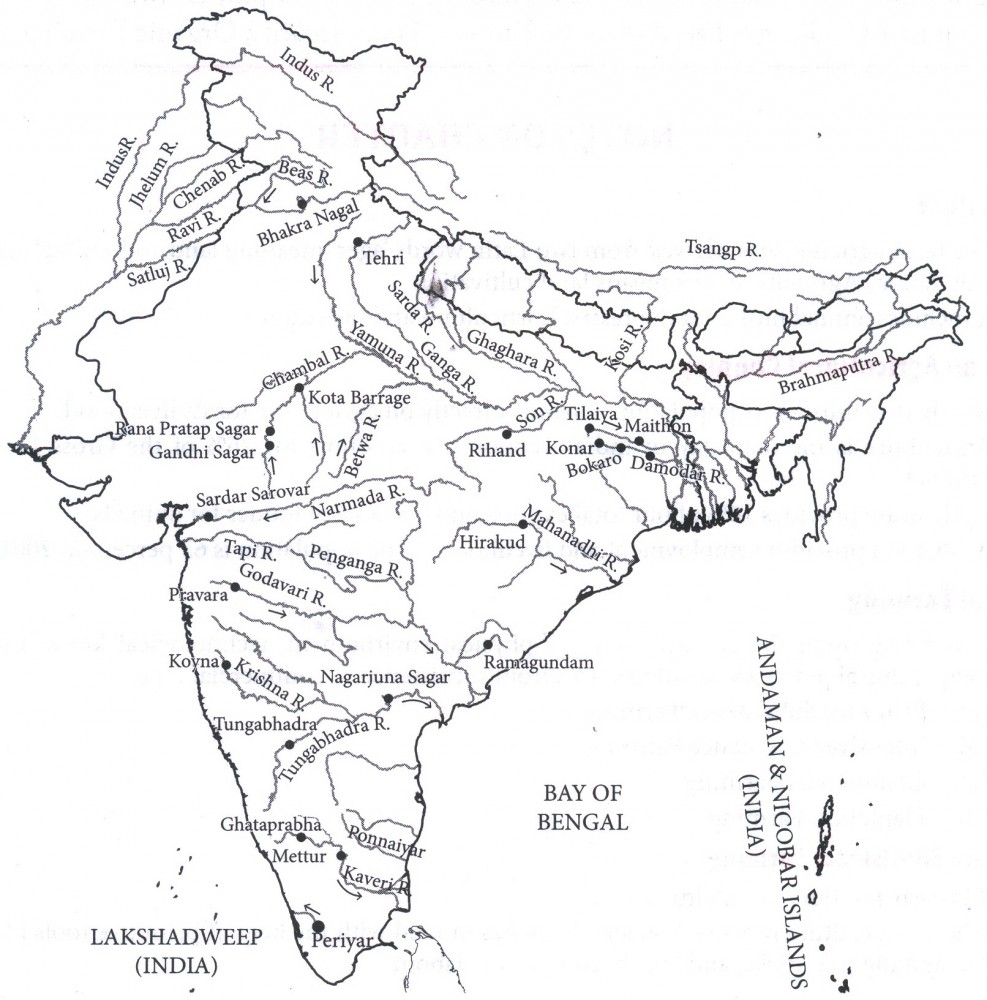
34.
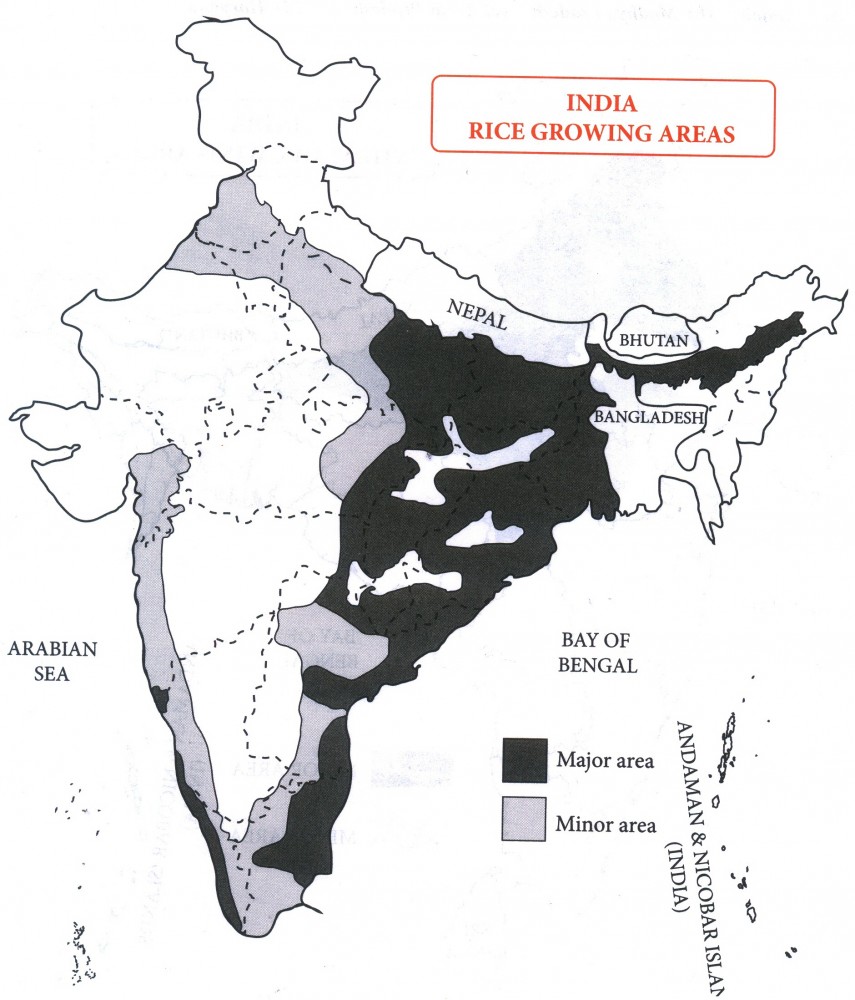
35.
()
Political completion along religions and ethnic lines led to the disintegration of Yugoslavia into six independent countries.
36.
()
After the Franco-Chinese war, the French troops assumed control of Tonkin and Anaam in 1887, and thus formed Indo-China.
37.
()
For comparing different countries the important component is per capita income

10th Standard CBSE Syllabus & Materials
10th Standard CBSE
CBSE 10th Social Science PS - Federalism - New Model Questions Papers Study Material - QB365 Set A
NEW10th Standard CBSE
CBSE 10th Social Science PS - Power Sharing - New Model Questions Papers Study Material - QB365 Set A
NEW10th Standard CBSE
CBSE 10th Social Science GEO - Manufacturing Industries - New Model Questions Papers Study Material - QB365 Set A
NEW10th Standard CBSE
CBSE 10th Social Science GEO - Minerals and Energy Resources - New Model Questions Papers Study Material - QB365 Set A



CBSE 10th Standard CBSE Subjects
CBSE Standards





