
 100% FREE ACCESS
7th Standard CBSE Syllabus & Materials
7th Standard CBSE
CBSE 7th Social Science Theme E - Understanding Market - New Sample Question Papers Study Material - QB365 Set A
NEW7th Standard CBSE
CBSE 7th Social Science Theme E - From Barter to Money - New Sample Question Papers Study Material - QB365 Set A
NEW7th Standard CBSE
CBSE 7th Social Science Theme D - The Constitution of India- An Introduction - New Sample Question Papers Study Material - QB365 Set A
NEW7th Standard CBSE
CBSE 7th Social Science Theme D - From the Rulers to the Ruled : Types of Governments - New Sample Question Papers Study Material - QB365 Set A
NEW7th Standard CBSE
CBSE 7th Social Science Theme B - The Age of Reorganisation - New Sample Question Papers Study Material - QB365 Set A
NEW7th Standard CBSE
CBSE 7th Social Science Theme B - The Rise of Empires - New Sample Question Papers Study Material - QB365 Set A

Published on: 05/09/2019
Winds, Storms and Cyclones
Download CBSE Class 7th Standard CBSE Science question papers, sample papers, important questions, and previous year solved papers in PDF format. Get free study materials, NCERT solutions, and exam preparation resources for Class 7th Standard CBSE Science
Questions + Answers key
Take MCQ Science Test
1.
Due to uneven heating of land and ocean water what happens in the following season? In winter season
2.
Name some effective safety measures against cyclone?
3.
Give three precautions that should be taken to protect oneself from the thunderstorm.
4.
Mention an example when the cyclone hit a part of India and how much destruction was caused due to it.
5.
What planning is required in advance to deal with the situation created by a cyclone?
6.
The calm centre of cyclone is called
head
eye
water spout
storm
7.
Increased wind speed is accompanied with
increased air pressure
affected air pressure
reduced air pressure
lower humidity
8.
Wind is caused due to
uneven heating of equator and poles
difference in humidity
even heating of land and water
None of the above
9.
Orissa was hit by a cyclone with wind speed of 200 km/h on which date
18Oct, 1998
18 Oct, 1999
18 Oct, 2001
18 Oct, 2000
10.
Which one of the following places is unlikely to be affected by a cyclone?
Chennai
Mangaluru (Mangalore)
Amritsar
Puri
11.
Can you say why smoke always rises up?
12.
Name the factor responsible for the increase of speed of wind or cyclones.
13.
Name the instrument which is used to measure the speed of wind.
14.
Suggest some precautions to be taken to prevent the roof of a tin sheet from flying away during a fierce wind storm.
15.
Enlist the other names of cyclone.
16.
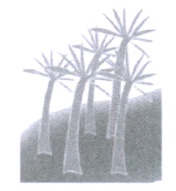
The picture in figure shows tree line along the sea coast on an island near the equator. As shown, the tree tops are permanently bent in one direction. Are the trees bend towards the sea or away from it? Explain.
17.
Air around us exerts _________________
18.
A violent Tornado can travel at the speeds of about ___________
19.
Uneven heating of land generates monsoon winds from _________ direction in ___________
20.
A change in the direction of wind is caused dueto __________ of earth.
21.
The bicycle tube __________ when it is overfilled with _________.
22.
Warm air is lighter than cool air.
23.
The coast line of India is not vulnerable to cyclones.
24.
A very high pressure system with very high speed wind surroundings, it forms a cyclone.
25.
If wind flows from land to the ocean, then it is day time.
26.
Uneven heating of land and water in winter (North-West and colder land) brings little rain in winter.
27.
Can you now state what happens to the air in the boiling tube when it cools down?
28.
Can we infer from the first observation that air expands on heating?
29.
Why is the same balloon deflated when the tube is kept in cold water?
30.
What makes the balloon inflated when the boiling tube is placed in hot water?
31.
Can you imagine what would happen if high speed winds blew over the roofs of buildings?
1.
Due to uneven heating of land and ocean water
In winter season The uneven heating of land and water generates winds from the North-West colder land which carry little water . It brings small amount of rain in winter season.
2.
These are produced by the dark clouds which form at fairly low altitude in the atmosphere.
3.
The following three precautions must be taken to protect oneself from the lightning of thunderstorm
(i) Do not take shelter under an isolated tree.
(ii) Do not lie on the ground
(iii) Do not take shelter under an umbrella with a metallic end.
4.
Orissa (a part of India) was hit by cyclone in 18th October 1999. The wind speed was 200 km/h and smashed 45000 houses making 700000 people homeless. Another cyclone hit the Orissa again an 29th October with the wind speed of 260 km/h. Thousands of people lost their lives and property worth crores of rupees was destroyed.
5.
A good planning in advance will minimise the damages to be caused by a cyclone. Some of the plannings are as follows:
(i) The cyclone warning issued by the meteorological department through television, radio or newspapers must not be ignored and this instruction given should be followed carefully.
(ii) The household articles, domestic animals, vehicles, etc., should be shifted to safer places.
(iii) The telephone numbers of essential services like police, fire brigade and medical centres, etc., should be kept ready to meet the emergency situation.
6.
(b)
eye
7.
(c)
reduced air pressure
8.
(a)
uneven heating of equator and poles
9.
(b)
18 Oct, 1999
10.
(c)
Amritsar
11.
As we know that smoke is the combination of hot airs and hot air becomes light weight with respect to cold air. Thus, it always rises up.
12.
Factors like wind speed, wind direction, temperature and humidity contribute to the development of cyclones.
13.
Anemometer is used to measure the speed of wind.
14.
Some precautions are
(i) Put heavy stones on it.
(ii) Screw it tight.
15.
Hurricane and typhoon are the other names of cyclone.
16.
In the given figure, the tree line along the sea coast on an island near the equator shows that tree tops are permanently bent in one direction. The reason behind this movement of tree is that during the day time the wind blows from sea to land because land gets warmer more quickly than sea.
This makes the air of land, warm and lighter which is raised up in the sky. Therefore, the top of the bent trees shows the moving direction of wind from sea to land.
17.
()
pressure
18.
()
300 km/h
19.
()
South-West, summer
20.
()
rotation
21.
()
bursts, air
22.
(a)
23.
(b)
24.
(b)
25.
(b)
26.
(a)
27.
()
Air contracts on cooling.
28.
()
Yes.
29.
()
The air contracts owing to low temperature.
30.
()
The expansion of air caused by heat.
31.
()
When the roofs are weak, they can be lifted and blown away.

7th Standard CBSE Syllabus & Materials
7th Standard CBSE
CBSE 7th Social Science Theme B - New Beginnings : Cities and States - New Sample Question Papers Study Material - QB365 Set A
NEW7th Standard CBSE
CBSE 7th Social Science Theme A - Climates of India - New Sample Question Papers Study Material - QB365 Set A
NEW7th Standard CBSE
CBSE 7th Social Science Theme A - Geographical Diversity of India - New Sample Question Papers Study Material - QB365 Set A
NEW7th Standard CBSE
CBSE 7th Science Earth, Moon and the Sun - New Sample Question Papers Study Material - QB365 Set A



CBSE 7th Standard CBSE Subjects
CBSE Standards




