
 100% FREE ACCESS
11th Standard CBSE Syllabus & Materials
11th Standard CBSE
CBSE 11th Economics PART-A - Presentation of Data - New Sample Question Papers Study Material - QB365 Set A
NEW11th Standard CBSE
CBSE 11th Economics PART-A - Organisation of Data - New Sample Question Papers Study Material - QB365 Set A
NEW11th Standard CBSE
CBSE 11th Economics PART-A - Collection of Data - New Sample Question Papers Study Material - QB365 Set A
NEW11th Standard CBSE
CBSE 11th Economics PART-A - Introduction to Economics and Statistics - New Sample Question Papers Study Material - QB365 Set A
NEW11th Standard CBSE
CBSE 11th Business Studies International Trade Sample Question Papers Study Material - QB365 Set A
NEW11th Standard CBSE
CBSE 11th Business Studies Evolution and Fundamentals of Business Sample Question Papers Study Material - QB365 Set A

Published on: 21/10/2025
Download CBSE Class 11th Standard CBSE Biology question papers, sample papers, important questions, and previous year solved papers in PDF format. Get free study materials, NCERT solutions, and exam preparation resources for Class 11th Standard CBSE Biology
Questions + Answers key
Take MCQ Biology Test
1.
Name two synthetic auxins.
2.
Draw the structure of the amino acid, alanine.
3.
What is cell theory?
4.
Name the stage of cell cycle at which one of the following events occur:
(i) Chromosomes are moved to spindle equator.
(ii) Centromere splits and chromatids separate.
(iii) Pairing between homologous chromosomes takes place.
(iv) Crossing over between homologous chromosomes takes place
5.
What are macromolecules? Give examples.
6.
'X' is the female reproductive part of the flower, which consisits of three parts A,B and C. 'A' is the swollen botton part and C is the stocky part. Name all X,A,B, and C.
7.
Give the scientific term used for organisms that produce gobar gas.
8.
Who proposed the two kingdom classification?
9.
Explain the following terms:
(a) Actinomorphic,
(b) Gamosepalous,
(c) Syncarpous.
10.
What is the structural formula of sugars?
11.
Which one of the plant growth regulators would you use if you are asked to:
(a) induce rooting in a twig
(b) quickly ripen a fruit
(c) delay leaf senescence
(d) induce growth in axillary buds
(e) ‘bolt’ a rosette plant
(f) induce immediate stomatal closure in leaves.
12.
Describe passive transport, osmosis and active transport in plasma membrane.
13.
List the main differences between mitosis and meiosis.
14.
Differentiate between Dendrites and axons
15.
Define the term inflorescence. Explain the basis for the different types inflorescence in flowering plants.
16.
How useful is the study of the nature of body cavity and coelom in the classification of animals?
17.
What do the terms phycobiont and mycobiont signify?
18.
Take one flower of the family Solanaceae and write its semi-technical description. Also draw their floral diagram.
19.
Give a brief account of Mechanism of synaptic transmission.
20.
What is a centromere? How does the position of centromere form the basis of classification of chromosomes. Support your answer with a diagram showing the position of centromere on different types of chromosomes.
21.
List five main groups of natural plant growth regulators. Write a note on discovery, physiological functions and agricultural/horticultural applications of any one of them.
22.
23.
Assertion (A) : Arrival of an impulse at the axon terminal, stimulates the release of neurotransmitters in the synaptic cleft.
Reason (R) : These neurotransmitters are responsible for the opening of ion channels.
If both A and Rare true and R is the correct explanation A.
If both A and R are true, but R is not the correct explanation of A.
If A is true,but R is false.
If A is false, but R is true.
24.
Assertion (A) : Neurons are excitable cells.
Reason (R) : Membranes of the neurons are in a polarised state which is responsinle for the excitability.
If both A and R aare true and R is the correct explanation of A.
If both A and R are true, but R is not the correct explanation of A.
If A is true, but R is false.
If A is false,but R is true.
25.
Arrange in correct order according to the given figures.
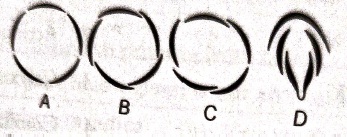
A- Imbricate,B - Vexillary, C -Valvate, D-Twisted
A - Vexillary, B- Valvate, C - Twisted, D - Imbricate
A - Valvate, B -Twisted, C -Vexillary D- Imbricate
A - Valvate, B -Twisted, C- Imbricate, D- Vexillary
26.
Pleuro Pneumonia Like Organisms (PPLOs) are ______.
Actinomycetes
Cyanobacteria
Mycoplasma
Rickettsia
27.
Who proposed the fluid mosaic model of plasma membrane?
Benda
Schleiden and Schwann
Singer and Nicolson
Robert Brown
28.
Roots developed from parts of the embryo other than the radicle are called _______.
taproots
fibrous roots
adventitious roots
nodular roots
29.
What constitutes a ribozyme?
Protein
Nucleic acid
Fat
Carbohydrate
30.
What is the name of the node between two myelin sheaths?
Nissl's Granules
Schwan Cell
Nodes of Ranvier
None of these
31.
How many essential amino acids are known?
20
21
22
23
32.
Which of the following hormones acts as growth inhibitor?
Gibberellins
Auxins
Cytokinins
Abscisic Acid
33.
Which of the following plastids stores starch?
Amyloplasts
Elaioplasts
Aleuroplasts
Chloroplasts
34.
Which of the following cells usually do not undergo cell division?
Cells of skin
Cells of buccal cavity
Cells of heart
All of these
35.
Which type of excretion is present in fishes?
Ammonotelic
Ureotelic
Urecotelic
None of these
36.
Which of the following organisms is a good indicator of pollution in an environment?
Bacteria
Fungi
Algae
Lichens
37.
Water vascular system is the characteristic of which group of the following:
Porifera
Ctenophora
Echinodermata
Chordata
38.
Read the following passage and answer the questions that follows.
Class XI biology students attended a seminar where the speaker explained the students about the basic macromolecule found in the body, i.e. protein. He started with the monomer unit of protein and explained about different amino acids found . As armino acids are organic compounds containing an amino group and an acidic group as substituents on the same carbon, they are also considercd as substituted
methane. Suddenly, Ajay stood up and asked about his queries based on the topic. The guest of seminar patiently explained him all the things. Ajay became satisfied and returned home happily from the seminar.
(i) What are the four substituent groups ín an amino acid?
(ii) Why are there so many different types of amino acids?
(iii) Give the general formula of α - amino acids.
(iv) What are acidic amino acids? Give examples.
39.
All organisms are composed of cell(s), i.e. organisms are unicellular or multicellular. The discovery of microscope and its improvement leading to the electron microscope has revealed all the structural details of cells.
(a) Why are cells considered the fundamental structural and functional units of life?
(b) Mention two characteristic features of unicellular organisms.
(c) Name the scientist who
(i) first observed and described living cells.
(ii) showed that cell wall is a unique character of plant cells.
1.
(i) Naphthalene acetic acid (NAA)
(ii) 2, 4-dichlorophenoxy acetic acid (2, 4-D)
2.
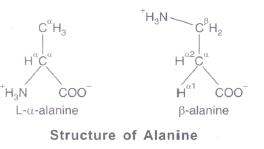
3.
Cell Theory (Malthias Scheiden, 1868; Schwarm, 1839; and Rudolf Virchow, 1855)
Cell theory as understood today is:
(i) all living organisms are composed of cells and products of cells.
(ii) all cells arise from pre-existing cells.
4.
(i) Metaphase
(ii) Anaphase
(iii) Zygotene stage of meiosis-I
(iv) Pachytene stage of prophase-I
5.
Macromolecules are large sized complex molecules having large molecular weight and low solubility which are formed by polymerisation of a number of micromolecules. They may be branched or unbranched. The common cellular macromolecules are polysaccharides, proteins and nucleic acids.
6.
X is a carpel; A is ovary; B is style and C is stigma.
7.
The Methanobacterium present in the food of the cattle digests the cellulose present. The dung then produced by the cattle contains these methanogens which can be used for the production of biogas also known as the gobar gas.
8.
Linnaeus proposed the two kingdom classification in 1758
9.
(a) A flower is actinomorphic.
(b) The calyx of a flower is gamosepalous, if the sepals are united.
(c) The ovary is syncarpous, if the carpels are fused together. if it can be cut into two equal parts along any radial plane passing through the centre.
10.
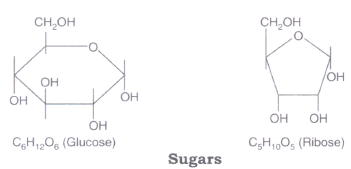
11.
(i) Indole Butyric Acid (IBA)
(ii) Ethylene
(ii) Cytokinin
(iv) Cytokinin
(v) Gibberellin
(vi) Abscisic acid
12.
Passive Transport. The plasma membrane is selectively permeable to some molecules present on either side of it. Many molecules can move briefly across the membrane without any requirement of energy and this is called the passive transport.
Osmosis. Neutral solutes may move across the membrane by the process of simple diffusion along the concentration gradient, i.e., from higher concentration to the lower. Water may also move across this membrane from higher to lower concentration. Movement of water by diffusion is called osmosis.
Active Transport. As the polar molecules cannot pass through the nonpolar lipid bilayer, they require a carrier protein of the membrane to facilitate their transport across the membrane. A few ions or molecules are transported across the membrane against their concentration gradient, i.e., from lower to the higher concentration. Such a transport is an energy-dependent process, in which ATP is utilised and is called active transport, e.g., Na+/K+ Pump.
13.
Difference between Mitosis and Meiosis
| Mitosis | Meiosis |
|---|---|
| Takes place in somatic cells | Takes place in gametic cells |
| Single division | Double division |
| Two daughter cells are formed in the end and resemble mother cell | Four daughter cells are formed in the end and do not resemble to mother cell |
| Replication of chromsomes occurs before every mitotic division |
Replication of chromsomes occurs only once |
| Number of chromosomes remains same in daughter cells as compared to those in parent cells | Number of chromosomes is halved in daughter cells as compared to those in parent cells |
| Does not intoduce variations | Intoduces variations |
| Cell division happens in simple steps | Cell division involves multiple and longer stages |
14.
Difference between dendrites and axons are as follows:
| Dendrites | Axon |
| These are short fibres which branch repeatedly and project out of the cell body and also contain Nissl's granules. |
The axon is a long branched fibre, which terminates as a bulb-like structure called synaptic vesicles containing chemicals called neurotransmitters. |
| These fibres transmit impulses towards the cell body. | The axons transmit nerve impulses away from the cell body to a synapse. |
| Its branches terminate into bulb-like synaptic knobs. | Their branches do not have synaptic knobs. |
15.
The inflorescence is how the flowers are arranged on the flowering axis. During the flowering season, the vegetative apex of the stem gets converted into a floral meristem. Based on whether the floral axis continues to grow or ends in a flower, the inflorescence is classified into racemose and cymose. In racemose inflorescence, the floral axis continues to grow and produces flowers laterally. On the other hand, in a cymose inflorescence, the main axis terminates into a flower. Hence, it is limited in growth.
Growth : Indefinite (race mose) and definite.
Number of branches : Cymose, uniparous, biparous, multiparous
Pedicel : Presence or absence of pedicel in inflorescene.
Branching of peduncle : Unbranched and branched.
Sex of flowers : Certain types have unisexual flowers. e.g, Catkin.
16.
Presence or absence of a cavity between the body wall and the gut wall is very important in classification. The body cavity which is lined by mesoderm is called coelom.
(i) Animals possessing coleom are called coelmate , e.g annelids, molluscs , arthropods, echinoderms, hemichordates and chordates.
(ii) In some, animals, the body cavity id not mesoderm, instead the mesoderm is present as scattered pouchesin between the ectoderm and endoderm. Such a body possessing them are called pseudocoelomates, e.g aschelminthes .
(iii) The animals in which the body cavity is absent are known as acoelomates, e.g plathyhelminthes . This helps, in assigning the excat taxonomic position of the animal on the basis of its presence or absence in the animal's body
17.
Lichen:
1. It signifies a symbiotic relationship between the algae and fungi.
2. In this association, the fungi provide shelter and protection to algae and in return get nutrition from algae.
Phycobiont and mycobiont:
1. They both are the components of a lichen.
2. Phycobiont signifies the algal component of a lichen.
3. On the other hand, mycobiont signifies the fungal constituent of a lichen.
18.
Semi-technical descriptions of flowers of following families are:
Fabaceae
Family - Fabaceae
Vegetative characters
Herb
Leaf: Pinnately compound, alternately arranged with leaf tendrils with the pulvinus present at the leaf base. Venation is reticulate.
Root: Tap root system with root nodules.
Floral features:
Inflorescence: racemose .
Flower: zygomorphic and bisexual.
Calyx: Sepals which are gamosepalous while aestivation is imbricate.
Corolla: five petals (polypetalous) with vexillary aestivation.
Androecium: ten anthers that are diadelphous with dithecous anthers.
Gynoecium: Monocarpellary superior ovary which is unilocular with marginal placentation.
Fruit: Legume pod with non-endospermic seeds
Floral formula:

Floral Diagram:
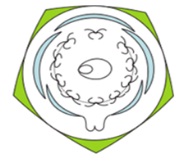
Solanaceae
Solanum lycopersicum (Tomato)
Family - Solanaceae
Vegetative characters
Shrub
Stem: herbaceous stem, aerial, erect , branched solid
Leaf: alternate , simple, exstipulate and reticulate venation
Floral features:
Inflorescence: Cymose
Flower: bisexual and actinomorphic.
Calyx: five sepals, united persistant, valvate aestivation
Corolla: five petals, united, valvate aestivation
Androecium: five stamens, epipetalous
Gynoecium: bicarpellary, syncarpous superior ovary, bilocular, placenta swollen with many ovules
Fruit: berry
Seeds: many endosperms
19.
Mechanism of synaptic transmission
Synapse is a junction between two neurons. It is present between the axon terminal of one neuron and the dendrite of next neuron separated by a cleft.
There are two ways of synaptic transmission.
(1) Chemical transmission
(2) Electrical transmission
1. Chemical transmission – When a nerve impulse reaches the end plate of axon, it releases a neurotransmitter (acetylcholine) across the synaptic cleft. This chemical is synthesized in cell body of the neuron and is transported to the axon terminal. The acetylcholine diffuses across the cleft and binds to the receptors present on the membrane of next neuron. This causes depolarization of membrane and initiates an action potential.
2. Electrical transmission – In this type of transmission, an electric current is formed in the neuron. This electric current generates an action potential and leads to transmission of nerve impulse across the nerve fibre. This represents a faster method of nerve conduction than the chemical method of transmission.
20.
Every chromosome essentially has a primary constriction or the centromere on the sides of which disc-shaped structures called kinetochores are present. Based on the position of the centromere, the chromosomes can be classified into four types.
Metacentric Chromosome : The metacentric chromosome has middle centromere forming two equal arms of the chromosome. Sub-metacentric Chromosome. The sub-metacentric chromosome has centromere nearer to one end of the chromosome resulting into one shorter arm and one longer arm.
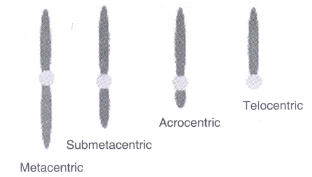
Acrocentric Chromosome : In case of acrocentric chromosome, the centromere is situated close to its end forming one extremely short and one very long arm, Telocentric Chromosome. The telocentric chromosome has a terminal centromere.
21.
Plant growth regulators are the chemical molecules secreted by plants affecting the physiological attributes of a plant. There are five main plant growth regulators. These are: Auxins, Gibberellic acid, Cytokinins, Ethylene and Abscisic acid
(i) Auxins
Discovery:
1. The first observations regarding the effects of auxins were made by Charles Darwin and Francis Darwin wherein they saw the coleoptiles of canary gross bending toward a unilateral source of light.
2. It was concluded after a series of experiments that some substance produced at the tip of coleoptiles was responsible for the bending. Finally, this substance was extracted as auxins from the tips of coleoptiles in oat seedlings.
Physiological functions:
1. They control plant cell-growth.
2. They cause the phenomenon of apical dominance.
3. They control division in the vascular cambium and xylem differentiation. - They induce parthenocarpy and prevent abscission of leaves and fruits.
Horticultural applications:
1. They are used as the rooting hormones in stem cuttings.
2. 2-4 D is used weedicide to kill broadleaf, dicotyledonous weeds.
3. They induce parthenocarpy in tomatoes.
4. They promote flowering in pineapple and litchi.
(ii) Gibberellic acid
Discovery: Bakane or the “foolish rice seedling” disease was first observed by Japanese farmers. In this disease, rice seedlings appear to grow taller than natural plants and become slender and pale green. Later, after several experiments, it was found that this condition was caused by the infection from a certain fungus Gibberella fujikuroi. The active substance was isolated and identified as gibberellic acid.
Physiological functions:
1. It causes elongation of internodes.
2. It promotes bolting in rosette plants.
3. It helps in inducing seed germination by breaking seed dormancy and initiating the synthesis of hydrolases enzymes for digesting reserve food.
Horticultural applications:
1. It helps in increasing the sugar content in sugarcane by increasing the length of the internodes.
2. It increases the length of grape stalks.
3. It improves the shape of an apple.
4. It delays senescence.
5. It hastens maturity and induces seed-production in juvenile conifers.
(iii) Cytokinins
Discovery: Through their experimental observations, F. Skoog and his co-workers found that the tobacco callus differentiated when extracts of vascular tissues, yeast extract, coconut milk, or DNA were added to the culture medium. This led to the discovery of cytokinins.
Physiological functions:
1. They promote the growth of lateral branches by inhibiting apical dominance.
2. They help in the production of new leaves, chloroplasts, and adventitious shoots.
3. They help in delaying senescence by promoting nutrient mobilisation.
Horticultural applications:
1. They are used for preventing apical dominance.
2. They are used for delaying senescence in leaves.
(iv) Ethylene
Discovery: It was observed that unripe bananas ripened faster when stored with ripe bananas. Later, the substance promoting the ripening was found to be ethylene.
Physiological functions:
1. It helps in breaking seed and bud dormancy.
2. It promotes rapid internode-elongation in deep-water rice plants.
3. It promotes root-growth and formation of root hairs.
4. It promotes senescence and abscission of leaves and flowers.
5. It hastens the respiration rate in fruits and enhances fruit ripening.
Horticultural applications:
1. It is used to initiate flowering and synchronising the fruit set in pineapples.
2. It induces flowering in mango.
3. Ethephon is used to ripen the fruits in tomatoes and apples, and accelerate the abscission of flowers and leaves in cotton, cherry, and walnut.
4. It promotes the number of female flowers in cucumbers.
(v) Abscisic acid
Discovery: During the mid-1960s, inhibitor-B, abscission II, and dormin were discovered by three independent researchers. These were later on found to be chemically similar and were thereafter called ABA (Abscisic acid).
Physiological functions:
1. It acts as an inhibitor to plant metabolism.
2. It stimulates stomatal closure during water stress.
3. It induces seed dormancy.
4. It induces abscission of leaves, fruits, and flowers.
Horticultural application: It induces seed dormancy in stored seeds.
22.
(b)
23.
(b)
If both A and R are true, but R is not the correct explanation of A.
24.
(a)
If both A and R aare true and R is the correct explanation of A.
25.
(d)
A - Valvate, B -Twisted, C- Imbricate, D- Vexillary
26.
(c)
Mycoplasma
27.
(c)
Singer and Nicolson
28.
(c)
adventitious roots
29.
(b)
Nucleic acid
30.
(c)
Nodes of Ranvier
31.
(b)
21
32.
(d)
Abscisic Acid
33.
(a)
Amyloplasts
34.
(c)
Cells of heart
35.
(a)
Ammonotelic
36.
(d)
Lichens
37.
(c)
Echinodermata
38.
(i) Hydrogen, carboxyl group, amino group, variable (R) group.
(ii) Due to the enormously varying R group, there are many different types of amino acids.
(iii)
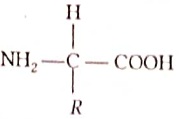
(iv) The acidic amino acids contain one amino group and two carboxyl groups per molecule, e.g. glutamic acid and aspartic acid.
39.
(a) Cell is considered the fundamental structural and functional unit of life because anything less than a complete structure of a cell does not ensure independent living.
(b) Unicellular organisms are capable of
(i) independent existence.
(ii) performing all the essential life processes.
(c) (i) Anton Von Leeuwenhoek
(ii) Theodore Schwann

11th Standard CBSE Syllabus & Materials
11th Standard CBSE
CBSE 11th Business Studies Forms of Business Organisation Sample Question Papers Study Material - QB365 Set A
NEW11th Standard CBSE
CBSE 11th Business Studies Business, Trade and Commerce Sample Question Papers Study Material - QB365 Set A
NEW11th Standard CBSE
CBSE 11th Physics Waves Sample Question Papers Study Material - QB365 Set A
NEW11th Standard CBSE
CBSE 11th Physics Kinetic Theory Sample Question Papers Study Material - QB365 Set A



NCERT Books

Syllabus

Exam Pattern

Sample Question Papers

Previous year Question Papers

Important Notes

MCQ Practice test

NCERT Exemplers

Case study Questions

Image Based Questions

Passage based Questions

HOT Questions

Value Based Questions

Model Questions Papers
NCERT ( Book Back ) Questions

Assertion and Reason
Important Questions And Answers

CBSE 11th Standard CBSE Subjects
CBSE Standards







