
 100% FREE ACCESS
11th Standard CBSE Syllabus & Materials
11th Standard CBSE
CBSE 11th Economics PART-A - Presentation of Data - New Sample Question Papers Study Material - QB365 Set A
NEW11th Standard CBSE
CBSE 11th Economics PART-A - Organisation of Data - New Sample Question Papers Study Material - QB365 Set A
NEW11th Standard CBSE
CBSE 11th Economics PART-A - Collection of Data - New Sample Question Papers Study Material - QB365 Set A
NEW11th Standard CBSE
CBSE 11th Economics PART-A - Introduction to Economics and Statistics - New Sample Question Papers Study Material - QB365 Set A
NEW11th Standard CBSE
CBSE 11th Business Studies International Trade Sample Question Papers Study Material - QB365 Set A
NEW11th Standard CBSE
CBSE 11th Business Studies Evolution and Fundamentals of Business Sample Question Papers Study Material - QB365 Set A

Published on: 18/10/2019
Respiration in Plants
Download CBSE Class 11th Standard CBSE Biology question papers, sample papers, important questions, and previous year solved papers in PDF format. Get free study materials, NCERT solutions, and exam preparation resources for Class 11th Standard CBSE Biology
Questions + Answers key
Take MCQ Biology Test
1.
Explain various steps involved in cellular respiration.
2.
How do plants manage exchange of gases? Give an overview of respiration in plants.
3.
Explain glycolysis.
4.
Explain ETS.
5.
Differentiate between Glycolysis and Krebs' cycle.
6.
Differentiate between Aerobic respiration and Fermentation.
7.
What is the significance of stepwise release of energy in respiration.
8.
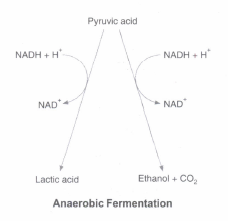
Give a diagrammatic representation of fermentation.
9.
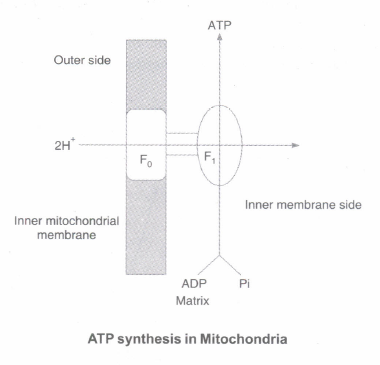
Give a diagrammatic representation of ATP synthesis.
10.
The maximum concentration of alcohol produced by natural fermentation is 13%. But most of the alcoholic preparations for human consumption contain more than this percentage. How this higher percentage is achieved?
1.
Steps of cellular respiration:
(1) Glycolysis: Glycolysis is the first step in cellular respiration. During glycolysis glucose undergoes partial oxidation and makes pyruvic acid. From 1 molecule of glucose 2 molecules of pyruvic acid is formed.
(2) Fermentation: The pyruvic acid undergoes fermentation in anaerobic conditions. There can be lactic acid fermentation or ethanol fermentation. By lactic acid fermentation pyruvic acid is converted into lactic acid, while in another case the pyruvic acid is converted to ethyl alcohol. Fermentation does not ensure complete oxidation of glucose.
(3) Citric Acid Cycle: Under aerobic conditions the pyruvic acid undergoes citric acid cycle. This converts the pyruvic acid into citric acid. ATP is also released which is stored by mitochondria.
\(pyruvic \ acid +CoA+NAD^+\xrightarrow {Mg2^+}Acetyl \ CoA+NADH+H^+\)
2.
Plant Respiration
(i) Plants, unlike animals, have no specialised organs for gaseous exchange but they have stomata and lenticels for this purpose. There are several reasons why plants can get along without respiratory organs.
(ii) Each plant part takes care of its own gas-exchange needs. There is very little transport of gases from one plant part to another.
(iii) Plants do not present great demands for gas exchange. Roots, stems and leaves respire at rates far lower than animals do. Only during photosynthesis are large volumes of gases exchanged and, each leaf is well adapted to take care of its own needs during these periods. When cells photosynthesise, availability of O2 is not a problem in these cells since O2 is released within the cell.
(iv) The distance that gases must diffuse even in large, bulky plants is not great. Each living cell in a plant is located quite close to the surface of the plant. Even in woody stems, the 'living' cells are organised in thin layers inside and beneath the bark. They also have openings called lenticels. The cells in the interior are dead and provide only mechanical support. Thus, most cells of a plant have at least a part of their surface in contact with air. This is also facilitated by the loose packing of parenchyma cells in leaves, stems and roots, which provide an interconnected network of air spaces.
(v) The complete combustion of glucose, which produces CO2 and H2O as end products, yields energy most of which is given out as heat.
C6H12O6+ 6O2 \(\rightarrow\)6CO2 + 6H2O + Heat
(vi) If this energy is to be useful to the cell, it should be able to utilise it to synthesise other molecules that the cell requires. The strategy that the plant cell uses is to catabolise the glucose molecule in such a way that not all the liberated energy goes out as heat. The key is to oxidise glucose not in one step but in several small steps enabling some steps to be just large enough such that the energy released can be coupled to ATP synthesis.
3.
Glycolysis
(i) The term glycolysis has originated from the Greek words, glycos for sugar, and lysis for splitting. The scheme of glycolysis was given by Gustav Embden, Otto Meyerhof, and J. Parnas, and is often referred to as the EMP pathway.
(ii) In anaerobic organisms, it is the only process in respiration.
(iii) Glycolysis occurs in the cytoplasm of the cell and is present in all living organisms.
(iv) In this process, glucose undergoes partial oxidation to form two molecules of pyruvic acid. In plants, this glucose is derived from sucrose, which is the end product of photosynthesis, or from storage carbohydrates.
(v) Sucrose is converted into glucose and fructose by the enzyme, invertase, and these two monosaccharides readily enter the glycolytic pathway.
(vi) Glucose and fructose are phosphorylated to give rise to glucose-6-phosphate by the activity of the enzyme hexokinase.
(vii) This phosphorylated form of glucose then isomerises to produce fructose -6-phosphate.
(viii) Subsequent steps of metabolism of glucose and fructose are same.
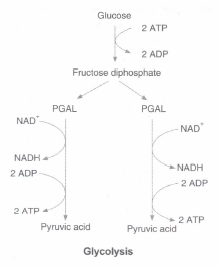
(ix) The various steps of glycolysis are depicted in the following figure:
In glycolysis, a chain of ten reactions, under the control of different enzymes, takes place to produce pyruvate from glucose.
Utilisation of ATP During Glycolysis:
1. During the conversion of glucose into glucose-6-phosphate
2. During the conversion of fructose-6-phosphate to fructose-1, 6-diphosphate.
4.
The following steps in the respiratory process are to release and utilize the energy stored in NADH+ H+and FADH2. This is accomplished when they are oxidised through the electron transport system and the electrons are passed on to O2 resulting in the formation of H2O. The metabolic pathway through which the electron passes from one carrier to another, is called the electron transport system (ETS) and it is present in the inner mitochondrial membrane.
Electrons from NADH produced in the mitochondrial matrix during citric acid cycle are oxidised by an NADH dehydrogenase (complex I), and electrons are then transferred to ubiquinone located within the inner membrane. Ubiquinone also receives reducing equivalents via FADH2 (complex II) that is generated during oxidation of succinate in the citric acid cycle.
The reduced ubiquinone (ubiquinol) is then oxidised with the transfer of electrons to cytochrome c via cytochrome bc l complex (complex III).
Cytochrome c is a small protein attached to the outer surface of the inner membrane and acts as a mobile carrier for transfer of electrons between complex III and IV. Complex IV refers to cytochrome c oxidase complex containing cytochromes a and a3, and two copper centres.
When the electrons pass from one carrier to another via complex I to IV in the electron transport chain, they are coupled to ATP synthase (complex V) for the production of ATP from ADP and inorganic phosphate. The number of ATP molecules synthesized depends on the nature of the electron donor.
Oxidation of one molecule of NADH gives rise to 3 molecules of ATP, while that of one molecule of FADH2 produces 2 molecules of ATP. Although the aerobic process of respiration takes place only in the presence of oxygen, the role of oxygen is limited to the terminal stage of the process. Yet, the presence of oxygen is vital, since it drives the whole process by removing hydrogen from the system. Oxygen acts as the final hydrogen acceptor.
Unlike photophosphorylation where it is the light energy that is utilised for the production of proton gradient required for phosphorylation, in respiration it is the energy of oxidation-reduction utilised for the same process. It is for this reason that the process is called oxidative phosphorylation.
The energy released during the electron transport system is utilised in synthesising ATP with the help of ATP synthase (complex V). This complex consists of two major components, F1 and F0. The F1 head piece is a peripheral membrane protein complex and contains the site for synthesis of ATP from ADP and inorganic phosphate. F0 is an integral membrane protein complex that forms the channel through which protons cross the inner membrane. The passage of protons through the channel is coupled to the catalytic site of the F1 component for the production of ATP. For each ATP produced, 2H+passes through F0 from the intermembrane space to the matrix down the electrochemical proton gradient.
5.
Glycolysis : Glycolysis is a metabolic pathway that is found in the cytoplasm of cells in all living organisms and is anaerobic, or doesn't require oxygen. The process converts one molecule of glucose into two molecules of pyruvate, and makes energy in the form of two net molecules of ATP.
Citric acid Cycle or Krebs Cycle : When oxygen is present, acetyl-CoA is produced from the pyruvate molecules created from glycolysis. Once acetyl-CoA is formed, two processes can occur, aerobic or anaerobic respiration.
When oxygen is present, the mitochondria will undergo aerobic respiration which leads to the Krebs cycle. However, if oxygen is not present, fermentation of the pyruvate molecule will occur. In the presence of oxygen, when acetyl-CoA is produced, the molecule then enters the citric acid cycle (Krebs cycle)inside the mitochondrial matrix, and gets oxidized to CO2 while at the same time reducing NAD to NADH. NADH can be used by the electron transport chain to create further ATP as part of oxidative phosphorylation. To fully oxidize the equivalent of one glucose molecule, two acetyl-CoA must be metabolized by the Krebs cycle. Two waste products, H2O and CO2, are created during this cycle.
The citric acid cycle is an 8-step process involving 8 different enzymes. Throughout the entire cycle, acetyl-CoA changes into citrate, isocitrate, \(\alpha\) ketoglutarate, succinyl-CoA, succinate, fumarate, malate, and finally, oxaloacetate. The net energy gain from one cycle is 3 NADH,1 FADH, and 1 ATP. Thus, the total amount of energy yield from one whole glucose molecule (2 pyruvate molecules) is 6 NADH, 2 FADH, and 2 ATP.
6.
Aerobic respiration :
Aerobic respiration is the main means by which both plants and animals utilize energy in the form of organic compounds that was previously created through photosynthesis. Respiration requires oxygen in order to generate energy (ATP). It is the preferred method of pyruvate breakdown from glycolysis and requires that pyruvate enter the mitochondrion in order to be fully oxidized by the Krebs cycle. The product of this process is energy in the form of ATP (Adenosine Triphosphate), by substrate-level phosphorylation, NADH and FADH2.
Anaerobic Respiration or Fermentation :
Without oxygen, pyruvate is not metabolized by cellular respiration but undergoes a process of fermentation. The pyruvate is not transported into the mitochondrion, but remains in the cytoplasm, where it is converted to waste products that may be removed from the cell. This serves the purpose of oxidizing the hydrogen carriers so that they can perform glycolysis again and removing the excess pyruvate. This waste product varies depending on the organism. In skeletal muscles, the waste product is lactic acid. This type of fermentation is called lactic acid fermentation. In yeast, the waste products are ethanol and carbon dioxide. This type of fermentation is known as alcoholic or ethanol fermentation. The ATP generated in this process is made by substrate phosphorylation, which is phosphorylation that does not involve oxygen.
7.
The process of aerobic respiration is divided into four phases – glycolysis, TCA cycle, ETS, and oxidative phosphorylation. It is generally assumed that the process of respiration and production of ATP in each phase takes place in a step-wise manner. The product of one pathway forms the substrate of the other pathway. Various molecules produced during respiration are involved in other biochemical processes. The respiratory substrates enter and withdraw from pathway on necessity. ATP gets utilized wherever required and enzymatic rates are generally controlled. Thus, the step-wise release of energy makes the system more efficient in extracting and storing energy.
8.
9.
10.
The higher percentage of alcohol is achieved through distillation of the liquid, which gives pure alcohol as well. The boiling involved in distillation helps evaporate the liquid part and higher concentration is achieved.

11th Standard CBSE Syllabus & Materials
11th Standard CBSE
CBSE 11th Business Studies Forms of Business Organisation Sample Question Papers Study Material - QB365 Set A
NEW11th Standard CBSE
CBSE 11th Business Studies Business, Trade and Commerce Sample Question Papers Study Material - QB365 Set A
NEW11th Standard CBSE
CBSE 11th Physics Waves Sample Question Papers Study Material - QB365 Set A
NEW11th Standard CBSE
CBSE 11th Physics Kinetic Theory Sample Question Papers Study Material - QB365 Set A



CBSE 11th Standard CBSE Subjects
CBSE Standards









