
 100% FREE ACCESS
11th Standard CBSE Syllabus & Materials
11th Standard CBSE
CBSE 11th Economics PART-A - Presentation of Data - New Sample Question Papers Study Material - QB365 Set A
NEW11th Standard CBSE
CBSE 11th Economics PART-A - Organisation of Data - New Sample Question Papers Study Material - QB365 Set A
NEW11th Standard CBSE
CBSE 11th Economics PART-A - Collection of Data - New Sample Question Papers Study Material - QB365 Set A
NEW11th Standard CBSE
CBSE 11th Economics PART-A - Introduction to Economics and Statistics - New Sample Question Papers Study Material - QB365 Set A
NEW11th Standard CBSE
CBSE 11th Business Studies International Trade Sample Question Papers Study Material - QB365 Set A
NEW11th Standard CBSE
CBSE 11th Business Studies Evolution and Fundamentals of Business Sample Question Papers Study Material - QB365 Set A

Published on: 21/10/2025
Download CBSE Class 11th Standard CBSE Chemistry question papers, sample papers, important questions, and previous year solved papers in PDF format. Get free study materials, NCERT solutions, and exam preparation resources for Class 11th Standard CBSE Chemistry
Questions + Answers key
Take MCQ Chemistry Test
1.
Give three points of differences between inductive effect and resonance effect.
2.
0.12 g of an organic compound containing phosphorous gave 0.22 g of Mg2 P2O7 by usual analysis. Calculate the percentage of phosphorous in the compound.
3.
The uncertainty in the position of a moving bullet of mass 10 g is 10-5 m. Calculate the uncertainty in its velocity?
4.
Consider structure I to VII and answer the following questions (i) and (ii).
I. \({ CH }_{ 3 }-{ CH }_{ 2 }-{ CH }_{ 2 }-{ CH }_{ 2 }-{ OH }\)
II. \({ CH }_{ 3 }-{ CH }_{ 2 }-{ CH }-{ CH }_{ 3 }\\ \quad \quad \quad \quad \quad \quad \quad |\\ \quad \quad \quad \quad \quad \quad \quad { OH }\)
III. \({ \quad \quad \quad \quad CH }_{ 3 }\\ \quad \quad \quad \quad |\\ { { CH }_{ 3 } }-{ C }-{ CH }_{ 3 }\\ \quad \quad \quad \quad |\\ \quad \quad \quad \quad { OH }\)
IV. \({ CH }_{ 3 }-{ CH }-{ CH_{ 2 } }-{ OH }\\ \quad \quad \quad \quad |\\ \quad \quad \quad \quad { CH }_{ 3 }\)
V. \({ CH }_{ 2 }-{ CH }_{ 2 }-{ O }-{ CH }_{ 2 }-{ CH }_{ 3 }\)
VI. \({ CH }_{ 2 }-{ O }-{ CH }_{ 2 }-{ CH }_{ 2 }-{ CH }_{ 3 }\)
VII. \({ CH }_{ 3 }-{ O }-{ CH }-{ CH }_{ 3 }\\ \quad \quad \quad \quad \quad \quad |\\ \quad \quad \quad \quad \quad \quad { CH }_{ 3 }\)
(i) Which of the above compounds form pairs of metamers?
(ii) Identify the pairs of compounds which are functional group isomers.
(iii) Identify the pairs of compounds that represent position isomerism.
(iv) Identify the pairs of compounds that represent chain isomerism.
5.
First member of each group of representative elements ( i.e. sand p-block elements ) shows anomalous behaviour. Illustrate with two examples.
6.
Calculate the total number of electrons present in 1.6 g of methane.
7.
Calculate the molar mass of the following. (i) H2O (ii) CO2 (iii) CH4
8.
A compound contains 4.07% hydrogen, 24.27% carbon and 71.65% chlorine. Its molar mass is 98.96 g. What are its empirical and molecular formulas?
9.
Explain hyperconjugation effect. How does hyperconjugation effect explain the stability of alkenes?
10.
Explain the terms inductive and electromeric effects. Which electron displacement effect explain the following correct orders of acidity of the carboxylic acids?
(a) Cl3CCOOH > Cl2CHCOOH > ClCH2COOH
(b) CH3CH2COOH > (CH3)2CHCOOH > (CH3)3C.COOH
11.
Discuss the factors that influence the magnitude of ionization enthalpy. What are the general trends of variation of ionization enthalpy in the periodic table? Explain.
12.
What is the basic difference between the terms electron gain enthalpy and electronegativity?
13.
In a reaction A + B2 → AB2 Identify the limiting reagent, if any, in the following reaction mixtures.
(i) 300 atoms of A + 200 molecules of B
(ii) 2 mol A + 3 mol B
(iii) 100 atoms of A + 100 molecules of B
(iv) 5 mol A + 2.5 mol B
(v) 2.5 mol A + 5 mol B
14.
Calculate the amount of water (g) produced by the combustion of 16 g of methane.
15.
What does atomic radius and ionic radius really mean to you?
16.
What do you mean by significant figures?
17.
Give examples of three cations and three anions which are isoelectronic with neon.
18.
Write the atomic number of the element present in the third period and seventeenth group of the periodic table.
19.
What is the difference between atomic mass and mass number?
20.
Calculate the mass per cent of different elements present in sodium sulphate, (Na2SO4).
21.
Which one of the following statements is incorrect in relation to ionization enthalpy?
Ionization enthalpy increases for each successive electron.
The greatest increase in ionization enthalpy is experienced on removal of electron from core noble gas configuration.
End of valence electrons is marked by a big jump in ionization enthalpy.
Removal of electron from orbitals bearing lower n value is easier than from orbital having higher n value.
22.
Which of the following statements related to the modern periodic table is incorrect?
The p-block has 6 columns, because a maximum of 6 electrons can occupy all the orbitals in a p-shell.
The d-block has 8 columns, because a maximum of 8 electrons can occupy all the orbitals in a d-subshell.
Each block contains a number of columns equal to the number of electrons that can occupy that subshell.
The block indicates value of azimuthal quantum number (l) for the last subshell that received electrons in building up the electronic configuration.
23.
The IUPAC name of the compound 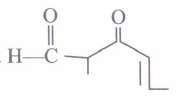 is _____________
5-Formyl hex-2-en-3-one
5-methyl-4-oxohex-2-en-5-al
3-keto-2 methyl hex-5-enal
3-keto-2-methyl hex-4-enal
24.
Hyperconjugation involves delocalisation of _________.
electrons of carbon-hydrogen σ bond of an alkyl group directly attached to an atom of unsaturated system.
electrons of carbon-hydrogen σ bond of alkyl group directly attached to the positively charged carbon atom.
π-electrons of carbon-carbon bond.
lone pair of electrons
25.
In which of the following pairs, the ions are is-electronic?
Na+, Mg2+
AI3+, O-
Na+, O2-
N3-, CI-
26.
The correct way(s) of representing 2-bromobutane is/are ______.
CH3CHBrCH2CH3
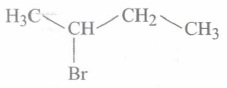
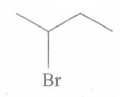
All of the above
27.
What is the mass per cent of carbon in carbon dioxide?
0.034%
27.27%
3.4%
28.7%
28.
The empirical formula of a compound is CH2. One mole of this compound has a mass of 42 g. Its molecular formula is _______.
C3H6
C3H8
CH2
C2H2
29.
The result reported in the following multiplication of significant figures, 2.5 x 1.25 = 3.125 should be _______.
3.125
3.1
3.12
3.10
30.
Which of the following compounds will exhibit cis-trans isomerism?
2-Butene
2-Butyne
1-Butene
2-Butanol
31.
The energy needed to remove a single electron (most loosely bound) from an isolated gaseous atom is called _______.
ionisation energy
electronegativity
kinetic energy
electron affinity
32.
de Broglie equation is _______.
\(\lambda =\frac { h }{ mv } \)
\(\lambda =\frac { hv }{ m } \)
\(\lambda =\frac { mv }{ h } \)
\(\lambda =hmv\)
33.
The idea of stationary orbits was first given by _______.
Rutherford
J.J. Thomson
Niels Bohr
Max Planck
34.
The reaction: CH3CH2I + KOH (aq) \(\rightarrow\)CH3CH2OH + KI is classified as :________.
electrophilic substitution
nucleophilic substitution
elimination
addition
35.
In the organic compound CH2=CH-CH2-CH2-C\(\equiv \)CH, the pair of hydridised orbitals involved in the formation of: C2 - C3 bond is _____.
sp - sp2
sp - sp3
Sp2 - Sp3
sp3 - sp3
36.
12 g of Mg will react completely with an acid to give: _______.
1 mole of O2
\(\frac { 1 }{ 2 } \)mole of H2
1 mole of H2
2 mole of H2
37.
Organic compounds are formed by covalent bonding. The nature of covalent bonding can described with the help of hybridisation, sp, Sp2 and sp3. The structure and reactivity depends upon type of bonds present in organic compounds. Organic compound can be represented by various structural formulae, Wedge and Dash formula is 3-D representation. Organic compounds can be classified on the basis of functional groups. Organic reactions mechanism are based on structure of substrate and the attacking reagent.
The intermediate formed can be free radical, carbocation, carbanion or carbene. The attacking reagent can be electrophile or nucleophile. The inductive, electromeric, resonance and hyper conjugative effect may help in polarisation of covalent bond. Organic reactions may be regarded as substitution, addition, elimination and rearrangement, oxidation and reduction reaction.
After the compound is obtained in pure state, qualitative analysis helps to detect elements present in organic compounds whereas quantitative analysis helps to find percentage of various elements. Dumas and Kjeldahl method help to determine percentage of nitrogen, Carius method for halogens and sulphur. Carbon and hydrogen are estimated by the amount of CO2 and H2Oformed. Phosphorus estimation is done by oxidising it to H3 PO4, sulphur to H2 SO4 , The percentage of oxygen is determined by taking the difference of 100 and percentage of all elements. Empirical formula gives simple ratios of elements whereas molecular formula gives exact number of atoms of each element present in a compound.
(a) What are free radicals?
(b) Write the order of stability of carbocation.
(c) An organic compounds has 8% sulphur. What is minimum molar mass of compound?
(d) If C is 75%, H = 25%, what is molecular formula of compound?
(e) In estimation of sulphur, which compound of sulphur is formed?
(f) f Lassaigne extract of organic compound give blood-red colour with FeCI3, what does it show?
(g) Why should we add HNO3 to Lassaigne extract before testing for halogens.
38.
Observe the group shown in figure and answer the questions that follow based on the graph and related studied concepts.
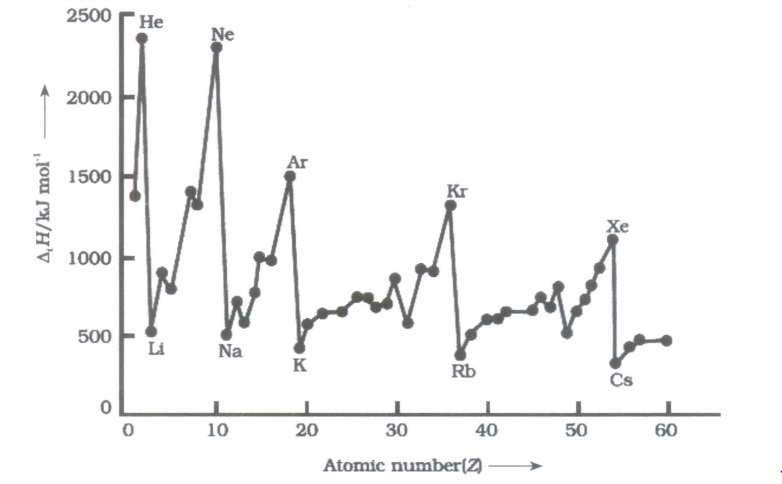
(a) Which group elements have lowest ionisation enthalpy and why?
(b) Which group element have highest ionisation enthalpy and why?
(c) Why is ionisation enthalpy of Be more than B?
(d) Why does 'N' have higher ionisation enthalpy than O?
1.
The main points of difference between inductive and resonance effects are given below.
| Inductive Effect | Resonance Effect |
| It involves displacement of only σ-electrons and hence, occurs only in saturated compounds. |
It involves delocalisation of π or n (lone pairs) of electrons and hence occurs in unsaturated and conjugated systems |
| During inductive effect the electron pair is only slighty displaced towards the more electronegative atom and hence only partial positive and negative charges appear |
During resonance effect, the electron pair is completely transferred and hence full positive and negative charge appear. |
| Inductive effects are transmitted over short distance in saturated carbon chains and the magnitude of the effect decreses rapidly as the distance from the heteroatom increa |
The resonance effect are transmitted all along the length of the conjugated system without suffering much change in magnitude. e.g. |
| Inductive Effect | Resonance Effect |
| The effect almost becomes negligible beyond three carbon atoms from the heteroatom. \(\mathrm{C}-\mathrm{C}^{\delta \delta \delta+} \rightarrow{ }^{\delta \delta+} \rightarrow{\mathrm{C}}^{\delta+} \rightarrow \mathrm{Cl}\) |
C3, in crotonaldehyde is almost as positive as C1. \(\mathrm{CH}_{3}-\mathrm{CH}=\mathrm{CH}-\mathrm{CHO}\) \(\underset{4}{\mathrm{C}} \mathrm{H}_{3} \underset{3}{\mathrm{C}} \mathrm{H}=\mathrm{CH}{ }_{2}{\mathrm{C}}_{1}^{+} \mathrm{H}-\mathrm{O}\) \(\longleftrightarrow \mathrm{CH}_{3}-\mathrm{C}_{3}^{+} \mathrm{H}-\mathrm{CH}=\mathrm{CH}-\mathrm{O}^{-}\) |
2.
\(\%\ of\ P=\frac{62}{222}\times\frac{weight\ of\ Mg_2P_2O_7\ formed\times100}{weight\ of\ organic\ compound}\)
\(=\frac{62}{222}\times\frac{0.22}{0.12}\times100\)
= 51.20%
3.
According to uncertainty principle,
\(\Delta \)x. m\(\Delta \)v = \(\frac { h }{ 4\pi } \) or \(\Delta \)v =\(\frac { h }{ 4\pi m\Delta x } \); h = 6.626 x 10⁻³⁴ kg m-2s-1; m = 10 g = 10-2 .kg
\(\Delta \)x, = 10-5 m ; \(\Delta \)v = \(\frac { (6.626\times 10^{ -34 }kg\quad m^{ 2 }s^{ -1 } }{ 4\times 3.143\times (10^{ 2 }kg)\times (10^{ -5 }m) } \) = 5.27 x 10⁻²⁸ mv
4.
(i) V and VI or VI and VII form a pair of metamers since they differ in the number of carbon atoms on the either side of the functional group, i.e. O-atom.
(ii) I and V, I and VI , I and VII; II and V, II and VI, II and VII ; III and V, II and VI; III and VII;IV and V ; IV and VI and IV and VII are all functional group isomers.
(iii) I and II, III and IV and, VI and VII represent position isomerism.
(iv) I and III, I and IV, II and III and II and IV represent chain isomerism.
(a) CH3COH3, (b) H - CH = CH2
5.
First member of each group of representative elements ( i.e. s and p-block elements ) shows anomalous behaviour due to
(i) small size
(ii) high ionisation enthalpy
(iii) high electronegativity and
(iv) absence of d- orbitals.
For example in s-block elements, lithium shows anoimalous behaviour from rest of the alkali metals.
(i) Compounds of lithium have significant covalent character. While compounds of other alkali metals are predominantly ionic.
(ii) Lithium reacts with nitrogen to form lithium nitride while other alkali metals do not form nitrides.
In p-block elements, first member of each group has four orbitals, one 2s- and three 2p-orbitals in their valence shell. So, these elements show a maximum covalency of four ehile other members of the same group or different group show a maximum covalency beyond four due to availability of vacant d-orbitals.
6.
Molar mass of methane ( CH4 ) = 12 + 4\(\times\)1 = 16 g
16 g of methane contains = 6.022\(\times\)1023 moilecules
16 g of methane will contain
= \(\frac{7.022 \times 10^{23}}{(16 g)}\)
= 6.022 \(\times\)1022 molecules
(ii) Number of electrons in 6.022 \(\times\)1022 molecules of methane. 1 molecule of methane contains = 6 + 4 = 10 electrons 6.022 \(\times\)1022 moleculesof methane contain electrons = 6.022 \(\times\)1022 2 molecules\(\times\)10
= 6.022\(\times\)1023 molecules
7.
(i) Molar mass of H2O = 2 x atomic mass of hydrogen + 1 x atomic mass of oxygen
= 2 x 1.0079 u + 1 x 16.00 u
= 18.0158
(ii) Molar mass of CO2 = 1 x atomic mass of Carbon +2 x atomic mass of oxygen
= 1 x 12.01 u +2 x 16.00 u
= 44.01 u
(iii) Molar mass of CH4 =1 x atomic mass of Carbon +4 x atomic mass of Hydrogen
= 1 x 12.01 u +4 x 1.0079 u
= 16.0416
8.
Step 1. Conversion of mass per cent to grams : Since we are having mass per cent, it is convenient to use 100 g of the compound as the starting material. Thus, in the 100 g sample of the above compound, 4.07g hydrogen, 24.27g carbon and 71.65g chlorine are present.
Step 2. Convert into number moles of each element : Divide the masses obtained above by respective atomic masses of various elements. This gives the number of moles of constituent elements in the compound
Moles of hydrogen = \(\frac{4.07 \mathrm{~g}}{1.008 \mathrm{~g}}=4.04\)
Moles of carbon = \(\frac{24.27 \mathrm{~g}}{12.01 \mathrm{~g}}=2.021\)
Moles of chlorine = \(\frac{71.65 \mathrm{~g}}{35.453 \mathrm{~g}}=2.021\)
Step 3. Divide each of the mole values obtained above by the smallest number amongst them : Since 2.021 is smallest value, division by it gives a ratio of 2:1:1 for H:C:Cl. In case the ratios are not whole numbers, then they may be converted into whole number by multiplying by the suitable coefficient.
Step 4. Write down the empirical formula by mentioning the numbers after writing the symbols of respective elements : CH2Cl is, thus, the empirical formula of the above compound.
Step 5. Writing molecular formula : (a) Determine empirical formula mass by adding the atomic masses of various atoms present in the empirical formula.
For CH2Cl, empirical formula mass is
12.01 + (2 x 1.008) + 35.453
= 49.48 g
(b) Divide Molar mass by empirical formula mass
\(\frac{\text { Molar mass }}{\text { Empirical formula mass }}=\frac{98.96 \mathrm{~g}}{49.48 \mathrm{~g}}\)
= 2 = (n)
(c) Multiply empirical formula by n obtained above to get the molecular formula
Empirical formula = CH2Cl, n = 2. Hence molecular formula is C2H4Cl2.
9.
Hyperconjugation: The relative stability of various classes of carbonium ions may be explained by the number of no-bond resonance structures that can be written for them. Such structures are arrived by shifting the bonding electrons from an adjacent C-H bond to the electron-deficient carbon. In this way, the positive charge originally on carbon is dispersed to the hydrogen. This manner of electron release by assuming no-bond character in the adjacent C-H bond is called Hyperconjugation or No-Bond Resonance. The greater the hyperconjugation, the greater will be 'the stability of the compound. The increasing order of stability can be shown as.

10.
Inductive Effect: The inductive effect refers to the polarity produced in a molecule as a result of higher electronegativity of one atom compared to another. Atoms or groups which lose electron towards a carbon atom are said to have + I Effect.
Those atoms or groups which draw electron away from a carbon atom are said to have -I Effect.
Common examples of -I effect are:
NO2, F, Cl, Br, I, OH etc.
Examples of +1 effect are (Electron releasing)
(CH3)2C-, (CH3)2CH-, CH3CH2-, CH3- etc.
Electromeric effect: The electromeric effect refers to the polarity produced in a multiple bonded compound as it is approached by a reagent.
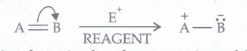
The atom A has lost its share in the electron pair and B has gained this share. As a result A acquires a positive charge and B a negative charge. It is a temporary effect and takes place only in the presence of a reagent.
(a) -I-effect as shown below:
As the number of halogen atoms decreases, the overall -1- effect decreases and the acid strength decreases accordingly.

(b) +I-effect as shown below:
As the number of alkyl groups increases, the +I-effect increases and the acid strength decreases accordingly.

11.
Factors affecting Ionization enthalpy.
(i) Atomic size. With the increase in atomic size, the number of electron shells increases and thus the force of attraction between the electrons and the nucleus decreases. Therefore the ionization enthalpy decreases.
(ii) Nuclear charge. As the nuclear charge increases the attraction for the electron also increases that's why ionization enthalpy increases.
(iii) Screening or shielding effect. In a multi-electron atom, the electron present in the inner shells shield the electrons in the valence shell as a result these electrons experience less attraction from the nucleus. This leads to lesser ionization enthalpy.
Variation along a period. On moving from left to right in a period the nuclear charge increases and the atomic size decreases as a result ionization enthalpies are expected to increase.
Variation within a group. On moving down the group as the atomic size of the elements increases that's why ionization enthalpy decreases down the group
12.
Electronegativity:
1. The tendency of an atom in a molecule to attract the shared pair of electrons towards itself is known as electronegativity.
2. There is no specific unit for electronegativity. In the modern periodic table:
3. In the modern periodic table: as we move left to right, across a period the nuclear charge increases, atomic size decreases, and electronegativity value increases.
4. As we move down the group there is an increase in the atomic number also nuclear charge and a decrease in the electronegativity value.
5. In general, metal shows a lower electronegativity value compared to on-metals.
| Electronegativity: | Electron gain enthalpy |
| 1. An atom in a molecule tends to attract the shared pair of electrons towards itself known as electronegativity. | 1. Electron gain enthalpy is defined as the amount of energy released when an electron is added to an isolated gaseous atom. |
| 2. It is the property of a bonded atom. | 2. It is the property of an isolated atom. |
| 3. It has no unit. | 3. Its unit is KJ/ mol. |
| 4. The values of electronegativity cannot be determined experimentally. | 4. An element has a constant value of the electron gain enthalpy that can be calculated experimentally. |
13.
A limiting reagent determines the extent of a reaction. It is the reactant which is the first to get consumed during a reaction, thereby causing the reaction to stop and limiting the amount of products formed.
(i) According to the given reaction, 1 atom of A reacts with 1 molecule of B. Thus, 200 molecules of B will react with 200 atoms of A, thereby leaving 100 atoms of A unused. Hence, B is the limiting reagent.
(ii) According to the reaction, 1 mol of A reacts with 1 mol of B. Thus, 2 mol of A will react with only 2 mol of B. As a result, 1 mol of B will not be consumed. Hence, A is the limiting reagent.
(iii) According to the given reaction, 1 atom of A combines with 1 molecule of B. Thus, all 100 atoms of A will combine with all 100 molecules of B. Hence, the mixture is stoichiometric where no limiting reagent is present.
(iv) 1 mol of atom A combines with 1 mol of molecule B. Thus, 2.5 mol of B will combine with only 2.5 mol of A. As a result, 2.5 mol of A will be left as such. Hence, B is the limiting reagent.
(v) According to the reaction, 1 mol of atom A combines with 1 mol of molecule B. Thus, 2.5 mol of A will combine with only 2.5 mol of B and the remaining 2.5 mol of B will be left as such. Hence, A is the limiting reagent.
14.
The balanced equation for the combustion of methane is :
\({ CH }_{ 4 }(g)+2{ O }_{ 2 }(g)\rightarrow { CO }_{ 2 }(g)+{ 2H }_{ 2 }O(g)\)
(i) 16 g of CH4 corresponds to one mole.
(ii) From the above equation, 1 mol of CH4 (g) gives 2 mol of H2O (g).
2 mol of water (H2O) = 2 × (2 + 16) = 2 × 18 = 36 g
1 mol H2O = 18 g H2O ⇒ \(\frac{18g H_2O}{1 mol H_2O} = 1\)
Hence, 2 mol H2O × \(\frac{18g H_2O}{1 mol H_2O} \)
= 2 × 18 g H2O = 36 g H2O
15.
electrons in the atom of any element is called its atomic radius. It refers to both covalent or metallic radius depending on whether the element is a non-metal or a metal. Ionic radius. The Ionic radii can be estimated by measuring the distances between cations and anions in ionic crystals.
16.
The digits in a properly recorded measurement are known as significant figures. It is also defined as follows. The total numbers of figures in a number including the last digit whose value is uncertain is called number of significant figures.
17.
Cations : Na+, Mg2+ Al3+
Anions : N3- , O2-,F-
18.
General configuration for 17th group elements is ns2 np5 . In the third period, the principal quantum number for valence shell is three, so the electronic configuration of valence shell for the given element is 3s2, 3p5. Third period starts from atomic number, Z = 11 and end at Z = 18. Hence, the atomic number of the given element is 10 + 7 = 17.
19.
Mass number is a whole number because it is the sum of the number of protons and number of neutrons whereas atomic mass is fractional because it is the average relative mass.
20.
Mass percent of an element
= \( \frac{\text{ Mass of that element in the compund} \times 100 }{\text{ Molar mass of } Na_2SO_4}\)
= (2\(\times\)22.99) + 32.06 + (4\(\times\)16.00) = 142.04 g
Mass percent of Sodium
= \(\frac{45.98 \times 100}{142.04}\)
= 32.37
Mass percent of Sulphur
= \(\frac{32.06\times100}{142.04}\)
= 22.57
Mass percent of oxygen
= \(\frac{64\times100}{142.04} \)
= 45.06
21.
(d)
Removal of electron from orbitals bearing lower n value is easier than from orbital having higher n value.
22.
Statement (b) is incorrect.
The d-block has 10 columns because a maximum of 10 electrons can occupy all the orbitals in a d subshell.
23.
(a)
5-Formyl hex-2-en-3-one
24.
(a)
electrons of carbon-hydrogen σ bond of an alkyl group directly attached to an atom of unsaturated system.
25.
(a)
Na+, Mg2+
26.
(d)
All of the above
27.
(b)
27.27%
28.
(a)
C3H6
29.
(b)
3.1
30.
(a)
2-Butene
31.
(a)
ionisation energy
32.
(a)
\(\lambda =\frac { h }{ mv } \)
33.
(c)
Niels Bohr
34.
(b)
nucleophilic substitution
35.
(c)
Sp2 - Sp3
36.
(b)
\(\frac { 1 }{ 2 } \)mole of H2
37.
(a) Free radicals are atoms or group of atoms having one electron in excited state
(b) 3° > 2° > 1°.
(c) 400 g mol-1, because it will contain at least one atom 'S', i.e., 32 g of sulphur.
(d) CH4.
(e) It is estimated by taking mass of BaSO4 formed.
(f) It is done to convert NaCN to HCN and N2S to H2S if nitrogen and sulphur are present because they will interfere with the AgNO3 test for halogens, H2S and HCN are removed as gases.
38.
(a) Group 1 because they have largest atomic size.
(b) Group 18 because they have stable electronic configuration.
(c) Be(1s2 2s2). It is because 'Be' has completely filled s-orbital which is more stable therefore, needs higher energy to remove electrons than B(1s2 2s2 2p1).
(d) It is because 'N' has half filled orbital which is more stable and more energy is needed to remove electron in 'N' than O.

11th Standard CBSE Syllabus & Materials
11th Standard CBSE
CBSE 11th Business Studies Forms of Business Organisation Sample Question Papers Study Material - QB365 Set A
NEW11th Standard CBSE
CBSE 11th Business Studies Business, Trade and Commerce Sample Question Papers Study Material - QB365 Set A
NEW11th Standard CBSE
CBSE 11th Physics Waves Sample Question Papers Study Material - QB365 Set A
NEW11th Standard CBSE
CBSE 11th Physics Kinetic Theory Sample Question Papers Study Material - QB365 Set A



NCERT Books

Syllabus

Exam Pattern

Sample Question Papers

Previous year Question Papers

Important Notes

MCQ Practice test

NCERT Exemplers

Case study Questions

Image Based Questions

Passage based Questions

HOT Questions

Value Based Questions

Model Questions Papers
NCERT ( Book Back ) Questions

Assertion and Reason
Important Questions And Answers

CBSE 11th Standard CBSE Subjects
CBSE Standards







