
 100% FREE ACCESS
11th Standard CBSE Syllabus & Materials
11th Standard CBSE
CBSE 11th Economics PART-A - Presentation of Data - New Sample Question Papers Study Material - QB365 Set A
NEW11th Standard CBSE
CBSE 11th Economics PART-A - Organisation of Data - New Sample Question Papers Study Material - QB365 Set A
NEW11th Standard CBSE
CBSE 11th Economics PART-A - Collection of Data - New Sample Question Papers Study Material - QB365 Set A
NEW11th Standard CBSE
CBSE 11th Economics PART-A - Introduction to Economics and Statistics - New Sample Question Papers Study Material - QB365 Set A
NEW11th Standard CBSE
CBSE 11th Business Studies International Trade Sample Question Papers Study Material - QB365 Set A
NEW11th Standard CBSE
CBSE 11th Business Studies Evolution and Fundamentals of Business Sample Question Papers Study Material - QB365 Set A

Published on: 21/10/2025
Download CBSE Class 11th Standard CBSE Chemistry question papers, sample papers, important questions, and previous year solved papers in PDF format. Get free study materials, NCERT solutions, and exam preparation resources for Class 11th Standard CBSE Chemistry
Questions + Answers key
Take MCQ Chemistry Test
1.
2.
3.
4.
Identify the correct order of reactivity towards electrophilic substitution reaction.
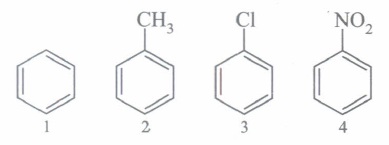
1 > 2 > 3 > 4
4 > 3 < 2 > 1
2 > 1 > 3 > 4
2 > 3 > 1 > 4
5.
Electrophile that participates in sulphonation of benzene is ______.
SO3H
SO2
SO3
\(\mathrm{SO}_{3}^{-}\)
6.
In which of the following, all atoms are coplanar?
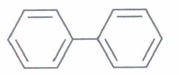

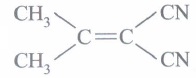
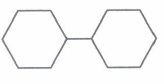
7.
Four structures are given in options (a) to (d). Examine them and select the aromatic structures.


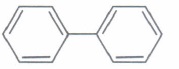

8.
Which are the correct IUPAC names of the following compound?

5- Butyl - 4- isopropyldecane
5- Ethyl- 4- propyldecane
5- sec-Butyl- 4- iso-propyldecane
4-(1-methylethyl)- 5 - (1-methylpropyl)-decane
9.
Which of the following alkenes on ozonolysis give a mixture of ketones only?
\(\mathrm{CH}_{3} \longrightarrow \mathbf{C H}=\mathrm{CH}-\mathrm{CH}_{3}\)
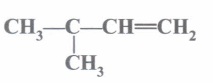
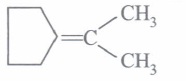
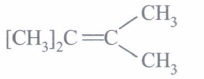
10.
Arrange the following carbanions in order of their decreasing stability.
\((A) \mathbf{H}_{3} \mathbf{C}-\mathbf{C} \equiv \mathbf{C}^{-} \
(B) \mathbf{H}-\mathbf{C} \equiv \mathbf{C}^{-} \
(C) \mathrm{H}_{3} \mathrm{C}-\mathrm{C}^{-} \mathrm{H}_{2}\)
A > B > C
B > A > C
C > B > A
C > A > B
11.
The addition of HBr to I-butene gives a mixture of products A, Band C
\(\begin{aligned} \mathbf{C H}_{3}-\mathbf{C H}_{2}-\mathbf{C H}_{2}-\mathbf{C H}_{2}-\mathbf{B r}\\ \text { (C) }\quad \quad \quad \quad \quad \quad \end{aligned}\) The mixture consists of ______.
A and B as major and C as minor products
B as major, A and C as minor products
B as minor, A and C as major products
A and B as minor and C as major products
12.
Which of the following is most reactive?


13.
Which of the following compounds will exhibit geometrical isomerism?
2-Phenyl-1-butene
1, 1-Diphenyl propane
1-Phenyl-2-butene
3-phenyle butane
14.
Phenyl magnesium bromide reacts with methanol to give ______.
Benzene
Toluene
Phenol
Arisole
15.
Sodium nitroprusside reacts with sodium sulphide formed in lassaigne's test to detect presence of sulphur gives violet colour due to _______.
Na2[Fe(CN)5NO]
Na4[Fe(CN)5NOS]
Na2[Fe(CN)5COS]
None of these
16.
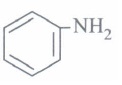
Which one of the following has the most nucleophilic nitrogen?
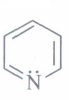
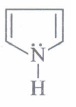
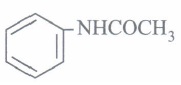
17.
The IUPAC name of the molecule _______.
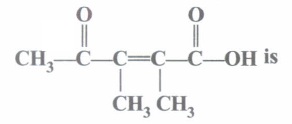
4-oxo-2,3-dimethyl pent-2-en-1-oic acid
2-carboxy-3-methyl pent-2-en -3-one
4-carboxy-3-methyl pent-3-en-2-one
2,3-Dimethyl-4-oxo-pent-2-en-1-oic acid
18.
In Dumas method, 0.25g of organic compound gave 40 ml of N2 at 300k and 725mm pressure. If aqueous tension at 300k is 25mm, the percentage of nitrogen in compound is _______.
16.76%
15.76%
17.36%
18.20%
19.
Glycerol is purified by _______.
Vacuum distillation
Simple distillation
Steam distillation
Fractional distillation
20.
Consider the following compounds.
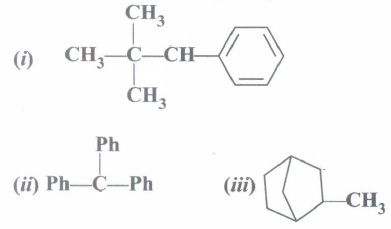
Hyper conjugation occurs in _______.
III
I and II
I
II
21.
Sulphuric acid reacts with sodium hydroxide as follows:
\(\mathrm{H}_{2} \mathrm{SO}_{4}+2 \mathrm{NaOH} \longrightarrow \mathrm{Na}_{2} \mathrm{SO}_{4}+2 \mathrm{H} 2 \mathrm{O}\)
When 1L of 0.1M sulphuric acid solution is allowed to react with 1L of 0.1M sodium hydroxide solution, the amount of sodium sulphate formed and its molarity in the solution obtained is _______.
0.1 mol L-1
7.10 g
0.025 mol L-1
3.55 g
22.
One mole of oxygen gas at STP is equal to _________
6.022 x 10²³ molecules of oxygen
6.022 x 10²³ atoms of oxygen
16 g of oxygen
32 g of oxygen
23.
1 g of M2CO3 on treatment with excess HCl produces 0.01186 moles of CO2. The molar mass of M2CO3 in g mol-1 is _______.
1186
84.3
118.6
11.86
24.
A mixture of 24 dm3 of hydrogen and 100 dm3 of oxygen was ignited and the reaction mixture was cooled to room temperature and pressure. What will be volume of gases remaining of the end of the reaction?
24 dm3
76 dm3
88 dm3
112 dm3
25.
16 g of oxygen has same number of molecules as in _______.
16 g of CO
28 g of N2
14 g of N2
1.0 g of H2
26.
What is mass silicon in 100 g of sodium silicate, Na2SiO3? [Na = 23, Si = 28, O = 16u]
16.7%
23.0%
28.0%
82.0%
27.
Which of the following represents largest number of particles _______.
Atoms in mole of CH4
Atoms in 0.5 mol of SO3
Atoms in 0.5 mole of CO2
Atoms in 1 mol of CO
28.
The mass of one mole a chloride formed by metal 'X' is 111.0 g. Which one could be formula of chloride?
XCI
XCI2
XCI3
XCI4
29.
Which of the following deactivates the benzene ring towards electrophilic substitution and is o/p directing?
\(-\mathrm{Cl}^{\ominus}\)
-OCR3
-CHO
All of these
30.
Which of the following correctly explains the stability of benzene molecule?
Conjugation
Resonance
Unsaturation
Hybridisation
31.
Which of the following organic materials damage DNA of our body?
Tobacco
Coal
Petroleum
All of these
32.
 \(+\text { Conc. } \mathrm{HNO}_{3}+\text { Conc. } \mathrm{H}_{2} \mathrm{SO}_{4} \stackrel{(323-333) \mathrm{K}}{\longrightarrow}\) Here, A refers to ______.
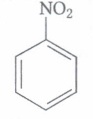
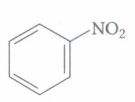
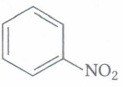
All of these
33.
Attack of electrophile on benzene results in the formation of ______.
σ complex
arenium ion
π complex
Both (a) and (b)
34.
The geometry of ethyne molecule is ______.
linear
trigonal planar
tetrahedral
bent
35.
In the reaction,
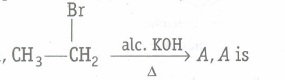 ______.
CH2 = CH2
CH3CH3
CH \(\equiv\) CH
Both (a) and (b)
36.
2-methyl propan-2-ol is obtained by the reaction of X with water in the presence of cone. H2SO4 The X is ______.
1-methylpropene
2,2-dimethylhexane
2-methylpropene
2-methylbutane
37.
Which of the following exhibit geometrical isomerism?
2-methylpropene
But-1-ene
But-2-ene
2, 3-dibromo-but-2-ene
38.
Consider the following reaction, \(\mathrm{CaC}_{2}+\mathrm{H}_{2} \mathrm{O} \longrightarrow X\) Here X refers to ______.
ethene
ethyne
methyne
None of these
39.
The correct IUPAC name of the given structure
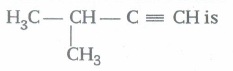
2-methylbut-1-yne
I-methylbut-3-yne
2-methylbut-3-yne
3-methylbut-1-yne
40.
Arrange the following alkyl halides in decreasing order of the rate of β - elimination reaction with alcoholic KOH.
(A)
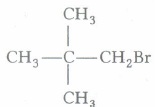
(B) CH3 - CH2 - Br
(C) CH3 - CH2 - CH2 - Br
A > B > C
C > B > A
B > C > A
A > C > B
41.
The IUPAC name of
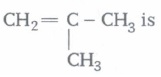
2-methylbutene
1-methylpropene
2-methylbut-2-ene
2-methylprop-1-ene
42.
Eclipsed and the staggered conformations can be represented by ______.
Sawhorse projection
Newman projection
Both (a) and (b)
None of these
43.
How many chain isomers can be formed by butane?
One
Three
Two
Four
44.
The given structures,
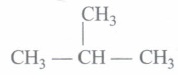 and CH3CH2CH2CH3 are ______.
conformational isomers
chain isomers
position isomers
functional isomers
45.
The carbocation stability is: \(\stackrel{+}{\mathrm{C}} \mathrm{H}_{3}<\mathrm{CH}_{3} \mathrm{C}^{+} \mathrm{H}_{2}<\left(\mathrm{CH}_{3}\right)_{2} \stackrel {+}{\mathrm{C}} \mathrm{H}<\left(\mathrm{CH}_{3}\right)_{3} \mathrm{C}\) and alkyl radical stability is _______.
\(\dot{\mathrm{C}} \mathrm{H}\left(\mathrm{CH}_{3}\right)_{2}<\dot{\mathrm{CH}}_{3}<\dot{\mathrm{C}} \mathrm{H}_{2} \mathrm{CH}_{3}<\dot{\mathrm{C}}\left(\mathrm{CH}_{3}\right)_{3}\)
\(\stackrel{\circ}{\mathrm{C}}\left(\mathrm{CH}_{3}\right)_{3}<\dot{\mathrm{CH}}\left(\mathrm{CH}_{3}\right)_{2}<\dot{\mathrm{CH}}_{3}<\dot{\mathrm{CH}}_{2} \mathrm{CH}_{3}\)
\(\dot{\mathrm{C}}\left(\mathrm{CH}_{3}\right)_{3}<\dot{\mathrm{CH}}\left(\mathrm{CH}_{3}\right)_{2}<\dot{\mathrm{CH}}_{2} \mathrm{CH}_{3}<\dot{\mathrm{CH}}_{3}\)
\(\dot{\mathrm{C}} \mathrm{H}_{3}<\dot{\mathrm{C}} \mathrm{H}_{2} \mathrm{CH}_{3}<\dot{\mathrm{CH}}\left(\mathrm{CH}_{3}\right)_{2}<\dot{\mathrm{C}}\left(\mathrm{CH}_{3}\right)_{3}\)
46.
In Duma's method for estimation of nitrogen, 0.3 g of an organic compound gave 50 mL of nitrogen. collected at 300K temperature and 715 mm pressure. The percentage composition of nitrogen in the compound (Aqueous tension at 300K = 15mm) is _______.
15.46%
17.46%
18.36%
28%
47.
In Carius method of estimation of halogens, 250 mg of an organic compound gave 141 mg of AgBr. The percentage of bromine in the compound is_______. (atomic mass Ag = 108 and Br = 80)
24
36
48
60
48.
The elements always present in organic compounds are C and H. In addition to these, name the other elements that may be present in it ______.
Oxygen and nitrogen
Sulphur and halogens
Phosphorus
All of these
49.
Name the two types of chromatography techniques based on the principle of differential adsorption.
Column chromatography and thick layer chromatography
Non-column chromatography and thin layer chromatography
Column chromatography and thin layer chromatography
Paper chromatography and thick layer chromatography
50.
During hearing of a court case, the judge suspected that some changes in the documents had been carried out. He asked the forensic department to check the ink used at two different places. According to you which technique can give the best results?
Column chromatography
Solvent extraction
Distillation
Thin layer chromatography
51.
Glycerol can be separated from spent-lye in soap industry by ______.
chromatography
sublimation
fractional distillation
distillaltion under reduced pressure
52.
Which techniqaes is based on the difference in the solubilities of the compound and the impurities in a suitable solvent?
Sublimation
Crystallisation
Distillation
None of these
53.
The difference in energy between the actual structure and lowest energy canonical form is called ______.
resonance energy
localisation energy
Both (a) and (b)
All of these
54.
Choose the correct order of stability of carbocation using the concept of hyperconjugation
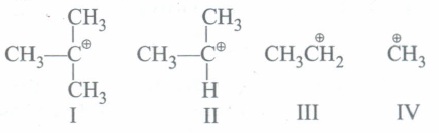
I < II < Ill < IV
IV < IIl < II < I
Ill < IV < II < I
None of these
55.
Electrophilic addition reactions proceed in two steps. The first step involves the addition of an electrophile. Name the type of intermediate formed in the first step of the following addition reaction.
\(\mathrm{H}_{3} \mathrm{C}-\mathrm{HC}=\mathrm{CH}_{2}+\mathrm{H}^{+} \longrightarrow \text { ? }\)
2° carbanion
1° carbocation
2° carbocation
1° carbanion
56.
What is the correct order of decreasing stability of the following cations?
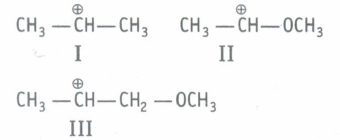
II > I > III
II > III > I
Ill > I > II
I > II > III
57.
The following compounds show
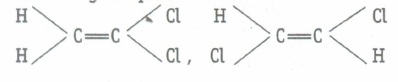
configuration isomerism
conformational isomerism
structural isomerism
stereoisomerism
58.
Write the correct IUPAC name of the following.
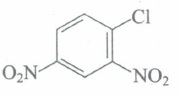
1-chloro-2, 4- dinitrobenzene
6-chloro-1, 3- dinitrobenzene
1-chloro-4, 6-dinitrobenzene
2-chloro-1, 5-dinitrobenzene
59.
In which of the following, functional group isomerism is not possible?
Alcohols
Aldehydes
Alkyl halides
Cyanides
60.
What is the correct IUPAC name of the following?
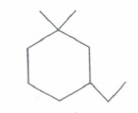
3-ethyl-1,1-dimethylcyclohexane
t-ethyl- 3,3-dimethylcyclohexane
1,1-dimethyl-3-ethylcyclohexane
None of the above
61.
The correct way(s) of representing 2-bromobutane is/are ______.
CH3CHBrCH2CH3
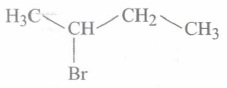
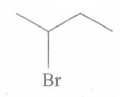
All of the above
62.
In which of the following ways the structure(s) of organic compounds is/are represented?
Lewis or dot structure
Dash structure
Condensed and bond-line structure
All of the above
63.
In cyclic compounds, the bond-line formula for chlorocyclohexane is represented by which of the following representations?
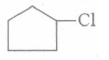


64.
Which of the following is a correct representation of condensed formula for HOCH2CH2CH2CH(CH3)CH(CH3 )CH3?
HO(CH2)2 CHCH3CH(CH3)2
HO(CH2)3 CH(CH3 )CH(CH3)2
HOCH2CHCH3CH(CH3)2
None of the above
65.
Which type of bond is formed between carbon atom and nitrogen atom?
Covalent bond
Ionic bond
Dative bond
None of these
66.
A bivalent metal has an equivalent mass of 32. The molecular mass of the metal nitrate is _______.
182
168
192
188
67.
18.72 g of a substance X occupies 1.81 cm3. What will be its density measured in correct significant figures?
10.3g/cm3
10.34g/cm3
10.4g/cm3
10.3425g/cm3
68.
Which of the following statements is/are correct regarding significant figures?
All non-zero digits are significant
Significant figures are meaningful digits which are known with certainty
Significant figures are meaningful digits which are known with certainty
All of the above
69.
The weight of iron which will be converted into its oxide (Fe 3O4) by the action of 18 g of steam on it will be (Atomic weight of Fe = 56) _______.
168 g
84 g
42 g
21 g
70.
A solution is prepared by adding 2 g of a substance A to 18 g of water. Calculate the mass per cent of the solute.
8%
9%
10%
11%
71.
The concentration of a solution or the amount of substance present in its given volume can be expressed in which of the following ways?
Mass per cent or weight per cent (w/w%)
Mole fraction or molarity
Molality
All of the above
72.
What will be the molality of the solution made by dissolving 10 g of NaOH in 100 g of water?
2.5 m
5 m
10 m
1.25 m
73.
If the concentration of glucose (C6H12O6) in blood is 0.9 g L- 1, what will be the molarity of glucose in blood?
5 M
50 M
0.005 M
0.5 M
74.
What will be the molarity of a solution, which contains 5.85 g of NaCI(s) per 500 mL?
4 mol L- 1
20 mol L-1
0.2 mol L-1
2 mol L-1
75.
Which of the following equations is unbalanced?
\(4 \mathrm{Fe}(s)+3 \mathrm{O}_{2}(g) \longrightarrow 2 \mathrm{Fe}_{2} \mathrm{O}_{3}(s)\)
\(2 \mathrm{Mg}(s)+\mathrm{O}_{2}(g) \longrightarrow 2 \mathrm{MgO}(s)\)
\(\mathrm{P}_{4}(s)+\mathrm{O}_{2}(g) \longrightarrow \mathrm{P}_{4} \mathrm{O}_{10}(s)\)
\(\mathrm{CH}_{4}(\mathrm{~g})+2 \mathrm{O}_{2}(g) \longrightarrow \mathrm{CO}_{2}(g)+2 \mathrm{H}_{2} \mathrm{O}(g)\)
76.
1.020 g of metallic oxide contains 0.540 g of the metal. If the specific heat of the metal, Mis 0.216 cal deg-1g-1. The molecular formula of its oxide is _______.
MO
M2O3
M2O4
M2O
77.
An organic compound on analysis was found to contain 10.06% carbon, 0.84% hydrogen and 89.10% chlorine. What will be the empirical formula of the substance?
CH2Cl2
CHCl3
CCl4
CH3CI
78.
How many number of aluminium ions are present in 0.051 g of aluminium oxide?
6.023 x 10²³ ions
3 ions
6.023 x 10²⁰ ions
9 ions
79.
Given that, the abundances of isotopes 54Fe, 56Fe and 57Fe are 5%, 90% and 5% respectively, the atomic mass of Fe is _______.
55.85
55.95
55.75
56.05
80.
An organic compound containing C,Hand O has 49.3%carbon, 6.84% hydrogen and its vapour density is 73. Molecular formula of the compound is _______.
C3H5O2
C4H10O2
C6H10O4
C3H10O2
81.
The empirical formula of a compound is CH2. One mole of this compound has a mass of 42 g. Its molecular formula is _______.
C3H6
C3H8
CH2
C2H2
82.
The number of atoms present in one mole of an element is equal to Avogadro number. Which of the following element contains the greatest number of atoms?
4 g He
46 g Na
0.40 g Ca
12 g He
83.
Which of the following statements is correct about the reaction given below?
\({ }_{4 \mathrm{Fe}}(s)+30_{2}(g) \longrightarrow 2 \mathrm{Fe}_{2} \mathrm{O}_{3}(g)\)
Total mass of iron and oxygen in reactants = total mass of iron and oxygen in product therefore it follows law of conservation of mass.
Total mass of reactants = total mass of product, therefore, law of multiple proportions is followed
Amount of Fe2O3 can be increased by taking anyone of the reactants (iron or oxygen) in excess
Amount of Fe2O3 produced will decrease if the amount of anyone of the reactants (iron or oxygen) is taken in excess.
84.
If the density of a solution is 3.12 g ml-1, the mass of 1.5 mL solution in significant figures is _____.
4.7 g
4680 x 10-3 g
4.680 g
46.80 g
85.
Two students performed the same experiment separately and each one of them recorded two readings of mass which are given below. Correct reading of mass is 3.0 g. On the basis of given data, mark the correct option out of the following statements.
| students | Readinds | |
| (i) | (ii) | |
| A | 3.01 | 2.99 |
| B | 3.05 | 2.95 |
Results of both the students are neither accurate nor precise
Results of student A are both precise and accurate
Results of student B are neither precise nor accurate
Results of student B are both precise and accurate
86.
Which of the following statements about a compound is incorrect?
A molecule of a compound has atoms of different elements
A compound cannot be separated into its constituent elements by physical methods of separation
A compound retains the physical properties of its constituent elements
The ratio of atoms of different elements in a compound is fIxed
87.
Which of the following compounds will exhibit cis-trans isomerism?
2-Butene
2-Butyne
1-Butene
2-Butanol
88.
The hybridization state of a carbocation is ______.
Sp4
sp3
sp2
sp
89.
The large number of organic compounds is due to _______.
the valency of carbon
a small size of carbon
a special property of carbon known as catenation
90.
The mass of an atom of nitrogen is _______.
\(\frac { 14 }{ { { 6.023\times 10 }^{ 23 } } } \)
\(\frac { 28 }{ { { 6.023\times 10 }^{ 23 } } } \)g
\(\frac { 1 }{ { { 6.023\times 10 }^{ 23 } } } \)g
14 amu
1.
(b)
2.
(c)
3.
(a)
4.
(c)
2 > 1 > 3 > 4
5.
(c)
SO3
6.
(a)
7.
(c)
8.
(c)
5- sec-Butyl- 4- iso-propyldecane
9.
(c)
10.
(b)
B > A > C
11.
(a)
A and B as major and C as minor products
12.
(a)
13.
(c)
1-Phenyl-2-butene
14.
(a)
Benzene
15.
(b)
Na4[Fe(CN)5NOS]
16.
(a)
17.
(d)
2,3-Dimethyl-4-oxo-pent-2-en-1-oic acid
18.
(a)
16.76%
19.
(a)
Vacuum distillation
20.
(a)
III
21.
(b)
7.10 g
22.
(a)
6.022 x 10²³ molecules of oxygen
23.
(b)
84.3
24.
(c)
88 dm3
25.
(c)
14 g of N2
26.
(d)
82.0%
27.
(a)
Atoms in mole of CH4
28.
(b)
XCI2
29.
(a)
\(-\mathrm{Cl}^{\ominus}\)
30.
(b)
Resonance
31.
(d)
All of these
32.
(d)
All of these
33.
(d)
Both (a) and (b)
34.
(a)
linear
35.
(a)
CH2 = CH2
36.
(c)
2-methylpropene
37.
(c)
But-2-ene
38.
(b)
ethyne
39.
(d)
3-methylbut-1-yne
40.
(d)
A > C > B
41.
(d)
2-methylprop-1-ene
42.
(c)
Both (a) and (b)
43.
(c)
Two
44.
(b)
chain isomers
45.
(d)
\(\dot{\mathrm{C}} \mathrm{H}_{3}<\dot{\mathrm{C}} \mathrm{H}_{2} \mathrm{CH}_{3}<\dot{\mathrm{CH}}\left(\mathrm{CH}_{3}\right)_{2}<\dot{\mathrm{C}}\left(\mathrm{CH}_{3}\right)_{3}\)
46.
(b)
17.46%
47.
(a)
24
48.
(d)
All of these
49.
(c)
Column chromatography and thin layer chromatography
50.
(d)
Thin layer chromatography
51.
(d)
distillaltion under reduced pressure
52.
(b)
Crystallisation
53.
(a)
resonance energy
54.
(b)
IV < IIl < II < I
55.
(c)
2° carbocation
56.
(a)
II > I > III
57.
(c)
structural isomerism
58.
(a)
1-chloro-2, 4- dinitrobenzene
59.
(c)
Alkyl halides
60.
(a)
3-ethyl-1,1-dimethylcyclohexane
61.
(d)
All of the above
62.
(d)
All of the above
63.
(c)
64.
(b)
HO(CH2)3 CH(CH3 )CH(CH3)2
65.
(a)
Covalent bond
66.
(d)
188
67.
(b)
10.34g/cm3
68.
(d)
All of the above
69.
(c)
42 g
70.
(c)
10%
71.
(d)
All of the above
72.
(a)
2.5 m
73.
(c)
0.005 M
74.
(c)
0.2 mol L-1
75.
(c)
\(\mathrm{P}_{4}(s)+\mathrm{O}_{2}(g) \longrightarrow \mathrm{P}_{4} \mathrm{O}_{10}(s)\)
76.
(b)
M2O3
77.
(b)
CHCl3
78.
(c)
6.023 x 10²⁰ ions
79.
(b)
55.95
80.
(c)
C6H10O4
81.
(a)
C3H6
82.
(d)
12 g He
83.
(a)
Total mass of iron and oxygen in reactants = total mass of iron and oxygen in product therefore it follows law of conservation of mass.
84.
(a)
4.7 g
85.
(b)
Results of student A are both precise and accurate
86.
(c)
A compound retains the physical properties of its constituent elements
87.
(a)
2-Butene
88.
(c)
sp2
89.
(c)
a special property of carbon known as catenation
90.
(b)
\(\frac { 28 }{ { { 6.023\times 10 }^{ 23 } } } \)g

11th Standard CBSE Syllabus & Materials
11th Standard CBSE
CBSE 11th Business Studies Forms of Business Organisation Sample Question Papers Study Material - QB365 Set A
NEW11th Standard CBSE
CBSE 11th Business Studies Business, Trade and Commerce Sample Question Papers Study Material - QB365 Set A
NEW11th Standard CBSE
CBSE 11th Physics Waves Sample Question Papers Study Material - QB365 Set A
NEW11th Standard CBSE
CBSE 11th Physics Kinetic Theory Sample Question Papers Study Material - QB365 Set A



NCERT Books

Syllabus

Exam Pattern

Sample Question Papers

Previous year Question Papers

Important Notes

MCQ Practice test

NCERT Exemplers

Case study Questions

Image Based Questions

Passage based Questions

HOT Questions

Value Based Questions

Model Questions Papers
NCERT ( Book Back ) Questions

Assertion and Reason
Important Questions And Answers

CBSE 11th Standard CBSE Subjects
CBSE Standards







