
 100% FREE ACCESS
11th Standard CBSE Syllabus & Materials
11th Standard CBSE
CBSE 11th Economics PART-A - Presentation of Data - New Sample Question Papers Study Material - QB365 Set A
NEW11th Standard CBSE
CBSE 11th Economics PART-A - Organisation of Data - New Sample Question Papers Study Material - QB365 Set A
NEW11th Standard CBSE
CBSE 11th Economics PART-A - Collection of Data - New Sample Question Papers Study Material - QB365 Set A
NEW11th Standard CBSE
CBSE 11th Economics PART-A - Introduction to Economics and Statistics - New Sample Question Papers Study Material - QB365 Set A
NEW11th Standard CBSE
CBSE 11th Business Studies International Trade Sample Question Papers Study Material - QB365 Set A
NEW11th Standard CBSE
CBSE 11th Business Studies Evolution and Fundamentals of Business Sample Question Papers Study Material - QB365 Set A

Published on: 21/10/2025
Download CBSE Class 11th Standard CBSE Chemistry question papers, sample papers, important questions, and previous year solved papers in PDF format. Get free study materials, NCERT solutions, and exam preparation resources for Class 11th Standard CBSE Chemistry
Questions + Answers key
Take MCQ Chemistry Test
1.


2.
The IE1 and IEII in kJ/mol of a few elements are given in the following table:

1. Which of the above element is likely to be alkali metal?
(A) P
(B) Q
(C) R
(D) S
2. Which of the above element is likely to be alkaline earth metal?
(A) P
(B) Q
(C) R
(D) S
3. Which of the above element is likely to be noble gas?
(A) P
(B) Q
(C) R
(D) S
3.
Hydrocarbons are compounds of carbon and hydrogen only, obtained from coal and petroleum mainly which are major sources of energy. Hydrocarbons are classified as open chain, saturated (alkanes), unsaturated (alkenes and alkynes), cyclic (alicyclic) and aromatic based on structure.
Alkanes show conformational isomerism due to free rotation along C-C bond leading to staggered and eclipsed conformations of ethane. Staggered conformation is more stable. Alkenes show geometrical (Cis-trans) isomerism due to restricted rotation around carbon-carbon double bond. Benzene and benzenoid show aromatic character. They follow Huckel rule \((4 n+2) \pi\) electrons which must be delocalised. The presence of activating and deactivating groups decide the position of electrophile after electrophilic substitution. Polynuclear fused aromatic hydrocarbons have carcinogenic property. Benzene is prepared by polymerisation of ethyne and by heating sodium benzoate with soda lime.
(a) Why is staggered form of ethane more stable than eclipsed form?
(b) Out of T-butene and 2-butene which will show geometrical isomerism.
(c) Why is cis-2.-butene has higher boiling point than trans-2-butene?
(d) Why is cyclopentadienyl anion is aromatic?
(e) Why is -NO2 group m-directing towards electrophilic substitution?
(f) Convert acetylene to benzene .
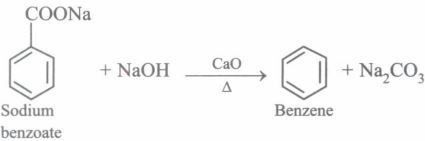
(g) Sodium benzoate, on heating with soda lime gives benzene, name the reaction.
4.
Organic reactions can be classified into four main categories. Substitution reactions, addition reactions, elimination reactions and rearrangement reactions. Substitution reactions can be further classified into free radical, nucleophilic and electrophilic substitution reactions. Addition reactions can be nucleophilic as well as electrophilic addition reactions. Dehydration, dehydrohalogenation, dehalogenation are examples of elimination reactions. Conversion by ammonium cyanate to urea is an example of rearrangement reactions. Reactions are classified on the basis to nature of intermediate species formed. Mechanism of reaction is exact path followed by the reaction involving all steps showing intermediates and slowest steps of the reaction which is rate determining step. Oxidation, reduction, combustion reactions are also important in hydrocarbons.
(a) Halogenation of alkane is an example of which type of reaction?
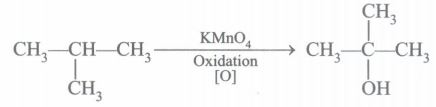
(b) What happens when 2-methyl propane is heated with KMnO4?
(c) What type of reaction takes place when n-hexane is heated in presence of AICI3 (anhy.) and HCI?CH2 =CH2 + KCI + HzO
(d) What happens when but-2-yne reacts with H2 in presence of Lindlar's catalyst.
(e) CH3CH2C1 + KOH(alc) \(\longrightarrow\) CH2 =CH2 + KCI + H2O
What is type of reaction?
(f) Why do aromatic hydrocarbons undergo electrophilic substitution reaction?
5.
Organic compounds are formed by covalent bonding. The nature of covalent bonding can described with the help of hybridisation, sp, Sp2 and sp3. The structure and reactivity depends upon type of bonds present in organic compounds. Organic compound can be represented by various structural formulae, Wedge and Dash formula is 3-D representation. Organic compounds can be classified on the basis of functional groups. Organic reactions mechanism are based on structure of substrate and the attacking reagent.
The intermediate formed can be free radical, carbocation, carbanion or carbene. The attacking reagent can be electrophile or nucleophile. The inductive, electromeric, resonance and hyper conjugative effect may help in polarisation of covalent bond. Organic reactions may be regarded as substitution, addition, elimination and rearrangement, oxidation and reduction reaction.
After the compound is obtained in pure state, qualitative analysis helps to detect elements present in organic compounds whereas quantitative analysis helps to find percentage of various elements. Dumas and Kjeldahl method help to determine percentage of nitrogen, Carius method for halogens and sulphur. Carbon and hydrogen are estimated by the amount of CO2 and H2Oformed. Phosphorus estimation is done by oxidising it to H3 PO4, sulphur to H2 SO4 , The percentage of oxygen is determined by taking the difference of 100 and percentage of all elements. Empirical formula gives simple ratios of elements whereas molecular formula gives exact number of atoms of each element present in a compound.
(a) What are free radicals?
(b) Write the order of stability of carbocation.
(c) An organic compounds has 8% sulphur. What is minimum molar mass of compound?
(d) If C is 75%, H = 25%, what is molecular formula of compound?
(e) In estimation of sulphur, which compound of sulphur is formed?
(f) f Lassaigne extract of organic compound give blood-red colour with FeCI3, what does it show?
(g) Why should we add HNO3 to Lassaigne extract before testing for halogens.
6.
The order of decreasing priority of some functional groups is \(-\mathrm{COOH},-\mathrm{SO}_{3} \mathrm{H},-\mathrm{COOR},-\mathrm{COCl},-\mathrm{CONH}_{2}\),

Observe the table based on different functional groups and their respective prefix and suffix given below and answer the questions as follow.
| Functional Group | Prefix | Suffix |
| Alkane | - | - ane |
| Alkane | - | - ene |
| Alkane | - | - yne |
| -x | Halo (chloro, bromo, iodo) | - |
| -OH | Hydroxy | - ol |
 |
Aldo or formyl | - al |
 |
Oxo | - one |
| \(-\mathrm{C} \equiv \mathrm{N}\) | Cyano | nitrile |
| -ROR | Alkoxy | ether |
| -COOH | Carboxy | - oic acid |
| -COOR | Alkoxy carbonyl | - oate |
| -NH2 | Amino | - amine |
| -NO2 | Nitro | - |
| -CONH2 | Carbamoyl or Amido | - amide |
| -COX | Halo formyl | - oyl halide |
| -SO3H | Sulpho | sulphonic acid |
(a) Write IUPAC Dame of HOCH2 -(CH2 )3-CH2COCH3 .
(b) What is IUPAC Dame of CH2 =CH-CH2Br. Give reason.
(c) What is IUPAC name of
(i)

(ii) CH2 =CH-CH=CH2
(d) Write structural formula of 6-methyl ectan-s-ol.
(e) Write IUPAC name of
(i)
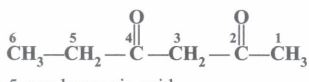
(ii)
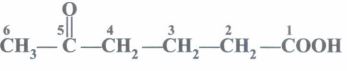
(f) Write IUPAC name of

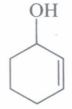
(g) Write structural formula of cyclohex-2-en-1-ol.
7.
It is essential to purify an organic compound. The method used for purification depends upon nature of compound and impurity present in it. The common methods to purify a solid is sublimation and crystallisation. Crystallisation is most common method applicable to most of solid organic compounds. Liquids are purified by simple distillation, fractional distillation, distillation under reduced pressure, steam distillation. Differential extraction is used to extract organic compound from aqueous solution. Chromatography is used to separate coloured substances from plants. Column chromatography, thin layer chromatography and partition chromatography are types of chromatography used for isolation and purification of organic compounds.
(a) Which method is used to purify camphor?
(b) How is unwanted colour from organic compounds removed?
(c) How is chloroform (Boiling point 334 K) and aniline (b.pt. 457 K) are separated? Why?
(d) Which is condensed first in fractionating column, vapours of higher boiling point liquid or lower boiling point liquid?
(e) How is glycerol purified?
(f) How is Aniline purified? Why?
(g) How are o-nitrophenol and p-nitrophenol separated? Why?
8.
Observe the group shown in figure and answer the questions that follow based on the graph and related studied concepts.
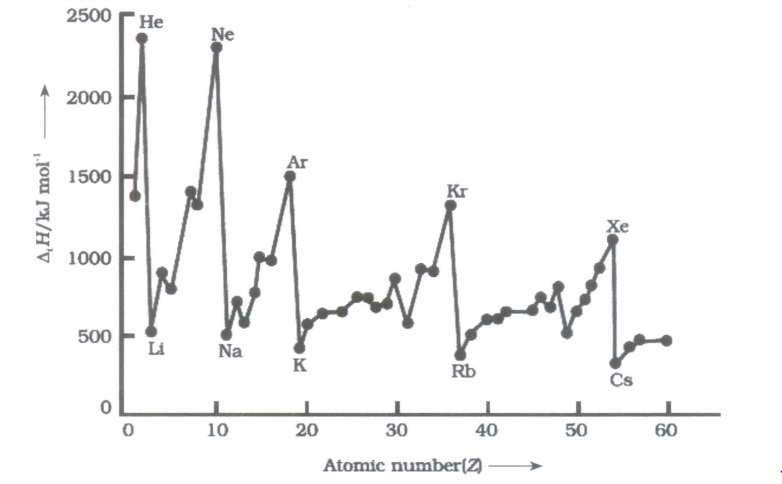
(a) Which group elements have lowest ionisation enthalpy and why?
(b) Which group element have highest ionisation enthalpy and why?
(c) Why is ionisation enthalpy of Be more than B?
(d) Why does 'N' have higher ionisation enthalpy than O?
9.
The atomic and ionic radii decrease with increase in atomic number along a period from left to right. Atomic size and ionic size increases down the group.
Ionisation enthalpy decreases down the group and increases along a period from left to right. It also depends upon shielding effect as well as stability of electronic configuration.
Electronegativity decreases down the group but increases along the period.
(a) Arrange the elements of second period in increasing order of first ionisation enthalpy.
(b) Arrange the elements of group 13 in increasing order of atomic size.
(c) Select the' amphoteric oxides among the following:
NO, B2O3, Cr 2O3, BeO, ZnO, CO2 , Al2 O3
(d) For an element I.E1 = 738 kJ mol-1, IE2 = 1450 kJ mol-1, IE3 = 7700 kJ mol-1, IE4 = 1.1 x 10 4 kJ mol-1. Name the main group to which element belong. Why?
10.
Modern periodic table arranges the elements in the increasing order of atomic number. It has 18 groups and 7 periods. Atomic numbers are consecutive in a period and increases in group in a pattern. Elements are divided into four blocks, s-block,p-block, d-block andf-block based on their electronic configuration. 78% of elements are metals, about 20 elements are non-metals and few elements like B, Si, Ge, As are metalloids. Metallic character increases down the group but decreases along the period from left to right. The physical and chemical properties vary periodically with their atomic numbers.
Periodic trends are observed in atomic size, ionisation enthalpies, electron gain enthalpies, electronegativity and valence. Oxides of metals are basic, some are amphoteric. Non-metals form acidic oxides, some form neutral oxides. s-block elements are soft, highly reactive, do not show variable oxidation states. p-block elements are metals, non-metals as well as metalloids, show variable oxidation states, exist as solids, liquids and gases. d-block elements are metals, form coloured ions, show variable oxidation states, have high melting and boiling points. Lanthanoids and actinoids are f-block elements, form coloured ions. All actinoids are radioactive.
(a) Name the elements which belong to d-block but are not transition metals.
(b) What are representative elements?
(c) What is difference between oxidation states of p-block and d-block elements?
(d) Which group elements are most electropositive and why?
(e) What happens to reactivity down the group 17?
(f) What type of compounds are formed by element belonging to group 14 and third period? Identify the element.
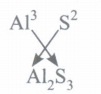
(g) What is formula of compound formed between AI and S
11.
Chemistry play an important role in human needs for food, health care products and improving life. Cis platin and taxol are used in chemotherapy, AZT (Azidothymidine) is used for AIDS. SI units are international units of measurement. Matter is classified into elements, compounds and mixtures, which can be homogeneous as well as heterogeneous. A mixture can be separated by physical methods, compounds can be separated by chemical methods only. Atomic mass is average of masses of isotopes depending upon their natural abundance. Empirical formula is calculated with the help of percentage composition of elements in a compound and molecular mass helps to calculate molecular formula. A chemical equation must be balanced so as to follow laws of chemical combination.
(a) Express 2.54 mm into S.I units.
(b) Out of milk, diamond, air, petrol which is pure substance?
(c) Balance the equation: NO2 + H2 O \(\rightarrow\) HNO3 + NO
(d) What is percentage of Na in Na2CO3 ? (Na = 23u, C = 12, O = 16u)
(e) \({ }_{17}^{35} \mathrm{Cl} \text { and }{ }_{17}^{37} \mathrm{Cl}\) are in ratio of 3 : 1 in nature. What is atomic mass of CI?
(f) What is empirical formula of C6H12O6?
(g) Chlorophyll contains 2.68% magnesium atoms. Calculate mass of magnesium atoms in 2 g of chlorophyll.
12.
In the table given below to illustrate precision and accuracy. Study the table and answer the questions based on the table and related studied concepts.
Data to Illustrate Precision and Accuracy
| Measurement in g | I | II | III | Average |
| student A | 0.521 g | 0.515 g | 0.509 g | 0.515 g |
| student B | 0.516 g | 0.515 g | 0.514 g | 0.515 g |
| student C | 0.521 g | 0.520 g | 0.520 g | 0.520 g |
(a) What is meant by precision?
(b) What is accuracy?
(c) If actual mass of a piece of metal is 0.520 g, data for which student is neither precise nor accurate.
(d) Which student data is precise but not accurate?
(e) The data of which student is both precise and accurate?
(f) How many significant figures are in 0.520?
(g) What is scientific notation for 0.520?
13.
Stoichiometry is a section of chemistry that involves calculation based on chemical equations. Chemical equations are governed by laws of chemical combination. Mass of reactants is equal to mass of products. Compound obtained from different methods contain the same elements in the fixed ratio by mass. Mole is a counting unit, equal to 6.022 x 10²³ particles.
One mole is also equal to molar mass expressed in grams. One mole of every gas at STP has volume equal to 22.4 L. The reacting species which are consumed in the reaction completely is called limiting reagent which decides amount of products formed. Concentration of solution is expressed in terms of molarity, molality and mole fraction.
(a) Calculate number of moles of NH3 formed by reaction of 2 moles of N2 and 2 moles of H2.
\(\mathbf{N}_{2}(g)+3 \mathbf{H}_{2}(g) \longrightarrow 2 \mathrm{NH}_{3}(g)\)
(b) Calculate number of electrons in 18 g of H2 O. [Atomic number of H = 1 ,O = 8]
(c) Calculate the molality of 1 M NaCI solution having density 1.10 g cm-3. (Molar mass = 58.5 g mol-1)
(d) Define mole fraction.
(e) In aqueous solution of glucose Xglucose = 0.1, what is XH2O = ?
1.
2.
1. (B) Q
2. (C) R
3. (A) P
3.
(a) It has less repulsion between C-H bonds.
(b) But-2-ene.
(c) It is because cis-2-butene is more polar, has more van der Waals' forces of attraction than trans-form.
(d) It has \(6 \pi\) electrons which are delocalised.
(e) It is electron-withdrawing, i.e., deactivating, there is +ve charge on 0 and p-position, so electrophile attacks on m-position
(f)
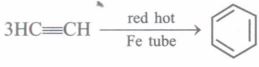
(g) Decarboxylation
4.
(a) Free radical substitution.
(b) Tert. butyl alcohol is formed.
(c) Isomerisation (Rearrangement) reaction takes place.

(d) Cis-But-2-ene is formed

(e) It is nucleophilic elimination reaction (Dehydrohalogenation).
(f) It is due to presence of n-electrons in aromatic hydrocarbons, electrophile can replace H+ ion.
5.
(a) Free radicals are atoms or group of atoms having one electron in excited state
(b) 3° > 2° > 1°.
(c) 400 g mol-1, because it will contain at least one atom 'S', i.e., 32 g of sulphur.
(d) CH4.
(e) It is estimated by taking mass of BaSO4 formed.
(f) It is done to convert NaCN to HCN and N2S to H2S if nitrogen and sulphur are present because they will interfere with the AgNO3 test for halogens, H2S and HCN are removed as gases.
6.
(a) 7-hydroxy heptan-2-one,
.JPG)
(b) 3-Bromoprop-2-ene. It is because double bond is preferred over halogen.
(c) (i) Ethane 1, 2-diol
(ii) Buta-l, 3-diene
(d)

(e) (i) Hexane 2, 4-dione
(ii) 5-oxo hexanoic acid
(f) Hexa I, 3-dien-5-yne
(g)
7.
(a) Sublimation.
(b) It is removed by adsorbing over activated charcoal.
(c) Simple distillation because there is large difference in boiling points.
(d) Vapours of higher boiling point liquid are condensed first.
(e) It is purified by distillation under reduced pressure.
(f) It is purified by steam distillation because it is steam volatile and insoluble in water.
(g) They are separated by steam distillation because o-nitrophenol is steam volatile where as p-nitrophenol is not.
8.
(a) Group 1 because they have largest atomic size.
(b) Group 18 because they have stable electronic configuration.
(c) Be(1s2 2s2). It is because 'Be' has completely filled s-orbital which is more stable therefore, needs higher energy to remove electrons than B(1s2 2s2 2p1).
(d) It is because 'N' has half filled orbital which is more stable and more energy is needed to remove electron in 'N' than O.
9.
(a) Li < B < Be < C < O< N < F < Ne.
(b) B < Ga < Al < In < TI
(c) Cr2 O3 , BeO, ZnO and Al2 O3 .
(d) Group 2, because its third ionisation is very high as compared to second because after losing 2 electrons it acquires nearest noble gas configuration.
10.
(a) Zn, Cd, Hg
(b) s-block and p-block elements are called representative elements or main group elements.
(c) In p-block elements oxidation states differ by 2 and lower oxidation state is more stable where as in d-block, oxidation state differ by 1 and mostly higher oxidation state is more stable.
(d) Group 1 due to largest atomic size and lowest ionisation enthalpies in respective periods.
(e) Reactivity goes on decreasing down the group as tendency to gain electron decreases.
(f) Covalent, silicon.
(g)
11.
(a) 2.54 x 10- 3 m.
(b) Diamond.
(c) 3NO2 + H2O \(\rightarrow\) 2HNO3 + NO
(d) \(\% \text { of } \mathrm{Na}=\frac{\text { Total mass of } \mathrm{Na}}{\text { Molar mass }} \times 100\)
\(=\frac{46}{106} \times 100=43.39 \%\)
(e) \(\frac{3 \times 35+1 \times 37}{4}=35.5\)
(f) CH2O
(g) Mass of magnesium atoms \(=2 \times \frac{2.68}{100}\)
\(=\frac{5.36}{100}=0.0536 \mathrm{~g}\)
12.
(a) It refers to the closeness of the set of values obtained from identical measurements.
(b) It refers to the closeness of a single measurement to its true value.
(c) 'A' because the individual values differ widely and average value is not accurate.
(d) 'B'. The values deviate a little from each other but average is not equal to true value.
(e) 'C' because the value are close to each other as well as average is same as true value.
(f) 3
(g) 5.20 x 10- 3
13.
(a) 1 mole of N2 needs 3 moles of H2 ,
Therefore, 2 moles of N2 needs 6 moles of H2 .
But we have only 2 moles of H2 , so H2 is limiting reagent.
3 moles of H2 gives 2 moles of NH2.
2 moles of H2 gives \(\frac{2}{3} \times 2=1.33\) moles of NH3 .
(b) 18 g of water (1 mole) containing 10 x 6.022 x 1023 electrons = 6.022 x 1024 electrons.
[ \(\because\)1 molecule of H2O = 2 + 8 = 10 e)
(c) 'M is molarity
'd is density of solution
'm' is molality
\(m=\frac{M \times 1000}{1000 \times d-M \times \text { Molar mass }}\)
\(=\frac{1 \times 1000}{1000 \times 1.10-1 \times 58.5}\)
\(=\frac{1000}{1100-58.5}=\frac{1000}{1041.5}=m=0.96 \mathrm{~mol} / \mathrm{kg} .\)
(d) It is ratio of number of moles of solute (component) to the total number of moles of solute and solvent (all components).
(e) Xglucose + xH2O = 1
\(\Rightarrow\) XH2O = 1 - 0.1 = 0.9

11th Standard CBSE Syllabus & Materials
11th Standard CBSE
CBSE 11th Business Studies Forms of Business Organisation Sample Question Papers Study Material - QB365 Set A
NEW11th Standard CBSE
CBSE 11th Business Studies Business, Trade and Commerce Sample Question Papers Study Material - QB365 Set A
NEW11th Standard CBSE
CBSE 11th Physics Waves Sample Question Papers Study Material - QB365 Set A
NEW11th Standard CBSE
CBSE 11th Physics Kinetic Theory Sample Question Papers Study Material - QB365 Set A



NCERT Books

Syllabus

Exam Pattern

Sample Question Papers

Previous year Question Papers

Important Notes

MCQ Practice test

NCERT Exemplers

Case study Questions

Image Based Questions

Passage based Questions

HOT Questions

Value Based Questions

Model Questions Papers
NCERT ( Book Back ) Questions

Assertion and Reason
Important Questions And Answers

CBSE 11th Standard CBSE Subjects
CBSE Standards







