
 100% FREE ACCESS
11th Standard CBSE Syllabus & Materials
11th Standard CBSE
CBSE 11th Economics PART-A - Presentation of Data - New Sample Question Papers Study Material - QB365 Set A
NEW11th Standard CBSE
CBSE 11th Economics PART-A - Organisation of Data - New Sample Question Papers Study Material - QB365 Set A
NEW11th Standard CBSE
CBSE 11th Economics PART-A - Collection of Data - New Sample Question Papers Study Material - QB365 Set A
NEW11th Standard CBSE
CBSE 11th Economics PART-A - Introduction to Economics and Statistics - New Sample Question Papers Study Material - QB365 Set A
NEW11th Standard CBSE
CBSE 11th Business Studies International Trade Sample Question Papers Study Material - QB365 Set A
NEW11th Standard CBSE
CBSE 11th Business Studies Evolution and Fundamentals of Business Sample Question Papers Study Material - QB365 Set A

Published on: 11/12/2018
Chemistry, like Mathematics, requires good conceptual understanding and thorough practice from the students in order for them to score well in the exam. Questions in the exam focus on topics which are important and the best way to start practising the subject is by referring to CBSE previous year question paper of chemistry class 12. Chemistry is not a subject where answers can be learned and written. It needs a lot of application, in-depth understanding and good practice of different types of questions that can be asked. The CBSE last year question papers class 12 chemistry board give you a good sneak peek into the difficulty level of the board exams and play an important role in getting you accustomed to the pattern of questions in the final exams.
Get 100 percent accurate NCERT Solutions for Class 11 Chemistry Chapter 12 (Organic Chemistry - Some Basic Principles and Techniques) solved by expert Chemistry teachers. We provide solutions for questions given in Class 11 Chemistry text-book as per CBSE Board guidelines from the latest NCERT book for Class 11 Chemistry.
In this chapter, concepts such as Tetravalence of Carbon: Shapes of Organic Compounds, The Shapes of Carbon Compounds, Some Characteristic Features of p Bonds, Structural Representations of Organic Compounds, Complete, Condensed and Bond-line, Structural Formulas, Three-Dimensional, Representation of Organic Molecules, Classification of Organic Compounds, Functional Group, Homologous Series Nomenclature of Organic Compounds, The IUPAC System of Nomenclature, IUPAC Nomenclature of Alkanes, Nomenclature of Organic Compounds having Functional Group(s), Nomenclature of Substituted Benzene Compounds, Isomerism, Structural Isomerism, Stereoisomerism Fundamental Concepts in Organic Reaction Mechanism, Substrate and Reagent, Electron Movement in Organic Reactions, Electron Displacement Effects in Covalent Bonds, Inductive Effect, Resonance Structure, Resonance Effect, Electromeric Effect (E effect), Hyperconjugation, Types of Organic Reactions and Mechanisms, Methods of Purification of Organic Compounds, Sublimation, Crystallisation, Distillation, Differential Extraction Chromatography, Qualitative Analysis of Organic Compounds, Detection of Carbon and Hydrogen, Detection of Other Elements, Quantitative Analysis, Carbon and Hydrogen, Nitrogen, Halogens, Sulphur Phosphorus, and Oxygen will be learnt.
Download CBSE Class 11th Standard CBSE Chemistry question papers, sample papers, important questions, and previous year solved papers in PDF format. Get free study materials, NCERT solutions, and exam preparation resources for Class 11th Standard CBSE Chemistry
Questions + Answers key
Take MCQ Chemistry Test
1.
0.25 g of an organic compound gave 38 cm3 of N2 at 300 K and 96 k Pa pressure. Calculate % of Nin the sample.
2.
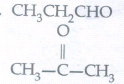
Write all structural isomers of molecular formula C3H6O.
3.
Write structural formula for all the isomeric amines with molecular formula C4H11 N.
4.
Write the name of element which is confirmed on adding Na2[Fe(CN)5NO] in sodium extract solution due to appearance of violet colouration.
5.
What type of solids are separated by fractional crystallisation?
6.
How will you separate a mixture of two organic compounds which have different solubilities in the same solvent?
7.
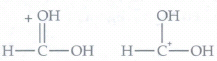
What is the relationship between the members of following pairs of structures? Are they structural or geometrical isomers or resonance contributors?
8.
How many \(\sigma\) and \(\pi\) bonds are present in each of the following molecules?
\(H\equiv CCH=CHCH_{ 3 }\)
9.
How many \(\sigma\) and \(\pi\) bonds are present in each of the following molecules?
CH3CH2C \(\equiv\) N
10.
Name a suitable technique of separation of the components from a mixture of calcium sulphate and camphor.
11.
Explain hyperconjugation effect. How does hyperconjugation effect explain the stability of alkenes?
12.
Explain the terms inductive and electromeric effects. Which electron displacement effect explain the following correct orders of acidity of the carboxylic acids?
(a) Cl3CCOOH > Cl2CHCOOH > ClCH2COOH
(b) CH3CH2COOH > (CH3)2CHCOOH > (CH3)3C.COOH
13.
Which of the following are electrophiles?
Dimethyl sulphide
Bromides
Carbon dioxide
Ammonia
14.
The bond that undergoes heterolytic cleavage most readily is ______.
C-C
C-O
C-H
O-H
15.
The reaction: CH3CH2I + KOH (aq) \(\rightarrow\)CH3CH2OH + KI is classified as :________.
electrophilic substitution
nucleophilic substitution
elimination
addition
16.
Which of the following carbocation is most stable ?
\(({ CH }_{ 3 })_{ 3 }C.\overset {+ }{ C } { H }_{ 2 }\)
\(\left( { CH }_{ 3 } \right) _{ 3 }\overset { + }{ C } \)
\({ CH }_{ 3 }{ CH }_{ 2 }\overset { +}{ C } { H }_{ 2 }\)
\({ CH }_{ 3 }\overset {+ }{ C } HC{ H }_{ 2 }{ CH }_{ 3 }\)
17.
In the organic compound CH2=CH-CH2-CH2-C\(\equiv \)CH, the pair of hydridised orbitals involved in the formation of: C2 - C3 bond is _____.
sp - sp2
sp - sp3
Sp2 - Sp3
sp3 - sp3
1.
V1 = 38 cm3
V2 =?
P1 = 96 k Pa
P2 = 101.3 Pa.
T1 = 300 K T2 = 273 K
\(V_2=\frac{96\times 38\times 273}{300\times 101.3}\)
\(\frac{995904}{30390}=32.77\ cm^3\)
\(\% of\ N=\frac{28}{22400}\times\frac{100\times V_2}{W}\)
\(=\frac{1}{8}\times \frac{V_2}{W}=\frac{1}{8}\times \frac{32.77}{0.25}=16.38\%\)
2.
3.
(i) \({ CH }_{ 3 }-{ CH }_{ 2 }-{ CH }_{ 2 }-{ CH }_{ 2 }-{ NH }_{ 2 }\)
(ii)
\({ CH }_{ 3 }-{ CH }_{ 2 }-{ CH }-{ CH }_{ 3 }\\ \quad \quad \quad \quad \quad \quad \quad |\\ \quad \quad \quad \quad \quad \quad \quad { NH }_{ 2 }\)
(iii)
\({ CH }_{ 3 }-{ CH }-{ CH_{ 2 } }-{ NH }_{ 2 }\\ \quad \quad \quad \quad |\\ \quad \quad \quad \quad { CH }_{ 3 }\)
(iv)
\({ \quad \quad \quad \quad CH }_{ 3 }\\ \quad \quad \quad \quad |\\ { { CH }_{ 3 } }-{ C }-{ NH }_{ 2 }\\ \quad \quad \quad \quad |\\ \quad \quad \quad \quad { CH }_{ 3 }\)
(v)
\({ CH }_{ 3 }-{ CH }_{ 2 }-{ CH }_{ 2 }-{ NH }-{ CH }_{ 3 }\)
(vi)
\({ CH }_{ 3 }-{ CH }-{ NH }-{ CH }_{ 3 }\\ \quad \quad \quad \quad |\\ \quad \quad \quad \quad { CH }_{ 3 }\)
(vii)
\({ CH }_{ 3 }-{ CH }_{ 2 }-{ NH }-{ CH }_{ 2 }-{ CH }_{ 3 }\)
(viii)
\({ CH }_{ 3 }-{ CH }_{ 2 }-{ N }-{ CH }_{ 3 }\\ \quad \quad \quad \quad \quad \quad \quad |\\ \quad \quad \quad \quad \quad \quad \quad { CH }_{ 3 }\)
4.
Sulphur.
5.
Those solids which are soluble in the same solvent but to a different extent i.e., differ in their solubility.
6.
By fractional crystallisation.
7.
resonance contributors because they differ in the position of electrons but not atoms.
8.
\(\sigma_{\mathrm{C}-\mathrm{c}}: 4 ; \sigma_{\mathrm{C}-\mathrm{H}}: 6 ; \pi_{\mathrm{C}=\mathrm{C}}: 1 ; \pi \mathrm{C} \equiv \mathrm{C}: 2\)
9.
\({ \sigma }_{ C-C }=2, \ { { \sigma }_{ C-H }=5, \ }{ { \sigma }_{ C-N } }=1,\ { { \pi }_{ C-N } }=2\)
10.
A mixture of CaSO4 and camphor can be separated by sublimation. Because camphor is sublimate but CaSO4 is not therefore, sublimation of the mixture gives camphor on the sides of funnel while CaSO4 is left in the China dish.
11.
Hyperconjugation: The relative stability of various classes of carbonium ions may be explained by the number of no-bond resonance structures that can be written for them. Such structures are arrived by shifting the bonding electrons from an adjacent C-H bond to the electron-deficient carbon. In this way, the positive charge originally on carbon is dispersed to the hydrogen. This manner of electron release by assuming no-bond character in the adjacent C-H bond is called Hyperconjugation or No-Bond Resonance. The greater the hyperconjugation, the greater will be 'the stability of the compound. The increasing order of stability can be shown as.

12.
Inductive Effect: The inductive effect refers to the polarity produced in a molecule as a result of higher electronegativity of one atom compared to another. Atoms or groups which lose electron towards a carbon atom are said to have + I Effect.
Those atoms or groups which draw electron away from a carbon atom are said to have -I Effect.
Common examples of -I effect are:
NO2, F, Cl, Br, I, OH etc.
Examples of +1 effect are (Electron releasing)
(CH3)2C-, (CH3)2CH-, CH3CH2-, CH3- etc.
Electromeric effect: The electromeric effect refers to the polarity produced in a multiple bonded compound as it is approached by a reagent.
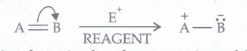
The atom A has lost its share in the electron pair and B has gained this share. As a result A acquires a positive charge and B a negative charge. It is a temporary effect and takes place only in the presence of a reagent.
(a) -I-effect as shown below:
As the number of halogen atoms decreases, the overall -1- effect decreases and the acid strength decreases accordingly.

(b) +I-effect as shown below:
As the number of alkyl groups increases, the +I-effect increases and the acid strength decreases accordingly.

13.
(a)
Dimethyl sulphide
14.
(d)
O-H
15.
(b)
nucleophilic substitution
16.
(b)
\(\left( { CH }_{ 3 } \right) _{ 3 }\overset { + }{ C } \)
17.
(c)
Sp2 - Sp3

11th Standard CBSE Syllabus & Materials
11th Standard CBSE
CBSE 11th Business Studies Forms of Business Organisation Sample Question Papers Study Material - QB365 Set A
NEW11th Standard CBSE
CBSE 11th Business Studies Business, Trade and Commerce Sample Question Papers Study Material - QB365 Set A
NEW11th Standard CBSE
CBSE 11th Physics Waves Sample Question Papers Study Material - QB365 Set A
NEW11th Standard CBSE
CBSE 11th Physics Kinetic Theory Sample Question Papers Study Material - QB365 Set A



CBSE 11th Standard CBSE Subjects
CBSE Standards









