
 100% FREE ACCESS
11th Standard Syllabus & Materials
11th Standard
TN 11th Tamil இயற்கை வேளாண்மை,சுற்றுச்சூழல் -செய்யுள் - மனோன்மணீயம் Important Questions And Answers Study Material - QB365 Set A
NEW11th Standard
TN 11th Tamil என்னுயிர் என்பேன் -துணைப்பாடம் - இசைத்தமிழர் இருவர் Important Questions And Answers Study Material - QB365 Set A
NEW11th Standard
TN 11th Tamil மொழி கலை -செய்யுள் - ஒவ்வொரு புல்லையும் Important Questions And Answers Study Material - QB365 Set A
NEW11th Standard
TN 11th Tamil பீடு பெற நில் - இலக்கணம் - பகுபத உறுப்புகள் Important Questions And Answers Study Material - QB365 Set A
NEW11th Standard
TN 11th Tamil பீடு பெற நில் - துணைப்பாடம் - வாடிவாசல் Important Questions And Answers Study Material - QB365 Set A
NEW11th Standard
TN 11th Tamil பீடு பெற நில் - செய்யுள் - குறுந்தொகை Important Questions And Answers Study Material - QB365 Set A

Published on: 12/11/2019
Download Tamil Nadu 11th Standard Computer Science question papers, model tests, one-mark questions, important questions, and public exam papers in PDF format. Free study materials and answer keys for TN State Board students.
Questions + Answers key
Take MCQ Computer Science Test
1.
The variables which can store the truth values are called as _______
logical variable
binary valued variable
boolean variables
all of these
2.
How many variables can be defined in the same struct type?
2
4
10
many
3.
What happens when a class with parameterized constructors and having no default constructor is used in a program and we create an object that needs a zero-argument constructor?
Compile-time error
Domain error
Runtime error
Runtime exception
4.
Which of the following means organizing principle of a program?
OPPs
Modules
Sub-routines
Paradigm
5.
Which of the following supports the transitive nature of data?
Inheritance
Encapsulation
Polymorphism
Abstraction
6.
7.
What was the original name given to C++?
CPP
Advanced C
C with Classes
Class with C
8.
The speed of inkjet printers generally range from _________
1-20 PPM
1-22 PPM
10-20 PPM
11-20 PPM
9.
We wish to cover a chessboard with dominoes,ロロ the number of black squares and the number of white squares covered by dominoes, respectively, placing a domino can be modeled by
b:= b + 2
w:= w + 2
b, w := b + 1, w + 1
b:= w
10.
Which of the following statement is used to alter the normal flow of control?
Sequential control flow
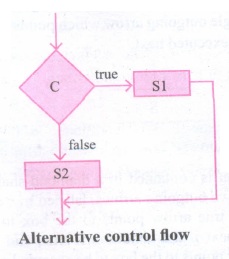
Alternative control flow
Iterative control flow
all of these
11.
Which of the OS not takes their roots from Unix?
iOS
Linux
Mac OS X
Windows
12.
NOR is a combination of ?
NOT(OR)
NOT(AND)
NOT(NOT)
NOT(NOR)
13.
14.
Which of the following is a CISC processor?
Intel P6
AMD K6
Pentium III
Pentium IV
15.
Which one of the following is the main memory?
ROM
RAM
Flash drive
Hard disk
16.
What do you mean by precedence of operators?
17.
Define OOP.
18.
Write the 1's complement number and 2's complement number for the following decimal number: -13
19.
When a condition statement will be executed?
20.
How do we refine a statement?
21.
What is recursive problem solving?
22.
What is the advantage of open source?
23.
List out different distributions of Linux operating system.
24.
What is the function of an ALU?
25.
Write about objects.
26.
How will you close an application?
27.
28.
Write about strupr ( ) function.
29.
Evaluate x+= x + ++x; Let x=5;
30.
Draw a flowchart for alternative control flow.
31.
Expand PROM, EPROM and EEPROM.
32.
Write a note Vacuum tube on.
33.
Explain the process management algorithms in Operating System.
34.
Explain various types of microprocessors.
35.
Write the advantages and disadvantages of OOPs.
36.
Mention the differences between constructor and destructor.
37.
Give an example for loop invariant.
38.
Write a note on case analysis.
39.
What are the values of variables m and n after the assignments in line (1) and line (3)?
40.
Explain any two input and output devices.
41.
42.
Add 11010102 + 1011012
43.
Write the specification of an algorithm hypotenuse whose inputs are the lengths of the two shorter sides of a right angled triangle, and the output is the length of the third side.
1.
(d)
all of these
2.
(d)
many
3.
(a)
Compile-time error
4.
(d)
Paradigm
5.
(a)
Inheritance
6.
(a)
7.
(c)
C with Classes
8.
(a)
1-20 PPM
9.
(d)
b:= w
10.
(d)
all of these
11.
(d)
Windows
12.
(a)
NOT(OR)
13.
(a)
14.
(c)
Pentium III
15.
(b)
RAM
16.
The hierarchical order in which the operators are used for operation is known as precedence of operators.
17.
Object-Oriented Programming (OOP) is the term used to describe a programming approach based on classes and objects.
18.
Binary equivalent of -13 = 1101
8 bit format =00001101
1's complement =11110010
Add 1 to LSB =+1
2' s Complement of -13 -11110011

19.
It will be executed only when the condition statement is true.
20.
In refinement, each statement is repeatedly expanded into more detailed statements in the subsequent levels.
21.
1. Recursion is a method of solving problems that involves breaking a problem down into smaller and smaller sub problems until user gets in to a small problem that it can be solved trivially.
2. Usually recursion involves a function calling itself. While it may not seem like much on the surface, recursion allows us to write elegant solutions to problems that may otherwise be very difficult to program.
22.
Advantages:
(i) It is free of cost
(ii) Accessible to everybody.
(iii) Not belongs to particular vendor.
(iv) It can be modified, for requirements.
23.
Different server distributions in Linux OS:
Ubuntu, Linux Mint, Debian, Fedora, RedHat.
24.
The ALU is a part of CPU where various computing functions are performed on data. ALU performs arithmetic operations such as addition, subtraction, multiplication, division and logical operations.
25.
Objects:
Represents data and its associated function together into a single unit. Objects are the basic unit of OOP. Basically an object is created from a class. They are instances of class also called as class variables. An identifiable entity with some characteristics and behaviour is called object.
26.
(i) To quit a application, click the close button in the upper right corner of the application window.
(ii) Click File → Exit
(iii) Click File → Close option
27.
28.
The strupr() function is used to convert the given string into Uppercase letters.
For example:
int mair()
{
char strl[50];
cout << "\nType any string in Lower case:";
gets(str 1);
cout<< "\nConverted the Sources
string' << strl << into Uppe case
is"<< strupr( str 1);
return 0;
}
Output:
Type any string in Lower case: computer science
Converted the Source string computer science into
Upper Case is COMPUTER SCIENCE
29.
x+ = x+++x (x - 5)
x+ = x+++5 (x becomes 6)
x+ = 6 + 6
x+ = 12
x = 6 + 12
x = 18
30.
31.
(i) PROM - Programmable Read only Memory.
(ii) EPROM - Erasable Read only Memory.
(iii) EEPROM - Electrically Erasable Read Only Memory.
32.
(i) Vacuum tubes contain electrodes for controlling electron flow and were used in early computers as a switch or an amplifier.
(ii) Vaccum tubes are big in size and consumed more power.
33.
(i) This algorithm is based on queuing technique. This is the basic logic of the FIFO algorithm.
(ii) Technically, the process that enters the queue first is executed first by the CPU, followed by the next and so on.
(iii) The processes are executed in the order of the queue (row).
34.
Microprocessors can be classified based on the following criteria:
1. The width. of data that can be processed
2. The instruction set
Classification of Microprocessors based on the Data Width
Depending on the data width, microprocessors can process instructions. The microprocessors can be classified as follows:
1. 8-bit microprocessor
2 16-bit microprocessor
3. 32-bit microprocessor
4. 64-bit microprocessor
Classification of Microprocessors based on Instruction Set
The size of the instruction set is another important consideration while categonzmg microprocessors. Initially, microprocessors had very small instruction sets because complex hardware was expensive as well as difficult to build. As technology had developed to overcome . these issues, more and more complex instructions were added to increase the functionality of microprocessors. Let us learn more about the two types of microprocessors based. on their instruction sets.
Reduced Instruction Set Computers (RISC)
RISC stands for Reduced Instruction Set Computers. They have a small set of highly optimized instructions. Complex instructions are also implemented using simple instructions, thus reducing the size of the instruction set.
Examples of RISC processors are Pentium IV, Intel P6, AMD.K6 and K7.
Complex Instruction Set Computers (CISC)
CISC stands for Complex Instruction Set Computers. They support hundreds of instructions. Computers supporting CISC can accomplish a wide variety of tasks, making them ideal for personal computers.
Examples of CISC processors are Intel 386 & 486, Pentium, Pentium II and III, and Motorola 68000.
35.
Advantages of OOP:
(i) Re-usability: Write once and use it multiple times you can achieve this by using class.
(ii) Redundancy: Inheritance is the good feature for data redundancy. If you need a same functionability in multiple class you can write a common class for the same functionality and inherit that class to sub class.
(iii) Easy Maintenance: It is easy to maintain and modify existing code as new objects can be created with small difference to existing ones.
(iv) Security: Using data hiding and abstraction only necessary data will be provided thus maintains the security of data.
Disadvantages of OOP:
(i) Size: Object Oriented Programs are much larger than other programs.
(ii) Effort: Object Oriented Programs require a lot of work to create.
(iii) Speed: Object Oriented Programs are slower than other programs, because of their size
36.
| Constructor | Destructor |
|---|---|
| The name of the constructor must be same as that of the class. | The destructor has the same name as that of the class prefixed by the tilde character '~'.. |
| No return type can be specified for constructor. | It has no return type. |
| A constructor can have parameter list. | The destructor cannot have arguments |
| The constructor function can be overloaded. | Destructors cannot be overloaded i.e., there can be only one destructor in a class. |
| They cannot be inherited but a derived class can call the base class constructor. | They cannot be inherited. |
| The compiler generates a constructor, in the absence of a user defined constructor. | In the absence of user defined destructor, it is generated by the compiler. |
37.
The loop invariant is true in four crucial points in a loop. Using the loop invariant, we can construct the loop and reason about the properties of the variables at these points.
Example:
Design an iterative algorithm to compute an , Let us name the algorithm power(a, n).
For example,
power(10, 4) = 10000
power (5 , 3) = 125
power (2 , 5) = 32
Algorithm power (a, n) computes an by multiplying a cumulatively n times.
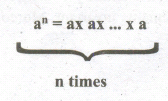
The specification and the loop invariant are shown as comments.
power (a, n)
-- inputs: n is a positive integer
-- outputs: p = an
p, i := 1 ,0
while i \(\neq \) n
-- loop invariant: p = a i
p, i:=p x a, i+ 1
The step by step execution of power (2, 5) is shown in Table. Each row shows the values of the two variables p and i at the end of an iteration, and how they are calculated. We see that p = a' is true at the start of the loop, and remains true in each row. Therefore, it is a loop invariant.
| iteration | p | p\(\times \)a | i | i+1 | ai |
| 0 1 2 3 4 5 |
1 2 4 8 16 32 |
1 \(\times \) 2 2 \(\times \) 2 4 \(\times \) 2 8 \(\times \) 2 16 \(\times \) 2 |
0 1 2 3 4 5 |
0+1 1+1 2+1 3+! 4+1 |
20 21 22 23 24 25 |
When the loop ends, p = a' is still true, but i = 5. Therefore, p = a5. In general, when the loop ends, p = an. Thus, we have verified that power(a, n) satisfies its specification.
38.
The alternative statement analyses the problem into two cases. The case analysis statement generalizes it to multiple cases. Case analysis splits the problem into an exhaustive set of disjoint cases. For each case, the problem is solved independently. if Cl, C2, and C3 are conditions, and S1, S2, S3, and S4 are statements, a 4-case analysis statement has the form,
1. Case C1
2. S1
3. Case C2
4. S2
5. Case C3
6. S3
7. else
8.S4
The conditions C1, C2, and C3 are evaluated in turn. For the first condition that evaluates to true, the corresponding statement is executed, and the case analysis statement ends. If none of the conditions evaluates to true, then the default case S4 is executed.
1. The cases are exhaustive: at least one' of the cases is true. If all conditions are false, the default case is true.
2. The cases are disjoint: only one of the cases is true. Though it is possible for more than one condition to be true, the case analysis always executes only one case, the first one that is true. If the three conditions are disjoint, then the four cases are (1) C1, (2) C2, (3) C3, (4), (not C1) and (not C2) and (not C3).
39.
1. m, n:= 2, 5
2. -- m, n = ? , ?
3. m,n: = m + 3, n - 1
4. -- m, n = ? , ?
The assignment in line (1) stores 2 in variable m, and 5 in variable n.
\(m\ n\\ \boxed { 2 } \ \boxed { 5 } \)
The assignment in line (3) evaluates the expressions m + 3 and n - 1 using the current values of m and n as
m+3,n-1
= 2+ 3,5-1
=5,4
and stores the values 5 and 4 in the variables m and n, respectively.
\(m\ n\\ \boxed { 4 } \ \boxed { 4 } \)
1. m, n:= 2,5
2. -- m, n = 2 , 5
3. m, n : = m + 3, n - 1
4. -- m, n = 2 + 3, 5-1 = 5, 4
Values of the variables after the two assignments are shown in line (2) and line (4).
40.
(i) Scanner:
Scanners are used to enter the information directly into the computer's memory. This device works like a Xerox machine. The scanner converts any type of printed or written information including photographs into a digital format, which can be manipulated by the computer.
(ii) Fingerprint Scanners:
Fingerprint Scanner is a fingerprint recognition device used for computer security, equipped with the fingerprint recognition feature that uses biometric technology. Fingerprint Reader / Scanner is a very safe and convenient device for security instead of using passwords, which is vulnerable to fraud and is hard to remember.
(iii) Monitor:
Monitor is the most commonly used output device to display the information. It looks like a TV. Pictures on a monitor are formed with picture elements called PIXELS. Monitors may either be Monochrome which display text or images in Black and White or can be color, which display results in multiple colors. There are many types of monitors available such as CRT (Cathode Ray Tube), LCD (Liquid Crystal Display) and LED (Light Emitting Diodes). The monitor works with the VGA (Video Graphics Array) card. The video graphics card helps the keyboard to communicate with the screen. It acts as an interface between the computer and display monitor. Usually the recent motherboards incorporate built-in video card.
(iv) Plotter:
Plotter is an output device that is used to produce graphical output on papers. It uses single colour or multi colour pens to draw pictures.
41.
 1985 1. Introduction of GUI in 16 - bit. processor
 1987 1. Supports to minimize or maximize windows.
 1992 1. Introduced the concept of multitasking.
 1995 1. Introduced Start button, the taskbar, Windows Explorer and Start menu.
 1998 1. Integration of the Web browser (Internet Explorer) with the Operating System.
 Designed to act as servers in network. 7. Windows Me
  2000 It introduced automated system diagnostics and recovery tools. 8. Windows 2000
  2000 1. Served as an Operating System for business
 2001 1. Introduced 64-bit Processor.
 2006 Updated the look and feel of Windows 11. Windows 7
  2009 Booting time was improved, introduced new user interfaces like Aero Peek, pinning programs to the taskbar, handwriting recognition etc, and Internet Explorer 8. 12. Windows 8
  2012 1. Windows 8 was faster than previous versions of Windows.
 2015 1. Start Button was added again.
42.
11010102 + 1011012
1101010
+101101
________
10010111
________
11010102 + 1011012 = 100101112
43.
1. hypotenuse (a, b)
2. -- inputs: a, b are real numbers, a > 0, b > 0
3 -- outputs: c²=a² + b² where c is real number, c > 0

11th Standard Syllabus & Materials
11th Standard
TN 11th Tamil பீடு பெற நில் - செய்யுள் - காவடிச்சிந்து Important Questions And Answers Study Material - QB365 Set A
NEW11th Standard
TN 11th Tamil பீடு பெற நில் - உரைநடை - மலை இடப்பெயர்கள் : ஓர் ஆய்வு Important Questions And Answers Study Material - QB365 Set A
NEW11th Standard
TN 11th Tamil மாமழை போற்றுதும் - துணைப்பாடம் - யானை டாக்டர் Important Questions And Answers Study Material - QB365 Set A
NEW11th Standard
TN 11th Tamil மாமழை போற்றுதும் - செய்யுள் - ஐங்குறுநூறு Important Questions And Answers Study Material - QB365 Set A



Tamilnadu Stateboard 11th Standard Subjects

Maths

Commerce

Economics

Biology

Business Maths and Statistics

Accountancy
Computer Science

Physics

Chemistry
Maths
Biology
Economics
Physics
Chemistry

History
Business Maths and Statistics

Computer Science
Accountancy

Computer Applications
History
Computer Technology
Commerce
Computer Applications
Computer Technology

Tamil

English

French
Tamilnadu Stateboard Standards
