
 100% FREE ACCESS
11th Standard CBSE Syllabus & Materials
11th Standard CBSE
CBSE 11th Economics PART-A - Presentation of Data - New Sample Question Papers Study Material - QB365 Set A
NEW11th Standard CBSE
CBSE 11th Economics PART-A - Organisation of Data - New Sample Question Papers Study Material - QB365 Set A
NEW11th Standard CBSE
CBSE 11th Economics PART-A - Collection of Data - New Sample Question Papers Study Material - QB365 Set A
NEW11th Standard CBSE
CBSE 11th Economics PART-A - Introduction to Economics and Statistics - New Sample Question Papers Study Material - QB365 Set A
NEW11th Standard CBSE
CBSE 11th Business Studies International Trade Sample Question Papers Study Material - QB365 Set A
NEW11th Standard CBSE
CBSE 11th Business Studies Evolution and Fundamentals of Business Sample Question Papers Study Material - QB365 Set A

Published on: 21/10/2025
Download CBSE Class 11th Standard CBSE Mathematics question papers, sample papers, important questions, and previous year solved papers in PDF format. Get free study materials, NCERT solutions, and exam preparation resources for Class 11th Standard CBSE Mathematics
Questions + Answers key
Take MCQ Mathematics Test
1.
Find r if \((i) { }^{5} \mathrm{P}_{r}=2{ }^{6} \mathrm{P}_{r-1}\)
\((ii) { }^{5} \mathrm{P}_{r}={ }^{6} \mathrm{P}_{r-1}\)
2.
Find n if n – 1P3 : nP4 = 1 : 9
3.
Find the number of permutations of the letters of the word ALLAHABAD.
4.
Evaluate \(\frac{n !}{r !(n-r) !}\) when n = 5, r = 2.
5.
Compute \((i) \frac{7 !}{5 !}\)
\((ii) \frac{12 !}{(10 !)(2 !)}\)
6.
Evaluate (i) 5 ! (ii) 7 ! (iii) 7 ! – 5!
7.
Evaluate \(\frac { n! }{ (n-r)! } \) when (i) n =6, r = 2 (ii) n=9, r=5
8.
If \(\frac { 1 }{ 6! } +\frac { 1 }{ 7! } =\frac { x }{ 8! } \), find x
9.
Compute \(\frac { 8! }{ 6!\times 2! } \)
10.
How many 3-digit numbers can be formed by using the digits 1 to 9 if no digit is repeated?
11.
Is 3! + 4! = 7! ?
12.
Evaluate: (i) 8 ! (ii) 4 ! – 3 !
13.
How many words, with or without meaning can be made from the letters of the word MONDAY, assuming that no letter is repeated, if.
(i) 4 letters are used at a time,
(ii) all letters are used at a time,
(iii) all letters are used but first letter is a vowel?
14.
From a committee of 8 persons, in how many ways can we choose a chairman and a vice-chairman assuming one person can not hold more than one postion?
15.
Find the number of ways in which 5 boys and 5 girls be seated in a row, so that no two girls sit together.
16.
Find n, if (n=2)!=2550x n!.
17.
Compute \(\frac { 20! }{ 18!(20-18)! } \)
18.
Evaluate the following
4! - 3!
19.
If \( \frac { n! }{ 2!(n-2)! } \)and \(\frac { n! }{ 4!(n-4)! } \) are in the ratio 2:1, then find the value of n.
20.
How many 4-digit numbers are there with no digit repeated?
21.
In how many ways can 5 girls and 3 boys be seated in a row so that no two boys are together?
22.
Find the number of different words that can be formed from the letters of the word 'TRIANGLE' so that no vowels are together.
23.
How many 3-digit even numbers can be made using the digits 1, 2, 3, 4, 6, 7, if no digit is repeated?
24.
If \((n+3)!=56\times (n+1)!\), then find n.
25.
If \(\frac { 1 }{ 7! } +\frac { 1 }{ 9! } =\frac { x }{ 10! } \), then find x.
26.
Compute \(\frac { (12!)-(10!) }{ 9! } \).
27.
Find the number of different signals that can be generated by arranging at least 2 flags in order (one below the other) on a vertical staff, if five different flags are available.
28.
Convert product into factorials.
(i) \(6\cdot 7\cdot 8\cdot 9\cdot 10\)
(ii) \(2\cdot 4\cdot 6\cdot 8\cdot 10\)
29.
It is required to seat 5 men and 4 women in a row so that the women occupy the even places. How many such arrangements are possible ?
30.
How many words, with or without meaning, can be formed using all the letters of the word EQUATION at a time so that the vowels and consonants occur together?
31.
How many 4-digit numbers are there, when a digit may be repeated any number of times?
32.
Find the number of different words can be formed from the letters of the word "TRIANGLE", so that
(i) all vowels occur together.
(ii) all vowels do not occur together.
33.
A room has 7 doors. In how many ways can a man enter the room through one door and come out through a different door ?
34.
A gentleman has 6 friends to invite, Inhow many ways can he send invitation cards to them, if he has threee servants to carry the cards?
35.
How many 2 digit even numbers can be formed from the digits 1, 2, 3, 4, 5 if the digits can be repeated?
1.
(i) \({ }^{5} \mathrm{P}_{r}=2^{6} \mathrm{P}_{r-1} \)
\(\Rightarrow \frac{5 !}{(5-r) !}=2 \times \frac{6 !}{(6-r+1) !} \)
\(\left.\Rightarrow \frac{5 !}{(5-r) !}=\frac{2 \times 6 !}{(7+\mathrm{J}) !}\right) \)
\(\Rightarrow \frac{5 !}{(5-r) !}=\frac{2 \times 6 \times 5 !}{(7-r)(6-r)(5-r) !}\)
\(\Rightarrow 1=\frac{2 \times 6}{(7-r)(6-r)}\)
\(\Rightarrow(7-r)(6-r)=12\)
\(\Rightarrow 42-6 r-7 r+r^{2}=12\)
\(\Rightarrow r^{2}-13 r+30=0\)
\(\Rightarrow r^{2}-3 r-10 r+30=0\)
\(\Rightarrow r(r-3)-10(r-3)=0\)
\(\Rightarrow(r-3)(r-10)=0\)
\(\Rightarrow(r-3)=0 \text { or }(r-10)=0\)
\(\Rightarrow r=3 \text { or } r=10\)
\(\text { It is known that, }{ }^{n} \mathrm{P}_{r}=\frac{n !}{(n-r) !}, \text { where } 0 \leq r \leq n\)
∴ 0 ≤ r ≤ 5
Hence, r ≠ 10
∴ r = 3
(ii) \({ }^{5} \mathrm{P}_{r}=2^{6} \mathrm{P}_{r-1} \)
\(\Rightarrow \frac{5 !}{(5-r) !}=2 \times \frac{6 !}{(6-r+1) !} \)
\(\left.\Rightarrow \frac{5 !}{(5-r) !}=\frac{2 \times 6 !}{(7+\mathrm{J}) !}\right) \)
\(\Rightarrow \frac{5 !}{(5-r) !}=\frac{2 \times 6 \times 5 !}{(7-r)(6-r)(5-r) !} \)
\(\Rightarrow 1=\frac{2 \times 6}{(7-r)(6-r)}\)
\(\Rightarrow(7-r)(6-r)=12\)
\(\Rightarrow 42-6 r-7 r+r^{2}=12\)
\(\Rightarrow r^{2}-13 r+30=0\)
\(\Rightarrow r^{2}-3 r-10 r+30=0\)
\(\Rightarrow r(r-3)-10(r-3)=0\)
\(\Rightarrow(r-3)(r-10)=0\)
\(\Rightarrow(r-3)=0 \text { or }(r-10)=0\)
\(\Rightarrow r=3 \text { or } r=10\)
\(\text { It is known that, }{ }^{n} \mathrm{P}_{r}=\frac{n !}{(n-r) !}, \text { where } 0 \leq r \leq n\)
∴ 0 ≤ r ≤ 5
Hence, r ≠ 10
∴ r = 3
2.
\({ }^{n-1} P_{3}:{ }^{n} P_{4}=1: 9 \)
\(\Rightarrow \frac{{ }^{n-1} P_{3}}{{ }^{n} P_{4}}=\frac{1}{9} \)
\(\Rightarrow \frac{\left[\frac{(n-1) !}{(n-1-3) !}\right]}{\left[\frac{n !}{(n-4) !}\right]}=\frac{1}{9} \)
\(\Rightarrow \frac{(n-1) !}{(n-4) !} \times \frac{(n-4) !}{n !}=\frac{1}{9} \)
\(\Rightarrow \frac{(n-1) !}{n \times(n-1) !}=\frac{1}{9} \)
\(\Rightarrow \frac{1}{n}=\frac{1}{9} \)
\(\therefore n=9\)
3.
Here, there are 9 objects (letters) of which there are 4A’s, 2 L’s and rest are all different.
Therefore, the required number of arrangements
\(=\frac{9 !}{4 ! 2 !}=\frac{5 \times 6 \times 7 \times 8 \times 9}{2}=7560\)
4.
We have to evaluate \(\frac{5 !}{2 !(5-2) !}\) (since n = 5, r = 2)
We have \(\frac{5 !}{2 !(5-2) !}=\frac{5 !}{2 ! \times 3 !}=\frac{5 \times 4}{2}=10\)
5.
(i) We have \(\frac{7 !}{5 !}=\frac{7 \times 6 \times 5 !}{5 !}=7 \times 6=42\)
and \(\text { (ii) } \frac{12 !}{(10 !)(2 !)}=\frac{12 \times 11 \times(10 !)}{(10 !) \times(2)}=6 \times 11=66 \text { . }\)
6.
(i) 5 ! = 1 × 2 × 3 × 4 × 5 = 120
(ii) 7 ! = 1 × 2 × 3 × 4 × 5 × 6 ×7 = 5040 and
(iii) 7 ! – 5! = 5040 – 120 = 4920.
7.
(i) Here n=6 and r=2
\(\therefore \frac { n! }{ (n-r)! } =\frac { 6! }{ (6-2)! } =\frac { 6! }{ 4! } \)
\(= \ \frac { 6\times 5\times 4! }{ 4! } =30\)
(ii) Here n=9, and r =5
\(\therefore \ \frac { n! }{ (n-r)! } =\frac { 9! }{ (9-5)! } =\frac { 9! }{ 4! } \)
\(=\frac { 9\times 8\times 7\times 6\times 5\times 4! }{ 4! } =15120\)
8.
\(\frac { 1 }{ 6! } +\frac { 1 }{ 7! } =\frac { x }{ 8! } \)
\(\Rightarrow \ \frac { 1 }{ 6! } +\frac { 1 }{ 7\times 6! } =\frac { x }{ 8\times 7\times 6! } \)
\(\Rightarrow \ \frac { 1 }{ 6! } [1+\frac { 1 }{ 7 } ] \ =\frac { 1 }{ 6! } [\frac { x }{ 8\times 7 } ]\)
\(\Rightarrow \ \frac { 8 }{ 7 } =\frac { x }{ 8\times 7 } \ \Rightarrow \ x=64\)
9.
\(\frac { 8! }{ 6!\times 2! } =\frac { 8\times 7\times 6! }{ 6!\times 2! } =\frac { 8\times 7 }{ 2 } =28\)
10.
Here total number of digits= 9
Number of digits used (no digit is repeated)= 3
∴ Number of permutationa= 9P3
\(={9!\over 6!}={9\times8\times7\times6!\over 6!}=504\)
11.
Here
3! + 4! = 3 x 2 x 1 + 4 x 3 x 2 x 1
= 6 + 24 = 30
7! = 7 x 6 x 5 x 4 x 3 x 2 x 1
= 5040
∴ 3! + 4! ≠ 7!.
12.
(i) 8! = 8 x 7 x 6 x 5 x 4 x 3 x 2 x 1
= 40320
(ii) 4! - 3 ! = 4 x 3 x 2 x 1 - 3 x 2 x 1
= 24-6 = 18
13.
(i) Here, the word 'MONDAY' contains 6 distinct letters
Required number of words = Number of permulations of 6 different things taken 4 at a time.
=6P4\(=\frac { 6! }{ 2! } =\frac { 6\times 5\times 4\times 3\times 2! }{ 2! } =360\)
(ii) In the given word, there are 2 different vowels, which have to occupy the rightmost place of the words formed. This can be done only in 2 ways.
Since the letters cannot be repeated and the rightmost place is already occupied with a letter (which is a vowel), the remaining five places are to be filled by the remaining 5 letters. This can be done in 5! ways.
Thus, in this case, required number of words that can be formed is
5! × 2 = 120 × 2 = 240
(iii) Number of words that can be formed by using all the letters of the word MONDAY at a time is the number of permutations of 6 different objects taken 6 at a time, which is 6P6=6!.
Thus, required number of words that can be formed when all letters are used at a time = 6! = 6 × 5 × 4 × 3 × 2 ×1 = 720
14.
From a committee of 8 persons, a chairman and a vice chairman are to be chosen in such a way that one person cannot hold more than one position.
Here, the number of ways of choosing a chairman and a vice chairman is the permutation of 8 different objects taken 2 at a time.
Thus, required number of ways = 8P2
\(=\frac { 8! }{ (8-2)! } =\frac { 8! }{ 6! } =\frac { 8\times 7\times 6! }{ 6! } =56\)
15.
We have 5 boys and 5 girls,
Since no two girls sit together, therefore the possible choices for girls are the places marked as '\(\times\)'.
B1 \(\times\)B2 \(\times\)B3 \(\times\)B4 \(\times\)B5 \(\times\)
Clearly, the girls can be arranged in 6P5 ways and the boys can be arranged in 5! ways.
Hence, by fundamental principle multiplication, required number of ways = 6P5 \(\times \)5!
\(=\frac { 6! }{ (6-5)! } = 5!=6!\times 5!=86400\)
For solving this type of problem, we used the following steps
Step I Firstly, decide that from how many digits the required number will be formed.
Step II Fill up the places on which restrictions are present and let the number of ways of filling up these places be k.
Step III Find the number of ways of filling the remaining places with remaining digits by using the formula nPr
Step IV Required number of numbers is k. n P r .
16.
n=49
17.
\(\frac{20 !}{18 !(20-18) !}=\frac{20 \times 19 \times 18 !}{18 ! \times 2 !}=190\)
18.
4! - 3! = 4 × 3 × 2 × 1 - 3 × 2 × 1 = 18
19.
We have, \(\frac { n! }{ 2!(n-2)! } :\frac { n! }{ 4!(n-4)! } =2:1\)
\(\Rightarrow \frac { n! }{ 2!(n-2)! } \times \frac { 4!(n-4)! }{ n! } =\frac { 2 }{ 1 } \)
\(\Rightarrow \frac { 4!(n-4)! }{ 2!(n-2)! } =2\)
\(\Rightarrow \frac { 4\times 3\times 2!\times (n-4)! }{ 2!\times (n-2)(n-3)(n-4)! } =2\)
\(\Rightarrow \frac { 12 }{ (n-2)(n-3) } =2\)
\( \Rightarrow 12=2(n-2)9n-3)\)
\(\Rightarrow 12=2({ n }^{ 2 }-5n+6)\)
\(\Rightarrow 6={ n }^{ 2 }-5n=6\)
\( \Rightarrow { n }^{ 2 }-5n=0\)
\(\Rightarrow n(n-5)=0\)
\(\Rightarrow n=0\quad or\quad 5\)
When n=0 then (n-2)! and (n-4)! are not defined, so rejecting n=0.
therefore n=5
20.
The thousands place of the 4-digit number is to be filled with any of the digits from 1 to 9 as the digit 0 cannot be included. Therefore, the number of ways in which thousands place can be filled is 9.The hundreds, tens, and units place can be filled by any of the digits from 0 to 9. However, the digits cannot be repeated in the 4-digit numbers and thousands place is already occupied with a digit. The hundreds, tens, and unitsplace is to be filled by the remaining 9 digits.Therefore, there will be as many such 3-digit numbers as there are permutations of 9 different digits taken 3 at a time. Number of such 3-digit numbers
\(={ }^{9} \mathrm{P}_{3}=\frac{9 !}{(9-3) !}=\frac{9 !}{6 !} \)
\(=\frac{9 \times 8 \times 7 \times 6 !}{6 !}=9 \times 8 \times 7=504\)
Thus, by multiplication principle, the required number of 4-digit numbers is 9 × 504 = 4536
21.
Let us first seat the 5 girls. This can be done in 5! ways. For each such arrangement, the three boys can be seated only at the cross marked places.
× G × G × G × G × G ×.
There are 6 cross marked places and the three boys can be seated in 6P3 ways.
Hence, by multiplication principle, the total number of ways
\(=5 ! \times{ }^{6} \mathrm{P}_{3}=5 ! \times \frac{6 !}{3 !}\)
= 4 × 5 × 2 × 3 × 4 × 5 × 6 = 14400.
22.
Firstly, fix the alternate position of consonant on C's position is 5! \(\times\)C1\(\times\)C2\(\times\)C3\(\times\)C4\(\times\)C5\(\times\)
Now, in any six '\(\times\)' position, 3 vowels can be arranged in 6P3 ways
Ans. 14400
23.
3-digit even numbers are to be formed using the given six digits, 1, 2, 3, 4, 6, and 7, without repeating the digits.
Then, units digits can be filled in 3 ways by any of the digits, 2, 4, or 6.
Since the digits cannot be repeated in the 3-digit numbers and units place is already occupied with a digit (which is even), the hundreds and tens place is to be filled by the remaining 5 digits.
Therefore, the number of ways in which hundreds and tens place can be filled with the remaining 5 digits is the permutation of 5 different digits taken 2 at a time.
Number of ways of filling hundreds and tens place
\(={ }^{5} \mathrm{P}_{2}=\frac{5 !}{(5-2) !}=\frac{5 !}{3 !} \)
\(=\frac{5 \times 4 \times 3 !}{3 !}=20\)
Thus, by multiplication principle, the required number of 3-digit numbers is 3 × 20 = 60
24.
We have, \((n+3)!=56\times (n+1)!\)
\(\Rightarrow (n+3)(n+2)(n+1)!=56\times (n+1)!\)
\(\Rightarrow (n+3)(n+2)=56 \quad [\because (n+1)!\neq 0]\)
\(\Rightarrow { n }^{ 2 }+5n+6-56=0\Rightarrow { n }^{ 2 }+5n-50=0\)
\(\Rightarrow { n }^{ 2 }+10n-5n-50=0\Rightarrow n(n+10)-5(n+10)=0\)
\( \Rightarrow (n+10)(n-5)=0\Rightarrow n=5\)
\([\because \) n can't be negative, as n is a natural number]
25.
Given,\(\frac { 1 }{ 7! } +\frac { 1 }{ 9! } =\frac { x }{ 10! } \Rightarrow \frac { 1 }{ 7! } +\frac { 1 }{ 9\times 8\times 7! } =\frac { x }{ 10\times 9\times 8\times 7! } \)
\(\Rightarrow \frac { 1 }{ 7! } \left( 1+\frac { 1 }{ 72 } \right) =\frac { 1 }{ 7! } \left( \frac { x }{ 10\times 9\times 8 } \right) \Rightarrow \frac { 73 }{ 72 } =\frac { x }{ 10\times 9\times 8 } \)
\(\therefore \) \(x=\frac { 73 }{ 72 } \times 10\times 9\times 8=730\)
26.
Consider,\(\frac { (12!)-(10!) }{ 9! } \) \(=\frac { 12\times 11\times 10!-10! }{ 9! } \) \(=\frac { 10!(132-1) }{ 9! } \)
\(=\frac { 10\times 9!\times 131 }{ 9! } \)
\(=1310\)
27.
A signal can consist of either 2 flags, 3 flags, 4 flags or 5 flags. Now, let us count the possible number of signals consisting of 2 flags, 3 flags, 4 flags and 5 flags separately and then add the respective numbers. There will be as many 2 flag signals as there are ways of filling in 2 vacant places 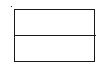 in succession by the 5 flags available. By Multiplication rule, the number of ways is 5 × 4 = 20. Similarly, there will be as many 3 flag signals as there are ways of filling in 3 vacant places
  in succession by the 5 flags.
The number of ways is 5 × 4 × 3 = 60.
Continuing the same way, we find that
The number of 4 flag signals = 5 × 4 × 3 × 2 = 120
and the number of 5 flag signals = 5 × 4 × 3 × 2 × 1 = 120
Therefore, the required no of signals = 20 + 60 + 120 + 120 = 320.
28.
(i) We have \(6\cdot 7\cdot 8\cdot 9\cdot 10\) \(=\frac { (1\cdot 2\cdot 3\cdot 4\cdot 5)\cdot 6\cdot 7\cdot 8\cdot 9\cdot 10 }{ (1\cdot 2\cdot 3\cdot 4\cdot 5) } \) [ multiplying numberator and ddenominator by \(1\cdot 2\cdot 3\cdot 4\cdot 5\) ]
\(=\frac { 10! }{ 5! } \)
(ii) We have, \(2\cdot 4\cdot 6\cdot 8\cdot 10\) \(=(2\times 1)\cdot (2\times 2)\cdot (2\times 3)\cdot (2\times 4)\cdot (2\times 5)\)
\(={ 2 }^{ 5 }\cdot (1\cdot 2\cdot 3\cdot 4\cdot 5)={ 2 }^{ 5 }\cdot 5!\)
29.
5 men and 4 women are to be seated in a row such that the women occupy the even places.
The 5 men can be seated in 5! ways. For each arrangement, the 4 women can be seated only at the cross marked places (so that women occupy the even places).
M x M x M x M x M
Therefore, the women can be seated in 4! ways.
Thus, possible number of arrangements = 4! × 5! = 24 × 120 = 2880
30.
In the word EQUATION, there are 5 vowels, namely, A, E, I, O, and U, and 3 consonants, namely, Q, T, and N.
Since all the vowels and consonants have to occur together, both (AEIOU) and (QTN) can be assumed as single objects. Then, the permutations of these 2 objects taken all at a time are counted. This number would be 2P2=2!
Corresponding to each of these permutations, there are 5! permutations of the five vowels taken all at a time and 3! permutations of the 3 consonants taken all at a time.
Hence, by multiplication principle, required number of words = 2! × 5! × 3!
= 1440
31.
0 cannot be placed at thousand's place. So, thousand's place can be filled in 9 ways. Since repitition of digits is allowed, therefore each of the remaining 3 places can be filled in 10 ways.
Ans. 9000
32.
There are 8 distinct letters in the word TRIANGLE, out of which 3 are vowels namely A, E, I and 5 are consonants, namely T, R, N, G, L.
(i) Since the vowels have to occur together with 5 remaining letters will be counted as 6 objects and these can be arranged in 6P6 = 6 ! ways. Corresponding to each of these permutations, we have 3! = 6 permutations of the three vowels A, E and I taken all at a time.
(ii) Clearly, by fundamental principle of multiplication, the required number of words = Number of all possible arrangements of 8 letters taken all at a time - Number of permutation in which the vowels are always together
= 6P6 - 6! x 3! = 8! - 6! x 3!
= 8 x 7 x 6! - 6! x 3! = 6! ( 56-6 )
= 720 x 50 = 36000
33.
Here, we need to perform two operations:
(i) Selecting a door to enter.
(ii) Selecting a door to come out.
Clearly, the man can enter the room through anyone of the seven doors. So, there are seven ways of entering into the room. Note that the man can come out through anyone of the remaining six doors. So, he can come out through a different door in 6 ways. Hence, by fundamental principle of counting, required number of ways = 7 \(\times\) 6 = 42
34.
Since, the gentleman has 3 servants, so number of ways of sening the invitation card to the first sriend = 3.Similarly, for each of the remaining friends, there are 3 ways each.
Ans . Total number of ways=36 = 729
35.
There will be as many ways as there are ways of filling 2 vacant places  in succession by the five given digits. Here, in this case, we start filling in unit’s place, because the options for this place are 2 and 4 only and this can be done in 2 ways; following which the ten’s place can be filled by any of the 5 digits in 5 different ways as the digits can be repeated. Therefore, by the multiplication principle, the required number of two digits even numbers is 2 × 5, i.e., 10.

11th Standard CBSE Syllabus & Materials
11th Standard CBSE
CBSE 11th Business Studies Forms of Business Organisation Sample Question Papers Study Material - QB365 Set A
NEW11th Standard CBSE
CBSE 11th Business Studies Business, Trade and Commerce Sample Question Papers Study Material - QB365 Set A
NEW11th Standard CBSE
CBSE 11th Physics Waves Sample Question Papers Study Material - QB365 Set A
NEW11th Standard CBSE
CBSE 11th Physics Kinetic Theory Sample Question Papers Study Material - QB365 Set A



NCERT Books

Syllabus

Exam Pattern

Sample Question Papers

Previous year Question Papers

Important Notes

MCQ Practice test

NCERT Exemplers

Case study Questions

Image Based Questions

Passage based Questions

HOT Questions

Value Based Questions

Model Questions Papers
NCERT ( Book Back ) Questions

Assertion and Reason
Important Questions And Answers

CBSE 11th Standard CBSE Subjects
CBSE Standards







