
 100% FREE ACCESS
11th Standard CBSE Syllabus & Materials
11th Standard CBSE
CBSE 11th Economics PART-A - Presentation of Data - New Sample Question Papers Study Material - QB365 Set A
NEW11th Standard CBSE
CBSE 11th Economics PART-A - Organisation of Data - New Sample Question Papers Study Material - QB365 Set A
NEW11th Standard CBSE
CBSE 11th Economics PART-A - Collection of Data - New Sample Question Papers Study Material - QB365 Set A
NEW11th Standard CBSE
CBSE 11th Economics PART-A - Introduction to Economics and Statistics - New Sample Question Papers Study Material - QB365 Set A
NEW11th Standard CBSE
CBSE 11th Business Studies International Trade Sample Question Papers Study Material - QB365 Set A
NEW11th Standard CBSE
CBSE 11th Business Studies Evolution and Fundamentals of Business Sample Question Papers Study Material - QB365 Set A

Published on: 21/10/2025
Download CBSE Class 11th Standard CBSE Mathematics question papers, sample papers, important questions, and previous year solved papers in PDF format. Get free study materials, NCERT solutions, and exam preparation resources for Class 11th Standard CBSE Mathematics
Questions + Answers key
Take MCQ Mathematics Test
1.
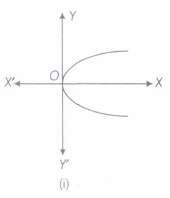
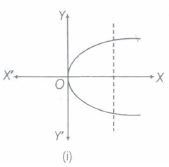
Identify the curve, which is a relation or function.
2.
If P = {a, b, c} and Q = {r}, form the sets P × Q and Q × P. Are these two products equal?
3.
If f(x) = x3 -\(1\over x^3\) ,Then find f(x) + f\(({1\over x})\) = 0
4.
Find the domain and range of the following functions:
f(x) = x2 - 3x +\({13\over4}\)
5.
Find the values of a and b, if (2a-5,4)=(5,b+6)
6.
Let f = \([(x,{x^2\over 1+x^2}):x\in R]\) be a function from R into R. Determine the range of f.
7.
Draw the graph of each the following function f(x) = 5
8.
Let A={1,2,3} and B={3,4} .Represent following graphically
\(B\times A\)
9.
If A = {1,3,6} and B = {X,Y}, then represent the following catesian products by an arrow diagrams \(B\times B\)
10.
If \(f(x)=\log { \left( 1-x \right) } \) and , \(g(x)=[x]\) then determine each of the following functions. \(f.g\) Also, find: \((f.g)(0)\)
11.
Find the domain of the function f given by f(x)=\(1\over \sqrt{[x]^2-[x]-6}\)
12.
Let A and B be two sets such that A x B consists of 6 elements. If three elements of A x B are (1, 4), (2, 6), (3, 6). Find A x Band B x A.
13.
Find the domain of the function \(f(x)=\frac { { x }^{ 2 }+2x+1 }{ { x }^{ 2 }-8x+12 } \)
14.
Find the domain and range of the following real functions. f(x) = - |2x|
15.
Let A = {-3, -2, -1, 4} and \(f:A\rightarrow Z\) given by f(x) = x2+x+2 Find pre-images of 6 and 4.
16.
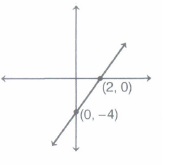
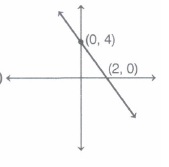
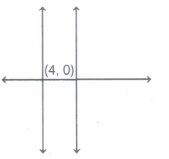
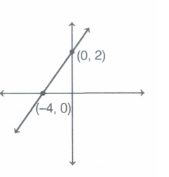
The graph of the function, f(x) = 4 - 2x is ______.
17.
If A is a finite set having n elements, then the number of relations which can be defined in A is ______.
2n
n2
2n2
nn
18.
Let R = \(\{x \mid x \in N, x \text { is a multiple of } 3 \text { and } x \leq 100\}\) S = \(\{x \mid x \in N, x \text { is a multiple of } 5 \text { and } x \leqq 100\}\). What is the number of elements in \((R \times S) \cap(S \times R) ?\)
36
33
20
6
19.
If a relation R is defined on the set Z of integers as follows \((a, b) \in R \Leftrightarrow a^{2}+b^{2}=25,\) then domain (R) is equal to ______.
{3, 4, 5}
{0 ,3, 4, 5}
{0 ,± 3, ± 4, ± 5}
None of these
20.
The relation R defined on the set of natural numbers as {(a, b): a differs from b by 3},is given by ______.
{(I, 4), (2, 5), (3, 6),... }
{(4, 1), (5,2), (6,3),.... }
{(I, 3), (2, 6), (3, 9),.... }
None of the above
21.
The relation on the set A = \(\{x:|x|<3, x \in Z\}\) is defined by R = \(\{(x, y): y=|x|, x \neq-1\}\). Then, the number of elements in the power set of R is ______.
32
16
8
64
22.
If A = {x : x2 - 5x + 6 = 0); B = {2, 4}, C = {4, 5}, then \(A \times(B \cap C)\) is ______.
{(2, 4), (3, 4)}
{(4, 2), (4, 3)}
{(2, 4), (3,4), (4, 4)}
{(2, 2), (3,3), (4,4), (5, 5)}
23.
Let A and B be two sets such that A x B consists of 6 elements. If three elements of A x B are (1, 4), (2, 6) and (3, 6), then ______.
(A X B) = (B X A)
(A X B) *(B X A)
A X B = {(l, 4), (1,6), (2, 4)}
None of the above
24.
Let f(x) = Ix-1I then ______.
f(x2) = [f(x)]2
f(x +y) = f(x) f(y)
f(IxI) = I f(x) I
none of these
25.
Which one of the following is not a function
{(x, y) (:) x, y \(\in\) R, x2 = y}
{(x, y) (:) x, y \(\in\) R, y2 = x}
{(x, y) (:) x, y \(\in\) R, x = y3}
{(x, y) (:) x, y \(\in\) R, y = x3}
1.
If we draw a vertical line, then it will intersect the curve at two points. It shows that given curve is a relation.
2.
By the definition of the cartesian product,
P × Q = {(a, r), (b, r), (c, r)} and Q × P = {(r, a), (r, b), (r, c)}
Since, by the definition of equality of ordered pairs, the pair (a, r) is not equal to the pair (r, a), we conclude that P × Q \(\begin{equation} \neq \end{equation}\) Q × P.
However, the number of elements in each set will be the same.
3.
0
4.
Domain = R, Range = [1,\(\infty\))
5.
We know that, two ordered pairs are equal, if their corresponding elements are equal.
(2a-5,4)=(5,b+6)\(\Rightarrow \)2a-5=5 and 4=b+6
[equating corresponding elements]
\(\Rightarrow \) 2a=5+5 and and 4-6=b
\(\Rightarrow \) 2a=10 and -2=b
\(\Rightarrow \) a=5 and b=-2
6.
Here f(x) = \({x^2\over 1+x^2}\)
Put \(y={x^2\over 1+x^2}\)
\(\Rightarrow\) y + yx2 = x2\(\Rightarrow\) x2(1- y) = y
\(\Rightarrow\) \(x^2={y\over 1-y}\)
\(\Rightarrow\) \(x=\pm\sqrt{y\over 1-y}\)
Now x will be real if
\({y\over 1-y}\ge 0\)
\(\Rightarrow\)\({y\over 1-y}\ge 0\)
\(\Rightarrow\) 0 \(\le\) y<1
\(\Rightarrow\) y\(\in\) [0,1)
\(\therefore \) Range of f(x) =[0,1)
7.
Given, \(f\left( x \right) =5\forall \ x\in R\)
Clearly, domain of f is R.
Range of f is {5}.
Npw, we prepare a table for different value of x as shown below
| x | -3 | -2 | -1 | 0 | 1 | 2 | 3 |
| f(x) | 5 | 5 | 5 | 5 | 5 | 5 | 5 |
Locate the points (-3,5), (-2,5), (-1,5), (0,5), (1,5), (2,5) and (3,5) on the graph paper and joint them, we obtained the required graph as shown below.
-S.png)
Clearly the graph of f(x) =5 represents a straight line parallel to X-axis and at a distance of 5 unit above the X-axis and symmetric with respect to Y-axis.
8.
-S.png)
9.
\(B\times B=\{ x,y\} \times \{ x,y\} \)
\(=\{ (x,x),(x,y),(y,x),(y,y)\} \)
Required arrow diagram is
-S.png)
10.
\(fg:(-\infty ,1)\rightarrow R,(f.g)(x)=[x].\log { (1-x) } \)
11.
(-\(\infty\), -2) \(\cup\) (4,\(\infty\))
12.
A x B = {(1, 4), (1, 6), (2, 4), (2, 6), (3, 4), (3, 6)}
B x A = {(4, 1), (4, 2), (4, 3), (6, 1), (6, 2), (6, 3)}
13.
Domain = R - {2, 6}
14.
Domain = R Range = (\(-\infty \),0)
15.
There is no pre-image of 6, pre-image of 4 is -2.
16.
(b)
17.
(c)
2n2
18.
(a)
36
19.
(c)
{0 ,± 3, ± 4, ± 5}
20.
(b)
{(4, 1), (5,2), (6,3),.... }
21.
(b)
16
22.
(a)
{(2, 4), (3, 4)}
23.
(b)
(A X B) *(B X A)
24.
(d)
none of these
25.
(b)
{(x, y) (:) x, y \(\in\) R, y2 = x}

11th Standard CBSE Syllabus & Materials
11th Standard CBSE
CBSE 11th Business Studies Forms of Business Organisation Sample Question Papers Study Material - QB365 Set A
NEW11th Standard CBSE
CBSE 11th Business Studies Business, Trade and Commerce Sample Question Papers Study Material - QB365 Set A
NEW11th Standard CBSE
CBSE 11th Physics Waves Sample Question Papers Study Material - QB365 Set A
NEW11th Standard CBSE
CBSE 11th Physics Kinetic Theory Sample Question Papers Study Material - QB365 Set A



NCERT Books

Syllabus

Exam Pattern

Sample Question Papers

Previous year Question Papers

Important Notes

MCQ Practice test

NCERT Exemplers

Case study Questions

Image Based Questions

Passage based Questions

HOT Questions

Value Based Questions

Model Questions Papers
NCERT ( Book Back ) Questions

Assertion and Reason
Important Questions And Answers

CBSE 11th Standard CBSE Subjects
CBSE Standards







