
 100% FREE ACCESS
11th Standard CBSE Syllabus & Materials
11th Standard CBSE
CBSE 11th Economics PART-A - Presentation of Data - New Sample Question Papers Study Material - QB365 Set A
NEW11th Standard CBSE
CBSE 11th Economics PART-A - Organisation of Data - New Sample Question Papers Study Material - QB365 Set A
NEW11th Standard CBSE
CBSE 11th Economics PART-A - Collection of Data - New Sample Question Papers Study Material - QB365 Set A
NEW11th Standard CBSE
CBSE 11th Economics PART-A - Introduction to Economics and Statistics - New Sample Question Papers Study Material - QB365 Set A
NEW11th Standard CBSE
CBSE 11th Business Studies International Trade Sample Question Papers Study Material - QB365 Set A
NEW11th Standard CBSE
CBSE 11th Business Studies Evolution and Fundamentals of Business Sample Question Papers Study Material - QB365 Set A

Published on: 21/10/2025
Download CBSE Class 11th Standard CBSE Mathematics question papers, sample papers, important questions, and previous year solved papers in PDF format. Get free study materials, NCERT solutions, and exam preparation resources for Class 11th Standard CBSE Mathematics
Questions + Answers key
Take MCQ Mathematics Test
1.
Solve the following system of inequalities.
\(\frac{x}{2 x+1} \geq \frac{1}{4} \text { and } \frac{6 x}{4 x-1}<\frac{1}{2}\)
2.
If A = {4, 5, 7, 8, 10}. B = {4, 5, 9} and C = {1, 4, 6, 9}, then verify that
(i) (A \(\cap\) B) \(\cap\) C = A \(\cap\) (B \(\cap\) C)
(ii) A \(\cup\) (B \(\cap\) C) = (A \(\cup\) B) \(\cap\) (A \(\cup\) C)
(iii) A \(\cap\) (B \(\cup\) C) = (A \(\cap\) B) \(\cup\) (A \(\cap\) C)
3.
Prove that: \({cos 6\theta +6cos 4\theta+15cos 2\theta+10\over cos5\theta+5cos 3\theta+10cos\theta}=2cos \theta\)
4.
Let z1 = 2-i ,z2 = -2+i. Find \(Im\left( \frac { 1 }{ { z }_{ 1 }\bar { { z }_{ 1 } } } \right) \)
5.
Find all other trigonometric ratios if sin \(\theta\) =\({-2\sqrt{6}\over5}\) and \(\theta\) lies in third quadrant.
6.
If the relation R is defined by R = {(2x + 1, 2x): x = 1, 2, 3, 4} then find domain and range of R.
7.
Find the complex number satisfying the equation \(z+\sqrt { 2 } \left| (z+1) \right| +i=0\)
8.
Find the domain of the function \(f(x)=\frac { { x }^{ 2 }+3x+5 }{ { x }^{ 2 }+x-6 } \)
9.
The longest side of a triangle is twice the shortest side and the third side is 2cm longer than the shortest side. If the perimeter of the triangle is more than 166cm then find the minimum length of the shortest side.
10.
If \(\left| z \right| =1\), then prove that \(\frac { z-1 }{ z+1 } ;(z\neq 1)\) is a purely imaginary number. What will you conclude, if z=1?
11.
The water acidity in a pool is considered normal, when the average pH reading of three daily measurements is between 7.2 and 7.8. The first two pH reading are 7.48 and 7.85, and pH reading of 3rd day is x.
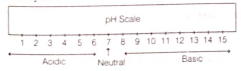
On the basis of above information, answer the following questions.
(i) The average pH of three days is
| (a) 5.11+x | (b) \(5.11+\frac{x}{3}\) | (c) 15.33+x | (d) None of these |
(ii) The system of linear inequality, which shows the given information is
| (a) \(7.2 \leq 5.11+\frac{x}{3} \leq 7.8\) | (b) \(7.2<5.11+\frac{x}{3} \leq 7.8\) | (c) \(7.2 \leq 5.11+\frac{x}{3}<7.8\) | (d) \(7.2<5.11+\frac{x}{3}<7.8\) |
(iii) The solution of linear inequality \(7.2 \leq 5.11+\frac{x}{3}\) is
| (a) x≥6.27 | (b) x>6.27 | (c) x≤6.27 | (d) x<6.27 |
(iv) The solution of linear inequality \(5.11+\frac{x}{3} \leq 78\) is
| (a) x≤8.07 | (b) x<8.07 | (c) x≥8.07 | (d) x>8.07 |
(v) The value of pH on third day is
| (a) [6.27,8.07] | (b) (627,8.07) | (c) (627,8.07] | (d) [6.27,8.07) |
1.
Now, \(\frac{x}{2 x+1} \geq \frac{1}{4} \Rightarrow \frac{x}{2 x+1}-\frac{1}{4} \geq 0\)
\(\Rightarrow \frac{2 x-1}{4(2 x+1)} \geq 0, \text { here } 2 x+1 \neq 0, \text { i.e. } x \neq-\frac{1}{2} \)
\(\Rightarrow (2 x-1)(2 x+1) \geq 0\)
Case I When both are non-negative
\(2 x-1 \geq 0 \text { and } 2 x+1>0 \)
\(\Rightarrow x \geq \frac{1}{2} \text { and } x>-\frac{1}{2} \)
\(\therefore x \in\left[\frac{1}{2} \infty\right)\) ..(i)
Case II When both are non-positive
\((2 x-1) \leq 0 \text { and } 2 x+1<0 \)
\(\Rightarrow x \leq \frac{1}{2} \text { and } x<\frac{-1}{2} \)
\(\therefore x \in\left(-\infty,-\frac{1}{2}\right)\) .(ii)
From Eqs. (i) and (ii), we get
\(x \in\left(-\infty,-\frac{1}{2}\right) \cup\left[\frac{1}{2}, \infty\right) \) .(iii)
now,\(\frac{6 x}{4 x-1}<\frac{1}{2} \Rightarrow \frac{6 x}{4 x-1}-\frac{1}{2}<0\)
\(\Rightarrow \frac{8 x+1}{2(4 x-1)}<0 \)
\(\Rightarrow (8 x+1)(4 x-1)<0\)
We have, \((8 x+1)<0 \text { and }(4 x-1)>0 \)
or \((8 x+1)>0 \text { and }(4 x-1)<0\)
\(\Rightarrow \frac{-1}{8}<x<\frac{1}{4}\) ..(iv)
Now, for the solution set of given system of inequalities take common value of x from Eqs. (ill) and (iv), but there is no common value of x.
Ans. Solution set is a empty set.
2.
Given, A = {4, 5, 7, 8, 10}, B = {4, 5, 9} and C = {1, 4, 6, 9}
(i) Now, A \(\cap\) B = {4, 5, 7, 8, 10} \(\cap\) {4, 5, 9} = {4, 5}
\(\therefore\) LHS = (A \(\cap\) B) \(\cap\) C
= {4, 5} \(\cap\) {I, 4, 6, 9} = {4} ... (i)
Now, B \(\cap\) C = {4, 5, 9} \(\cap\) {I, 4, 6, 9} = {4, 9}
\(\therefore\) RHS = A \(\cap\) (B \(\cap\) C)
= {4, 5, 7, 8, 10} \(\cap\) {4, 9}= {4} ...(ii)
From Eqs. (i) and (ii), we get
LHS = RHS = {4}
Hence, (A \(\cap\) B) \(\cap\) C = A \(\cap\) (B \(\cap\) C)
(ii) Here, B \(\cap\) C = {4, 9}
\(\therefore\) LHS = A \(\cup\) (B \(\cap\) C)
= {4, 5, 7, 8, 10} \(\cup\) {4, 9}
\(\Rightarrow\) LHS = {4, 5, 7, 8, 9,10} ...(iii)
Now, A \(\cup\) B = {4, 5, 7, 8, 10} \(\cup\) {4, 5, 9}
= {4, 5, 7, 8, 9,10}
and A \(\cup\) C = {4, 5, 7, 8, 10} \(\cup\) {1, 4, 6, 9}
= {1,4, 5, 6, 7, 8, 9,10}
\(\therefore\) RHS = (A \(\cup\) B) \(\cap\) (A \(\cup\) C)
= {4, 5, 7, 8, 9,10} \(\cap\) {1, 4, 5, 6, 7, 8, 9,10}
= {4, 5, 7, 8, 9, 10} ...(iv)
From Eqs. (iii) and (iv), we get
LHS = RHS = {4, 5, 7, 8, 9,10}
Hence, A \(\cup\) (B \(\cap\) C) = (A \(\cup\) B) \(\cap\) (A \(\cup\) C)
(iii) Now, B \(\cup\) C = {4, 5, 9} \(\cup\) {I, 4, 6, 9}= {1, 4, 5, 6, 9}
\(\therefore\) LHS = A \(\cap\) (B \(\cup\) C)
= {4, 5, 7, 8, 10} \(\cap\) {1, 4, 5, 6, 9} = {4, 5} ... (v)
Now, A \(\cap\) B = {4, 5, 7, 8, 10} \(\cap\) {4, 5, 9}= {4, 5}
and A \(\cap\) C = {4, 5, 7, 8, 10} \(\cap\) {1, 4, 6, 9}= {4}
\(\therefore\) RHS = (A \(\cap\) B) \(\cup\) (A \(\cap\) C) = {4, 5} \(\cup\) {4}
= {4, 5} .....(vi)
From Eqs. (v) and (vi), we get
LHS = RHS = {4, 5}
Hence, A \(\cap\) (B \(\cup\) C) = (A \(\cap\) B) \(\cup\) (A \(\cap\) C)
3.
cos 6\(\theta\) + 6 cos 4\(\theta\) + 15 cos 2\(\theta\) + 10
= (cos 6\(\theta\) + cos 4\(\theta\)) + (5 cos 4\(\theta\) + 5 cos 2\(\theta\)) + (10 cos 2\(\theta\) + 10)
= (cos 6\(\theta\) + cos 4\(\theta\)) + 5 (cos 4\(\theta\) + cos 2\(\theta\)) + 10 (cos 2\(\theta\)+ 1)
= 2cos 5\(\theta\) cos \(\theta\) + 5 x 2 cos 3\(\theta\) cos \(\theta\)+ 10 x 2 cos \(\theta\) cos \(\theta\)
= 2cos \(\theta\) [cos5\(\theta\) + 5 cos 3\(\theta\) + 10 cos \(\theta\)]
\(\therefore {cos \theta + 6 cos 4 \theta + 15 cos 2 \theta + 10 \over
cos 5 \theta + 5 cos 3 \theta + 10 cos \theta}=2cos \theta\)
4.
\(\frac { 1 }{ { z }_{ 1 }\bar { { z }_{ 1 } } } =\frac { 1 }{ (2-i)(2+i) } =\frac { 1 }{ 4-{ i }^{ 2 } } =\frac { 1 }{ 5 } \)
On comparing imaginary parts , we obtain
∴ \(Im\left( \frac { 1 }{ { z }_{ 1 }\bar { { z }_{ 1 } } } \right) =0\)
5.
\(cos \theta ={-1\over5},tan \theta=2\sqrt{6},cot\theta ={1\over 2\sqrt{6}},sec\theta=-5,cosec\theta={-5\over2\sqrt{6}}\)
6.
Domain of R = {3, 5, 7, 9}
Range of R = {2, 4, 6, 8}
7.
\(z+\sqrt { 2 } \left| (z+1) \right| +i=0\)
Let \( z=x+iy\)
Then, \( (x+iy)+\sqrt { 2 } \left| (x+iy+1 \right| +i\ =0\)
\( \Rightarrow x+i(y+1)+\sqrt { 2 } \left| (x+1)+iy \right| =0\)
\(\Rightarrow x+i(y+1)+\sqrt { 2 } \sqrt { { (x+1) }^{ 2 }+{ y }^{ 2 } } =0\)
\([if\quad z=a+ib,\quad then\quad \left| z \right| =\sqrt { { a }^{ 2 }+{ b }^{ 2 } } ]\)
\(\Rightarrow x+\sqrt { 2 } \sqrt { { x }^{ 2 }+1+2x+{ y }^{ 2 } } +i(y+1)=0+0i\)
On equating real and imaginary part, we get
\( x+\sqrt { 2 } \sqrt { { x }^{ 2 }+1+2x+{ y }^{ 2 } } =0\quad .......(i)\)
\(and\quad y+1=0\quad ......(ii)\)
From Eq. (ii), we get
y = -1
Now, on substituting y = - 1 in Eq. (i), we get
\( x+\sqrt { 2 } \sqrt { { x }^{ 2 }+1+2x+{ +1 }^{ } } =0\)
\(\Rightarrow x=-\sqrt { 2 } \sqrt { { x }^{ 2 }+2x+2 } \)
On squaring both sides, we get
\({ x }^{ 2 }=2({ x }^{ 2 }+2x+2)\)
\(\Rightarrow { x }^{ 2 }=2{ x }^{ 2 }+4x+4\Rightarrow { x }^{ 2 }+4x+4=0\)
\(\Rightarrow { (x+1) }^{ 2 }=0\Rightarrow x+2=0\Rightarrow x=-2\)
\(Hence,\ z=x+iy=-2-i\)
8.
Domain = R - {-3,2}
9.
Let the length of shortest side be x cm
Then, according to question, we have
Length of third side = (x+2) cm
Since the perimeter of the triangle is more than 166 cm.
2x+x+(x+2)>166
\(\Rightarrow 4x+2>166\)
\( \Rightarrow 4x>164\quad [subtracting\quad 2\quad from\quad both\quad sides]\)
\(\Rightarrow x>41\quad [dividing\quad both\quad sides\quad by\quad 4]\)
Hence,the length of the shortest side should be greater than 41cm.
10.
Let z =a+ib, such that \(\left| z \right| =\sqrt { { a }^{ 2 }+{ b }^{ 2 } } =1\)
Now, consider \( \left( \frac { z-1 }{ z+1 } \right) =\left( \frac { a+ib-1 }{ a+ib+1 } \right) \)
\(=\frac { (a+ib+1) }{ (a+ib+1) } \times \frac { (a+ib-1) }{ (a+ib-1) } \)
[by rationalising the denminator]
\(=\frac { [(a-1)+ib][(a+1)-ib] }{ { (a+1) }^{ 2 }+\quad { (ib) }^{ 2 } } \quad \quad [\because ({ z }_{ 1 }+{ z }_{ 2 })({ z }_{ 1 }-{ z }_{ 2 })={ z }_{ 1 }^{ 2 }-{ z }_{ 2 }^{ 2 }]\)
\(=\frac { { a }^{ 2 }-1-iab+ib+iab+ib-{ i }^{ 2 }{ b }^{ 2 } }{ { (a+1) }^{ 2 }-{ i }^{ 2 }{ b }^{ 2 } } \)
\(=\frac { ({ a }^{ 2 }+{ b }^{ 2 }-1)+2bi }{ { (a+1) }^{ 2 }+{ b }^{ 2 } } \quad [\because { i }^{ 2 }=-1]\)
\(=\frac { (1-1)+2bi }{ { a }^{ 2 }+1+2a+{ b }^{ 2 } } \)
\([\because { ({ z }_{ 1 }+{ z }_{ 2 }) }^{ 2 }={ z }_{ 1 }^{ 2 }-{ z }_{ 2 }^{ 2 }+2{ z }_{ 1 }{ z }_{ 2 }]\)
\(=\frac { 0+2bi }{ { (a }^{ 2 }+{ b }^{ 2 })+1+2a } =\frac { 2bi }{ 2+2a } \ [\because { a }^{ 2 }+{ b }^{ 2 }=1]\)
\( =0+\frac { bi }{ 1+a } \)
Clearly, real part of \(\left(\frac{z-1}{z+1}\right)\) is zero and imaginary part of \(\left(\frac{z-1}{z+1}\right)\)is \(\frac{b}{1+a}\)
\(\left(\frac{z-1}{z+1}\right)=\frac{i b}{1+a}\) is purely imaginary.
Again, when Z = 1,then \(\left(\frac{z-1}{z+1}\right)=\frac{1-1}{1+1}=0\)which is purely real.
11.
(i) (b)
(ii) (d)
(iii) (a)
(iv) (a)
(v) (b)

11th Standard CBSE Syllabus & Materials
11th Standard CBSE
CBSE 11th Business Studies Forms of Business Organisation Sample Question Papers Study Material - QB365 Set A
NEW11th Standard CBSE
CBSE 11th Business Studies Business, Trade and Commerce Sample Question Papers Study Material - QB365 Set A
NEW11th Standard CBSE
CBSE 11th Physics Waves Sample Question Papers Study Material - QB365 Set A
NEW11th Standard CBSE
CBSE 11th Physics Kinetic Theory Sample Question Papers Study Material - QB365 Set A



NCERT Books

Syllabus

Exam Pattern

Sample Question Papers

Previous year Question Papers

Important Notes

MCQ Practice test

NCERT Exemplers

Case study Questions

Image Based Questions

Passage based Questions

HOT Questions

Value Based Questions

Model Questions Papers
NCERT ( Book Back ) Questions

Assertion and Reason
Important Questions And Answers

CBSE 11th Standard CBSE Subjects
CBSE Standards







