
 100% FREE ACCESS
11th Standard CBSE Syllabus & Materials
11th Standard CBSE
CBSE 11th Economics PART-A - Presentation of Data - New Sample Question Papers Study Material - QB365 Set A
NEW11th Standard CBSE
CBSE 11th Economics PART-A - Organisation of Data - New Sample Question Papers Study Material - QB365 Set A
NEW11th Standard CBSE
CBSE 11th Economics PART-A - Collection of Data - New Sample Question Papers Study Material - QB365 Set A
NEW11th Standard CBSE
CBSE 11th Economics PART-A - Introduction to Economics and Statistics - New Sample Question Papers Study Material - QB365 Set A
NEW11th Standard CBSE
CBSE 11th Business Studies International Trade Sample Question Papers Study Material - QB365 Set A
NEW11th Standard CBSE
CBSE 11th Business Studies Evolution and Fundamentals of Business Sample Question Papers Study Material - QB365 Set A

Published on: 04/03/2020
11th Standard Biology Board Exam Model Question 2019-2020
Download CBSE Class 11th Standard CBSE Biology question papers, sample papers, important questions, and previous year solved papers in PDF format. Get free study materials, NCERT solutions, and exam preparation resources for Class 11th Standard CBSE Biology
Questions + Answers key
Take MCQ Biology Test
1.
What is the function of collecting duct in kidneys?
2.
What are polysaccharides?
3.
Define following: (a) Cohesion, (b) Adhesion and (c) Surface Tension. How do these properties of water help in movement of water in plants?
4.
Define cymose inflorescence.
5.
Describe mouth parts of the cockroach.
6.
Give a comparative account of limbs of Arthropods vis-a-vis those of Tetrapoda.
7.
Define the term inflorescence. Explain the basis for the different types inflorescence in flowering plants.
8.
Fill up the blank spaces (i) - (vi) in the table given below
| Name of Endocrine Gland | Secreted Hormone | Functions of the Hormone |
| Pituitary | (i) | Reabsorption of water and electrolytes in the kidney |
| (ii) .......... | Insulin | (iii) ..... |
| Thymus | Thymosins | (iv) ..... |
| Ovary | (v) .... and | |
| (vi) ..... | Thyroxine | Development of growing ovarian follicles controls the metabolism of proteins, fats and carbohydrates. |
9.
A man is admitted to a hospital. He is suffering from an abnormal low body temperature, loss of apeptite and extreme thirst. The doctor consoled him and also prescribed brain scan as he suspected, there would be a tumour in his brain.
(i) Mention the reason behind the abnormalities of the patient.
(ii) Which part of the brain would probably show a tumour?
(iii) Identify the location of hypothalamus.
(iv) what values of life were reflected by the doctor?
10.
Explain the mechanism of generation of light-induced impulse on the retina.
11.
Answer the following
(i) Name the major site where RBCs are formed.
(ii) Which part of heart is responsible for initiating and maintaining its rhythmic activity?
(iii) What is specific in the heart of crocodiles among reptilians?
12.
Give comparison between the C3 leaf anatomy and C4 leaf anatomy
13.
Define the term inflorescence. Explain the basis for the different types inflorescence in flowering plants.
14.
What is the benefit of metabolism for living organisms? What are its types?
15.
Define protein.
16.
How will you define lungs?
17.
What do you understand by guttation?
18.
What are the main steps during Calvin cycle?
19.
Which is the process which facilitates the movement of food through the alimentary canal?
20.
Name the stage of cell cycle at which one of the following events occur:
(i) Chromosomes are moved to spindle equator.
(ii) Centromere splits and chromatids separate.
(iii) Pairing between homologous chromosomes takes place.
(iv) Crossing over between homologous chromosomes takes place
21.
What is the name of pigments present in Chlorophyceae?
22.
How is a key helpful in the identification and classification of an organism?
23.
How are the hypothalamic hormones transported to target organs?
24.
What are the points of articulation for pelvic and pectoral girdles?
25.
What is the significance of time gap in the passage of action potential from sinoatrial node to the ventricle?
26.
Glucose, malic acid, oxalic acid and tartaric acid are oxidised to give energy in plant cell. Which of the mentioned acids will give RQ of value 4 and why?
27.
Where are tendons and sheets of white fibrous connective tissue located? What role do they play in tissue?
28.
Correctly match the column I and II. Also give the correct reason.
| Column I | Column II |
| A.Parapodia | 1.Porifera |
| B.Choanocytes | 2.Mollusca |
| 3.Annelida |
29.
How does a nucleoid differ from a nucleus?
30.
Explain the structure of human respiratory system with the help of suitable diagram.
31.
Find and write down structures of 10 interesting small molecular weight biomolecules. Find if there is any industry which manufactures the compounds by isolation. Find out who are the buyers.
32.
List the hormones secreted by the following:
(a) Hypothalamus
(b) Pituitary
(c) Thyroid
(d) Parathyroid
(e) Adrenal
(f) Pancreas
(g) Testis
(h) Ovary
(i) Thymus
(j) Atrium
(k) Kidney
(l) G-I Tract
33.
Describe cilia and flagella of eukaryotic cell. How are flagella of eukaryotes different from those of prokaryotic cell?
34.
Write Short Notes on Ethylene
35.
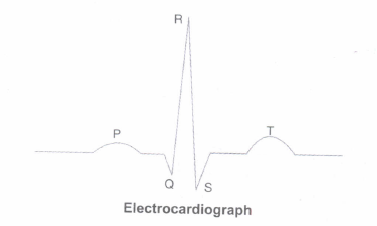
Draw a standard ECG and explain the different segments in it.
36.
What are special anatomical features displayed by leaves of C4 -plants? How do they provide an advantage over the structure of C3 -plants?
37.
What is meant by modification of root? What type of modification of root is found in the:
(a) Banyan tree
(b) Turnip
(c) Mangrove trees
38.
Which of the following procedures does not take place in a C4 plant?
Calvin cycle
Carbon fixation
Electron transport
Photorespiration
39.
Which of the following is true about chemical synapse?
There is gap between membranes of two axons
There is lesser gap between membranes of two axons
Chemical synapse is primarily responsible for the action of parasympathetic neural system
Chemical synapse is primarily responsible for the action of sympathetic neural system
40.
Which is the main organ of respiration in amphibians?
Skin
Lungs
Both (a) and (b)
Gills
41.
How many essential amino acids are known?
20
21
22
23
42.
Which of the following organs have unstriated muscles?
Fingers
Heart
Lower Jaw
Small Intestine
43.
Which of the following is not a result of action of cortisol?
RBC Production
Lipolysis
WBC production
Maintenance of Blood pressure
44.
What is the name of long distance transport of materials in plants?
Transduction
Translocation
Transportation
Transpiration pull
45.
Which of the following is a product of lactic acid fermentation?
Beer
Vinegar
Cake
Molasses
46.
Which artery supplies blood to the heart muscle?
Pulmonary artery
Systemic artery
Carotid artery
Coronary artery
47.
What is the main role of skin in human?
Excretion
Thermoregulation
Sweat production
Defence
48.
Which of the following micronutrients is important for pollen germination?
Zinc
Boron
Molybdenum
Sodium
49.
Which of the following hormones acts as growth inhibitor?
Gibberellins
Auxins
Cytokinins
Abscisic Acid
50.
Which of the following shows modification of stem for food storage?
Carrot
Turnip
Ginger
None of these
51.
Which place will have cuboidal epithelium?
Trachea
Artery
Large intestine
Bile duct
52.
Which of the following scientists proposed the cell theory?
Robert Brown
Leeuwenhoek
Schleiden and Schwann
Schleiden, Schwann and Virchow
53.
Which is the correct sequence of mitotic cell division?
Prophase Anaphase Metaphase Telophase
Prophase Telophase Metaphase Anaphase
Prophase Anaphase Telophase Metaphase
Prophase Metaphase Anaphase Telophase
54.
Apical meristem is found at which of the following organs in plant?
Roots Tips
Shoot Tips
Both (a) and (b)
Leaf Tips
55.
Which of the following is an incorrect statement?
There is a common opening for both digestive system and excretory system in Aves.
Forelimbs are modified for flight in Bats
Bioluminescence is also shown by an insect
Open digestive system is more advanced than the closed digestive system
56.
Which of the following is used in making litmus solution?
Fungi
Algae
Lichen
Bryophyta.
57.
Which of the following scientists started the practice of using biological names?
Carolus Linneaus
Aristotle
Whittaker
Robert Hooke.
1.
Function of Collecting Duct. This long duct extends from the cortex of the kidney to the inner parts of the medulla. Large amounts of water could be reabsorbed from this region to produce concentrated urine. This segment allows passage of small amounts of urea into the medullary interstitium to keep up the osmolarity. It also plays a role in the maintenance of pH and ionic balance of blood by the selective secretion of \({ H }^{ + }\) and \({ K }^{ + }\) ions.
2.
Polysaccharides are long chains of sugars. They are threads containing different monosaccharides as building blocks.
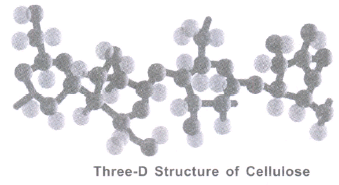
In a polysaccharide chain (say glycogen), the right end is called the reducing end and the left end is called the non-reducing end. Starch forms helical secondary structures. In fact, starch can hold 12 molecules in the helical portion. Examples: Cellulose, chitin.
3.
(a) Cohesion: Mutual attraction between water molecules is called cohesion.
(b) Adhesion: Attraction of water molecules to polar surfaces is called adhesion.
(c) Surface Tension: Water molecules are attracted to each other in the liquid phase more than to water in the gas phase. This gives a liquid an ability to acquire the least possible area and explains the spherical shape of raindrops.
These properties give water high tensile strength, i.e., an ability to resist a pulling force, and high capillarity, i.e., the ability to rise in thin tubes. In plants capillarity is aided by the small diameter of the tracheary elements - the tracheids and vessel elements.
4.
In cymose type of inflorescence the main axis terminates in a flower, hence is limited in growth. The flowers are borne in a basipetal order. In basipetal succession older flowers are at the apex and younger flowers are near the base.
5.
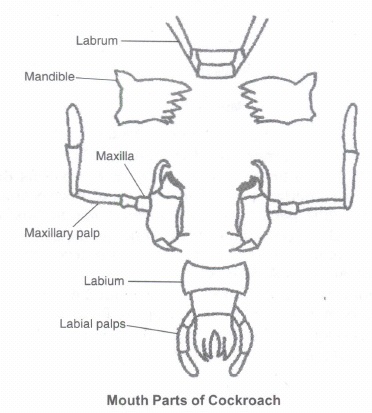
Mouth Parts of Cockroach. Anterior end of the head bears appendages forming biting and chewing type of mouth parts. The mouth parts consist of following structures:
(a) Labrum (upper lip),
(b) A pair of mandibles,
(c) A pair of maxillae and
(d) Labium (lower lip).
Apart from these a median flexible lobe, acting as tongue (hypopharynx), lies within the cavity enclosed by the mouth parts.
6.
| Limbs of Athropoda | Limbs of Tetrapoda |
|---|---|
| 1. Jointed legs. | 1. Jointed legs. |
| 2. Legs are made of exoskeleton | 2. Legs are made of endoskeleton. |
| 3. Skeleton is made of chitin. | 3. Skeleton is made of bones and cartilage. |
7.
The Inflorescence
A flower is a modified shoot wherein the shoot apical meristem changes to floral meristem. Internodes do not elongate and the axis gets condensed. The apex produces different kinds of floral appendages laterally at successive nodes instead of leaves. When a shoot tip transforms into a flower, it is always solitary. The arrangement of flowers on the floral axis is termed as inflorescence. Depending on whether the apex gets converted into a flower or continues to grow, two major types of inflorescences are defined-racemose and cymose
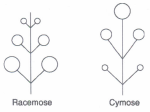
Racemose Inflorescence. In racemose type of inflorescences the main axis continues to grow, the flowers are borne laterally in an acropetal succession. Acropetal succession means that older flowers are at the base and younger flowers are near the apex
Cymose Inflorescence. In cymose type of inflorescence the main axis terminates in a flower, hence is limited in growth. The flowers are borne in a basipetal order. In basipetal succession older flowers are at the apex and younger flowers are near the base.
8.
(i) Vasopressin
(ii) Pancreas
(iii) Reduces blood glucose level
(iv) Differentiation of T-Iymphocytes
(v) Estrogen
(vi) Thyroid.
9.
(i) Tumour in hypothalamus.
(ii) Hypothalamus.
(iii) The hypothalamus lies at the base of thalamus in the forebrain.
(iv) Humanity and responsibility towards the patient. He is devoted to his duties and has professional ethics.
10.
Light induces dissociation of the retinol from opsin. It brings about changes in the structure of the opsin. This causes membrane permeability changes. As a result, potential difference are generated in the optic nerves to the visual cortex area of the brain, where the nerves impulses are analysed and the image formed on the retina is recognised.
11.
(i) Bone marrow.
(ii) Sinoatrial node (SA node).
(iii) Reptiles have three-chambered heart except crocodile, which has four-chambered heart.
12.
comparison between the C3 leaf anatomy and C4 leaf anatomy
| C3 leaf anatomy | C4 leaf anatomy |
| Only one type of chloroplast is present |
Kranz anatomy, i.e type of cell, each with its own type of chloroplast is present |
| Less efficient in photosynthesis than C4 leaves. |
More efficient in photosynthesis than C3 leaves |
| Only mesophyll cells Carryout photosynthesis. | Both mesophyll cells and bundle sheath cells carry out Photosynthesis. |
13.
The inflorescence is how the flowers are arranged on the flowering axis. During the flowering season, the vegetative apex of the stem gets converted into a floral meristem. Based on whether the floral axis continues to grow or ends in a flower, the inflorescence is classified into racemose and cymose. In racemose inflorescence, the floral axis continues to grow and produces flowers laterally. On the other hand, in a cymose inflorescence, the main axis terminates into a flower. Hence, it is limited in growth.
Growth : Indefinite (race mose) and definite.
Number of branches : Cymose, uniparous, biparous, multiparous
Pedicel : Presence or absence of pedicel in inflorescene.
Branching of peduncle : Unbranched and branched.
Sex of flowers : Certain types have unisexual flowers. e.g, Catkin.
14.
All the activities like growth, reproduction, movements, responsiveness, development, etc., are due to metabolism.
Metabolism is of two types, i.e., anabolism and catabolism. Anabolism involves the synthesis of complex compounds from simpler ones, e.g., photosynthesis and catabolism involves the breakdown of complex compounds into simpler substances, e.g., respiration.
15.
Proteins are linear chains of amino acids linked by peptide bonds.
16.
Lung is a bag like structure made up of bronchioles and alveoli. This is the place where exchange of gases takes place.
17.
In leaves of herbs, when transpiration is nil during night, root pressure results in collection of water droplets on leaves. This phenomenon is called guttation
18.
(i) Carboxylation,
(ii) Reduction and
(iii) Regeneration.
19.
Peristalsis.
20.
(i) Metaphase
(ii) Anaphase
(iii) Zygotene stage of meiosis-I
(iv) Pachytene stage of prophase-I
21.
The Chlorophyceae contain chlorophyll a and b, zeaxanthin and lutein, together with a minor proportion of less typical carotenoids.
22.
Keys are pairs of two contrasting characters. Selection of one character leads to rejection of another character while identifying a particular species or genera or family and so on. For example, presence or absence of hair on body can give a clue if an animal belongs to Mammalia or not.
23.
The hypothalamic secreted by the neurosecretory cells called nuclei, transport through their axons and released from their nerve endings and mixed with blood of hypophyseal portal vein . These are then transported to anterior pituitary.
The posterior pituitary hormones pass through the axnos thet reach the posterior pituitary and remain stored in the axon terminals, till they are stimulated for release.
24.
Pelvic girdles provide articulations to the bones of legs. These support and protect abdominal visceral organs and provide attachement to certain leg muscles.
Pectoral girdles provide an attachment point for numerous muscles that allows shoulder and elbow joints.
25.
The time gap in the passage of action potential from sinoatrial node to the ventricles allows ventricles to relax. The ventricular pressure falls, causing the closure of semilunar valves, which prevents the backflow of blood into the ventricles.
26.
The RQ of value 4 is expected from oxalic acid because it is an organic acid, whenever organic acids are oxidised, then RQ value is always greater than one.
27.
Sheets are located in the dermis of skin, periosteum of the bone, perichondrium of cartilage, pericardium of heart, etc. Sheets provide strength. Tendons are located between skeletal muscles and bones. They connect muscles with bones.
28.
A - 3, B - 1. Choanocytes or collar cells are characteristic features of Porifera. They take part in ingestion of food, formation, and differentiation of sex cells while parapodia in annelids are used for locomotion.
29.
Nucleus is membrane bound structure located in centre of eukaryotic cell while necleoid is a membraneless structure found in prokaryotic cell (false nucleus).
30.
Structure of Respiratory System
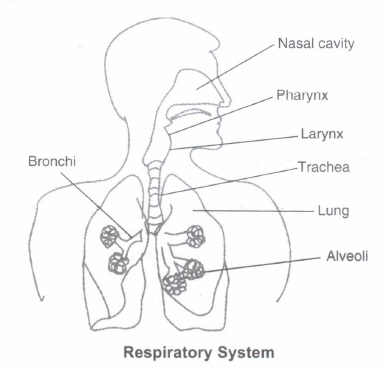
Pharynx. We have a pair of external nostrils opening out above the upper lips. It leads to a nasal chamber through the nasal passage. The nasal chamber opens into nasopharynx, which is a portion of pharynx, the common passage for food and air.
Larynx. Nasopharynx opens through glottis of the larynx region into the trachea. Larynx is a cartilaginous box which helps in sound production and hence called the sound box. During swallowing glottis can be covered by a thin elastic cartilaginous flap called epiglottis to prevent the entry of food into the larynx.
Trachea. Trachea is a straight tube extending up to the mid-thoracic cavity, which divides at the level of 5th thoracic vertebra into a right and left primary bronchi.
Bronchi. Each bronchi undergoes repeated divisions to form the secondary and tertiary bronchi and bronchioles ending up in very thin terminal bronchioles. The tracheae, primary, secondary and tertiary bronchi, and initial bronchioles are supported by incomplete cartilaginous rings. Each terminal bronchiole gives rise to a number of very thin, irregular-walled and vascularised bag-like structures called alveoli.
Lungs. The branching network of bronchi, bronchioles and alveoli comprise the lungs. We have two lungs which are covered by a double layered pleura. Pleura is filled with pleural fluid. It reduces friction on the lung surface. The outer pleural membrane is in close contact with the thoracic lining whereas the inner pleural membrane is in contact with the lung surface.
31.
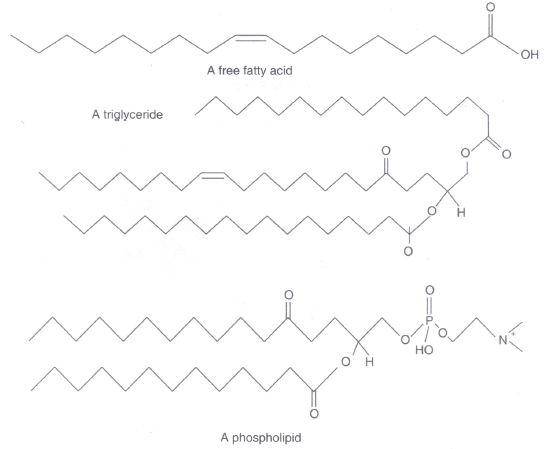
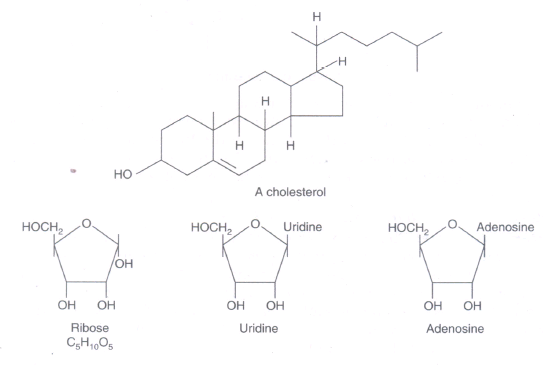
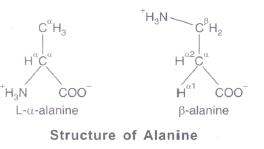
Fat is being manufactured by many companies in pharmaceuticals business as well as in food business. Vitamins come in many combination and are being used as supplementary medicines. Lactose is made by companies manufacturing baby food.
All of us are buyers of fat, protein and lactose.
32.
(a) Hypothalamus - Releasing hormone and Inhibiting hormone.
(b) Pituitary - Growth hormone, Prolactin, Thyroid stimulating hormone, Adrenocorticotrophic hormone, Luteinizing hormone, Follicle stimulating hormone, Melatonin.
(c) Thyroid - Tetraiodothyronine, Triiodothyronine.
(d) Parathyroid - Parathyroid hormone.
(e) Adrenal - Adrenalin or Epinephrine, Noradrenaline or norepinephrine Corticoids.
(f) Pancreas - Glucagon, Insulin.
(g) Testis - Testosterone.
(h) Ovary - Estrogen, Progesterone.
(i) Thymus - Thymosin.
(j) Atrium - Atrial Natriuretic Factor
(k) Kidney - Erythropoietin.
(l) GI Tract - Gastrin, Secretin, Cholecystokinin (CCK)Gastric Inhibitory Peptide (GIP)
33.
Cilia and flagella are hair-like outgrowths of the cell membrane. Cilia are small structures which work like oars, causing the movement of either the cell or the surrounding fluid. Flagella are comparatively longer and responsible for cell movement.
Structure:
i) The electron microscopic study of a cilium or the flagellum shows that they are covered with plasma membrane.
ii) Their core called the axoneme possesses a number of microtubules running parallel to the long axis. The axoneme usually has nine pairs of doublets of radially arranged peripheral microtubules and a pair of centrally located microtubules.
iii) Such an arrangement of axonemal microtubules is referred to as the 9 + 2 array.
iv) The central tubules are connected by bridges and are also enclosed by a central sheath, which is connected to one of the tubules of each peripheral couplet by a radial spoke. Thus, there are nine radial spokes. The peripheral doublets are also interconnected by linkers.
v) Both the cilium and flagellum emerge from centriole-like structure called the basal bodies.
34.
Ethylene. Ethylene is a simple gaseous PGR. It is synthesised in large amounts by tissues undergoing senescence and ripening fruits. Influences of ethylene on plants include horizontal growth of seedlings, swelling of the axis and apical hook formation in dicot seedlings.
Ethylene promotes senescence and abscission of plant organs especially of leaves and flowers. Ethylene is highly effective in fruit ripening. It enhances the respiration rate during ripening of the fruits. This rise in rate of respiration is called respiratory climactic.
Ethylene breaks seed and bud dormancy, initiates germination in peanut seeds, sprouting of potato tubers. Ethylene promotes rapid internode/petiole elongation in deep water rice plants. It helps leaves/upper parts of the shoot to remain above water. Ethylene also promotes root growth and root hair formation, thus helping the plants to increase their absorption surface.
Ethylene is used to initiate flowering and for synchronising fruit-set in pineapples. It also induces flowering in mango. Since ethylene regulates so many physiological processes, it is one of the most widely used PGR in agriculture. The most widely used compound as source of ethylene is ethephon. Ethephon in an aqueous solution is readily absorbed and transported within the plant and releases ethylene slowly. Ethephon hastens fruit ripening in tomatoes and apples and accelerates abscission in flowers and fruits (thinning of cotton, cherry, walnut). It promotes female flowers in cucumbers thereby increasing the yield.
35.
The P-wave represents the electrical excitation (or depolarisation) of the atria, which leads to the contraction of both the atria.
The QRS complex represents the depolarisation of the ventricles, which initiates the ventricular contraction. The contraction starts shortly after Q and marks the beginning of the systole.
The T-wave represents the return of the .ventricles from excited to normal state (repolarisation). The end of the T-wave marks the end of systole. Obviously, by counting the number of QRS complexes that occur in a given time period, one can determine the heartbeat rate of an individual. Since the ECGs obtained from different individuals have roughly the same shape for a given lead configuration, any deviation from this shape indicates a possible abnormality or disease. Hence, it is of a great clinical significance.
36.
The particularly large cells around the vascular bundles of the C4 pathway plants are called bundle sheath cells and the leaves, which have such anatomy are said to have Kranz anatomy.Kranz means wreath and is a reflection of the arrangement of cells.The bundle sheath cells may form several layers around the vascular bundles; they are characterized by having a large number of chloroplasts, thick walls impervious to gaseous exchange and no intercellular spaces.
C4 -plants can produce more sugar than C3-plants in conditions of bright light and high temperature.Many important crop plants are C4-plants, i.e maize, sorghum, sugarcane, and millet.
37.
Primarily, there are two types of root systems found in plants, namely the tap root system and fibrous root system. The main function of the roots is to absorb water and minerals from the soil. However, roots are also modified to perform various other functions. The roots of some plants act as storage sites for food, some provide support to massive plant structures, while others absorb oxygen from the atmosphere.
Roots and its modifications in various plants:
(a) Banyan tree
The banyan tree (Ficus benghalensis) has massive pillar-like adventitious roots arising from the aerial part of the stem. These roots grow towards the ground and provide support to the tree. Such roots are called prop roots.
(b) Turnip
The roots of turnip (Brassica rape) help in the storage of food. Similar food-storing roots are found in radishes, carrots, and sweet potatoes.
(c) Mangrove tree
The roots of mangrove plants grow vertically upwards from the soil for the absorption of oxygen from the atmosphere as the soil is poorly aerated. These types of roots are called pneumatophores.
38.
(d)
Photorespiration
39.
(b)
There is lesser gap between membranes of two axons
40.
(b)
Lungs
41.
(b)
21
42.
(d)
Small Intestine
43.
(c)
WBC production
44.
(b)
Translocation
45.
(c)
Cake
46.
(d)
Coronary artery
47.
(d)
Defence
48.
(b)
Boron
49.
(d)
Abscisic Acid
50.
(c)
Ginger
51.
(d)
Bile duct
52.
(d)
Schleiden, Schwann and Virchow
53.
(d)
Prophase Metaphase Anaphase Telophase
54.
(c)
Both (a) and (b)
55.
(b)
Forelimbs are modified for flight in Bats
56.
(c)
Lichen
57.
(a)
Carolus Linneaus

11th Standard CBSE Syllabus & Materials
11th Standard CBSE
CBSE 11th Business Studies Forms of Business Organisation Sample Question Papers Study Material - QB365 Set A
NEW11th Standard CBSE
CBSE 11th Business Studies Business, Trade and Commerce Sample Question Papers Study Material - QB365 Set A
NEW11th Standard CBSE
CBSE 11th Physics Waves Sample Question Papers Study Material - QB365 Set A
NEW11th Standard CBSE
CBSE 11th Physics Kinetic Theory Sample Question Papers Study Material - QB365 Set A



CBSE 11th Standard CBSE Subjects
CBSE Standards









