
 100% FREE ACCESS
11th Standard CBSE Syllabus & Materials
11th Standard CBSE
CBSE 11th Economics PART-A - Presentation of Data - New Sample Question Papers Study Material - QB365 Set A
NEW11th Standard CBSE
CBSE 11th Economics PART-A - Organisation of Data - New Sample Question Papers Study Material - QB365 Set A
NEW11th Standard CBSE
CBSE 11th Economics PART-A - Collection of Data - New Sample Question Papers Study Material - QB365 Set A
NEW11th Standard CBSE
CBSE 11th Economics PART-A - Introduction to Economics and Statistics - New Sample Question Papers Study Material - QB365 Set A
NEW11th Standard CBSE
CBSE 11th Business Studies International Trade Sample Question Papers Study Material - QB365 Set A
NEW11th Standard CBSE
CBSE 11th Business Studies Evolution and Fundamentals of Business Sample Question Papers Study Material - QB365 Set A

Published on: 04/03/2020
11th Standard Biology Board Exam Sample Question 2020
Download CBSE Class 11th Standard CBSE Biology question papers, sample papers, important questions, and previous year solved papers in PDF format. Get free study materials, NCERT solutions, and exam preparation resources for Class 11th Standard CBSE Biology
Questions + Answers key
Take MCQ Biology Test
1.
Describe reflex action.
2.
What are polysaccharides?
3.
There is no special respiratory organ in plants, yet plants efficiently manage exchange of gases. Justify.
4.
Describe passive transport, osmosis and active transport in plasma membrane.
5.
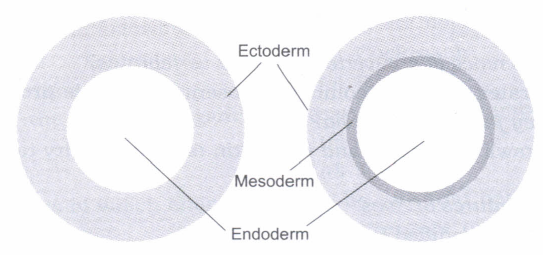
Draw a diagram showing comparison of diploblastic and triploblastic organization.
6.
Give a brief overview of structure and function of parenchyma.
7.
Cork cambium forms tissues that form the cork. Do you agree with this statement? Explain.
8.
During a college tour; while travelling at a higher altitude of maintains, Vijay complains of dizziness and vomiting sensation. The guide took him to the doctor. The doctor after diagnosing him gave some medicines and explained that it happened due to the change In air pressure, as we go towards the higher altitude,
(i) What is the cause of Vijay's sickness?
(ii) Which of the sensory organ get disturbed during the journey?
(iii) Name the part of the ear that maintains the air pressure.
(iv) What values did the guide possess?
9.
How do you distinguish between a skeletal muscle and a cardiac muscle.
10.
Show the structure of a renal corpuscle with the help of a diagram
11.
Diffusion of gases occurs in the alveolar region only and not in the other parts of respiratory system. Why?
12.
Fill in the blanks A - F in the different columns of the table given below.
| Enzyme | Site of Action | Substrate | Product of Action |
| Salivary amylase | Mouth and Stomach | A | Maltose |
| B | Stomach | Proteins | Proteoses and peptones |
| Trypsin | C | Proteins, peptones and proteoses | Dipeptides |
| Lipase | Small intestine | Fats | D |
| E | Small intestine | Nucleic acid | Nucleotides and nucleosides |
| Lactase | Small intestine | F | Glucose and galactose |
13.
Describe at least three major functions of turgor pressure.
14.
What different criteria would you choose to classify people that you meet often?
15.
Why is thymus called ‘throne of immunity?
16.
Explain anaerobic breakdown of glycogen in muscles and its effect.
17.
What is the name of duct,bringing secretions from gall bladder and pancreas?
18.
Which is the starting molecule for Krebs' cycle?
19.
What is Column of Bertini?
20.
Define cytoskeleton.
21.
Distinguish between the following: Prostomium and peristomium
22.
Name the three basic tissue systems in the flowering plants. Give the tissue names under each system.
23.
Which among the following is a long day plant-sugarbeet, sugarcane, tomato? Why is it so called?
24.
Assimilation of atmospheric free nitrogen does not occur directly in the higher plants. If agree justify.
25.
State any two functions of turgor pressure
26.
What is the term given to multinucleated condition? Explain briefly.
27.
On which basis angiosperms are classified?
28.
What are mesosomes and what its use in bacterial cell ?
29.
Describe various steps in urine formation.
30.
Explain the structure of human respiratory system with the help of suitable diagram.
31.
What are the key features of phylum Porifera? Write in detail.
32.
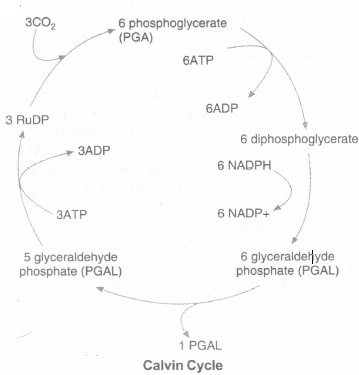
What is Calvin cycle? What is the importance of Calvin cycle?
33.
List the hormones secreted by the following:
(a) Hypothalamus
(b) Pituitary
(c) Thyroid
(d) Parathyroid
(e) Adrenal
(f) Pancreas
(g) Testis
(h) Ovary
(i) Thymus
(j) Atrium
(k) Kidney
(l) G-I Tract
34.
Describe transpiration pull model of water transport in plants. What are the factors influencing transpiration? How is it useful to plants?
35.
Differentiate between Aerobic respiration and Fermentation.
36.
Describe prophase I of meiotic cell division. How is it different from prophase II of meiosis?
37.
What is the importance of taxonomical aids? Describe various taxonomical aids.
38.
(i) Identify the structure shown in figure.
(ii) Write the measurement (distance) of the parts marked (A), (B), (C).
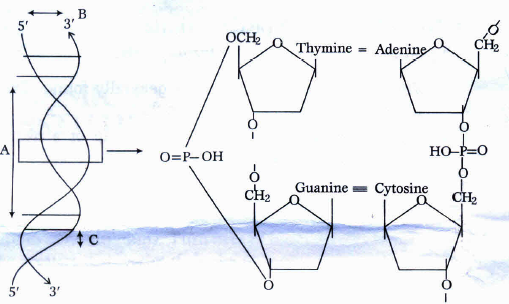
(iii) How many H-bonds are there at the place marked as(6)?
(iv) Which form of DNA is shown in the figure?
(v) Whether B type DNA has left-handed spiral structure or right-handed?
39.
How is natural system different from artificial system of classification? List some features.
40.
Which hormone maintains the volume of urine produced by kidneys?
Anti Diuretic Hormone
Atrial Natriuretic Factor
Testosterone
Adrenal Hormone
41.
Which is the primary CO2 acceptor in C3 plants?
RuBisCO
PEP
RuBP
NADPH
42.
Where does the exchange of gases take place in the respiratory system?
Bronchi
Bronchioles
Alveoli
Pulmonary Artery
43.
The sequence of amino acids in a protein is called: _____.
Primary structure
Secondary structure
Tertiary structure
Quarternary structure
44.
The region of the vertebrate eye, where the optic nerve passes out of the retina, is called the ______.
fovea
iris
blind spot
optic chiasma
45.
What is the name of the connective tissue which hold the bundle of muscle fibres together
Fascicle
Fascia
Fasciculum
Ligaments
46.
Which of the following hormones is secreted by hypothalamus?
Releasing hormone
Inhibitory hormones
Both (a) and (b)
Neither (a) nor (b)
47.
In case of osmosis the movement of water takes place in which direction?
From high chemical concentration to low chemical concentration
From low chemical concentration to high chemical concentration
There is random movement of water molecules
None of these
48.
Plants showing vemalism usually flower during which season?
Autumn
Summer
Winter
Spring
49.
Which of the following organisms has an open circulatory system?
Fish
Frog
Crocodile
Hydra
50.
What is the RQ of fat?
0.6
0.7
0.8
0.9
51.
Which is the innermost layer of alimentary canal?
Muscular Layer
Serosa
Mucosa
Sub-mucosa
52.
Which phase marks the splitting of chromatids during meiosis?
Anaphase I
Telophase I
Anaphase II
Telophase II
53.
Which of the following shows modification of stem for food storage?
Carrot
Turnip
Ginger
None of these
54.
Which of the following structure in neural tissue acts like an insulating structure?
Axon
Myelin sheath
Dendrite
Synapse
55.
What is hydroponics?
Technique of growing plants in an artificial environment
Technique of growing plants in the absence of soil
Aeration of nutrient solution
Both (b) and (c)
56.
Which of the following plastids stores proteins?
Amyloplasts
Elaioplasts
Aleuroplasts
Chloroplasts
57.
Which of the following contains bigger sieve tubes?
Protophloem
Metaphloem
Protoxylem
Metaxylem
58.
In which of the following organisms sexes are not separate?
Ascaris
Cockroach
Pheretima
Pila
59.
Which of the following division contains the largest number of plant species?
Gymnosperm
Angiosperm
Pteridophyta
Bryophyta
60.
Which is the correct word for relationship between algae and fungi in lichens?
Parasitism
Symbiosis
Commensals
Pathogens
61.
What is the full form of ICBN?
International Council for Botanical Nomenclature
International Code for Botanical Nomenclature
International Code for Biological Nomenclature
Indian Code for Biological Nomenclature
1.
The entire process of response to a peripheral neural stimulation, that occurs involuntarily, i.e., without conscious effort or thought and requires the involvement of a part of the central neural system is called a reflex action.
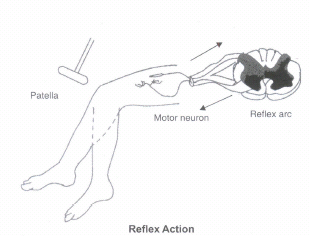
The reflex pathway comprises at least one afferent neuron (receptor) and one efferent (effector or excitor) neuron appropriately arranged in a series. The afferent neuron receives signal from a sensory organ and transmits the impulse via a dorsal nerve root into the CNS (at the level of spinal cord). The efferent neuron then carries signals from CNS to the effector. The stimulus and response thus forms a reflex arc as shown below in the knee jerk reflex.
2.
Polysaccharides are long chains of sugars. They are threads containing different monosaccharides as building blocks.
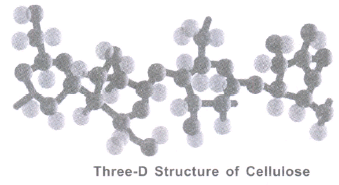
In a polysaccharide chain (say glycogen), the right end is called the reducing end and the left end is called the non-reducing end. Starch forms helical secondary structures. In fact, starch can hold 12 molecules in the helical portion. Examples: Cellulose, chitin.
3.
Every part of plant manages its gas exchange need. There is no exchange of gases between different organs. So unlike animals plants do not need special respiratory organs to facilitate exchange of gases. In leaves the exchange of gases takes place through stomata, while in stems it takes place through lenticels.
4.
Passive Transport. The plasma membrane is selectively permeable to some molecules present on either side of it. Many molecules can move briefly across the membrane without any requirement of energy and this is called the passive transport.
Osmosis. Neutral solutes may move across the membrane by the process of simple diffusion along the concentration gradient, i.e., from higher concentration to the lower. Water may also move across this membrane from higher to lower concentration. Movement of water by diffusion is called osmosis.
Active Transport. As the polar molecules cannot pass through the nonpolar lipid bilayer, they require a carrier protein of the membrane to facilitate their transport across the membrane. A few ions or molecules are transported across the membrane against their concentration gradient, i.e., from lower to the higher concentration. Such a transport is an energy-dependent process, in which ATP is utilised and is called active transport, e.g., Na+/K+ Pump.
5.
6.
Structure of Parenchyma. It is composed of round, spherical or polygonal cells. Cells are isodiametric with thin walls. The tissue has intracellular spaces. Function. Photosynthesis, food storage and secretion.
7.
Cork Cambium. As the stem continues to increase in girth due to the activity of vascular cambium, the outer cortical and epidermis layers get broken and need to be replaced to provide new protective cell layers. Hence, sooner or later, another meristematic tissue called cork cambium or phellogen develops, usually in the cortex region. Phellogen is a couple of layers thick. It is made of narrow, thin-walled and nearly rectangular cells. Phellogen cuts off cells on both sides. The outer cells differentiate into cork or phellem while the inner cells differentiate into secondary cortex or phelloderm. This is clear how cork cambium forms tissues that form the cork.
8.
(i) The cause of Vijay's sickness is the change of altitude in which there is change in the physiology of the body.
(ii) Internal ear gets affected which control balancing of body
(iii) Eustachian tube maintains the air pressure in the ear.
(iv) The guide is a very sensible person and is caring too.
9.
Differences between skeletal muscle and cardiac muscle
| skeletal muscle | cardiac muscle |
| It is found in limbs, tongue, all parts in association with the skeleton of organism | It is found in the walls of heart and large veins. |
| Fibres are unbranched | Fibres are branched |
| It is multinucleate | It is uninucleate |
| No oblique bridge and intercalated discs | Oblique bridge and intercalated discs are present. |
| It gets fatigued soon. | It never gets fatigued |
| It is voluntary in nature. | It is involuntary. |
10.
Representing the structure fo a renal corpuscle

11.
For efficient exchange of gases, respiratory surface must have certain characteristics such as
(i) it must be thin, moist and permeable to respiratory gases.
(ii) it must be large.
(iii) it must be highly vascular.
Only alveolar region has these characteristics. Thus, diffusion of gases occurs in this region only.
12.
A - Starch, B - Pepsin, C - Duodenum, D - Fatty acids + Glycerol, E - Nucleases and F - Lactose.
13.
Turgor pressure maintains rigidity of a plant cell, i.e., it keeps plants upright and stiff.
It also plays an imporant role in plant cell growth whereby the cell wall undergroes irreversible changes in volume and structure.
It also influences the opening and closure of stomata by influencing the turgidity of guard cells.
14.
Classifying humans:
1. The various criteria that may be chosen to classify people whom we meet often include behaviour, geographical location, morphology, gender, family members etc.
2. Geographical location of the individual defines their ability to adapt to the environment.
3. The morphology or phenotype of the organism and the behavior is responsible for differentiating humans.
4. Gender also helps in the major classification of humans that helps in the population studies.
15.
Since the T lymphocytes of immune system undergone maturation and proliferation in the thymus and contribute to the immunity of the body it is called throne of immunity.
16.
Anaerobic Breakdown of Glycogen. The reaction time of the fibres can vary in different muscles. Repeated activation of the muscles can lead to the accumulation of lactic acid due to anaerobic breakdown of glycogen in them, causing fatigue.
17.
Hepato-pancreatic duct
18.
The ultimate starting molecule of Kreb's cycle is oxaloacetate which is a 4-C acceptor molecule that is regenerated in each cycle.
19.
The cortex extends in between the medullary pyramids and this extension is called Column of Bertini.
20.
An elaborate network of filamentous proteinaceous structures present in the cytoplasm is called the cytoskeleton.
21.
Prostomium is the frontmost part of the earthworm. This is not called a true segment as it doesn't contain typical organs of an annelida. Peristomium is from where the true segment of the earthworm body starts.
22.
On the basis of their structure and location, there are three types of tissue systems:
(a) Epidermal Tissue System. Epidermis, Stomata
(b) Ground or Fundamental Tissue System and: Parenchyma, Sclerenchyma and Collenchyma
(c) Vascular or Conducting Tissue System. Phloem and Xylem.
23.
Sugarbeet is a long day plant. It is because in this plant flowering takes place when the plants are exposed to day length longer than a critical photoperiod.
24.
The higher plants do not have the active form of nitrogenase which eventually converts atmospheric nitrogen into unable form through the agency of living organisms.
25.
Two functions of turgor pressure are
(i)Helps in the movement of plants
(ii) Also aids in enlargement of cell
26.
Syncytium is the term given to multinucleated condition of the cell.
27.
Angiosperms are divided into two subgroups, i.e, dicotyledons and monocotyledons. This grouping is based on a number of embryonic leaves or cotyledons. the two are commonly called as monocots and dicots
28.
Mesosomes help in invagination of the membranes. Large septal mesosomes occur near centre of the cell and smaller lateral mesosome away from the centre. Septal mesosomes help in cell division and lateral mesosomes assist in the reproduction of bacterial DNA chromosome.
29.
Urine formation involves three main processes namely:
1. Glomerular Filtration,
2. Reabsorption and
3. Secretion.
Glomerular Filtration. The glomerular capillary blood pressure causes filtration of blood through three layers, i.e., the endothelium of glomerular blood vessels, the epithelium of Bowman's capsule and a basement membrane between these two layers. The epithelial cells of Bowman's capsule called podocytes are arranged in an intricate manner so as to leave some minute spaces called filtration slits or slit pores. The diameter of efferent arteriole (arteriole bringing blood out of the glomerulus) is less than the diameter of afferent arteriole (arteriole taking blood inside the glomerulus). This difference in diameters creates a pressure which facilitates the filtration. Blood is filtered so finely through these membranes, that almost all the constituents of the plasma, except the proteins pass onto the lumen of the Bowman's capsule. Therefore, it is considered as a process of ultra filtration.
Glomerular Filtration Rate (GFR). The amount of the filtrate formed by the kidneys per minute is called glomerular filtration rate (GFR). GFR in a healthy individual is approximately 125 ml/rninute, i.e., 180 litres per day. On an average, 1100-1200 ml of blood is filtered by the kidneys per minute which constitute roughly 1/ 5th of the blood pumped out by each ventricle of the heart in a minute. Regulation of GFR. The kidneys have built-in mechanisms for the regulation of glomerular filtration rate. One such efficient mechanism is carried out by juxta glomerular apparatus (JGA).JGA is a special sensitive region formed by cellular modifications in the distal convoluted tubule and the afferent arteriole at the location of their contact. A fall in GFR can activate the JG cells to release renin which can stimulate the glomerular blood flow and thereby the GFR back to normal.
Reabsorption. A comparison of the volume of the filtrate formed per day (180 litres per day) with that of the urine released (1.5 litres), suggest that nearly 99 per cent of the filtrate has to be reabsorbed by the renal tubules. This process is called reabsorption. The tubular epithelial cells in different segments of nephron perform this either by active or passive mechanisms. For example, substances like glucose, amino acids, Na", etc., in the filtrate are reabsorbed actively whereas the nitrogenous wastes are absorbed by passive transport. Reabsorption of water also occurs passively in the initial segments of the nephron. During urine formation, the tubular cells secrete substances like and ammonia into the filtrate. Tubular secretion is also an important step in urine formation as it helps in the maintenance of ionic and acid base balance of body fluids.
30.
Structure of Respiratory System
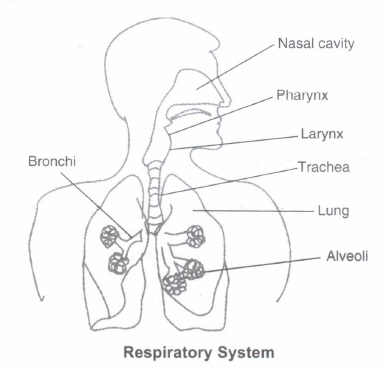
Pharynx. We have a pair of external nostrils opening out above the upper lips. It leads to a nasal chamber through the nasal passage. The nasal chamber opens into nasopharynx, which is a portion of pharynx, the common passage for food and air.
Larynx. Nasopharynx opens through glottis of the larynx region into the trachea. Larynx is a cartilaginous box which helps in sound production and hence called the sound box. During swallowing glottis can be covered by a thin elastic cartilaginous flap called epiglottis to prevent the entry of food into the larynx.
Trachea. Trachea is a straight tube extending up to the mid-thoracic cavity, which divides at the level of 5th thoracic vertebra into a right and left primary bronchi.
Bronchi. Each bronchi undergoes repeated divisions to form the secondary and tertiary bronchi and bronchioles ending up in very thin terminal bronchioles. The tracheae, primary, secondary and tertiary bronchi, and initial bronchioles are supported by incomplete cartilaginous rings. Each terminal bronchiole gives rise to a number of very thin, irregular-walled and vascularised bag-like structures called alveoli.
Lungs. The branching network of bronchi, bronchioles and alveoli comprise the lungs. We have two lungs which are covered by a double layered pleura. Pleura is filled with pleural fluid. It reduces friction on the lung surface. The outer pleural membrane is in close contact with the thoracic lining whereas the inner pleural membrane is in contact with the lung surface.
31.
Phylum - Porifera
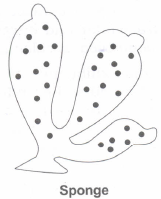
Habit and Habitat. Members of this phylum are commonly known as sponges. They are generally marine and mostly asymmetrical animals. These are primitive
multicellular animals and have cellular level of organization.
Water Transport System in Sponges. Sponges have a water transport or canal system. Water enters through minute pores (ostia) in the body wall into a central
cavity (spongocoel) from where it goes out through the osculum. This pathway of water transport is helpful in food gathering, respiratory exchange and removal of
waste. Choanocytes or collar cells line the spongocoel and the canals. Digestion is intracellular. The body is supported by a skeleton made up of spicules or
sponging fibres.
Reproduction. Sponges are hermaphrodite animals. Sexes are not separate, i.e., eggs and sperms are produced by the same individual. Sponges reproduce asexually by fragmentation and sexually by formation of gametes. Fertilization is internal and development is indirect having a larval stage which is morphologically distinct
from the adult.
Examples: Sycon, Spongilla, Euspongia.
32.
The Calvin Cycle
Calvin and his co-workers worked out the whole pathway and showed that the pathway operated in a cyclic manner; the RuBP (Ribulose bisphosphate) was regenerated.
The Calvin cycle can be described under three stages: carboxylation, reduction and regeneration.
1. Carboxylation. Carboxylation is the fixation of CO2 into a stable organic intermediate. Carboxylation is the most crucial step of the Calvin cycle where CO2 is utilised for the carboxylation of RuBP. This reaction is catalysed by the enzyme RuBP carboxylase which results in the formation of two molecules of 3-PGA. Since this enzyme also has an oxygenation activity it would be more correct to call it RuBP carboxylase-oxygenase or RuBisCO.
2. Reduction. These are a series of reactions that lead to the formation of glucose. The steps involve utilisation of 2 molecules of ATP for phosphorylation and two of NADPH for reduction per CO2 molecule fixed. The fixation of six molecules of CO2 and 6 turns of the cycle are required for the removal of one molecule of glucose from the pathway.
3. Regeneration. Regeneration of the CO2 acceptor molecule RuBP is crucial if the cycle is to continue uninterrupted. The regeneration steps require one ATP for phosphorylation to form RuBP.
Hence for every CO2 molecule entering the Calvin cycle, 3 molecules of ATP and 2 of NADPH are required. It is probably to meet this difference in number of ATP and NADPH used in the dark reaction that the cyclic phosphorylation takes place.
To make one molecule of glucose 6 turns of the cycle are required.
The Calvin Cycle
Importance of Calvin Cycle. Calvin cycle is the major step in which carbon fixation takes place. In other words this can be said as the 'moment of truth' in photosynthesis.
33.
(a) Hypothalamus - Releasing hormone and Inhibiting hormone.
(b) Pituitary - Growth hormone, Prolactin, Thyroid stimulating hormone, Adrenocorticotrophic hormone, Luteinizing hormone, Follicle stimulating hormone, Melatonin.
(c) Thyroid - Tetraiodothyronine, Triiodothyronine.
(d) Parathyroid - Parathyroid hormone.
(e) Adrenal - Adrenalin or Epinephrine, Noradrenaline or norepinephrine Corticoids.
(f) Pancreas - Glucagon, Insulin.
(g) Testis - Testosterone.
(h) Ovary - Estrogen, Progesterone.
(i) Thymus - Thymosin.
(j) Atrium - Atrial Natriuretic Factor
(k) Kidney - Erythropoietin.
(l) GI Tract - Gastrin, Secretin, Cholecystokinin (CCK)Gastric Inhibitory Peptide (GIP)
34.
Transpiration is the evaporative loss of water by plants. It occurs mainly through the stomata in the leaves. Besides the loss of water vapour in transpiration, exchange of oxygen and carbon dioxide in the leaf also occurs through pores called stomata (sing. : stoma). Normally stomata are open in the day time and close during the night. The immediate cause of the opening or closing of the stomata is a change in the turgidity of the guard cells. The inner wall of each guard cell, towards the pore or stomatal aperture, is thick and elastic. When turgidity increases within the two guard cells flanking each stomatal aperture or pore, the thin outer walls bulge out and force the inner walls into a crescent shape. The opening of the stoma is also aided due to the orientation of the microfibrils in the cell walls of the guard cells. Cellulose microfibrils are oriented radially rather than longitudinally making it easier for the stoma to open. When the guard cells lose turgor, due to water loss (or water stress) the elastic inner walls regain their original shape, the guard cells become flaccid and the stoma closes.
Factors Affecting Transpiration
1Temperature,
2.light,
3.humidity,
4.wind speed.
As water evaporates through the stomata, since the thin film of water over the cells is continuous, it results in pulling of water, molecule by molecule, into the leaf from the xylem. Also, because of lower concentration of water vapour in the atmosphere as compared to the substomatal cavity and intercellular spaces, water diffuses into the surrounding air. This creates a 'pull'.
Importance of Transpiration: Transport of liquids and minerals is facilitated because of transpiration.
35.
Aerobic respiration :
Aerobic respiration is the main means by which both plants and animals utilize energy in the form of organic compounds that was previously created through photosynthesis. Respiration requires oxygen in order to generate energy (ATP). It is the preferred method of pyruvate breakdown from glycolysis and requires that pyruvate enter the mitochondrion in order to be fully oxidized by the Krebs cycle. The product of this process is energy in the form of ATP (Adenosine Triphosphate), by substrate-level phosphorylation, NADH and FADH2.
Anaerobic Respiration or Fermentation :
Without oxygen, pyruvate is not metabolized by cellular respiration but undergoes a process of fermentation. The pyruvate is not transported into the mitochondrion, but remains in the cytoplasm, where it is converted to waste products that may be removed from the cell. This serves the purpose of oxidizing the hydrogen carriers so that they can perform glycolysis again and removing the excess pyruvate. This waste product varies depending on the organism. In skeletal muscles, the waste product is lactic acid. This type of fermentation is called lactic acid fermentation. In yeast, the waste products are ethanol and carbon dioxide. This type of fermentation is known as alcoholic or ethanol fermentation. The ATP generated in this process is made by substrate phosphorylation, which is phosphorylation that does not involve oxygen.
36.
Prophase I. Prophase of the first meiotic division is typically longer and more complex when compared to prophase of mitosis. It has been further subdivided into the following five phases based on chromosomal behaviour:
1.Leptotene
2.Zygotene
3.Pachytene
4.Diplotene and
5.Diakinesis.
Leptotene. During leptotene stage the chromosomes become gradually visible under the light microscope. The compaction of chromosomes continues throughout leptotene.
Zygotene:
1.During this stage chromosomes start parrrng together and this process of association is called synapsis. Such paired chromosomes are called homologous chromosomes.
2.Electron micrographs of this stage indicate that chromo some synapsis is accompanied by the formation of complex structure called synaptonemal complex.
3.The complex formed by a pair of synapsed homologous chromosomes is called a bivalent or a tetrad.
4.However, these are more clearly visible at the next stage. The first two stages of prophase I are relatively short-lived compared to the next stage that is pachytene
Pachytene:
During this stage bivalent chromosomes now clearly appear as tetrads.
1.This stage is characterised by the appearance of recombination nodules, the sites at which crossing over occurs between non-sister chromatids of the homologous chromosomes.
2.Crossing over is the exchange of genetic material between two homologous chromosomes. Crossing over is also an enzyme-mediated process and the enzyme involved is called recombinase.
3.Crossing over leads to recombination of genetic material on the two chromosomes.
4.Recombination between homologous chromosomes is completed by the end of pachytene, leaving the chromosomes linked at the sites of crossing over.
Diplotene. The beginning of diplotene is recognised by the dissolution of the synaptonemal complex and the tendency of the recombined homologous chromosomes of the bivalents to separate from each other except at the sites of crossovers. These X-shaped structures, are called chiasmata. In oocytes of some vertebrates, diplotene can last for months or years.
Diakinesis. The final stage of meiotic prophase I is diakinesis. This is marked by terminalisation of chiasmata. During this phase the chromosomes are fully condensed and the meiotic spindle is assembled to prepare the homologous chromosomes for separation. By the end of diakinesis, the nucleolus disappears and the nuclear envelope also breaks down. Diakinesis represents transition to metaphase.
Difference between prophase I and prophase II. During prophase I recombination of genes takes place, while in prophase II no such event happens. Prophase I is longer and more complicated compared to prophase II
37.
Taxonomical Aids help scientists keep a record and study common and uncommon characteristics of animals and plants. This study helps them to decide about the correct place of a species in the given taxonomical category.
Herbarium :
Collected plant species are dried for preservation. The place where they are kept as collection is known as herbarium.
Botanical Gardens :
Here live plants are reared for ready reference. Through live plants botanists can study certain features, like mode of reproduction, pattern of pollination, etc.
Museums :
Dead animal specimens are preserved in museums. Extinct species, like Dodo are kept in certain museum and act as good reference source.
Zoological Parks :
They are helpful in studying live specimens of animal species. Certain ferocious animals are easier to study in zoological parks.
Keys :
Keys are pairs of contrasting characters, out of which either of the characters is carried forward across generations and another is discarded to gain better adaptability. These keys are good tool to understand how complex organisms evolved from simpler organisms.
Manuals and Records :
Manuals and records show historical data about flora and fauna of a particular geographical location.
38.
(i) Double helix model of DNA (Waston-Crick model of DNA).
(ii) (A) 2 nm
(B) 3.4 nm
(C) 0.34 nm.
(iii) The bonds between C and G are three.
(iv) This is B-form of DNA.
(v) B-DNA is right - handed spiral structure.
39.
Differences between natural and artificial system are
| Natural Sytem | Artificial System |
| It is based on large number of characters. | It is based on one or a few characters. |
| The characters are stable. | The characters are liable to change with change in environment. |
| It avoids analogy. | It accepts analogy for grouping. |
| It is based on morphology, anatomy, cytology,embryology, molecular biology and genetics. |
It is based on morphologicalor reproductive traits.Others are not used. |
| Natural system brings out homology. | Artificial system does not study homology. |
| It explains natural and some phylogenetic relationships. | It does not give any idea about natural and phylogenetic relationships. |
40.
(a)
Anti Diuretic Hormone
41.
(b)
PEP
42.
(c)
Alveoli
43.
(a)
Primary structure
44.
(c)
blind spot
45.
(b)
Fascia
46.
(c)
Both (a) and (b)
47.
(a)
From high chemical concentration to low chemical concentration
48.
(d)
Spring
49.
(d)
Hydra
50.
(b)
0.7
51.
(c)
Mucosa
52.
(c)
Anaphase II
53.
(c)
Ginger
54.
(b)
Myelin sheath
55.
(b)
Technique of growing plants in the absence of soil
56.
(c)
Aleuroplasts
57.
(b)
Metaphloem
58.
(c)
Pheretima
59.
(b)
Angiosperm
60.
(c)
Commensals
61.
(b)
International Code for Botanical Nomenclature

11th Standard CBSE Syllabus & Materials
11th Standard CBSE
CBSE 11th Business Studies Forms of Business Organisation Sample Question Papers Study Material - QB365 Set A
NEW11th Standard CBSE
CBSE 11th Business Studies Business, Trade and Commerce Sample Question Papers Study Material - QB365 Set A
NEW11th Standard CBSE
CBSE 11th Physics Waves Sample Question Papers Study Material - QB365 Set A
NEW11th Standard CBSE
CBSE 11th Physics Kinetic Theory Sample Question Papers Study Material - QB365 Set A



CBSE 11th Standard CBSE Subjects
CBSE Standards









